
Vocabulary enhancement Tracing Letters Worksheets for Ages 3-9
3 filtered results
Difficulty Level
Grade
Age
-
From - To
Subject
Activity
Standards
Boost your child's vocabulary and handwriting skills with our Vocabulary Enhancement Tracing Letters Worksheets designed for ages 3-9. These engaging worksheets combine the joy of letter tracing with vocabulary-building activities, offering a fun and educational experience. With vibrant illustrations and wisely selected words, children will enhance their letter recognition, phonics, and fine motor skills. Perfect for preschool and early elementary students, our worksheets instill a love for language while laying a strong foundation for reading and writing. Visit us at Kids Academy to download and start enhancing your child's learning adventure today!
Favorites
With answer key
Interactive
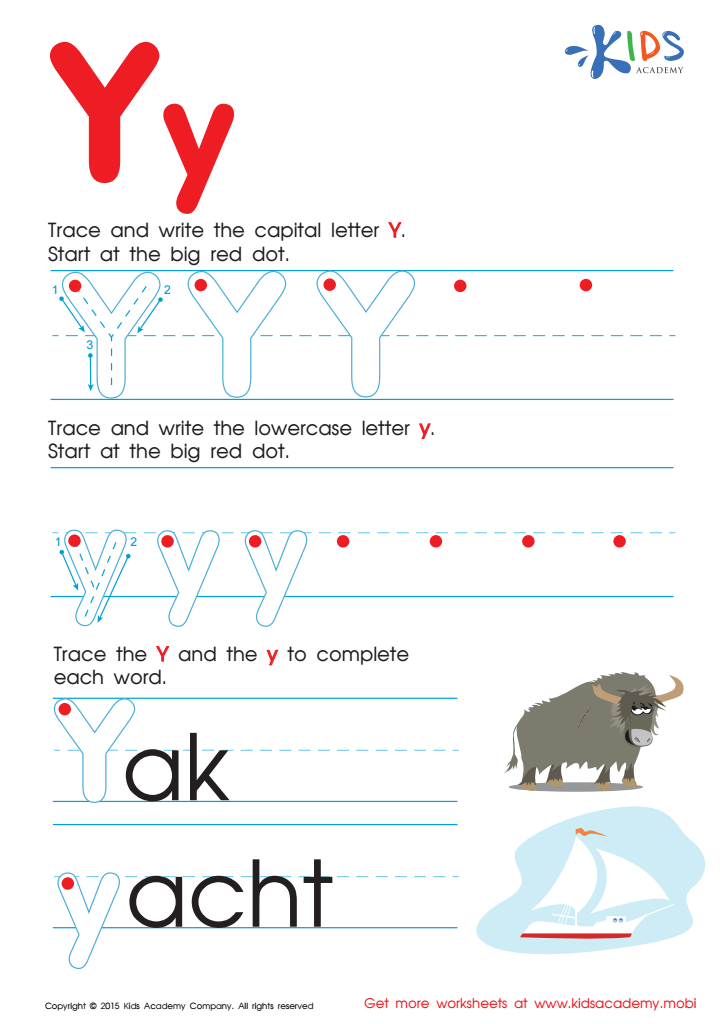
Letter Y Tracing Page
Trace the capital letter "Y" on the red dot, then trace and write the lowercase letter. Complete the words to help the Yak walk and the yacht swim. More worksheets at Kids Academy.
 Assign to My Students
Letter Y Tracing Page
Worksheet
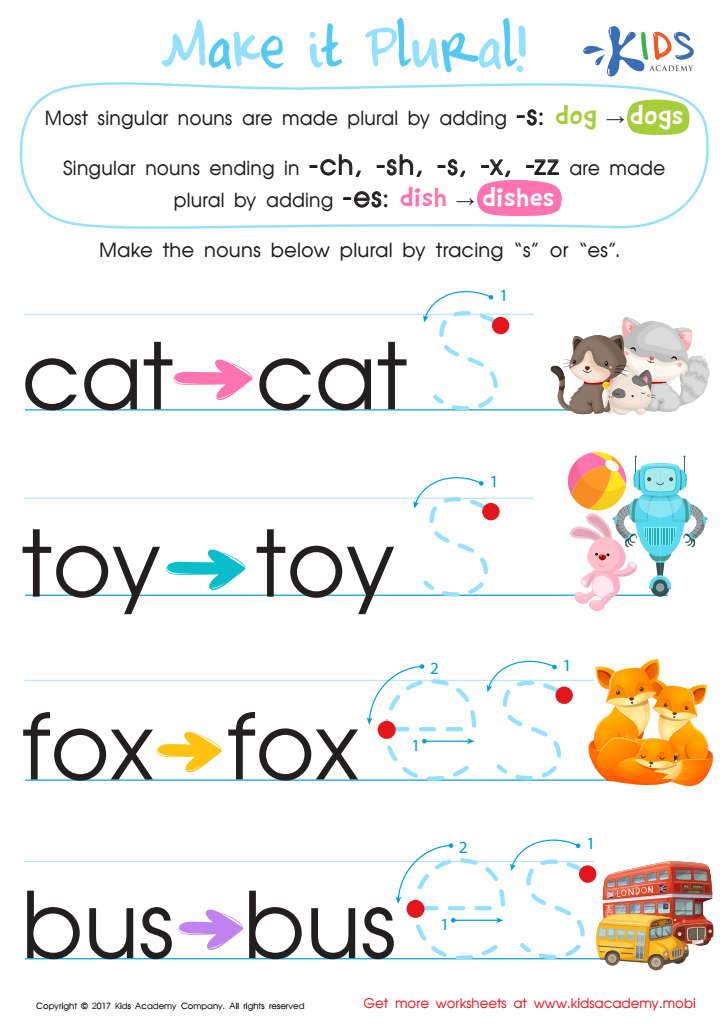
Make it Plural Worksheet
Changing words from singular to plural can be tricky as there are many word endings with special rules. Most words just need an -s, while endings like -ch, -sh, -s, -x or -zz need -es. This worksheet helps kids read words and trace the correct ending for each, making it easier to master these rules!
Make it Plural Worksheet
Worksheet
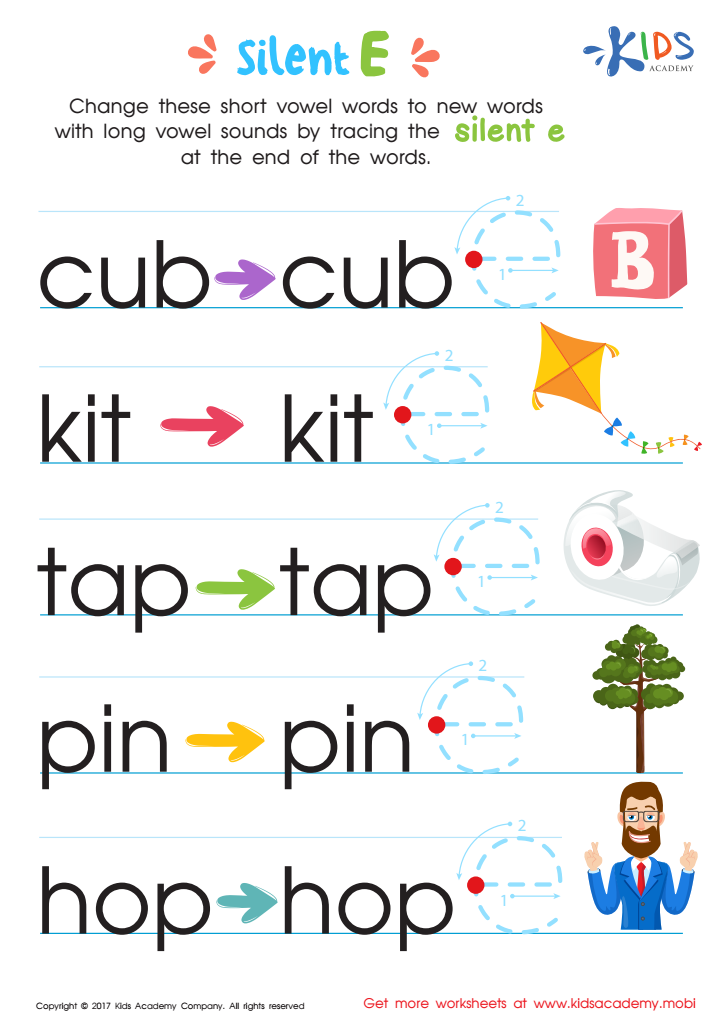
Silent E Words Worksheet
The letter e is amazing - it changes words without making a sound! Boost spelling and phonics with this Silent e worksheet from Kids Academy - fun and colorful!
Silent E Words Worksheet
Worksheet
Join Kids Academy for Free
Who is primarily going to use this learning content?







Parents and teachers should prioritize vocabulary enhancement and tracing letters for children ages 3-9 due to the crucial role these activities play in early development and academic success. Introducing children to a rich vocabulary early on can significantly enhance their language skills, laying a foundation for effective communication, reading comprehension, and critical thinking. A robust vocabulary helps children express themselves more clearly and vividly, fostering better social interactions and self-esteem.
Tracing letters serves as a foundational exercise in developing fine motor skills and handwriting. It bridges the gap between recognizing letters visually and reproducing them accurately, which is essential for future writing tasks. This practice also reinforces letter recognition and phonemic awareness, key components of early literacy. Combining vocabulary activities with letter tracing can create an integrated learning experience that stimulates cognitive growth, making abstract language concepts tangible.
For ages 3-9, a period marked by rapid brain development and linguistic curiosity, these activities can harness natural curiosity and transform it into lasting skills. Engaging in vocabulary and tracing exercises establishes a solid educational foundation, ensuring that children are better prepared for the academic challenges ahead and fostering a lifelong love of learning.








