Basic addition practice Worksheets for Ages 3-9 - Page 2
26 filtered results
-
From - To
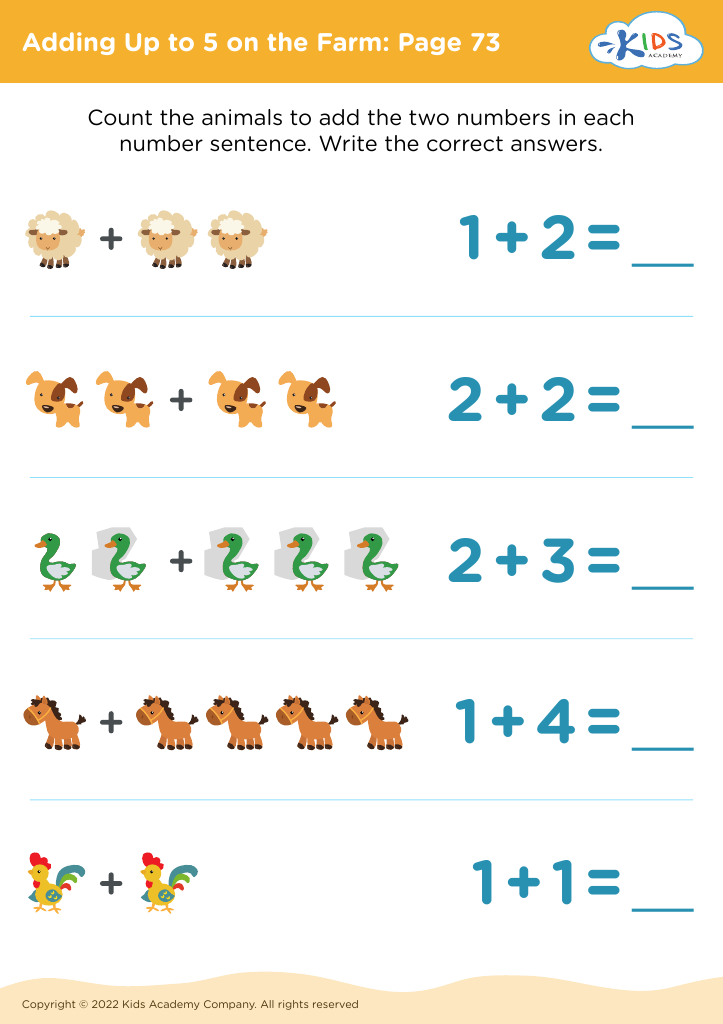








Basic addition practice for children ages 3 to 9 lays a crucial foundation for their future mathematical understanding and academic success. During these formative years, the brain is highly adaptable and can effectively absorb new concepts. Mastering basic addition contributes to the development of essential cognitive skills such as problem-solving, logical thinking, and improving memory. These skills are not only relevant in mathematics but also in real-life situations, aiding in decision-making and practical tasks like shopping, cooking, and time management.
For parents and teachers, promoting basic addition practice fosters a positive attitude towards math. It diminishes any anxiety children might have towards the subject, making them more confident and eager learners. Engaging in addition exercises also enhances children's fine motor skills and hand-eye coordination, especially when using physical objects such as counters or abacuses.
When children grasp basic addition early, they build a robust mental math capability and are better prepared to tackle more advanced concepts like multiplication, division, and fractions. This readiness can result in a smoother academic trajectory and potentially a stronger performance in standardized testing and future STEM-related courses. In essence, investing time in basic addition practice yields long-term educational benefits and forms the basis of critical life skills.








