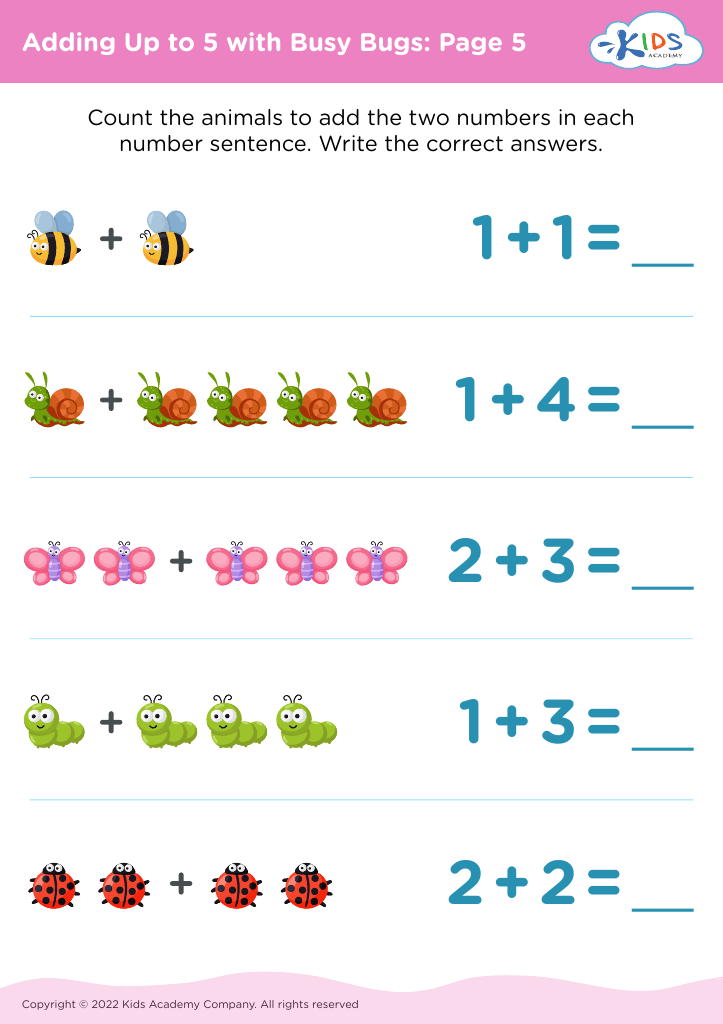
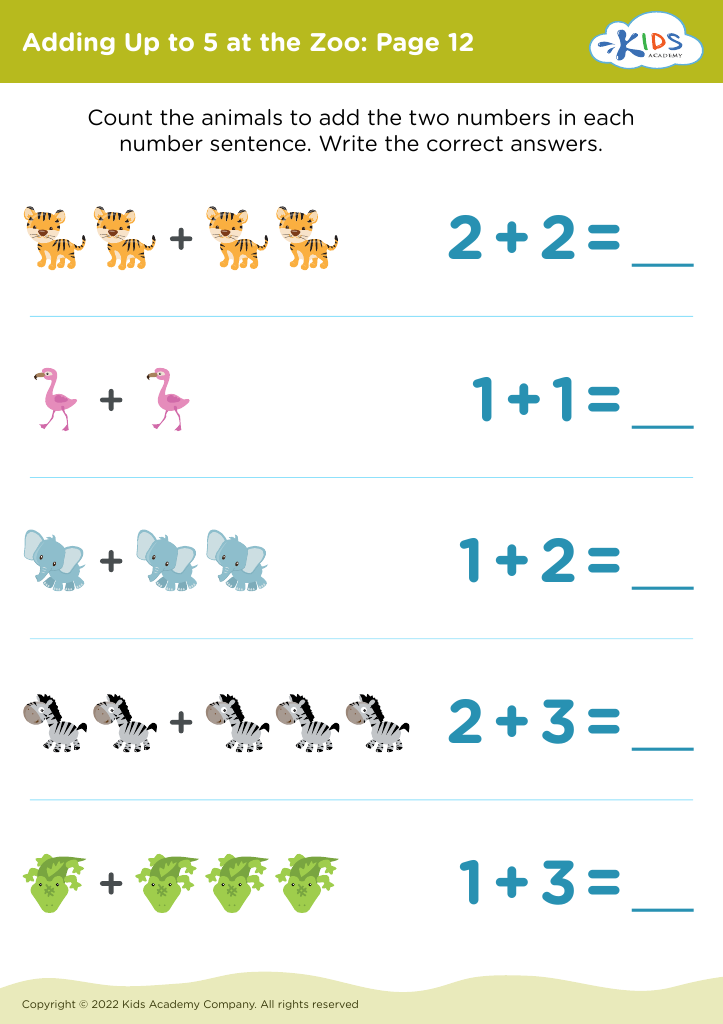
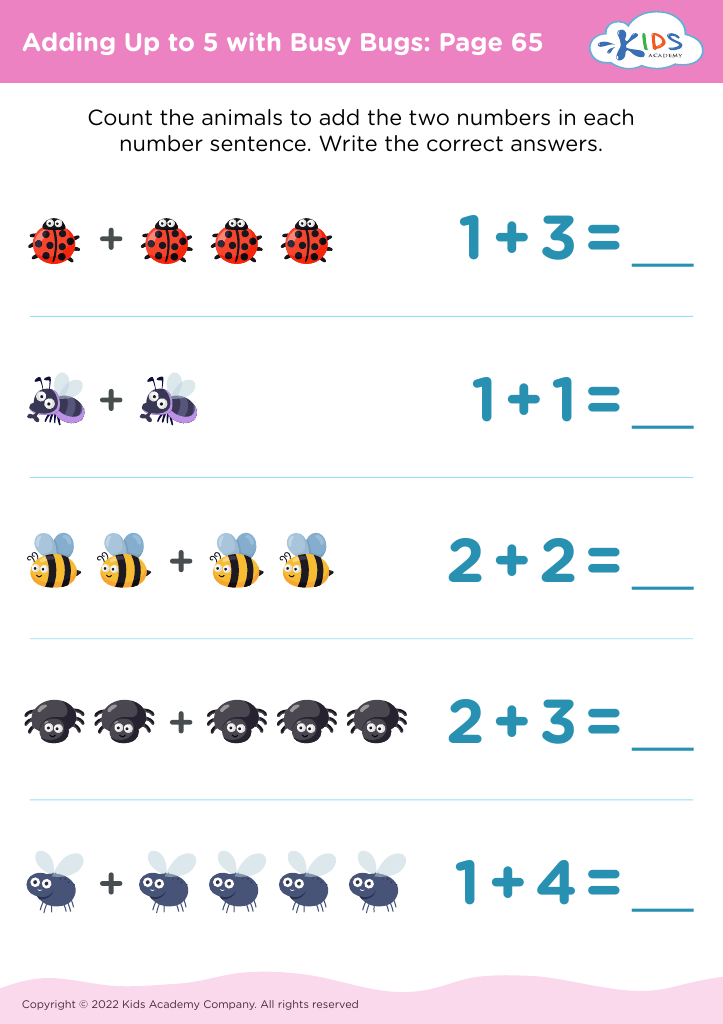
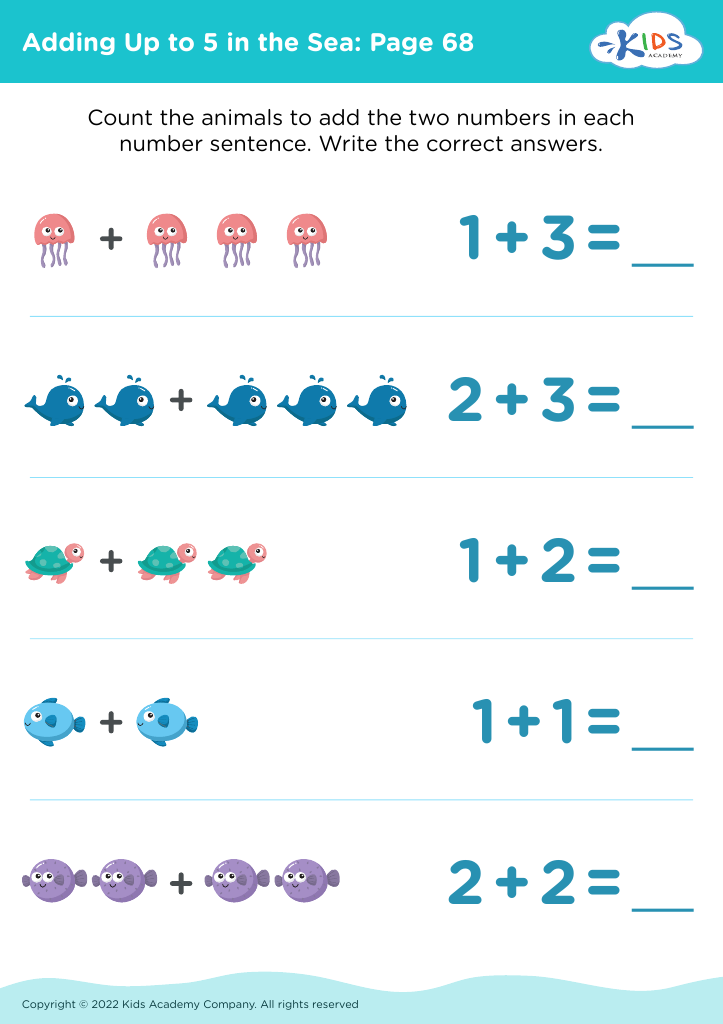
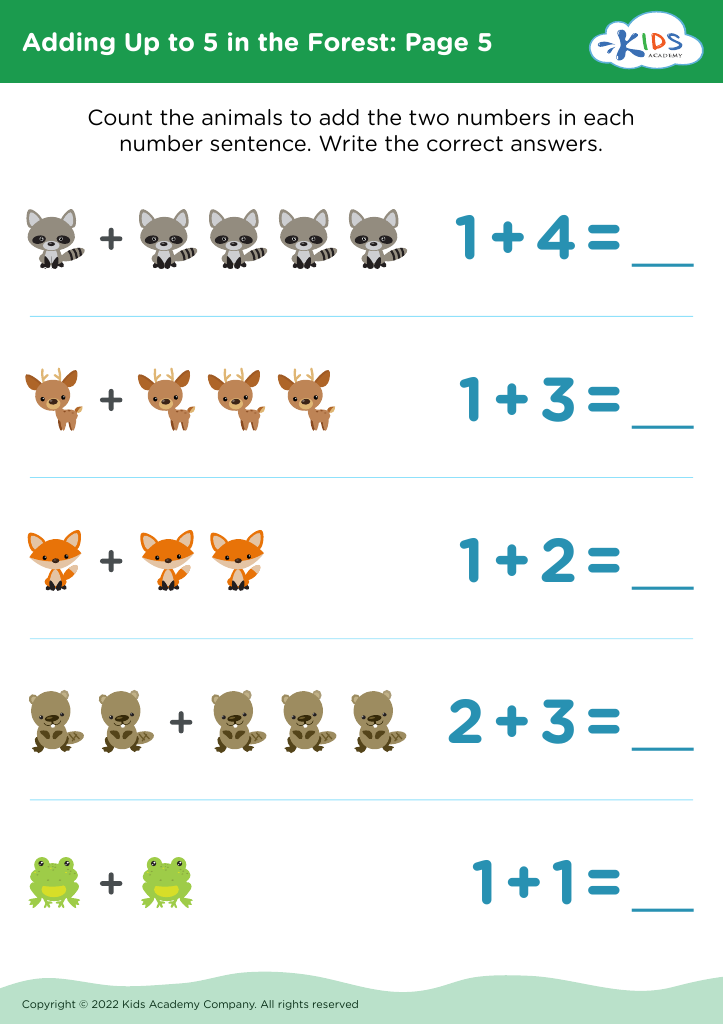
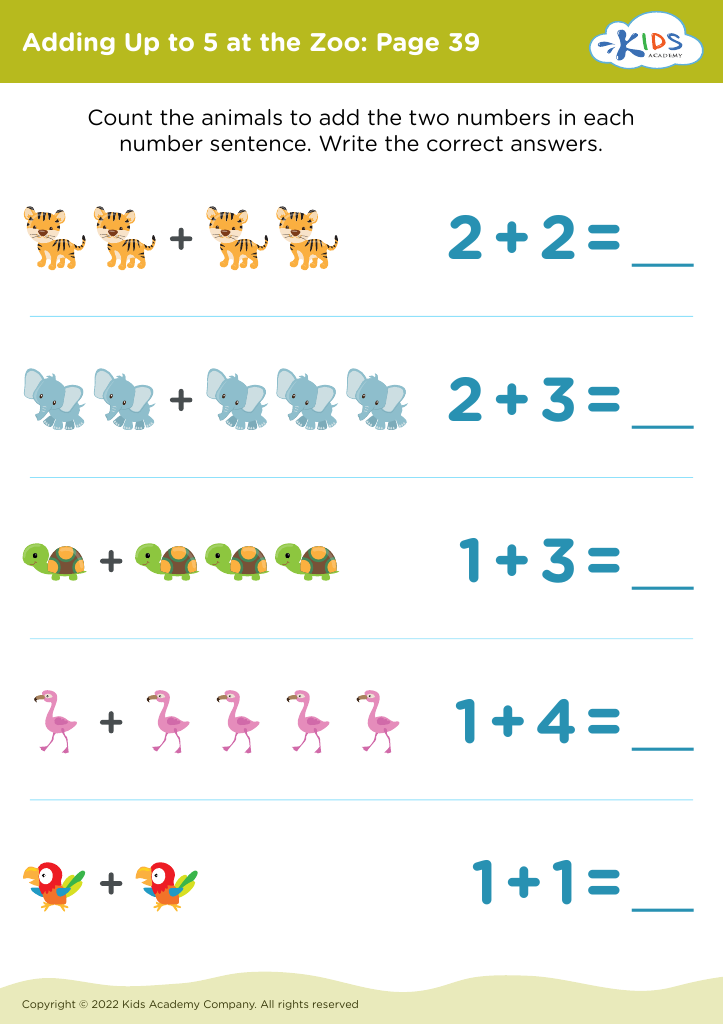
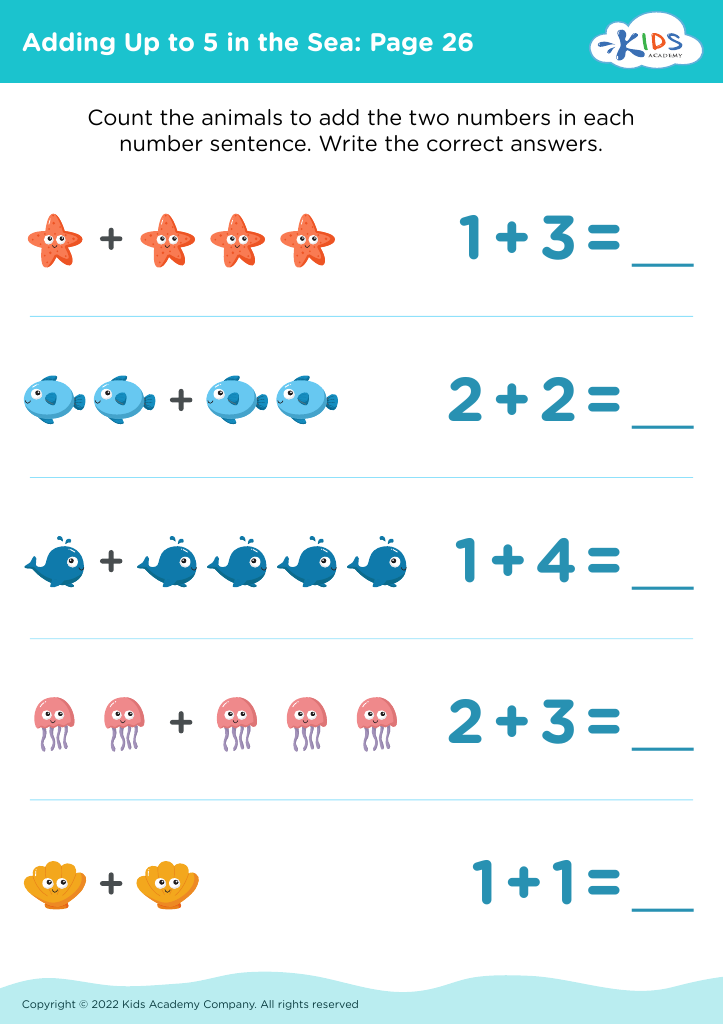
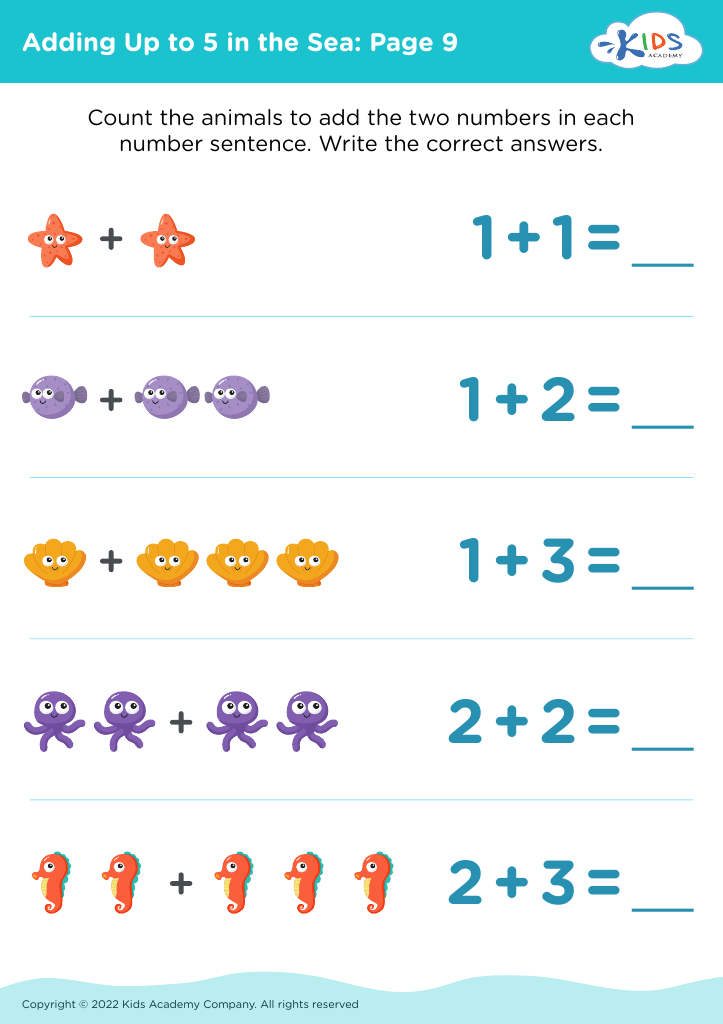








Basic arithmetic skills are foundational for children aged 3-9, serving as the building blocks for future mathematical understanding. Mastery of concepts such as addition, subtraction, and simple problem-solving is essential not only for academic success but also for everyday life. During these formative years, children's brains are highly receptive, making it an ideal time for introducing math concepts through engaging activities and practical experiences.
Parents and teachers should care about basic arithmetic because it fosters critical thinking and enhances cognitive skills. Children who grasp these early math concepts are more likely to excel in later academic endeavors, as they build confidence in their abilities. Furthermore, math skills are vital for developing logical reasoning and problem-solving abilities, which extend beyond the classroom into real-world situations.
Additionally, early exposure to arithmetic can bridge gaps in understanding and help prevent difficulties in later grades. By promoting arithmetic skills through fun games, hands-on activities, and daily interactions, adults can create a nurturing environment that encourages a positive attitude toward math. Ultimately, instilling these basic skills equips children with the tools they need to navigate life with creativity, confidence, and competence.








