Basic Mathematics Skills Worksheets for Ages 3-9
3 filtered results
-
From - To
Explore our Basic Mathematics Skills Worksheets designed for children ages 3-9. Our engaging, age-appropriate activities make learning math fun and effective, focusing on foundational skills such as counting, addition, subtraction, shapes, patterns, and more. Each worksheet is crafted to boost your child's confidence and help them master essential math concepts through playful practice. Perfect for both classroom and home use, these printable worksheets support your child’s academic growth while nurturing a love for math. Visit us to help your child develop crucial math skills at their own pace, building a strong foundation for future learning.
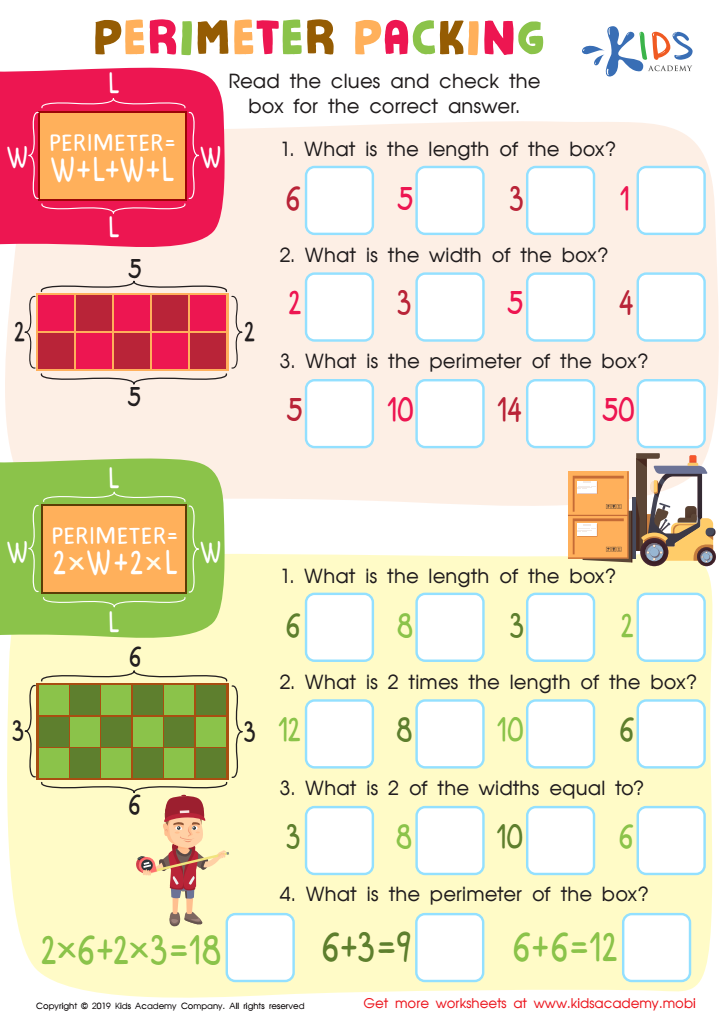
Perimeter Parking Worksheet
 Assign to My Students
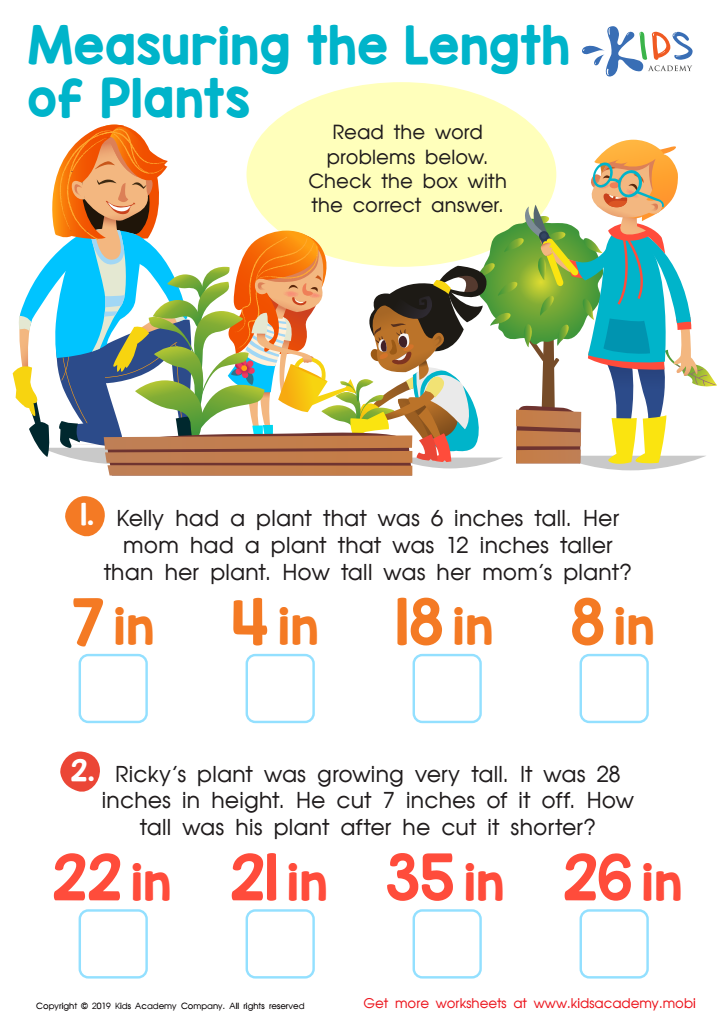
Measuring the Length of Plants Worksheet
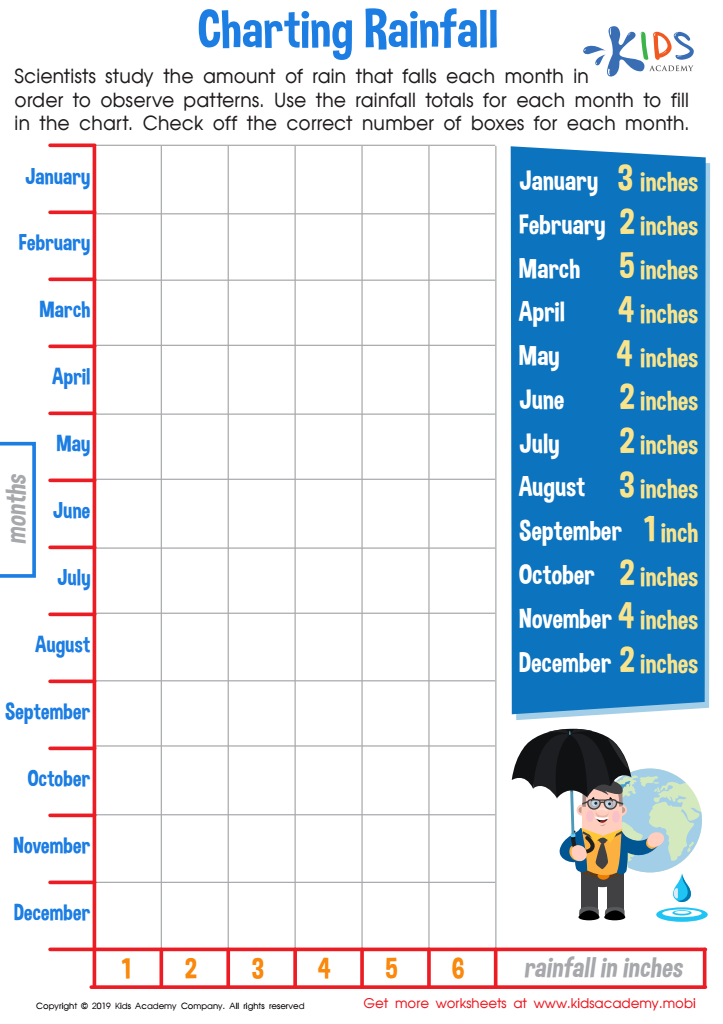
Charting Rainfall Worksheet






Basic mathematics skills are foundational for children aged 3-9, serving as the building blocks for their future academic success and everyday problem-solving abilities. Parents and teachers should prioritize these skills because they promote critical and logical thinking crucial for understanding more complex mathematical concepts later on. Children at this age are naturally curious and capable of absorbing new information quickly, making it an ideal time to introduce numbers, patterns, shapes, and simple arithmetic.
Additionally, early math skills are proven predictors of later academic achievements. Research shows that early proficiency in math before kindergarten is more predictive of later academic success than early reading or attention skills. This means that helping children develop these skills early increases their confidence and sets a positive trajectory in their academic career.
Integrating math into daily routines and play also enhances a child’s engagement with learning. Simple activities like counting toys, sorting shapes, or measuring ingredients while cooking make math relatable and enjoyable. Developing a robust number sense aids children in understanding time, money, and spatial orientation—all essential life skills.
In summary, fostering basic math skills from ages 3-9 cultivates a strong educational foundation, critical thinking, and practical life skills, ensuring children are well-prepared for future academic challenges and everyday tasks.








