Categorizing objects Worksheets for Ages 3-9
5 filtered results
-
From - To
Unlock the power of learning with our Categorizing Objects Worksheets, designed for children aged 3-9! These engaging and interactive worksheets help young learners develop crucial cognitive skills by sorting and classifying objects. Through fun activities, kids will enhance their ability to identify similarities and differences, fostering critical thinking and problem-solving abilities. Our diverse range of themes and colorful illustrations captivates children's attention while reinforcing essential concepts. Perfect for preschool, kindergarten, or early grades, these worksheets are an excellent resource for parents and educators alike. Explore our collection today and support your child's intellectual growth in a playful and educational way!
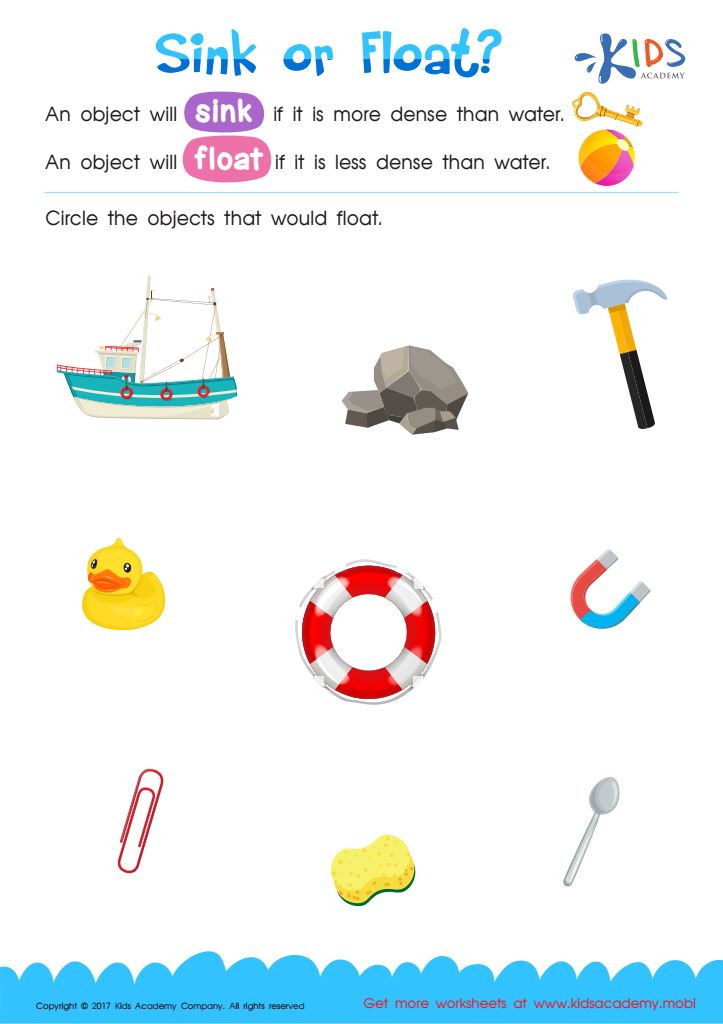
Sink or Float Printable
 Assign to My Students
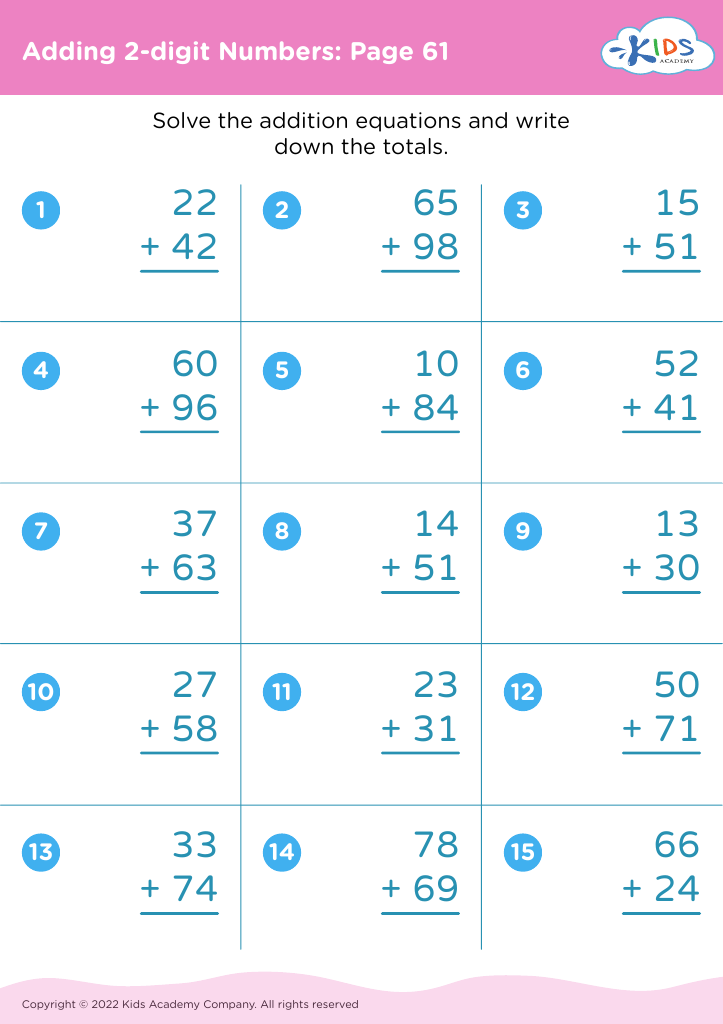
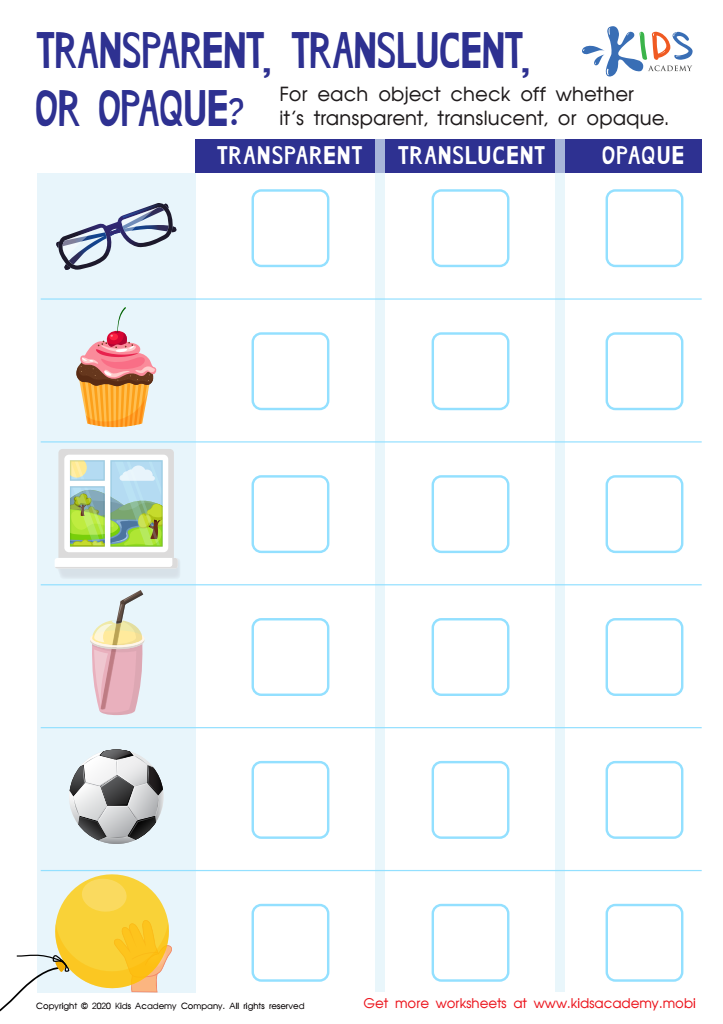
Transparent, Translucent, or Opaque Worksheet
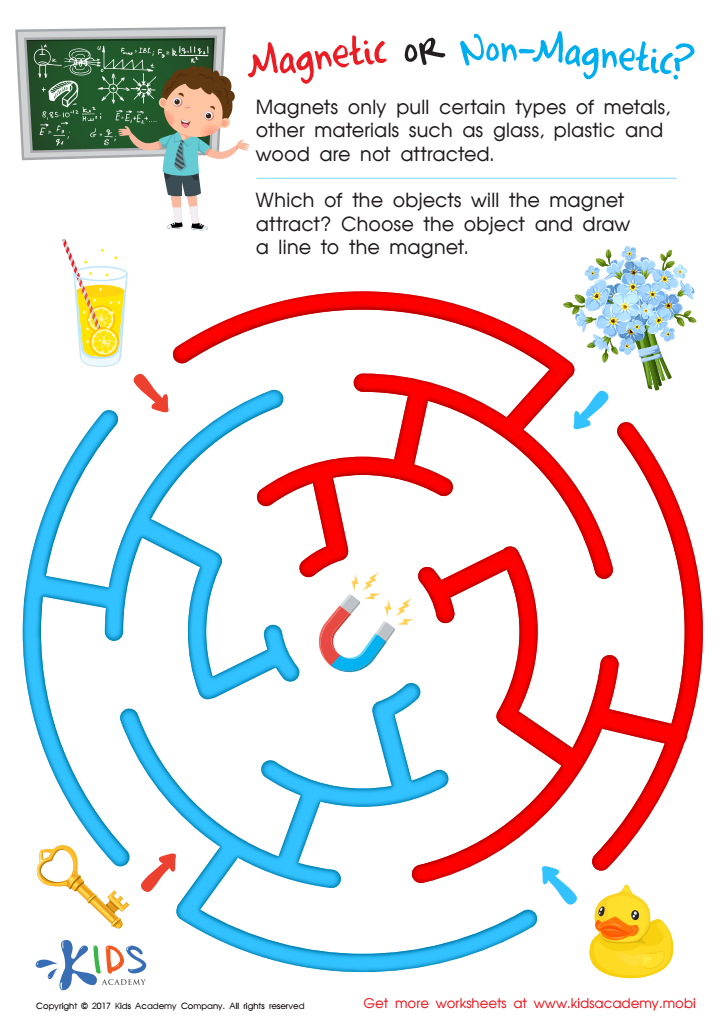
Magnetic or Non–Magnetic Worksheet
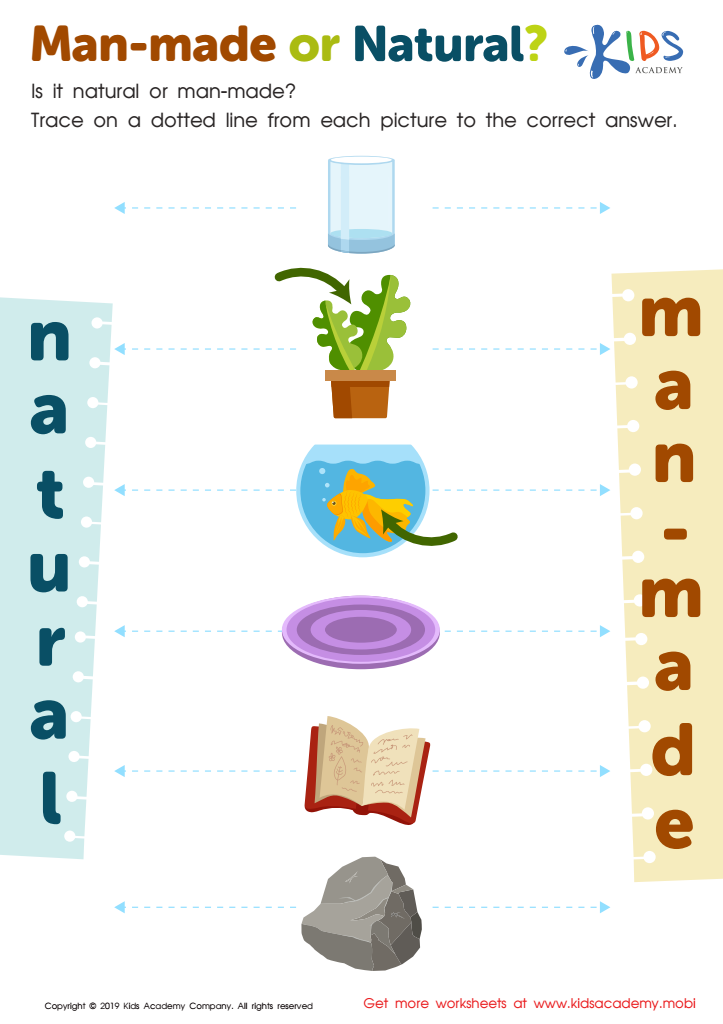
Man-Made or Natural? Worksheet





.jpg)
Categorizing objects is a crucial developmental activity for children aged 3-9, and both parents and teachers should prioritize it for several reasons. First, categorization enhances cognitive skills; children learn to recognize differences and similarities among objects, which strengthens critical thinking and problem-solving abilities. By grouping items, kids develop a foundational understanding of logical reasoning, preparing them for more complex concepts in math and science later on.
Second, categorization plays a significant role in language development. As children categorize objects, they learn new vocabulary, including descriptive words and category labels. This practice enriches their communication skills, allowing them to express their thoughts more clearly.
Moreover, engaging in categorization fosters social skills. Activities that involve sorting and grouping can be done collaboratively, promoting teamwork and communication among peers. This collaboration helps children learn to negotiate and share ideas, which builds important interpersonal skills.
Lastly, categorization helps children create mental frameworks for organizing their experiences. This cognitive organization aids in memory retention and retrieval, making learning more effective. Overall, parents and teachers should recognize categorizing objects as a foundational skill that supports various aspects of a child's growth and development.








