Comprehension development Worksheets for Ages 3-9
3 filtered results
-
From - To
Explore our engaging comprehension development worksheets designed for children ages 3-9! Our resources encourage young learners to enhance their reading and understanding skills through fun, interactive activities. Tailored for various age groups, these worksheets focus on key concepts such as vocabulary, sequencing, and main ideas, helping children build the foundational skills needed for effective communication. Suitable for both classroom use and at-home learning, our worksheets promote literacy development in a playful way. Ignite a love for reading and boost your child's comprehension with our innovative and versatile resources today! Perfect for educators and parents alike.
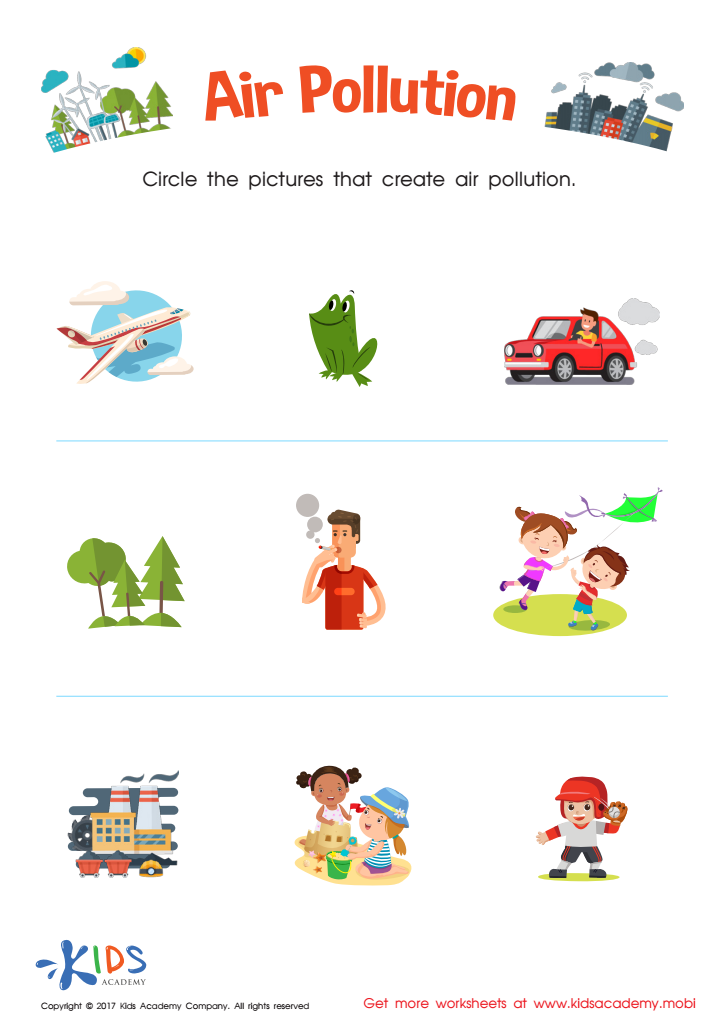
Air Pollution Worksheet
 Assign to My Students
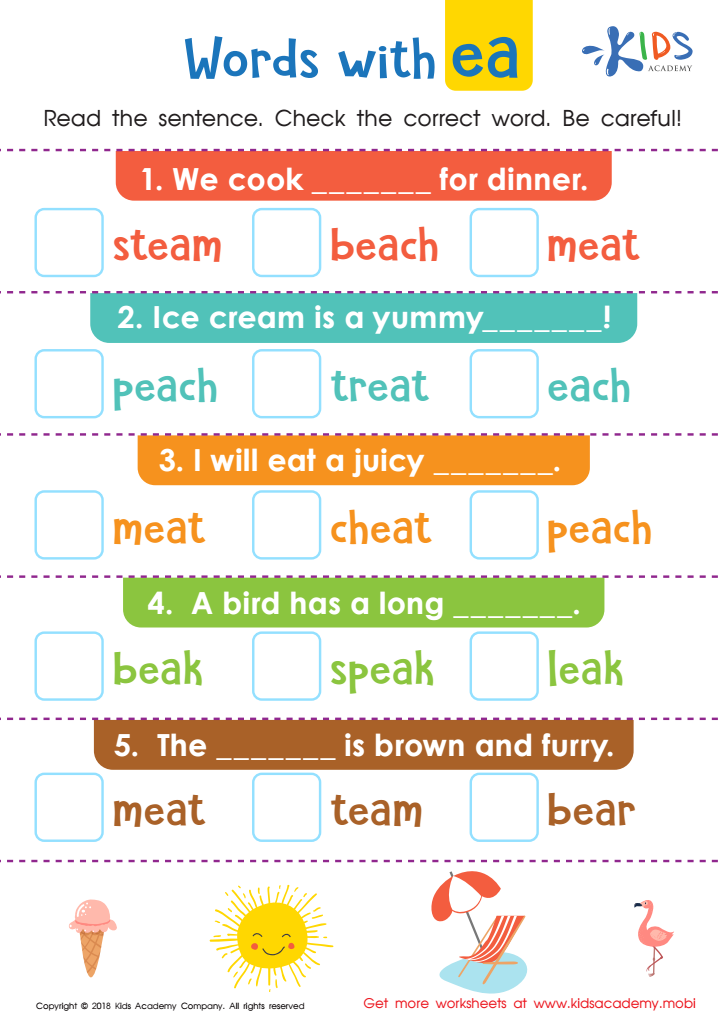
Words with ea Worksheet
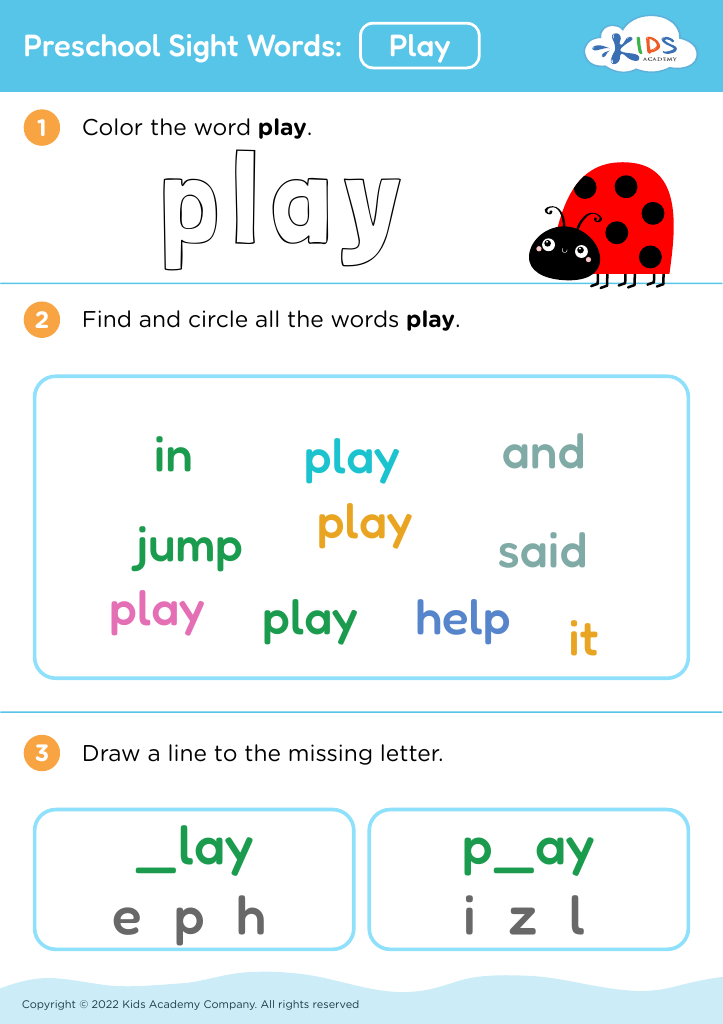








Comprehension development is crucial for children aged 3-9, as it forms the foundation for their future learning and academic success. During these formative years, children acquire essential language skills, vocabulary, and the ability to understand and interpret information, both in spoken and written forms. This cognitive development significantly influences their reading abilities, making it vital for parents and teachers to actively promote comprehension strategies.
By fostering strong comprehension skills, children learn to connect ideas, make inferences, and summarize information, which are skills they will use throughout their education and daily lives. Children who struggle with comprehension may find themselves at a disadvantage in various subject areas, as they find it difficult to understand lessons, complete assignments, or engage in classroom discussions.
Moreover, encouraging comprehension development helps children cultivate a love for reading and storytelling. This passion not only enhances their vocabulary but also stimulates imagination, creativity, and critical thinking. Parents and teachers can support comprehension through interactive reading, asking open-ended questions, and promoting discussion, thereby creating a rich learning environment. Ultimately, priorities in comprehension development can lead to more confident, capable, and successful learners who are equipped to navigate the complexities of their world.








