
Develop fine motor skills Worksheets for Ages 3-9
13 filtered results
Difficulty Level
Grade
Age
-
From - To
Subject
Activity
Standards
Discover engaging fine motor skills worksheets designed specifically for children aged 3-9 at Kid’s Academy! Our printables are crafted to enhance your child’s dexterity, hand-eye coordination, and overall motor skill development. Through fun, educational activities such as tracing, cutting, and drawing, your little ones will build essential skills to help them succeed in school and beyond. Perfect for parents and teachers alike, these worksheets are an excellent resource for meaningful, at-home learning sessions. Dive into our vibrant selection now to support your child’s growth with hands-on, enjoyable exercises that make learning a delightful adventure!
Favorites
With answer key
Interactive
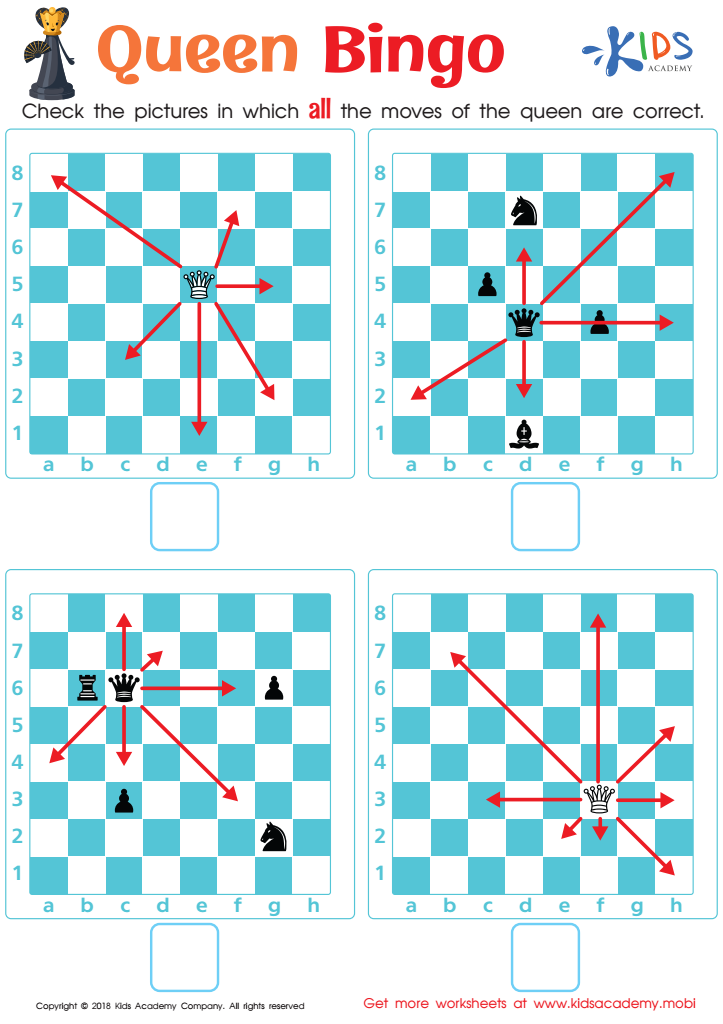
Queen Bingo Worksheet
Test your child's knowledge of chess rules and moves with this free worksheet! Kids look at four pictures and must decide if the queen moves are correct. This exercise helps hone your little one's chess skills!
Queen Bingo Worksheet
Worksheet

Connecting the Monster's Socks Printable
The cute monster did some washing yesterday, but now he can't put his socks back together! Children must focus on the color and pattern to make the right matches, improving their cognitive and fine motor skills. Get more educational games by Kids Academy!
 Assign to My Students
Connecting the Monster's Socks Printable
Worksheet
Join Kids Academy for Free
Who is primarily going to use this learning content?



.jpg)



.jpg)
Parents and teachers should prioritize the development of fine motor skills in children ages 3-9 because these skills are fundamental to a child’s overall growth and daily functioning. Fine motor skills involve the coordination of small muscles in the hands and fingers, which are essential for writing, buttoning clothes, tying shoelaces, using utensils, and manipulating small objects.
At this pivotal stage, kids are gearing up for more structured, academic tasks. Proficient fine motor skills facilitate ease in learning activities such as drawing, cutting with scissors, and handwriting. These activities build the foundation for later academic success and confidence. Poor fine motor skill development, on the other hand, can lead to frustration, lower academic achievement, and a lack of interest in school-related activities.
Additionally, mastering fine motor skills enhances children’s independence in self-care tasks, boosting their self-esteem and self-reliance. These skills also play a substantial role in cognitive development. By exploring and manipulating objects, children learn about their environment, develop problem-solving skills, and improve hand-eye coordination.
Igniting fine motor skill development early not only enriches a child's present capabilities but also prepares them for more complex tasks and learning experiences in the future. Through engaging activities like playdough play, puzzles, and crafts, caregivers can make the learning process enjoyable and effective.








