Explore our Enhance Critical Thinking Worksheets designed for children ages 3 to 9. These engaging activities help young learners develop essential problem-solving skills, logical reasoning, and analytical thinking. With colorful, age-appropriate worksheets, children will enjoy challenging puzzles, comparisons, and scenario-based questions that foster creativity and decision-making. Each worksheet aligns with early learning standards, ensuring educational value while keeping learning fun. Perfect for classroom or home use, our worksheets encourage interactive learning and critical engagement. Watch your child's confidence grow as they tackle each challenge! Discover the joy of critical thinking with our expertly crafted resources, promoting cognitive development in every young mind.

Check out this FREE "Enhance critical thinking" Trial Lesson for age 3-9!

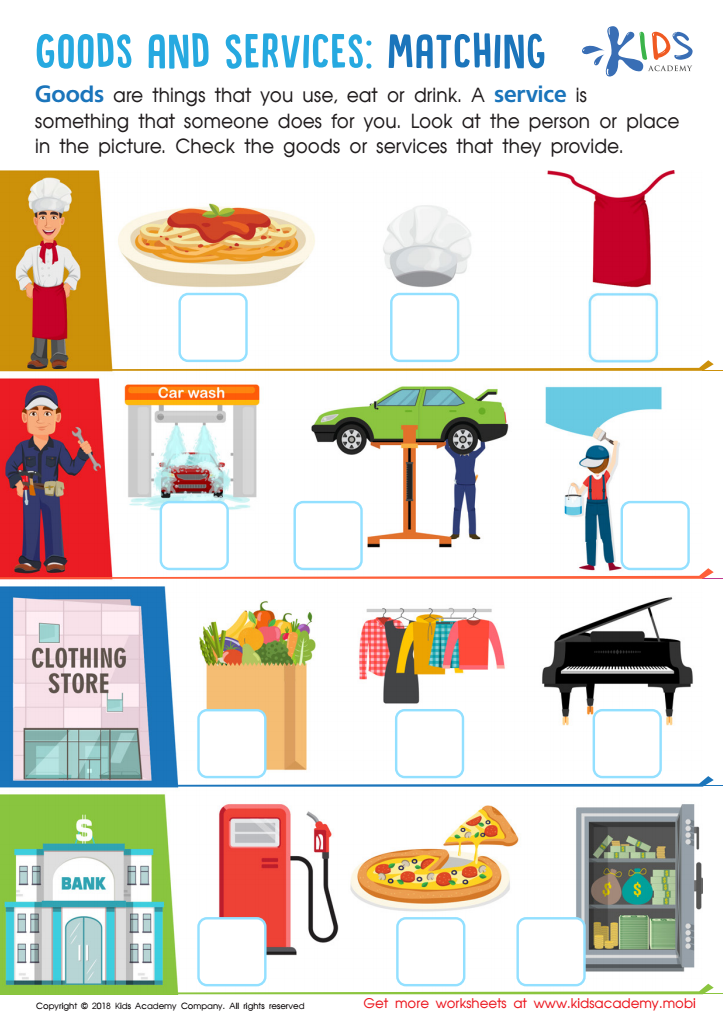
Goods and Services

Favorites
With answer key
Interactive
  • 3-9
  • Enhance critical thinking
Goods and Services: Matching Worksheet

Goods and Services: Matching Worksheet

Goods are things that you use, eat or drink. Ask your kids to give examples of goods and services. Challenge them to identify the people and places in the worksheet, and check the goods or services they provide from the options on the right side.
Goods and Services: Matching Worksheet
Worksheet
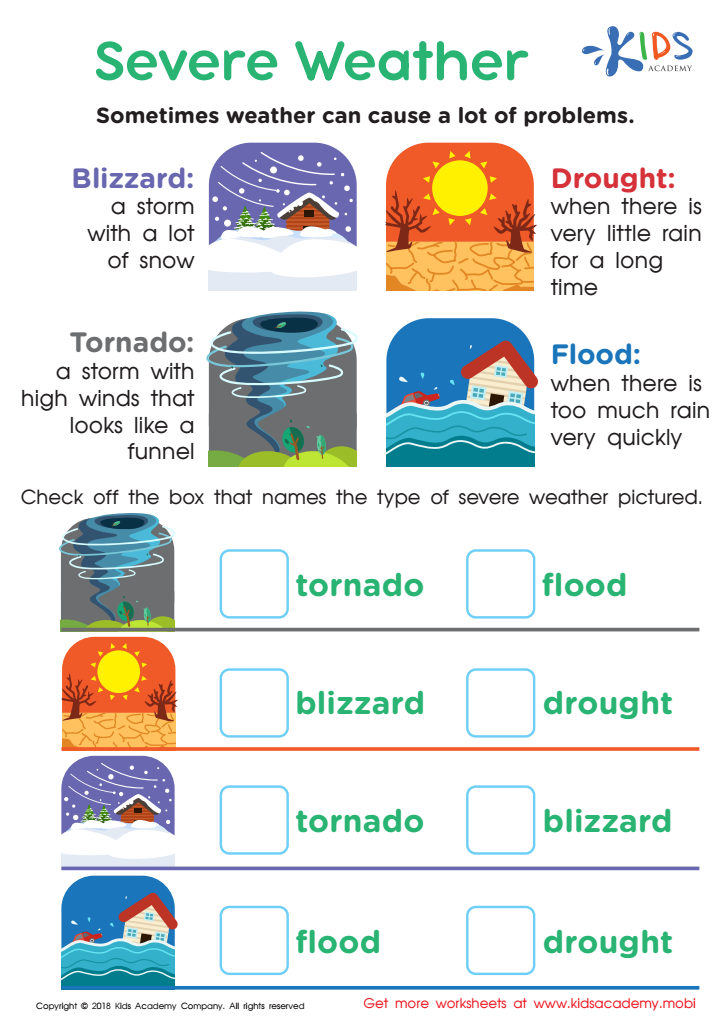
Severe Weather Worksheet

Severe Weather Worksheet

Weather can be dangerous, so teach your kids to stay safe with this interactive weather worksheet. Review the descriptions of tornadoes, blizzards, floods, and drought and match them with the colorful pictures. Tick the boxes to correctly identify each image and complete the sheet.
Severe Weather Worksheet
Worksheet
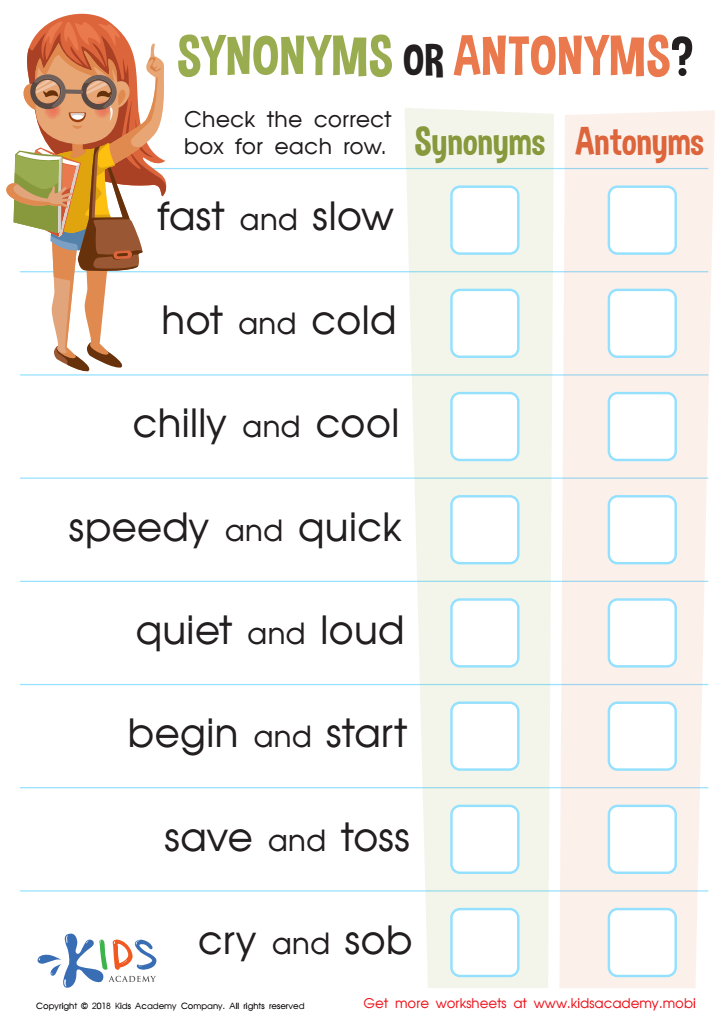
Synonyms or Antonyms: Assessment Worksheet
Synonyms or Antonyms: Assessment Worksheet
Test your child's knowledge with this fun worksheet! Ask them to read the words and select if they are synonyms or antonyms - e.g. 'happy' is a synonym and 'bad' is an antonym. For an extra challenge, ask them to provide two synonyms and two antonyms for each word.
Synonyms or Antonyms: Assessment Worksheet
Worksheet
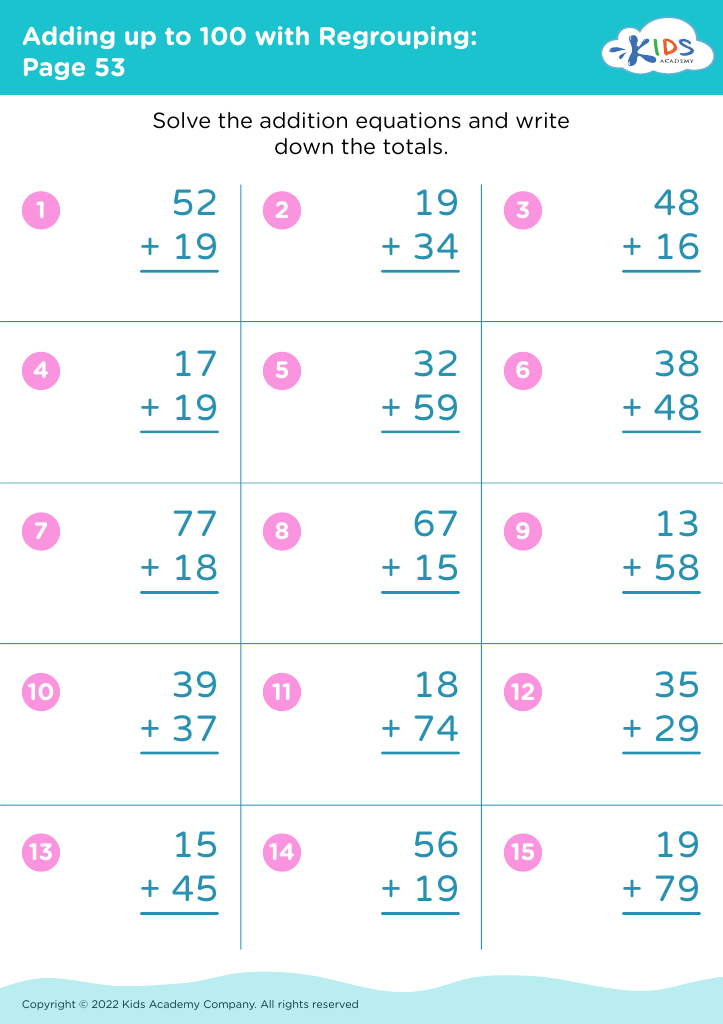
Adding up to 100 with Regrouping: Page 53
Worksheet
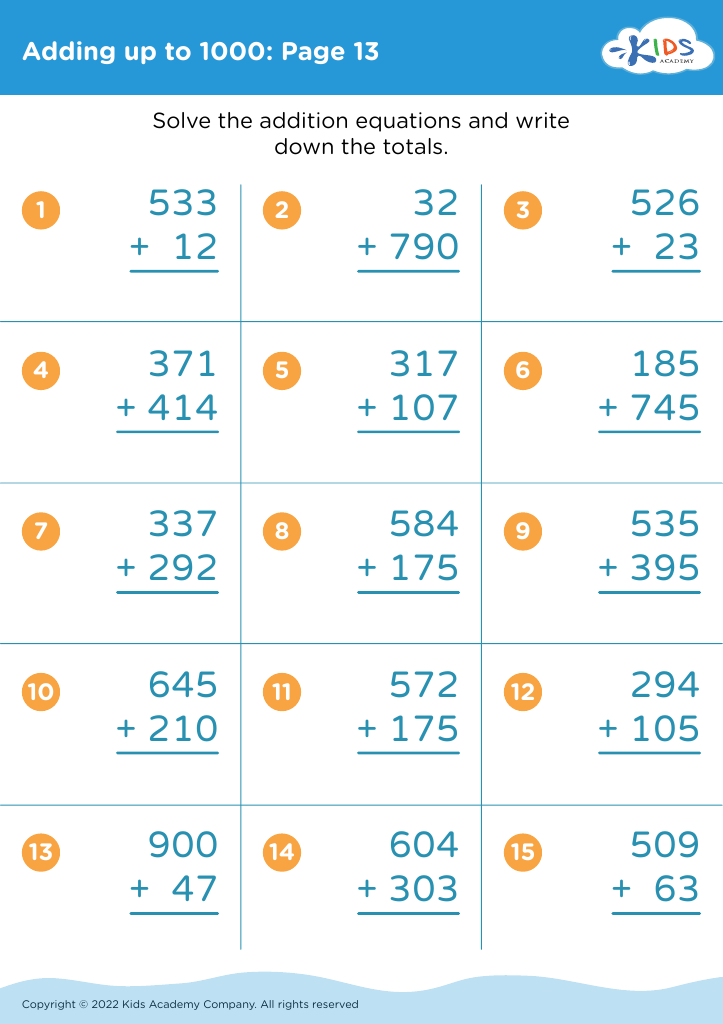
Adding up to 1000: Page 13

Adding up to 1000: Page 13

Adding up to 1000: Page 13
Worksheet
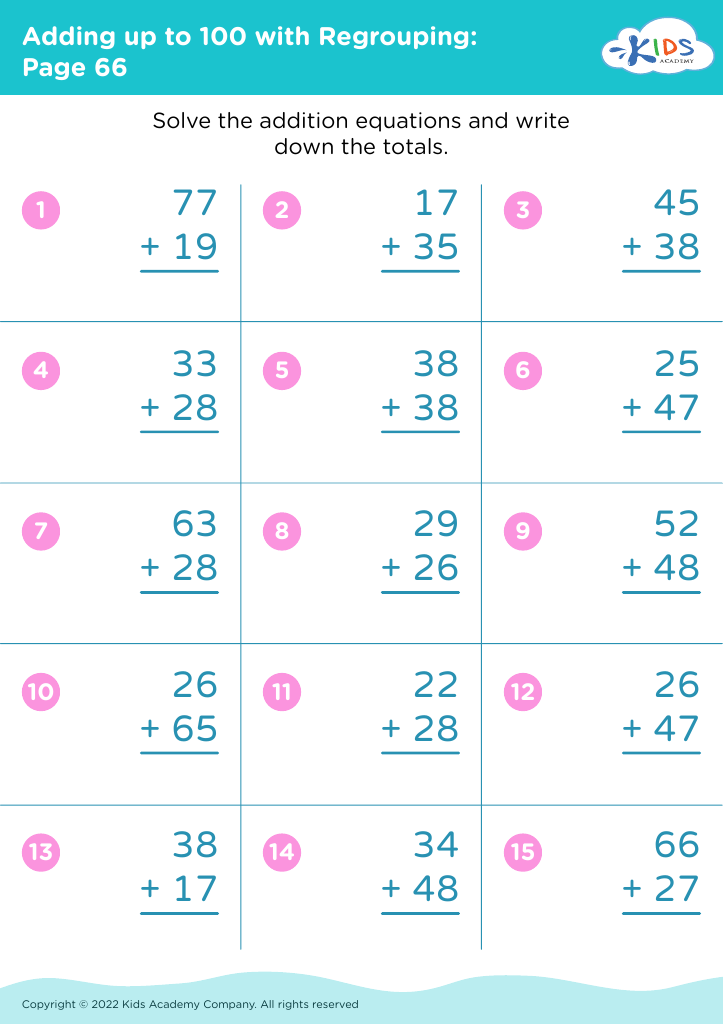
Adding up to 100 with Regrouping: Page 66
Worksheet
Text Features Worksheet

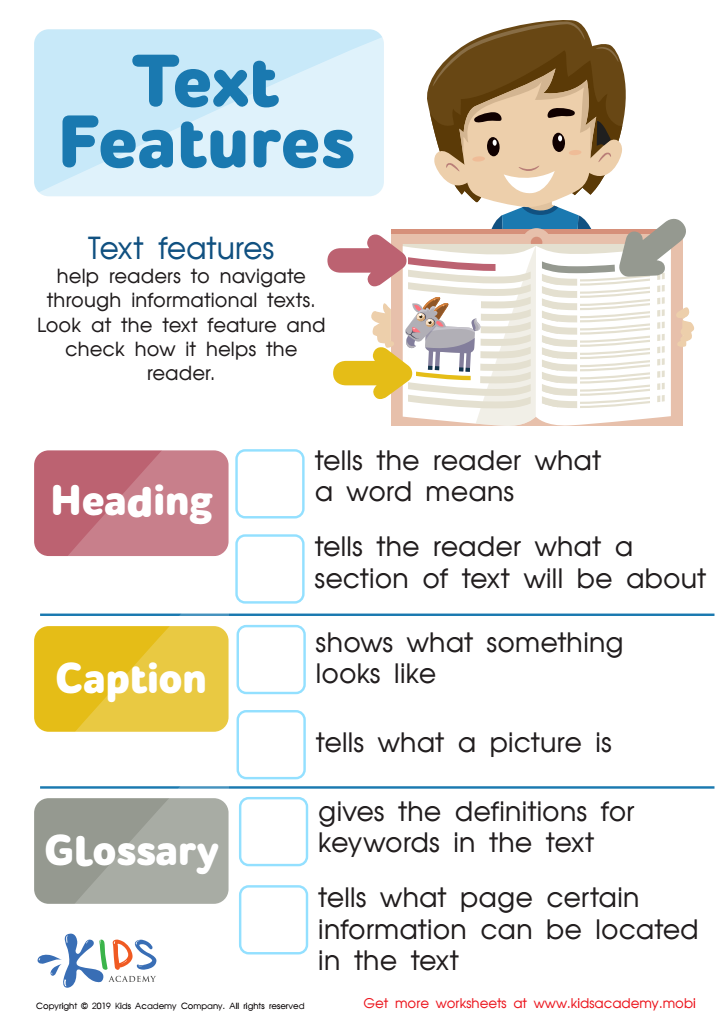
Text Features Worksheet

Help your kids get better at processing and analyzing texts by getting them to practice. Our worksheet with text features will help them find their way. This will help them understand how the features assist in finding information. Encourage practice, and they'll be able to improve quickly.
Text Features Worksheet
Worksheet
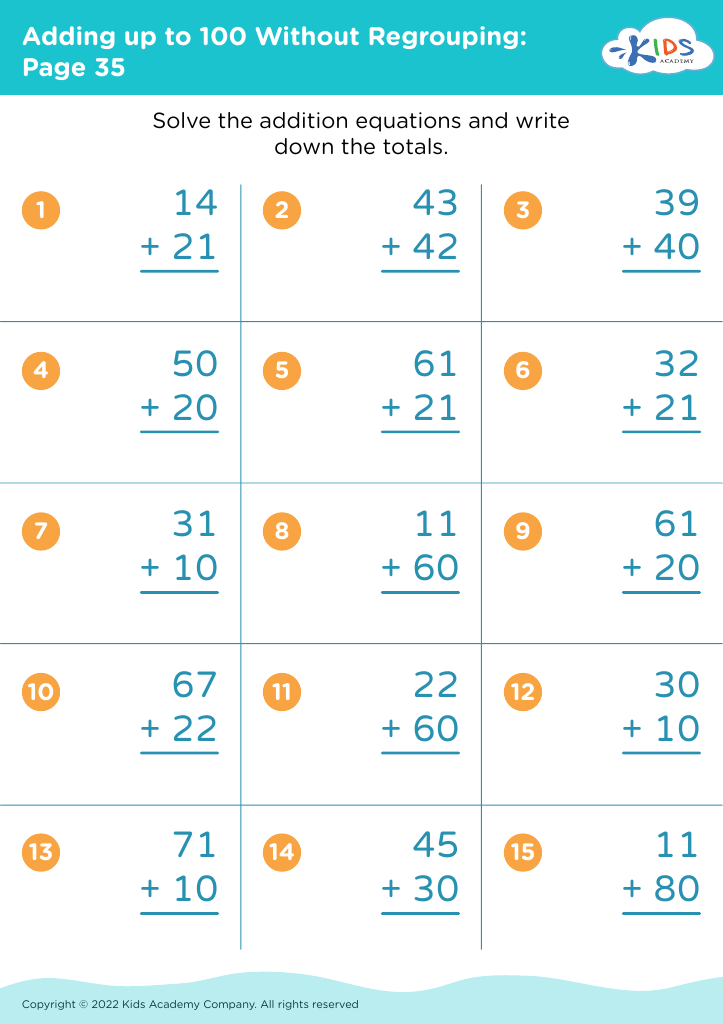
Adding up to 100 Without Regrouping: Page 35
Worksheet
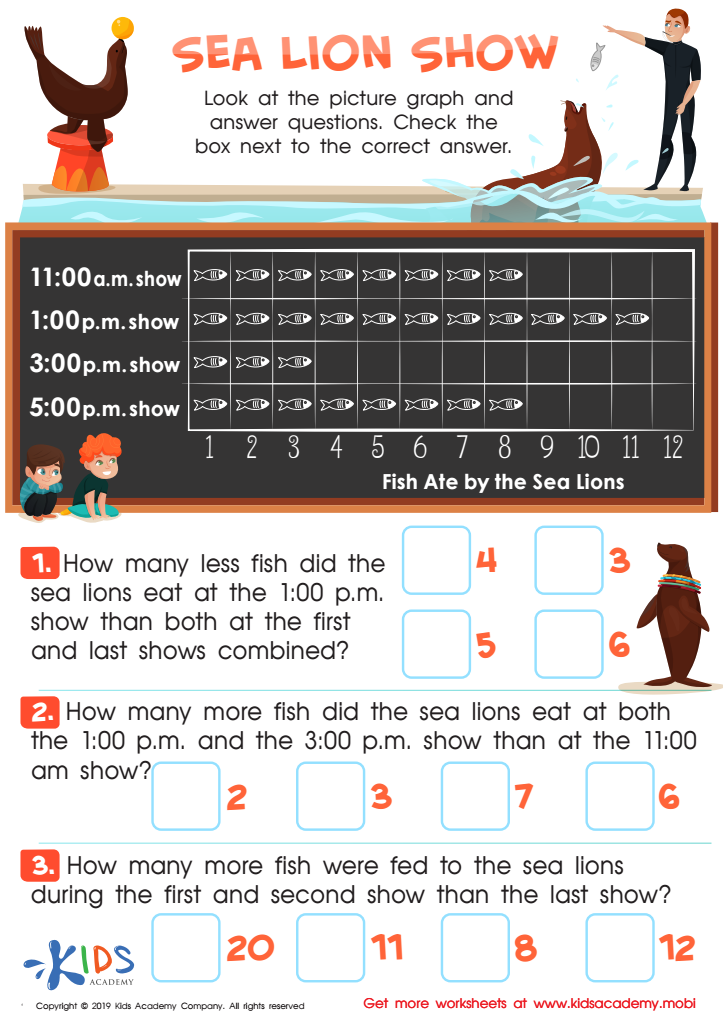
Sea Lion Show Worksheet


Sea Lion Show Worksheet

Help your kids understand and enjoy bar graphs better with this worksheet. Read and follow the simple instructions with your kids, and guide them through some exercises which will help them practice. As they learn maths in school, each day brings a new topic which might prove more difficult than the last. This worksheet will give your kids the best learning experience.
Sea Lion Show Worksheet
Worksheet
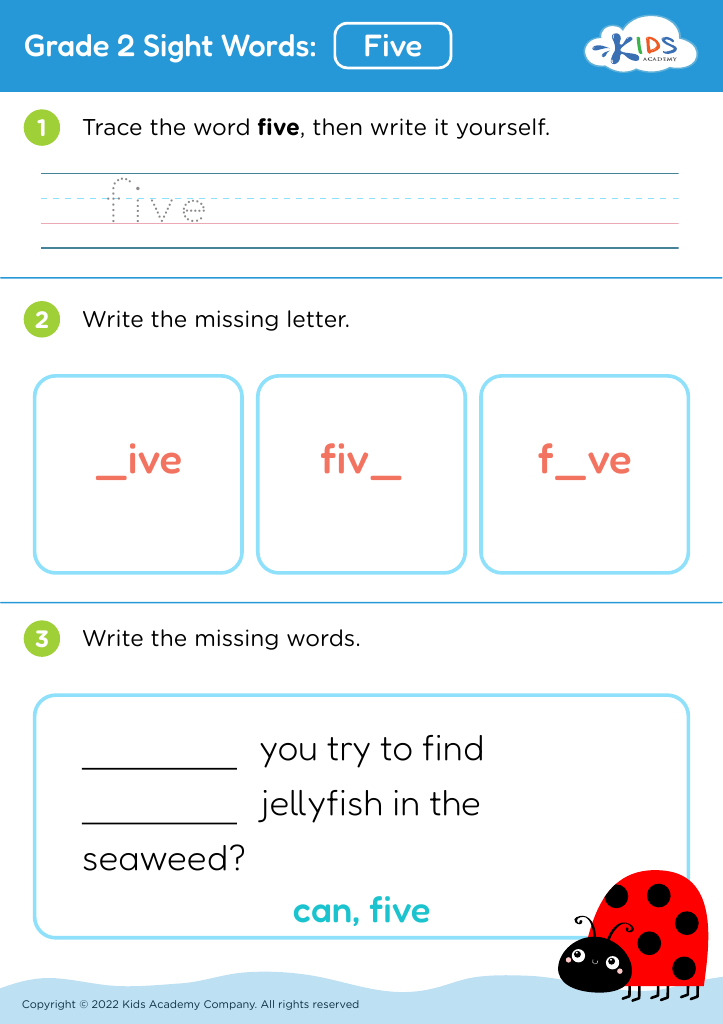
Grade 2 Sight Words: Five

Grade 2 Sight Words: Five

Grade 2 Sight Words: Five
Worksheet


Enhancing critical thinking in children aged 3 to 9 is vital for their overall development and future success. During these formative years, children develop foundational cognitive skills that will support their ability to reason, problem-solve, and make informed decisions. Encouraging critical thinking helps them to analyze information, ask questions, and engage in creative thinking, laying the groundwork for lifelong learning.

For parents and teachers, fostering critical thinking can lead to children becoming independent learners. It equips them to navigate challenges with confidence and resilience, as they learn to evaluate situations from various angles. By promoting critical thinking, adults also empower children to articulate their thoughts and ideas clearly, enhancing their communication skills.

Furthermore, in an age dominated by information overload and rapid change, critical thinking enables children to sift through data, discern credible sources, and form balanced viewpoints. This skill set is not only beneficial academically, as it enhances learning across subjects, but it also prepares children for real-world dilemmas they may encounter. Overall, prioritizing critical thinking in early education is an investment in well-rounded, adaptable individuals who will thrive in an increasingly complex society.