
Enhance Vocabulary Worksheets for Ages 3-9
7 filtered results
Difficulty Level
Grade
Age
-
From - To
Subject
Activity
Standards
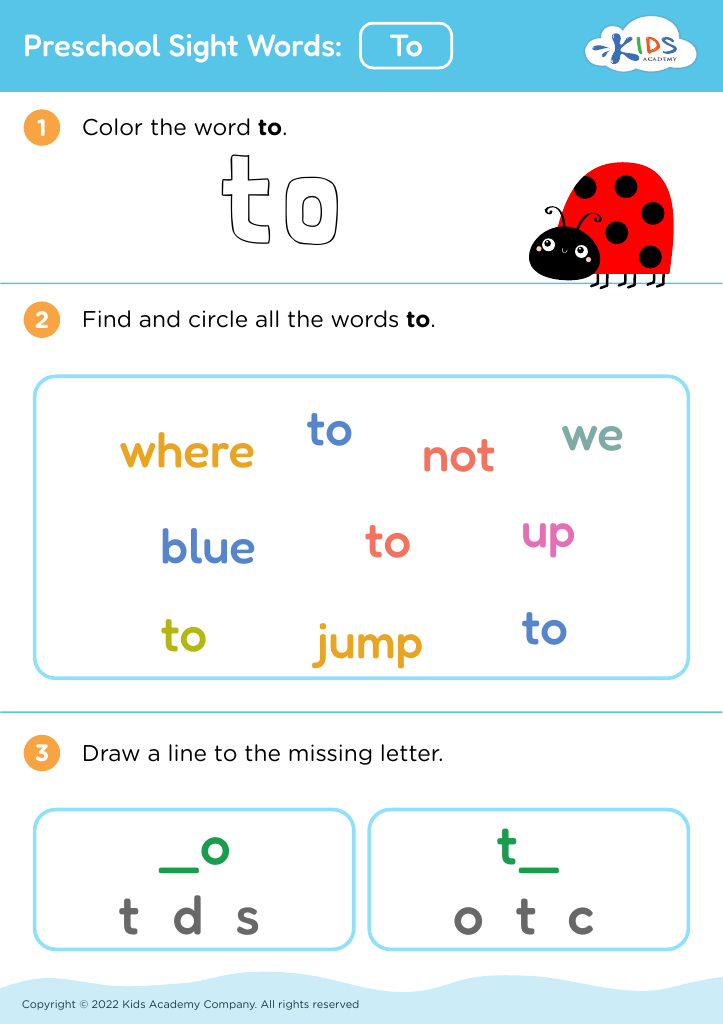
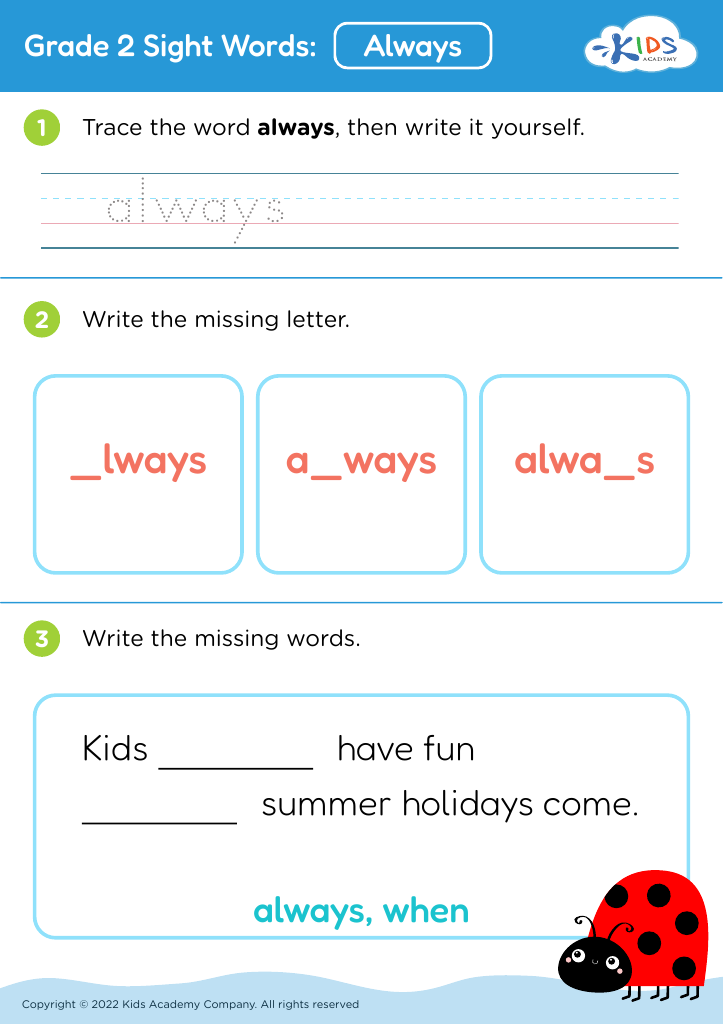
Explore our Enhance Vocabulary Worksheets designed for children ages 3-9, offering a fun and engaging way to expand their language skills! Our thoughtfully crafted worksheets feature vibrant illustrations and interactive activities that capture young learners' attention and foster a love for words. Covering a range of vocabulary-building exercises, these resources support comprehension, spelling, and word recognition. Perfect for parents and educators alike, they can be easily printed and used at home or in the classroom. Help your child thrive in communicative skills while making learning enjoyable. Unlock their potential with our Enhance Vocabulary Worksheets today!
Favorites
With answer key
Interactive

Where Does It Happen? Worksheet
This worksheet helps kids give better descriptions of events and their locations. Look at the illustration with them, then help them check the box next to the relevant picture. This will help them explain where stories are happening or have happened.
 Assign to My Students
Where Does It Happen? Worksheet
Worksheet
Join Kids Academy for Free
Who is primarily going to use this learning content?








Enhancing vocabulary in children aged 3-9 is crucial for their overall development and future success. First, a robust vocabulary lays the foundation for effective communication. At this early stage, children are incredibly receptive to language, and exposure to a variety of words helps them articulate thoughts, feelings, and ideas. This communication skill is vital not just in social settings but also in an academic context, where expressing comprehension clearly is essential.
Moreover, vocabulary development significantly impacts reading comprehension. Children who can decode words and understand their meanings are better equipped to grasp stories and concepts, fostering a love for reading.
Additionally, a rich vocabulary boosts critical thinking skills; as children encounter new words, they learn to connect concepts and form broader understandings of the world around them. This skill set is beneficial across all subjects—literature, science, and social studies—enabling them to succeed academically.
Finally, enhancing vocabulary instills confidence. When children can speak and write with precision, they feel more empowered in social interactions and learning opportunities. By prioritizing vocabulary development, parents and teachers invest in children's present enjoyment of language and their future successes in all areas of life.








