
Fraction subtraction Worksheets for Ages 3-9
3 filtered results
Difficulty Level
Grade
Age
-
From - To
Subject
Activity
Standards
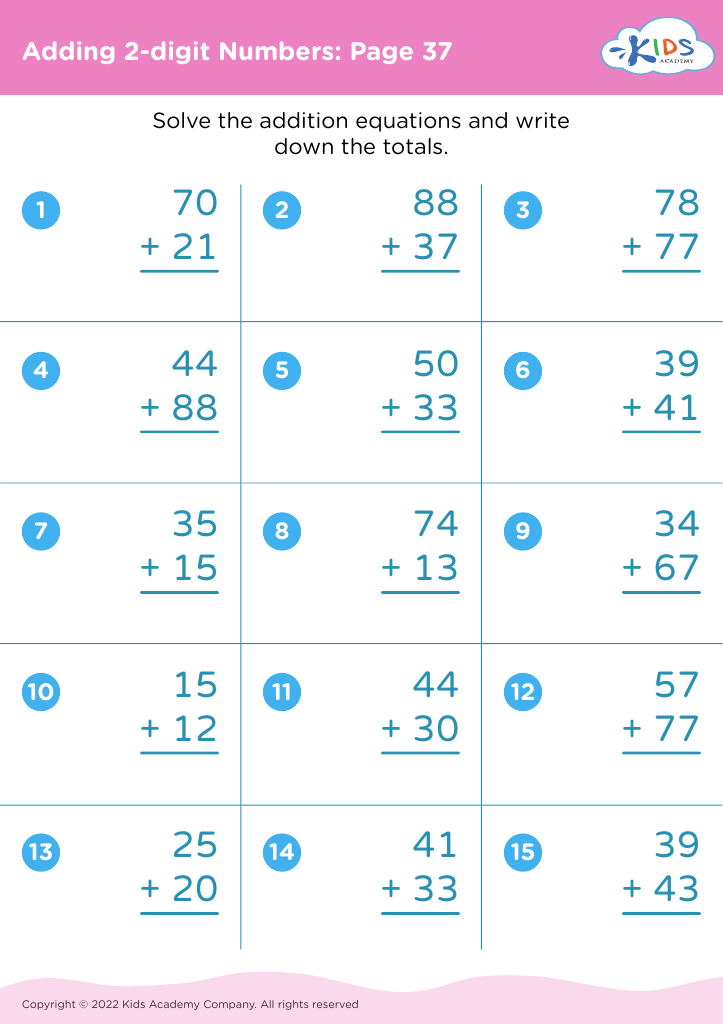
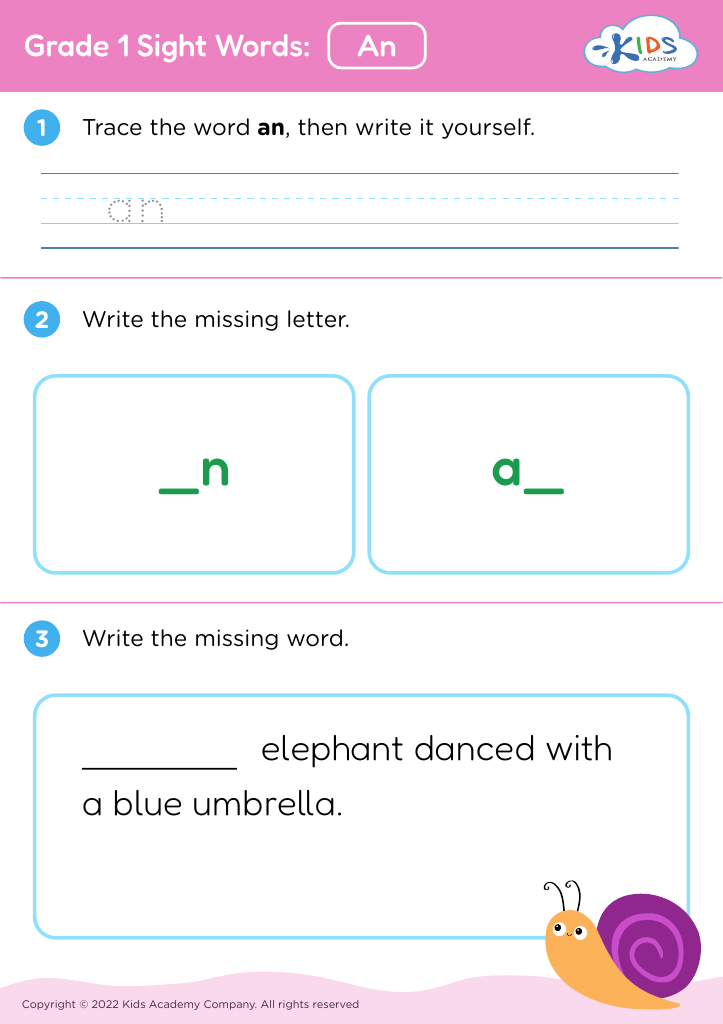
Our Fraction Subtraction Worksheets for ages 3-9 offer a fun and engaging way for young learners to grasp the concept of subtracting fractions. Designed specifically for early learners, these worksheets feature colorful visuals and easy-to-follow instructions to help children build their foundational math skills effectively. They gradually introduce students to more complex problems, ensuring steady progression in understanding. With a variety of problems and interactive exercises, children will become confident as they practice subtracting fractions. Perfect for independent learning or classroom use, these worksheets will turn math practice into an enjoyable experience. Start building math proficiency today!
Favorites
With answer key
Interactive
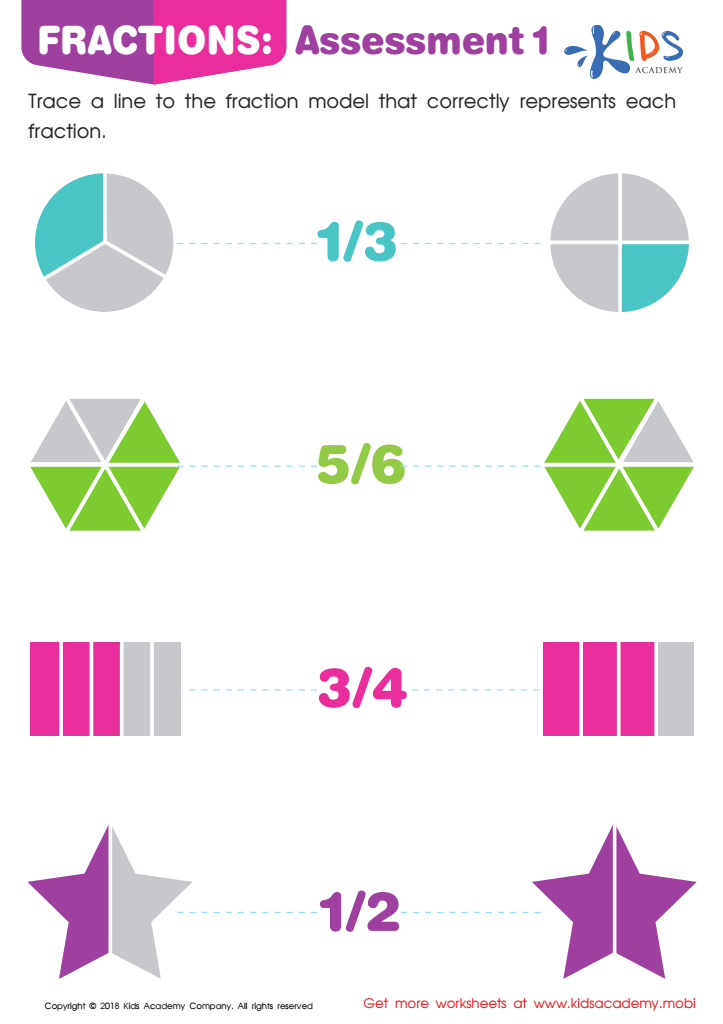
Fractions: Assessment 1 Worksheet
Master fractions easily with this worksheet! It has four sets of fraction models and fraction equations with two models each. Guide your kids to trace a line to the correct fraction model for each equation.
 Assign to My Students
Fractions: Assessment 1 Worksheet
Worksheet
Join Kids Academy for Free
Who is primarily going to use this learning content?





Understanding fraction subtraction is essential for young learners because it lays a foundational mathematical skill that will be crucial in advanced studies and everyday life. At the age range of 3-9, children are developing core cognitive abilities and beginning to grasp basic mathematical concepts. Learning fraction subtraction enhances their problem-solving and critical-thinking skills, which are vital across all areas of learning and beyond the classroom.
For parents, supporting the learning of fraction subtraction means they are actively participating in setting their children up for academic success. Mathematical proficiency acquired through games, everyday tasks, or structured practice enhances a child's confidence and curiosity about the world—critical components of lifelong learning.
From a teacher's perspective, early introduction to fraction subtraction aids in diagnosing a child's understanding of basic concepts and helps in tailoring lessons to individual needs. It equips children with the skills to handle future mathematical challenges, ensuring they do not fall behind as the curriculum advances.
Moreover, being adept at fraction subtraction is not just about math class; it is a skill this age group will apply in various real-life contexts. Whether it’s cutting a cake, dividing a pizza, or managing their allowance, understanding how to subtract fractions makes their daily experiences richer and fosters a seamless integration of theoretical math into practical use.








