Identifying story elements Worksheets for Ages 3-9
4 filtered results
-
From - To
Discover our engaging "Identifying Story Elements Worksheets" designed for children aged 3 to 9! These interactive worksheets help young learners recognize essential story components, including characters, settings, plots, and events. By incorporating fun activities like coloring scenes, matching characters, and sequencing events, children can develop critical reading comprehension skills while enjoying the creative process. Ideal for home or classroom use, these resources enrich children's understanding of storytelling fundamentals and encourage a love for reading. Foster a strong foundation in literacy with our carefully crafted worksheets that guide children through the exciting world of stories. Start your storytelling journey today!
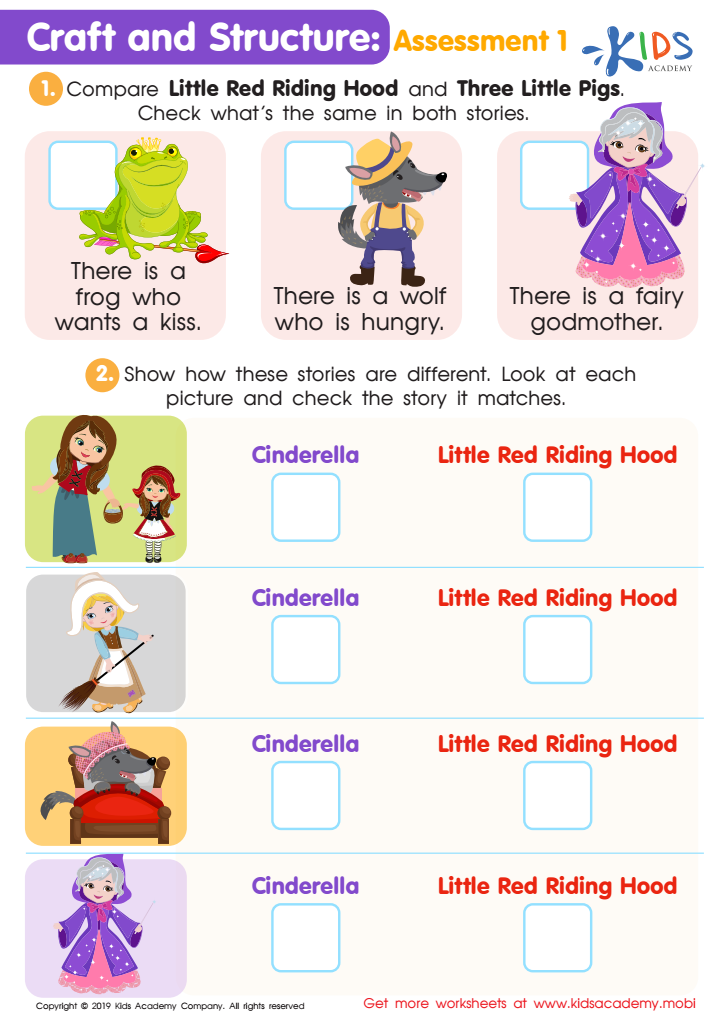
Craft and Structure: Assessment 1 Worksheet
 Assign to My Students
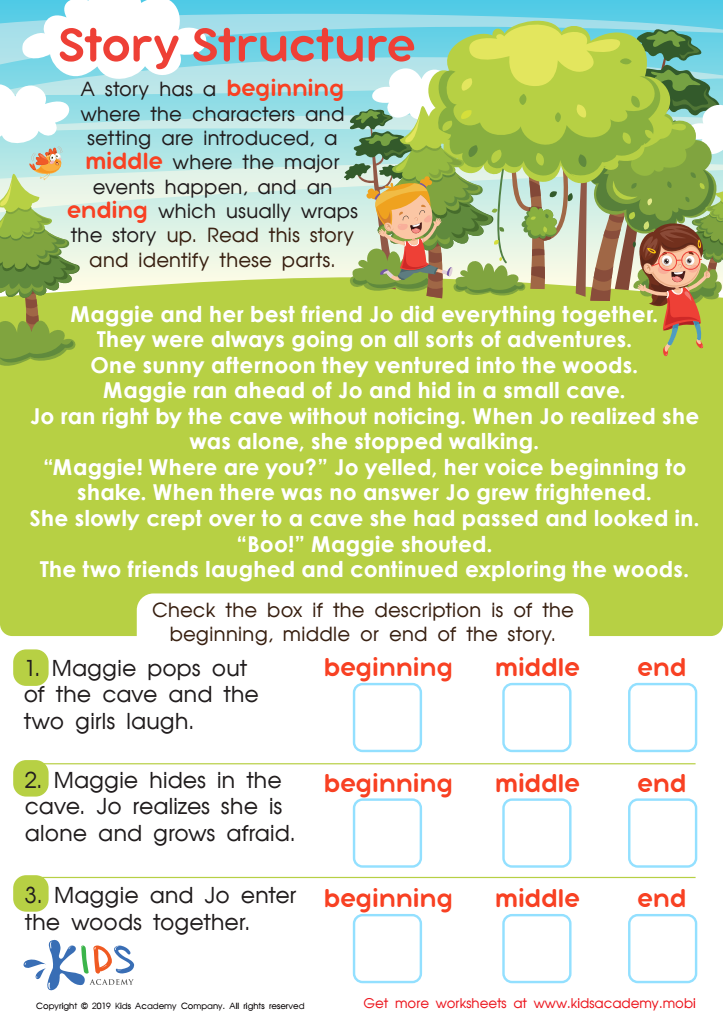
Story Structure Worksheet
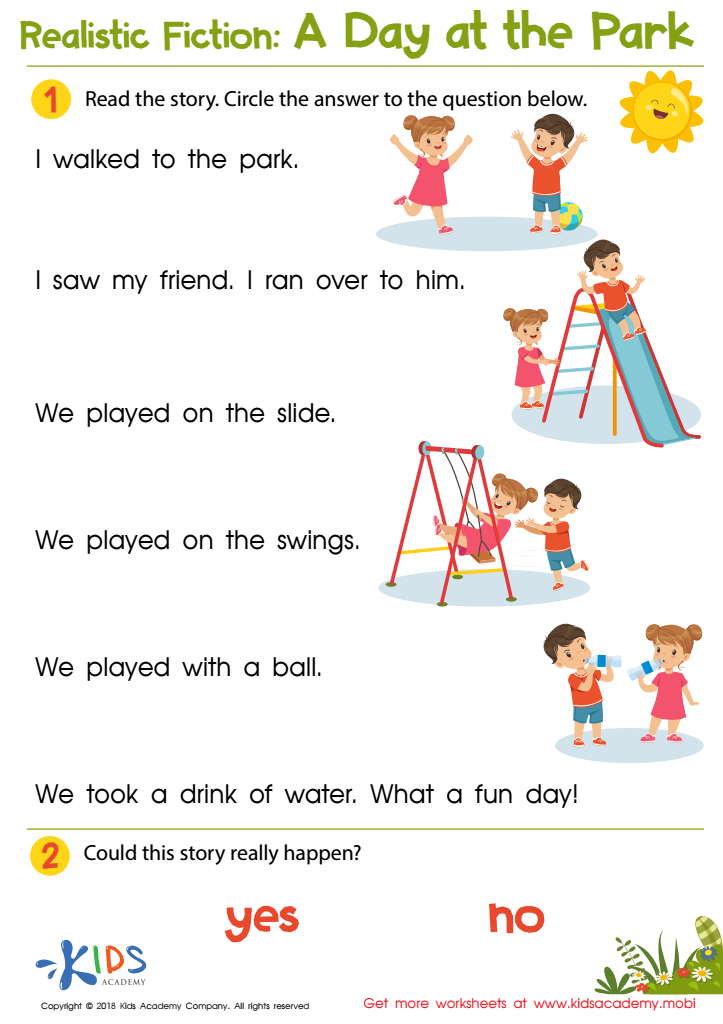
A Day at the Park Worksheet
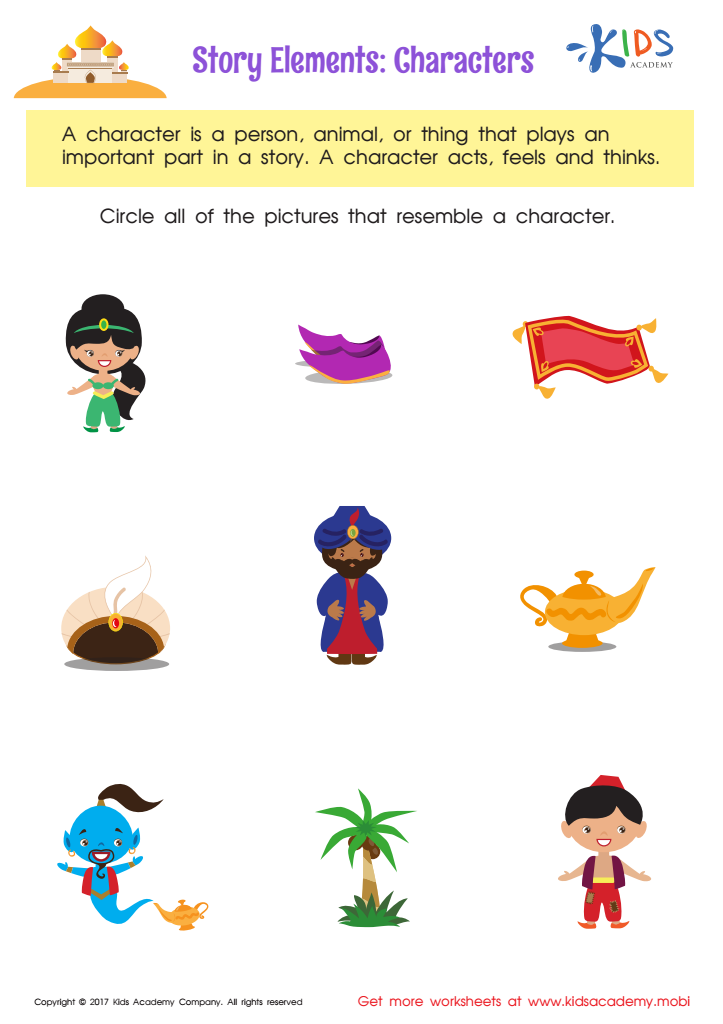
Story Elements Printable




.jpg)



Identifying story elements—such as characters, setting, plot, conflict, and resolution—holds significant importance for children aged 3-9 for several reasons, making it crucial for parents and teachers to emphasize in early education.
Firstly, understanding story elements enhances comprehension skills. When children can identify these components, they grasp the narrative’s structure, leading to stronger critical thinking abilities. This skill helps them identify the main idea and predict outcomes, enriching their overall reading experience.
Moreover, recognizing story elements fosters creativity and imagination. By dissecting tales and understanding how plots are crafted and sustained, children can develop their unique storytelling abilities. This encourages a love for reading, which is crucial for literacy development.
Additionally, discussing story elements can promote emotional intelligence. When kids analyze characters and their conflicts, they learn to empathize with different perspectives, fostering social skills and emotional awareness.
Finally, story elements serve as a foundation for music, theater, and art. Exposure to storytelling aids in cross-disciplinary learning where children can incorporate these elements into various expressions of creativity.
In sum, teaching children to identify story elements not only boosts literacy but also nurtures creativity, empathy, and critical thinking, preparing them for a lifetime of learning.








