
Improving categorization skills Worksheets for Ages 3-9
4 filtered results
Difficulty Level
Grade
Age
-
From - To
Subject
Activity
Standards
Enhance your child's cognitive abilities with our "Improving Categorization Skills Worksheets" for ages 3-9 from Kids Academy. Our expertly designed worksheets focus on developing essential categorization skills through engaging and interactive activities. Perfect for early learners, these worksheets promote critical thinking, problem-solving, and logical reasoning. Each activity is tailored to suit different age groups, making learning fun and effective. By using colorful images, relatable themes, and varying levels of difficulty, your child will gain confidence and mastery in organizing items into groups. Unleash your child's potential with these fun, educational resources. Visit our page for downloadable content today!
Favorites
With answer key
Interactive
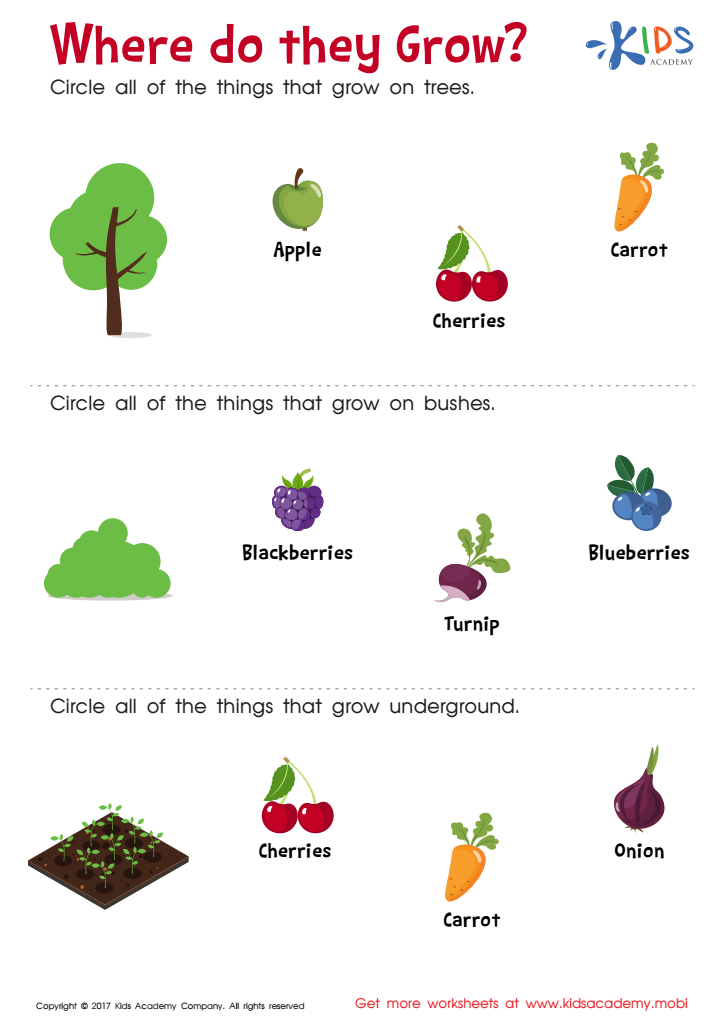
Where Do They Grow Worksheet
With this worksheet, your child can learn about apples, cherries, and blueberries and gain important science skills.
 Assign to My Students
Where Do They Grow Worksheet
Worksheet
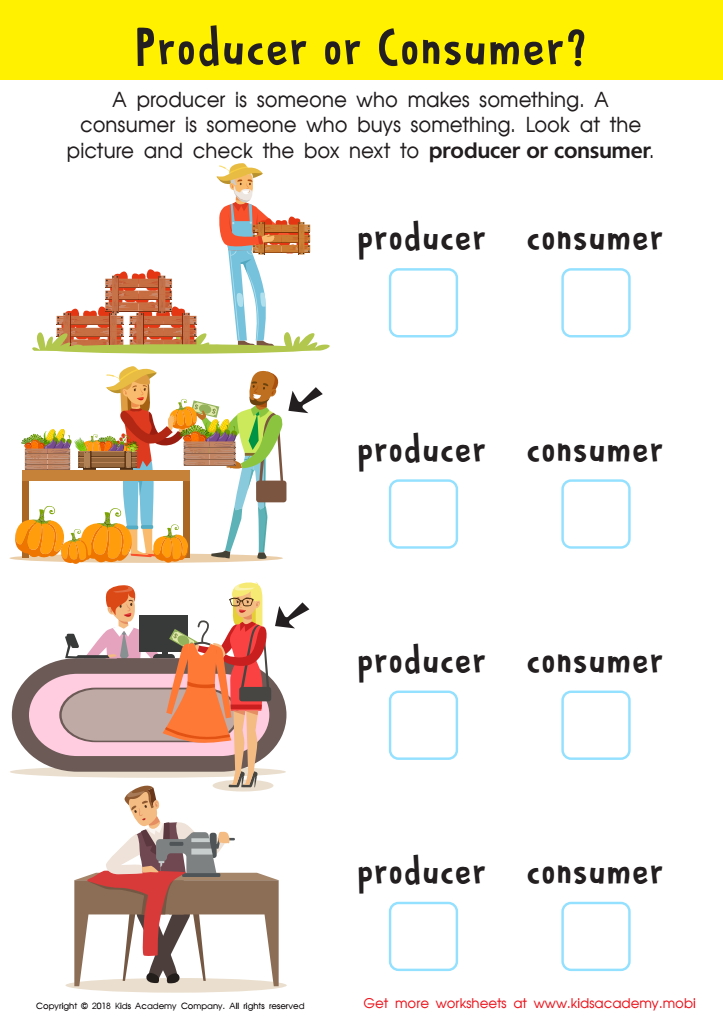
Producer or Consumer? Worksheet
Test your child's knowledge by asking who's a producer and consumer. Explain producer makes things and consumer buys them. Use a snack example. Look at the picture with your kids and help them check the box next to producer or consumer.
Producer or Consumer? Worksheet
Worksheet
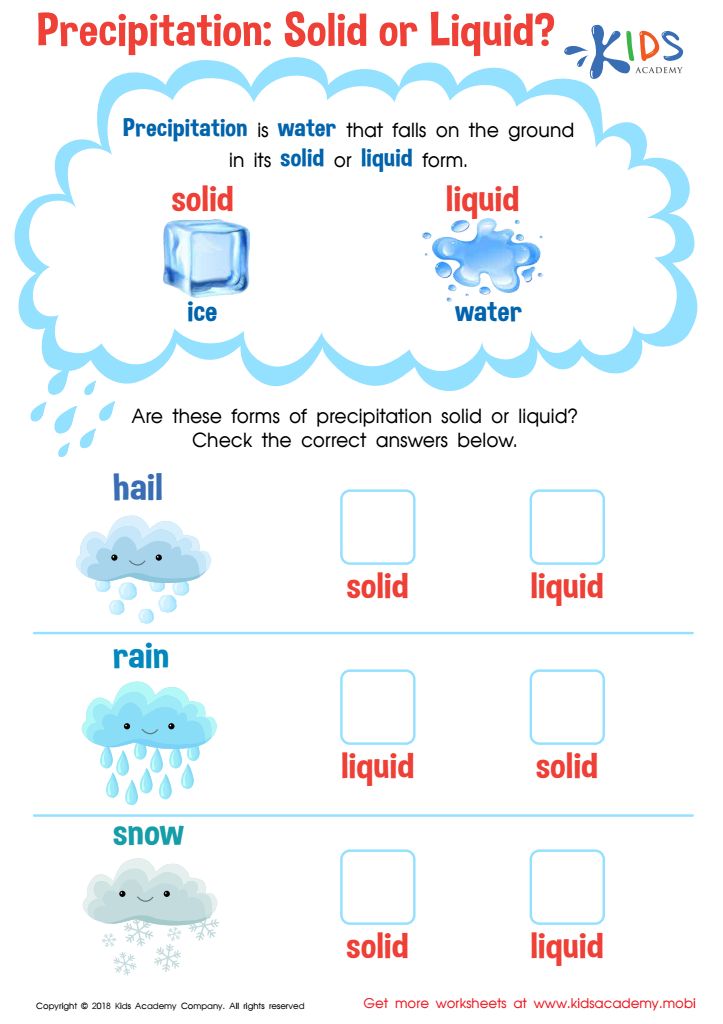
Precipitation: Solid or Liquid? Worksheet
Teach students that precipitation is water from the clouds/sky in either solid or liquid form, e.g. rain is liquid and snow is frozen. Use the worksheet with them to check if the forms of precipitation pictured are solid or liquid.
Precipitation: Solid or Liquid? Worksheet
Worksheet
Learning Skills
Join Kids Academy for Free
Who is primarily going to use this learning content?






Improving categorization skills for ages 3-9 is crucial as it lays the foundation for cognitive development and academic success. Categorization—the ability to group objects, ideas, or information based on shared characteristics—enables children to make sense of their environment, facilitating logical thinking and problem-solving skills. When young learners categorize, they are effectively organizing their thoughts, which aids in memory retention and retrieval. This is important for subjects like mathematics, where understanding patterns and grouping sets the stage for more complex concepts.
Additionally, categorization enhances language development. As children sort items and articulate why they belong together, they expand their vocabulary and comprehension abilities. "This is a fruit because it grows on trees" links new words with contextual understanding.
From a socio-emotional perspective, being able to categorize effectively gives children the tools to make better decisions and predictions about their everyday experiences. It also fosters a sense of order and predictability, which can reduce anxiety and build confidence. Teachers and parents should nurture these skills through activities like sorting games, classifying animals, or organizing household items. By focusing on this key area, they help children sharpen their analytical abilities, setting a robust foundation for future learning and everyday life.








