
Money counting skills Worksheets for Ages 3-9
5 filtered results
Difficulty Level
Grade
Age
-
From - To
Subject
Activity
Standards
Enhance your child's money counting skills with our engaging worksheets designed for ages 3-9! Our resources offer a fun and educational way to introduce young learners to the concept of money management. Through colorful illustrations and interactive activities, children will practice identifying coins, learning their values, and counting with confidence. These worksheets cater to different skill levels, ensuring every child can progress at their own pace. Perfect for home or classroom use, our money counting skills worksheets help build essential math abilities while fostering a positive attitude towards learning. Start your child's financial education journey today!
Favorites
With answer key
Interactive
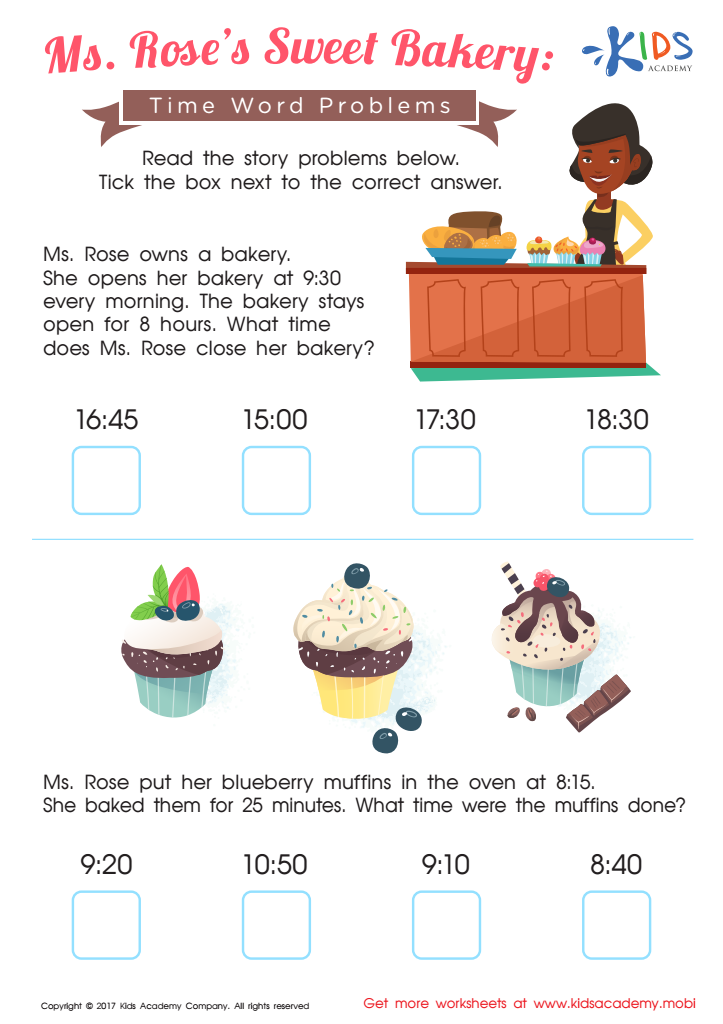
Ms. Roseв's Sweet Bakery Time Worksheet
Help your child understand the 24-hour clock using this fascinating telling time word problems worksheet: Sweet Bakery! Widely known as "military time", this skill isn't taught in school but is important for your kid to master.
 Assign to My Students
Ms. Roseв's Sweet Bakery Time Worksheet
Worksheet
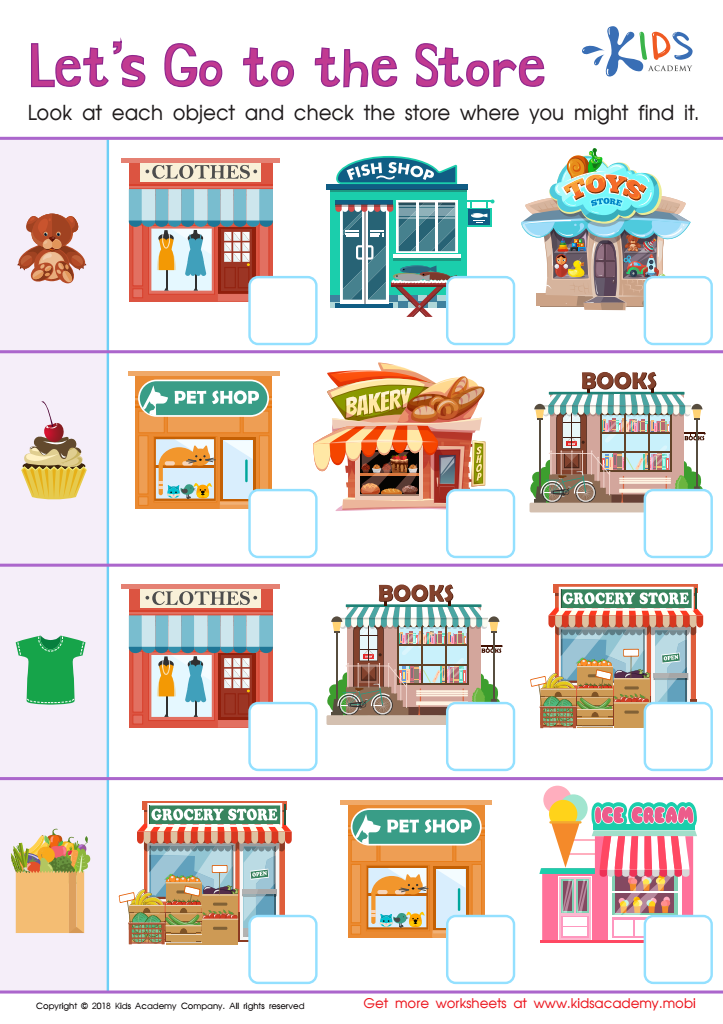
Let's Go to the Store! Worksheet
Take your kids along for errands and shopping. Ask them to identify items on this worksheet and the store where you'd buy them. See how much attention they were paying! Have fun and find out with this fun worksheet.
Let's Go to the Store! Worksheet
Worksheet
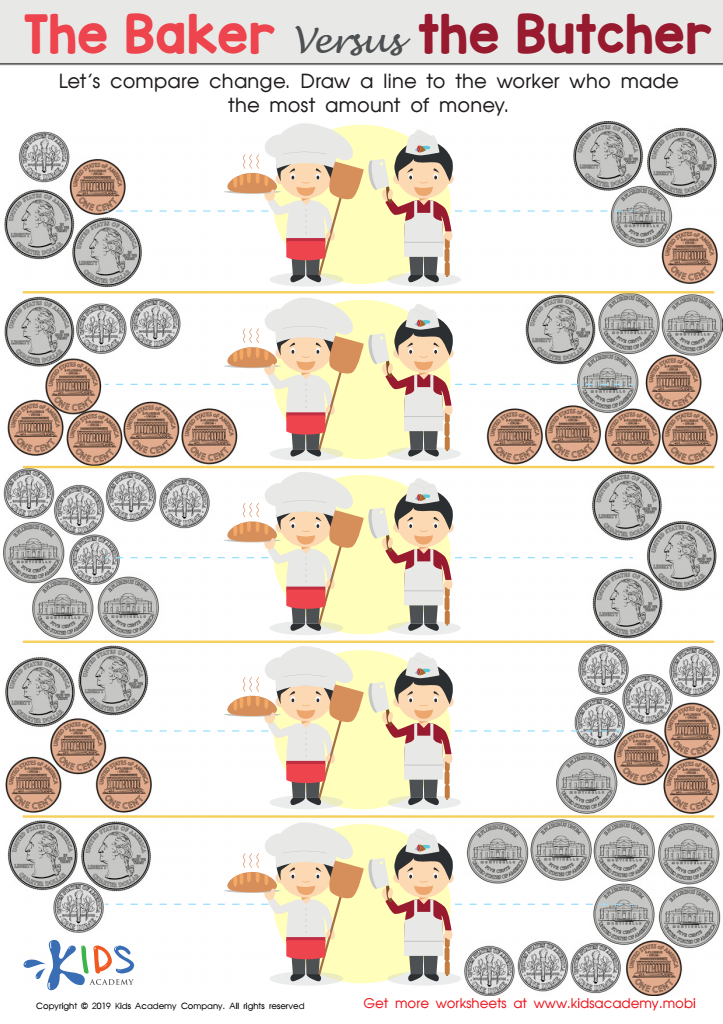
The Baker versus the Butcher Worksheet
At the baker’s and butcher’s, there are plenty of delicious treats and meals! With this worksheet, your kids can see who made more money at the end of the day. Have them trace a line to the worker who made the most amount of money. They’ll have fun while learning the basics of business and money!
The Baker versus the Butcher Worksheet
Worksheet
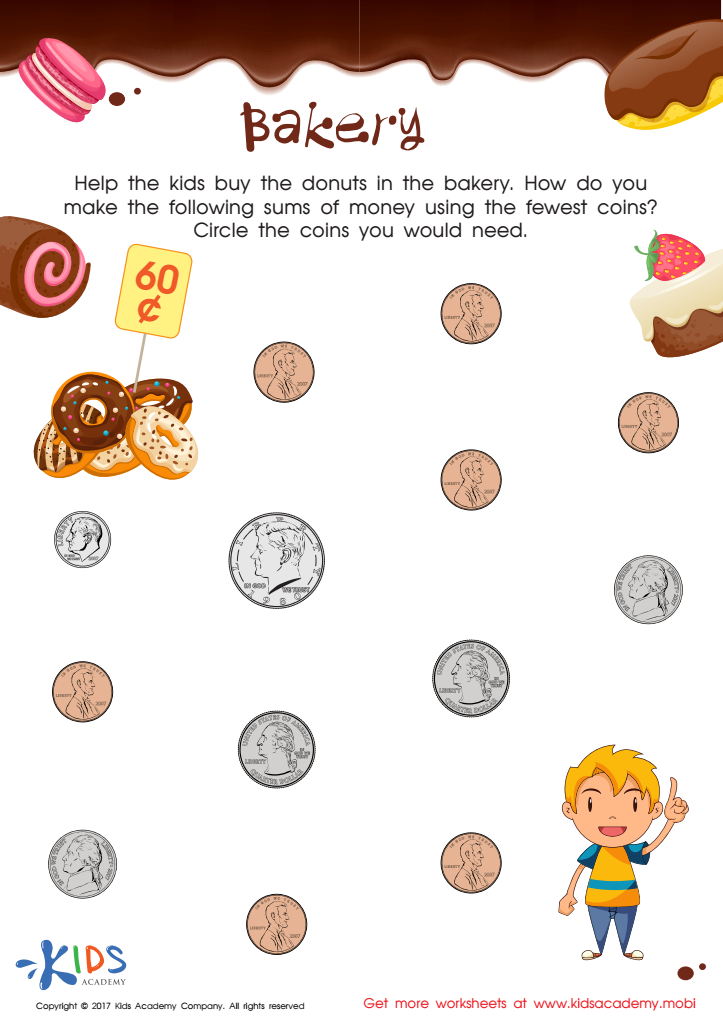
Counting Coins Worksheet
It will challenge them to spend a given amount using the least coins possible. Perfect for 2nd grade.
Help your child learn to count coins with this fun bakery-themed worksheet. It's perfect for 2nd graders and will challenge them to use the least coins possible to spend a set amount. Develop a valuable life skill and have fun while doing it!
Counting Coins Worksheet
Worksheet
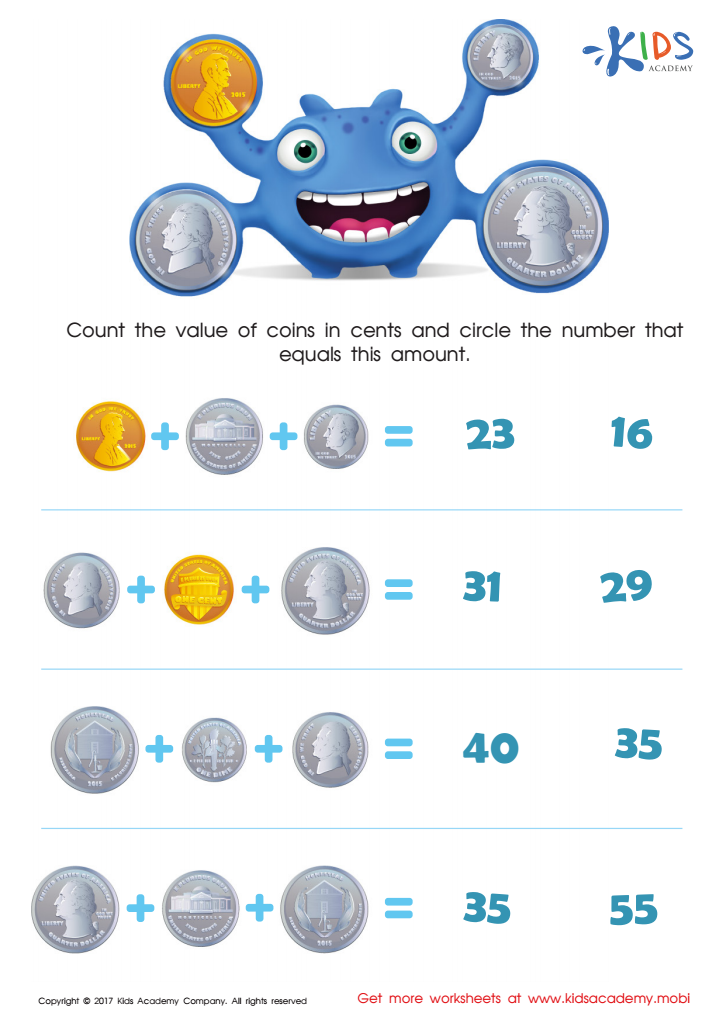
Counting the Coins Money Worksheet
Count coins quickly and work out sums in cents. Remember the value of each coin!
Counting the Coins Money Worksheet
Worksheet
Join Kids Academy for Free
Who is primarily going to use this learning content?








Money counting skills are crucial for children aged 3-9 as they lay the foundation for essential life skills and financial literacy. At this early age, children are naturally curious and learn best through play and practical experiences. By teaching them to count money, parents and teachers can engage their interest while introducing concepts of value, addition, subtraction, and the basic principles of commerce.
Developing money counting skills promotes critical thinking and problem-solving abilities, enabling children to make informed decisions about spending and saving. These skills transfer directly to real-world situations, leading to a greater sense of independence and responsibility. For instance, learning to count coins and understand prices fosters budgeting skills and prepares children for future financial challenges.
Moreover, integrating money counting into everyday activities, like shopping or playing store, makes learning fun and relevant. It nurtures confidence as children master the skills, encouraging a positive attitude toward math and finances.
In an increasingly complex economic world, instilling money counting skills at a young age equips children with the tools they need for future financial success, fostering lifelong habits that promote financial health and independence. Thus, parents and teachers should prioritize this essential aspect of early education.








