Number sequence learning Worksheets for Ages 3-9
3 filtered results
-
From - To
Enhance your child’s math skills with our Number Sequence Learning Worksheets for Ages 3-9. These engaging and educational printables are designed to build a strong foundation in numerical order, counting, and pattern recognition. Ideal for early learners, our sheets offer a range of activities suitable for children in preschool through third grade. Each worksheet progresses in difficulty to continuously challenge young minds and boost their confidence. Fun, colorful, and easy to follow, our worksheets transform learning into an enjoyable experience. Give your child the gift of numbers and watch their mathematical abilities flourish. Visit Kids Academy now!
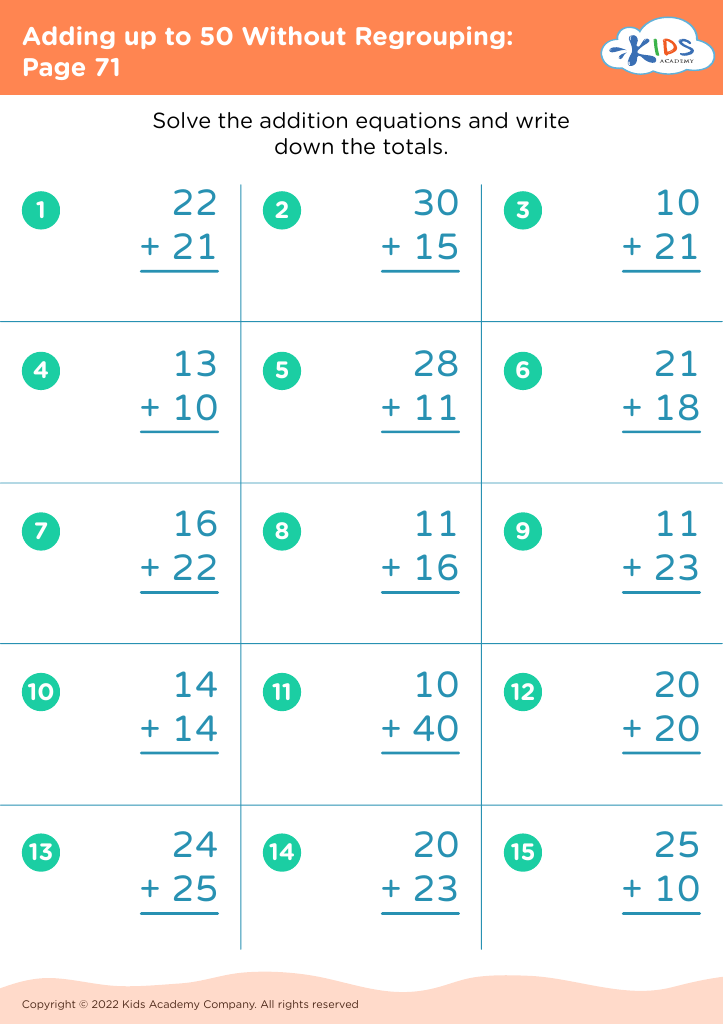
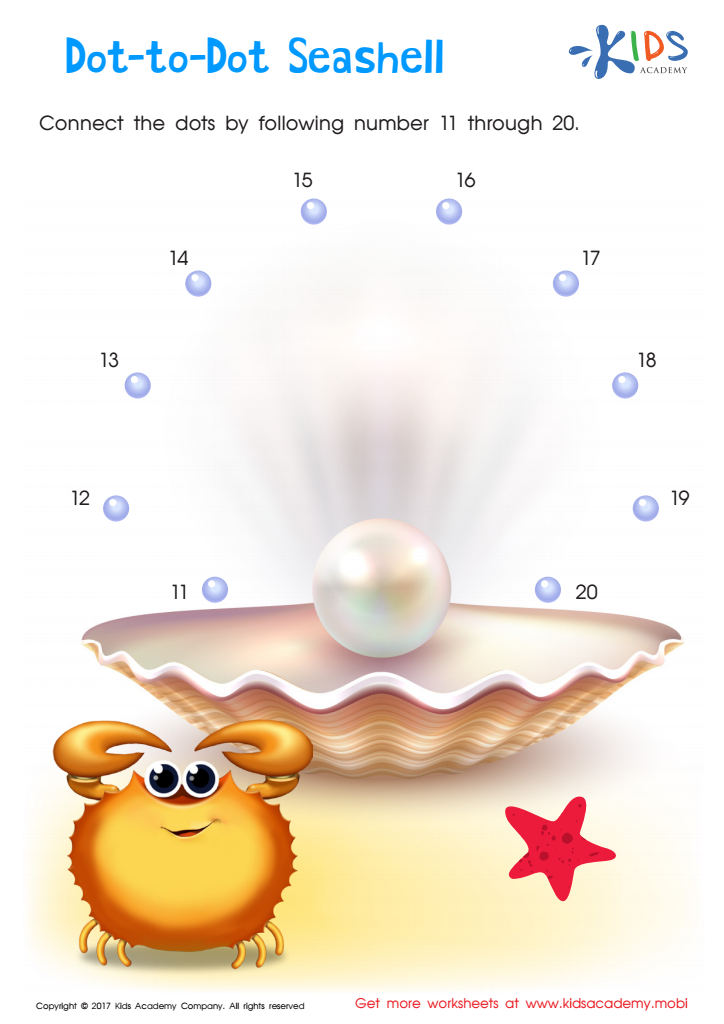
Ordering 11–20: Dot–to–dot Seashell Printable
 Assign to My Students

Counting on the City Skyline: Dot-to-Dot Worksheet






Number sequence learning is a foundational skill that is essential for children aged 3-9 as it significantly impacts their mathematical understanding and cognitive development. For parents and teachers, fostering this skill sets the stage for more complex mathematical abilities. Number sequencing enables kids to develop basic counting skills, which are critical for daily tasks and more advanced arithmetic operations like addition and subtraction. This ability to recognize patterns and predict the next number also improves problem-solving and logical thinking skills, which are crucial across various subjects.
Engaging in number sequence activities promotes memory retention and concentration, as children must keep track of the order and relation of numbers. Games and interactive learning tools centered around number sequences make learning fun and keep young minds engaged. Importantly, early proficiency in number sequences can boost a child’s confidence, creating a positive feedback loop that encourages further learning and exploration.
Introducing number sequences early sets the foundation for lifelong numeracy skills. It's not just about mastering numbers but developing a structured way of thinking and approaching problems. Thus, parents and teachers play a critical role by integrating number sequence learning into daily activities to ensure children develop a strong, fundamental understanding of mathematics from a young age.








