Phonics recognition Worksheets for Ages 3-9 - Page 2
25 filtered results
-
From - To
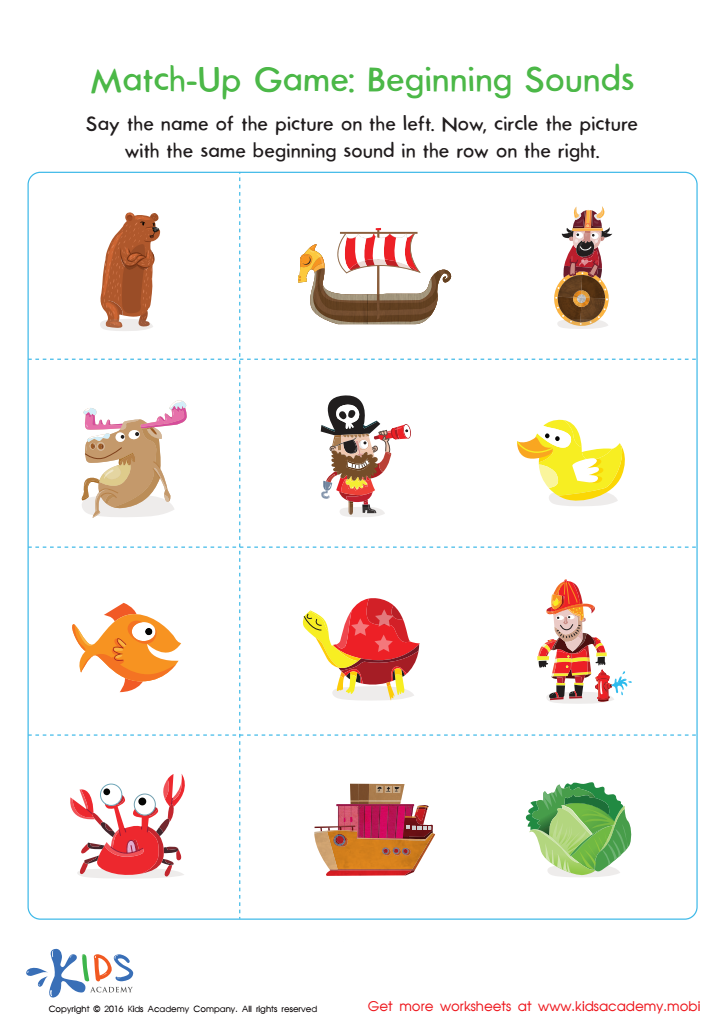
Match–Up Game: Beginning Sounds Worksheet
 Assign to My Students








Phonics recognition is foundational for early literacy development in children ages 3-9. It involves understanding the relationship between sounds and their corresponding letters or groups of letters. Mastery of phonics equips children with essential decoding skills required to read unfamiliar words, facilitating smoother reading experiences and enhancing comprehension.
Parents and teachers should prioritize phonics instruction as it directly influences a child's reading proficiency. Proper phonics education ensures children know how to sound out words rather than guess them, which builds their confidence and independence in reading. Moreover, research consistently shows that strong phonics skills are linked to better fluency, vocabulary, and spelling. Early success in reading creates a positive feedback loop, fostering a lifelong interest and aptitude in learning and literature.
Additionally, phonics is not just about reading but is intrinsically connected to writing. Children who understand phonics can more effectively segment sounds to spell words accurately, bolstering their writing skills. Given that literacy is a gateway to all other learning, a solid foundation in phonics during these crucial early years can significantly impact a child's academic journey and overall intellectual development. Therefore, parents and teachers investing in phonics instruction are setting up children for long-term educational success and empowerment.








