
Season identification Worksheets for Ages 3-9
3 filtered results
Difficulty Level
Grade
Age
-
From - To
Subject
Activity
Standards
Discover our engaging Season Identification Worksheets designed for children ages 3-9! These interactive resources help young learners explore the four seasons—spring, summer, autumn, and winter—through fun activities tailored to develop their recognition skills. Each worksheet is filled with vibrant illustrations and age-appropriate challenges that encourage observation, creativity, and learning. Kids will sort seasonal activities, match images, and identify seasonal changes in nature, enhancing their understanding of this fundamental concept. Perfect for homeschooling, early childhood education, or supplementary practice, our worksheets ensure learning is both enjoyable and effective. Get started today and make seasonal learning a delightful adventure for your child!
Favorites
With answer key
Interactive
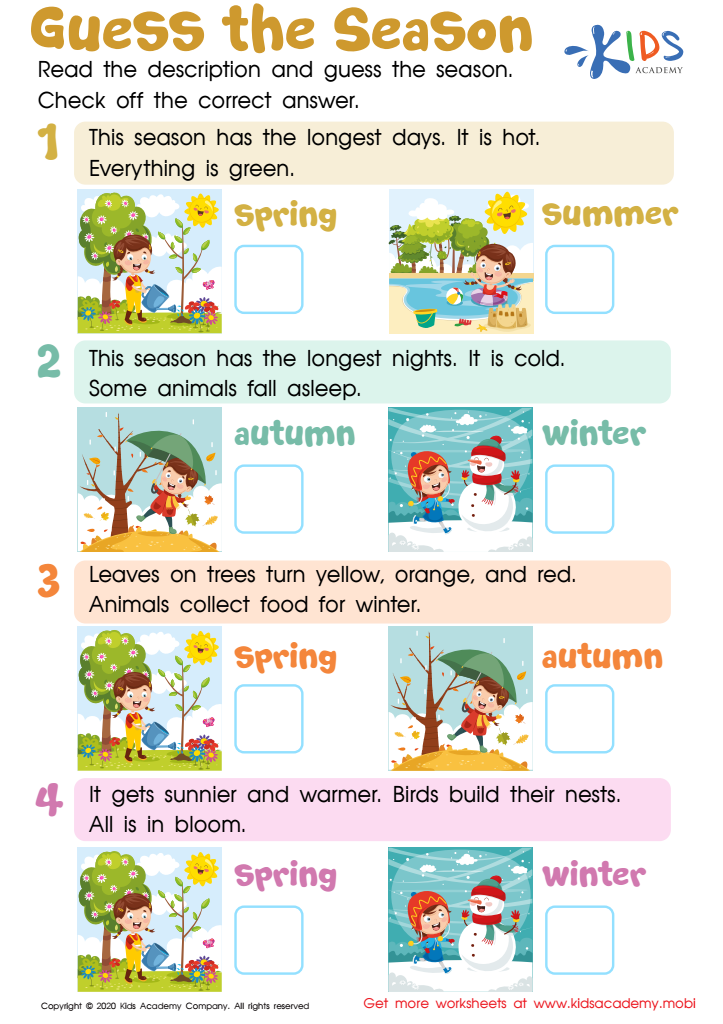
Guess the Season Worksheet
Winter and summer bring different weather! Help kids recognize the changes with this free Kids Academy PDF worksheet. Students read each description, look at the pictures, and check the box next to the season depicted. Make learning fun and easy with interactive activities.
Guess the Season Worksheet
Worksheet
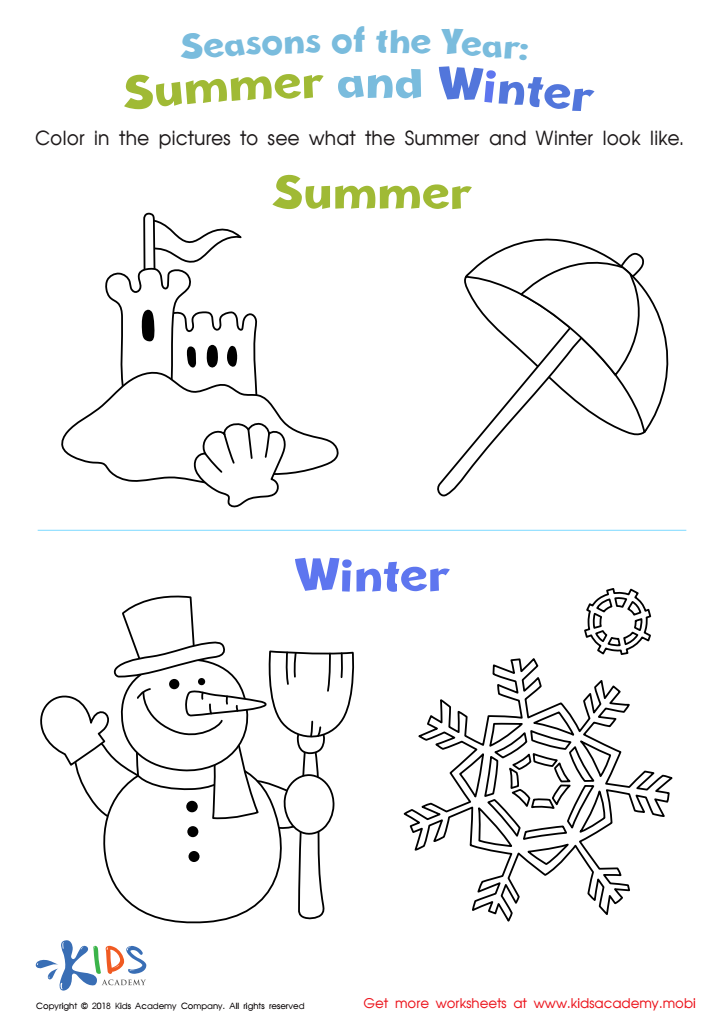
Summer and Winter Worksheet
Ask your child what they associate with winter and summer. What do they look forward to in winter? What colors do they see most? What do they love doing in summer? Help them color in the pictures of winter and summer in the worksheet, choosing the colors they think best represent each season.
Download (PDF)
 Assign to My Students
Assign to My Students
Summer and Winter Worksheet
Worksheet
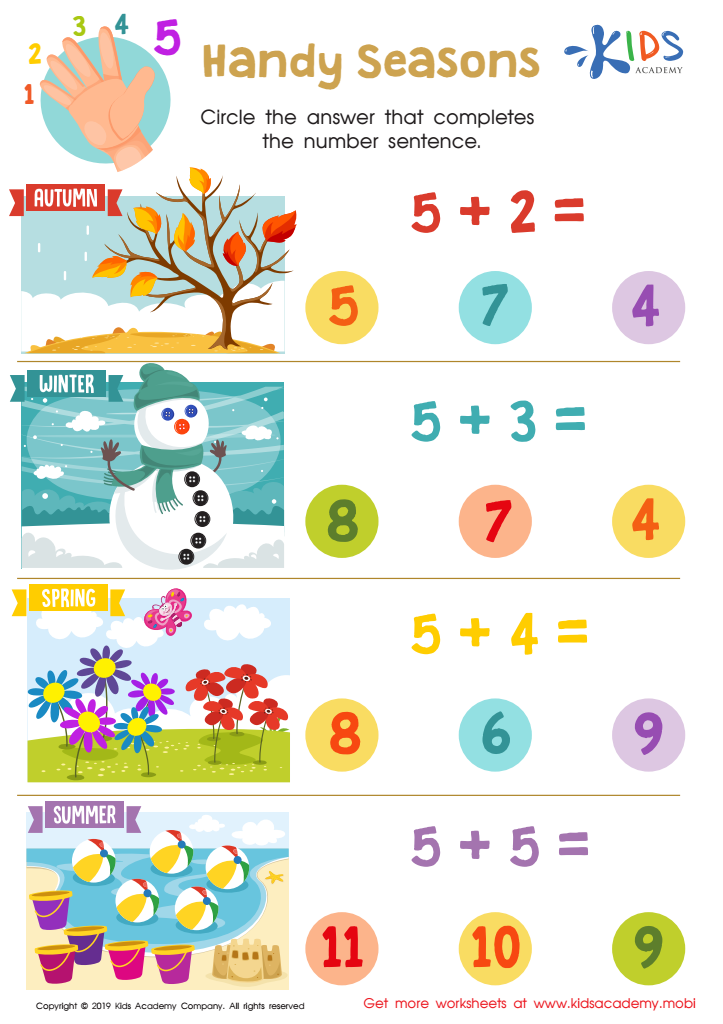
Handy Seasons Worksheet
Help your kids understand number sentences with this fun and colorful worksheet, featuring 4 pictures. Get them to identify each season, then circle the answer that completes the number sentence given. Make math exciting and get your kids excited to learn!
Handy Seasons Worksheet
Worksheet
Join Kids Academy for Free
Who is primarily going to use this learning content?







Understanding seasons is fundamental for children aged 3-9, as it connects them to the world around them and promotes cognitive, emotional, and social development. Recognizing seasonal changes enhances observational skills and increases awareness of environmental patterns, helping children make sense of their surroundings.
Season identification fosters curiosity and enriches vocabulary. Children learn new words related to each season—like "blossom" in spring or "hibernate" in winter—boosting their language development. Additionally, seasonal activities engage children in hands-on learning experiences, such as collecting leaves in autumn or observing snowflakes in winter, facilitating exploration and creativity.
Socially, discussing seasons can lead to collaborative projects, fostering teamwork when constructing seasonal art or planning activities. Awareness of seasons also aids emotional development, as children learn to identify how those changes affect moods and behaviors, like the excitement of holidays or the calmness of snowfall.
Moreover, connecting seasons to cultural practices, traditions, and celebrations teaches children the diversity of human experiences. For these reasons, fostering season identification in young learners is crucial for their holistic development, nurturing curiosity, and facilitating connections in their learning journey. Parents and teachers play a vital role in guiding these experiences, making it an essential focus in early education.








