Solar system knowledge Worksheets for Ages 3-9
3 filtered results
-
From - To
Explore the wonders of our Solar System with engaging and educational worksheets for kids ages 3-9! Kid’s Academy offers an array of activities designed to spark curiosity about planets, stars, moons, and other celestial bodies. These printable worksheets blend fun and learning, helping young minds to identify and understand the diverse components of space. Each worksheet is crafted to suit different age groups, making it perfect for home or classroom use. Enhance your child’s learning journey with exercises that support the development of critical thinking and knowledge of the universe in an interactive way. Start exploring today!
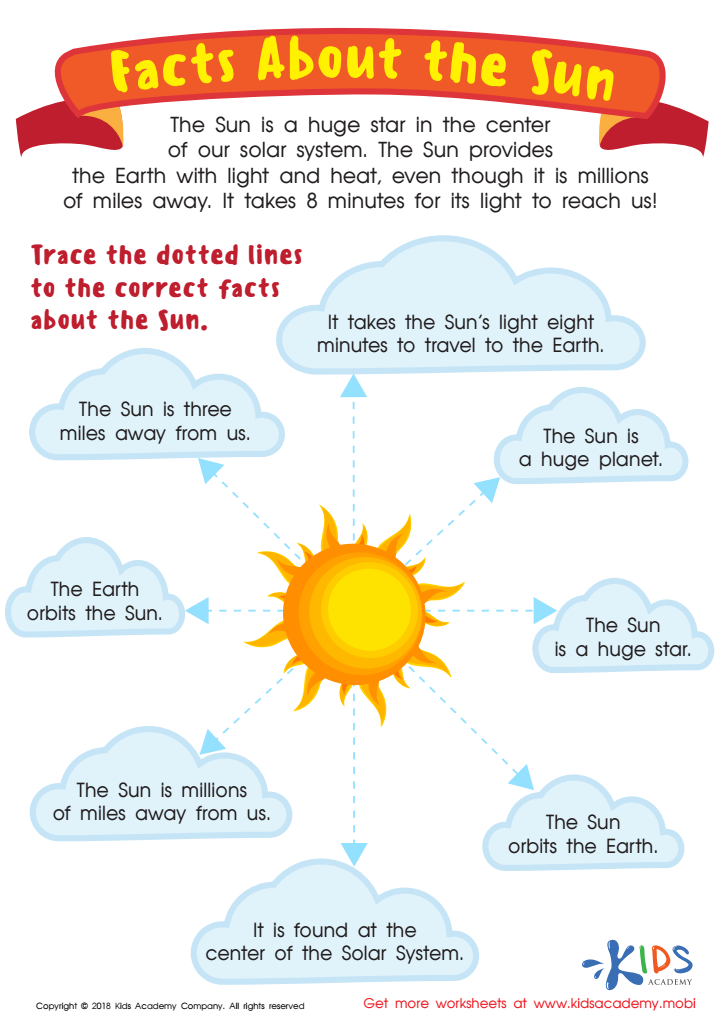
Facts About the Sun Worksheet
 Assign to My Students
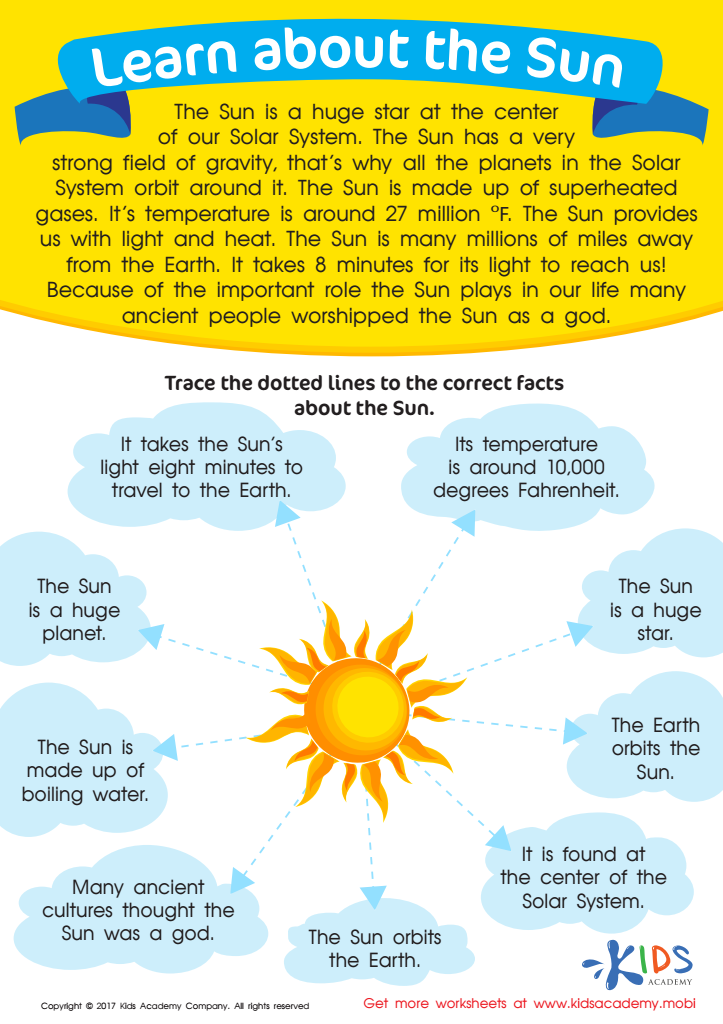
Sun Facts Worksheet
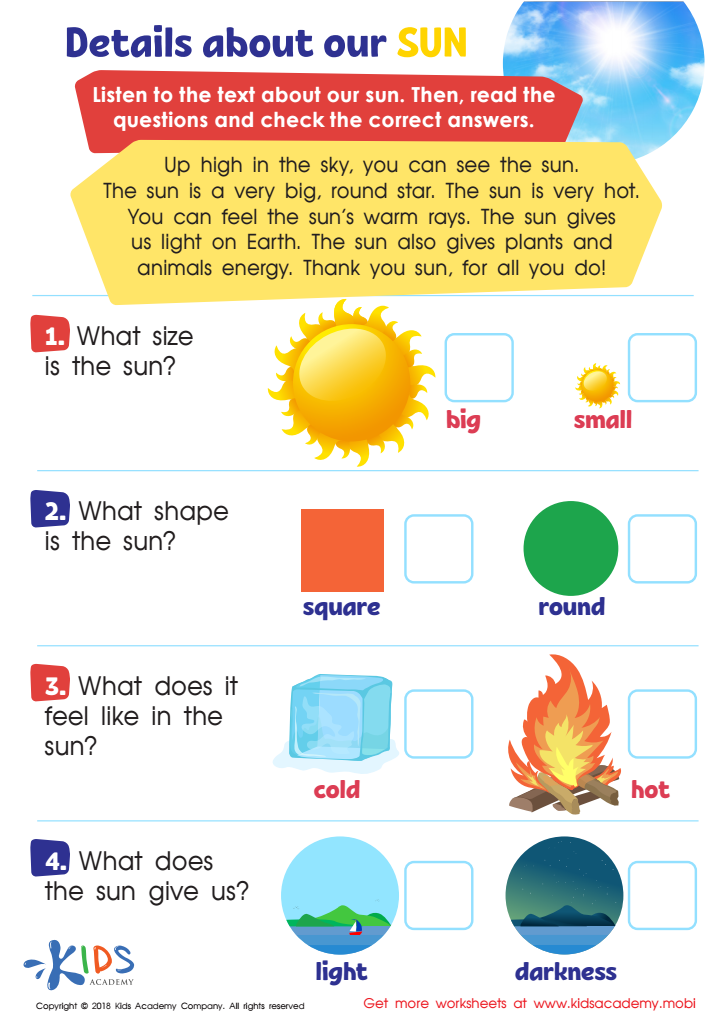
Details About Our Sun Worksheet







Parents and teachers should care about teaching children ages 3-9 about the solar system for several pivotal reasons. First, young children are naturally curious and have the capacity to absorb information like sponges. Introducing them to the wonders of the solar system can spark a lifelong interest in science, technology, engineering, and mathematics (STEM), essential fields for future generations.
Understanding the solar system also helps children comprehend their place in the universe, satisfying a natural curiosity about the world beyond their immediate surroundings and fostering a sense of awe and respect for nature. Learning about planets, stars, and space phenomena can enhance children's cognitive development by encouraging critical thinking, problem-solving, and observational skills.
Moreover, knowledge about the solar system promotes literacy and language skills as children learn new vocabulary and ways to describe what they observe. This engagement with new concepts can stimulate both their imaginative capacities and their foundational knowledge base, offering interdisciplinary benefits.
Lastly, early exposure to space subjects can cultivate positive attitudes towards learning and contribute to emotional and social development by allowing children to engage in shared group activities like planet naming or constructing models, fostering teamwork and creativity. Overall, investing in this early education ensures children develop both academically and personally, preparing them for future educational adventures.








