
Sound differentiation Worksheets for Ages 3-9
5 filtered results
Difficulty Level
Grade
Age
-
From - To
Subject
Activity
Standards
Discover our engaging Sound Differentiation Worksheets for ages 3-9, designed to sharpen auditory skills and boost phonemic awareness. Perfect for young learners, these worksheets make learning crucial sounds and identifying differences fun and interactive. From matching and sorting activities to identifying letters and sounds, your child will learn to distinguish between various phonemes while enhancing reading and listening skills. Ideal for both classroom and home use, these printable worksheets provide the foundational tools needed for literacy success. Visit Kids Academy and give your child the auditory edge they need to excel in early education!
Favorites
With answer key
Interactive
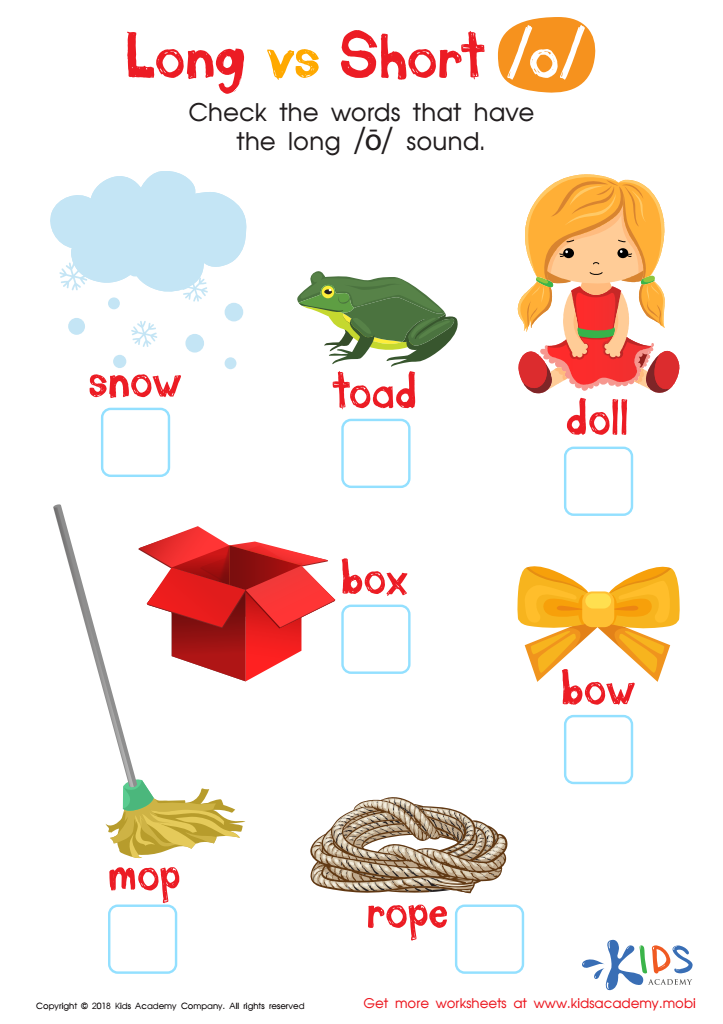
Long vs Short O Reading Worksheet
Help your child learn to identify the long and short «o» sound with this colourful worksheet. Guide them as they spot words with the long or short «o» sound. With practice, your child will find it easier to tell the difference between the two.
 Assign to My Students
Long vs Short O Reading Worksheet
Worksheet
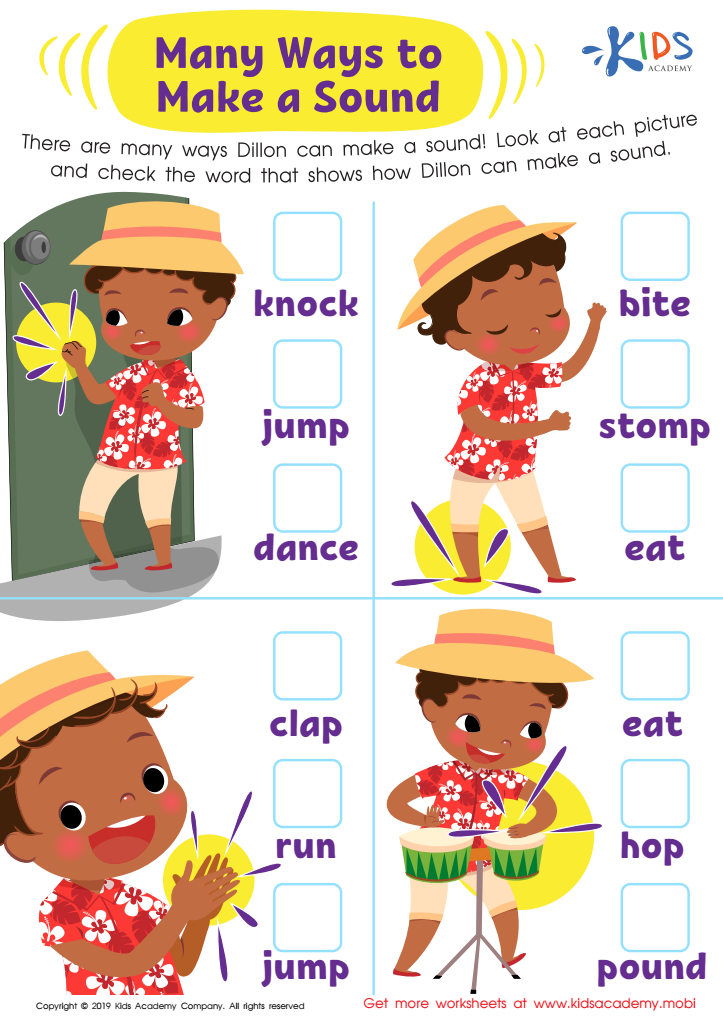
Many Ways to Make a Sound Worksheet
This interactive worksheet encourages creativity and imagination as kids use picture clues to match sound words. It helps them identify the sound methodology and build fine motor skills. Plus, with learning through play, they'll develop stronger vocabularies without even knowing it!
Many Ways to Make a Sound Worksheet
Worksheet
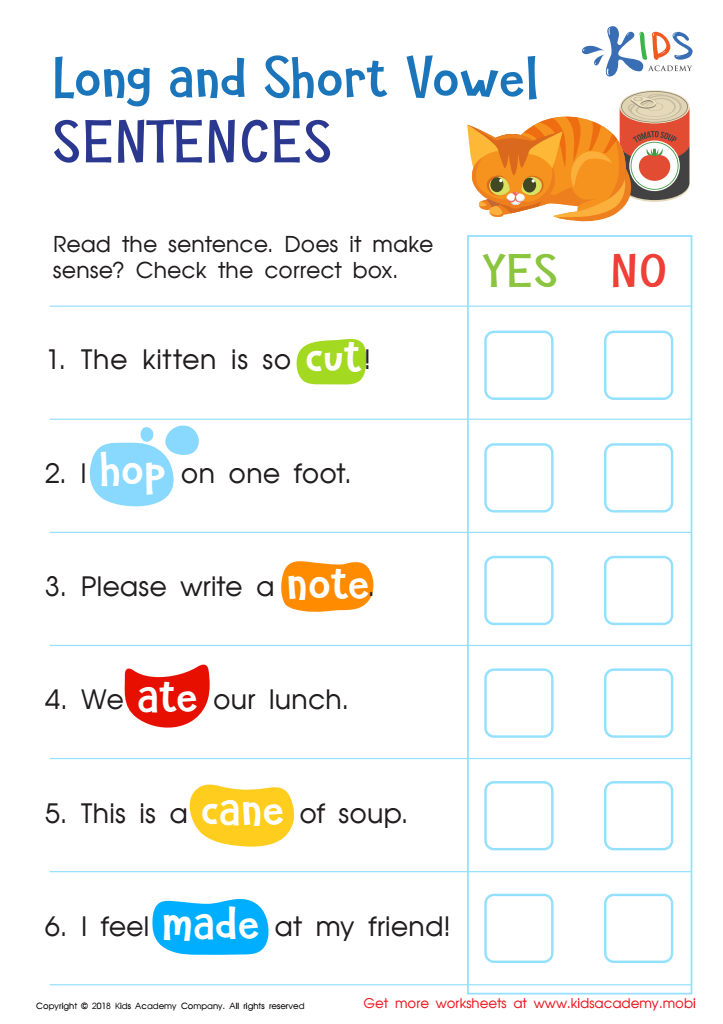
Long and Short Vowel Sentences: Assessment Worksheet
This printable worksheet helps kids practice differentiating between short and long vowel sounds. They'll use context clues to figure out which words make sense in simple sentences. A great way to build reading and writing skills!
Long and Short Vowel Sentences: Assessment Worksheet
Worksheet
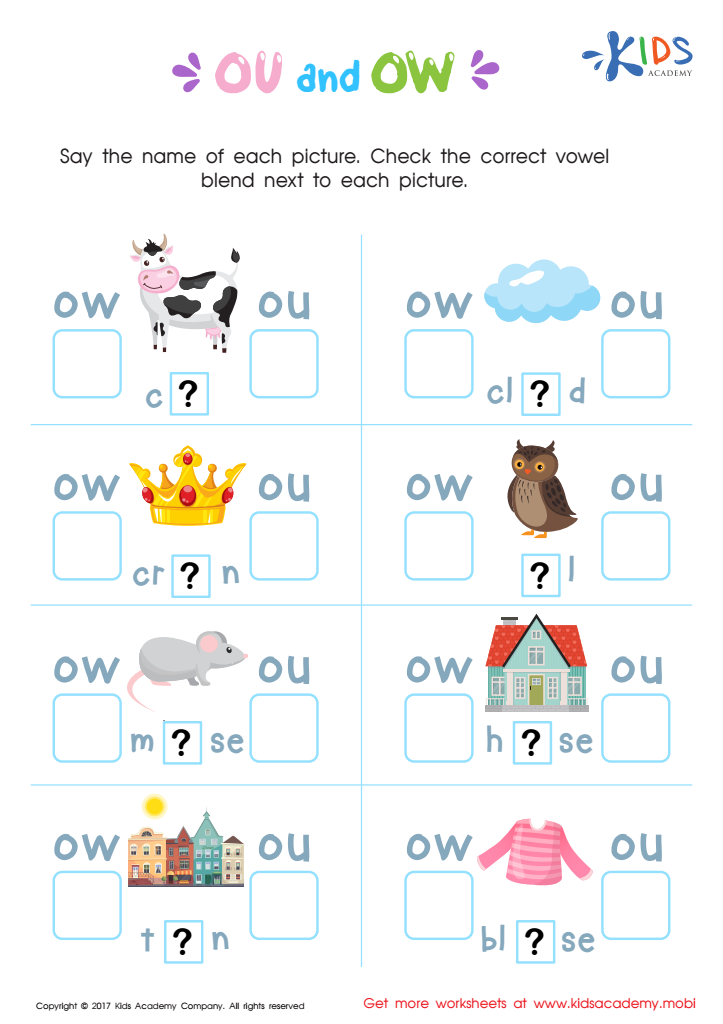
OU and OW Words Worksheet
Enhance your child's reading and spelling with this ou and ow words worksheet! Fun pictures and common words make mastering the diphthongs ou and ow easy and enjoyable.
OU and OW Words Worksheet
Worksheet
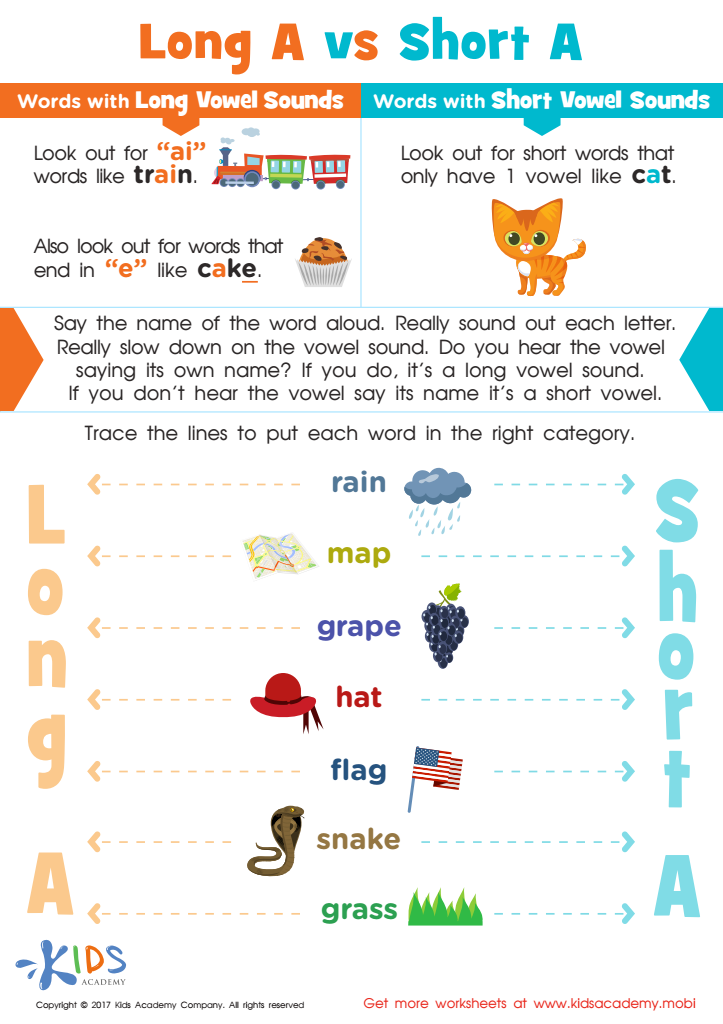
Long and Short Vowel A Spelling Worksheet
Help your child learn tricky spellings by focusing on vowel sounds. Read about each one, see examples and work through the long and short vowel A worksheet. Your child will be able to sound out words to determine if the vowel is long or short.
Long and Short Vowel A Spelling Worksheet
Worksheet
Join Kids Academy for Free
Who is primarily going to use this learning content?




Sound differentiation, the ability to recognize and distinguish between different sounds in spoken language, is essential for the cognitive and linguistic development of children ages 3-9. This skill is foundational for reading and verbal communication. During these formative years, children’s brains are particularly receptive to learning sounds and establishing neural pathways critical for language acquisition. Proper sound differentiation supports phonemic awareness, which is the understanding that words are made up of individual sounds or phonemes.
For parents and teachers, focusing on sound differentiation ensures children can decode words effectively, a crucial step for successful reading. Without a solid grasp of phonemic awareness, children might struggle with reading, potentially affecting their overall academic progress. Moreover, clear sound differentiation assists in enlarging their vocabulary, enhancing their ability to comprehend and use language accurately.
Socially, effective sound differentiation helps children better understand others and express themselves clearly, boosting their confidence and improving peer interactions. Additionally, it can aid in detecting any early signs of auditory impairments or language disorders, enabling timely intervention.
Engaging in activities like reading aloud, playing phonics games, and practicing rhyming can make a significant difference. Prioritizing sound differentiation nurtures lifelong literacy skills and fosters confident communication, both critical for personal and academic success.








