
Sound-letter association Worksheets for Ages 3-9
7 filtered results
Difficulty Level
Grade
Age
-
From - To
Subject
Activity
Standards
Discover our engaging sound-letter association worksheets designed for children ages 3-9! These resources are perfect for enhancing phonemic awareness and early literacy skills in a fun, interactive way. Our worksheets focus on helping young learners connect sounds to letters through exciting activities and colorful illustrations. Whether your child is just beginning to explore letters or building on existing skills, our comprehensive collection supports their journey in mastering the building blocks of reading and writing. Foster a love for learning with our printable worksheets that make sound-letter recognition an enjoyable experience! Explore now and watch your child's confidence soar!
Favorites
With answer key
Interactive
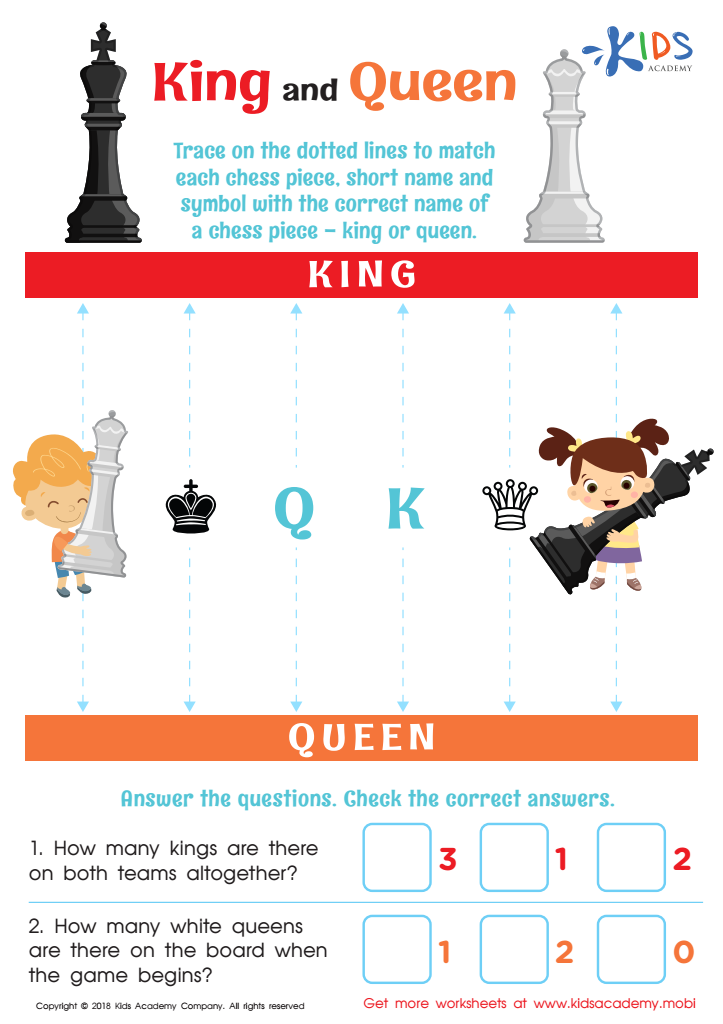
King and Queen Worksheet
Instruct your kids to trace the dotted lines to match each chess piece, short name, and symbol with either king or queen.Answer the questions at the bottom and check the answers. This exercise will help your children to differentiate between a king and queen chess piece and know their symbols.
King and Queen Worksheet
Worksheet
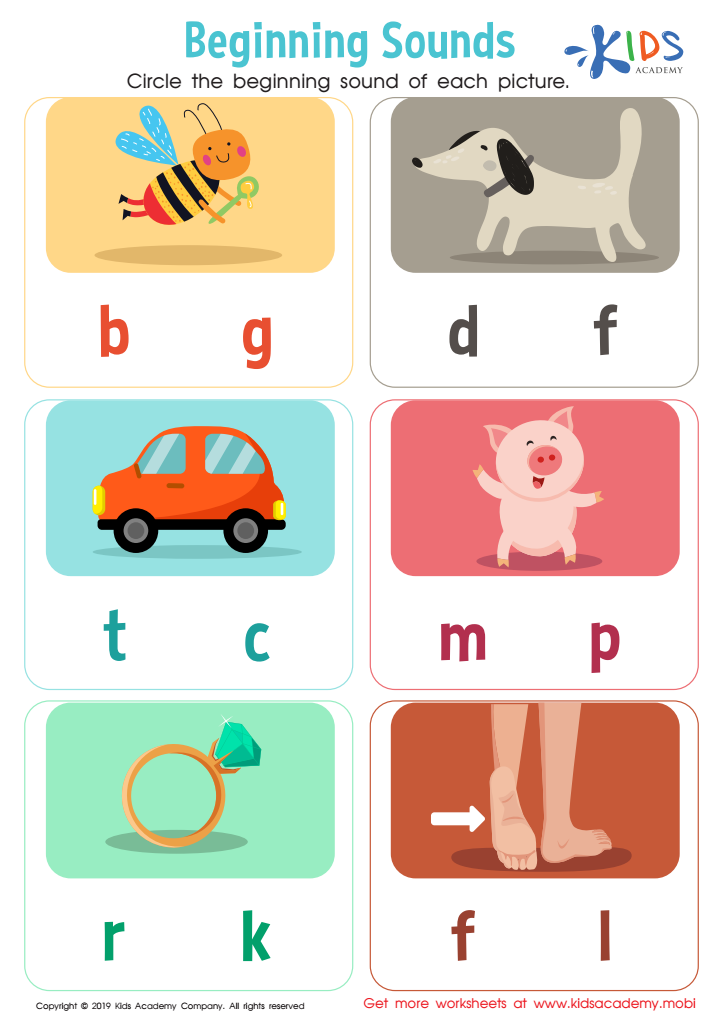
Beginning Sounds Worksheet
Test your child's knowledge with this colorful worksheet! Before beginning, have your kids recite the alphabet and sound them off. Give examples and ask them to do the same, then help them circle the beginning sound of each picture to complete the exercise.
Beginning Sounds Worksheet
Worksheet
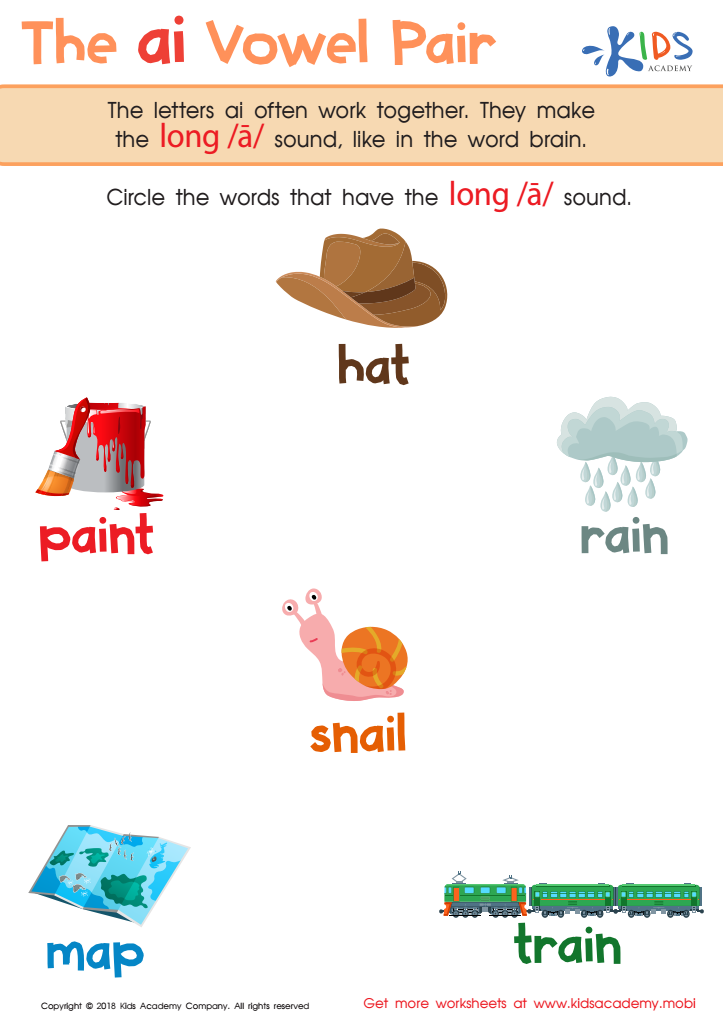
The AI Vowel Pair Worksheet
Vowel pairs make different sounds than individual letters. The 'ai' combination often forms the long /a/ sound, like in 'brain' and 'strain'. Get your kids to look at the pictures in the worksheet, identify each and say the name aloud. Help them circle the words with the long /a/ sound.
The AI Vowel Pair Worksheet
Worksheet
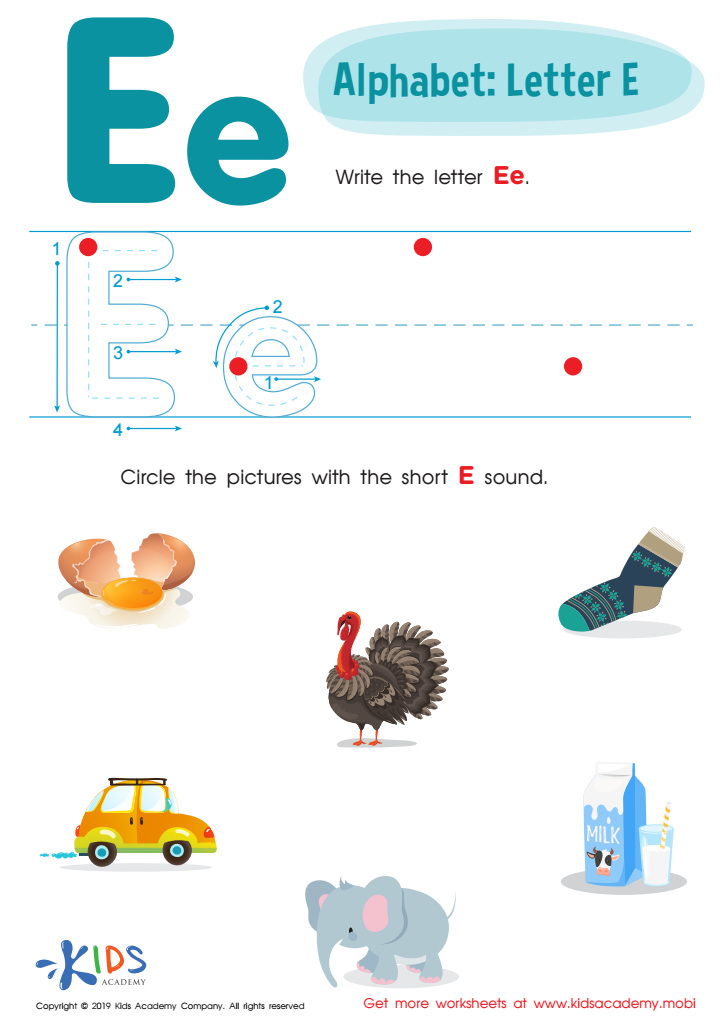
Letter E Tracing Worksheet
Students trace and write uppercase and lowercase letter E. They sound out "E" words, choosing those with short "E" sounds. Preschoolers identify the difference between the 'E' sounds in words like "egg" and "turkey." A tracing sheet helps them to understand.
Letter E Tracing Worksheet
Worksheet
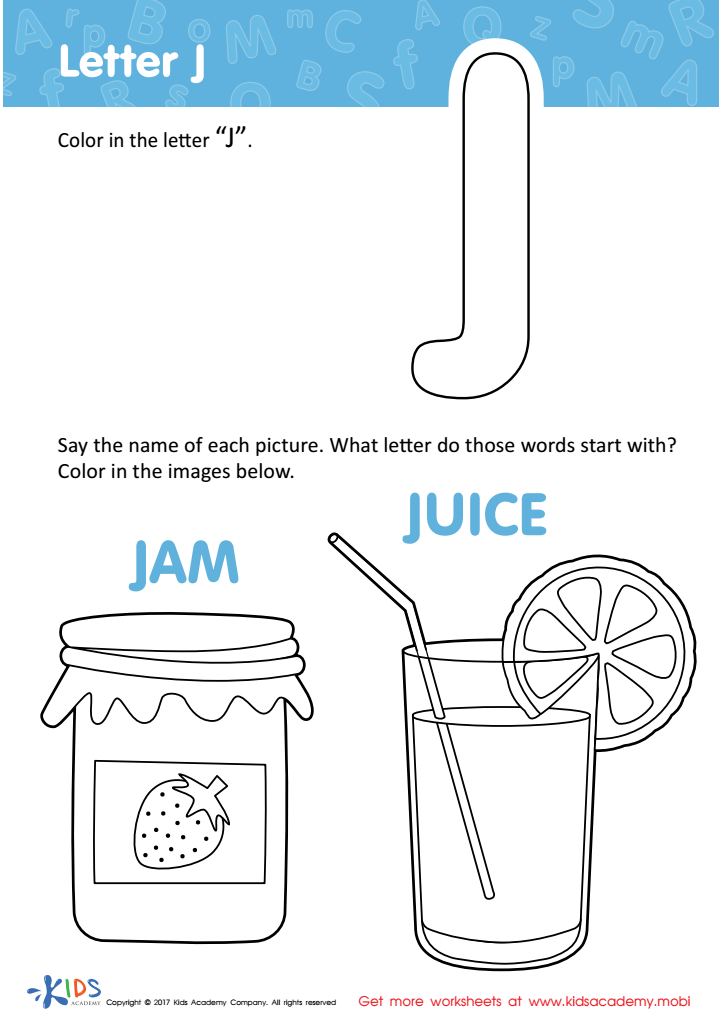
Letter J Coloring Sheet
Practice the letter 'J' with your little one with this fun coloring page! Pictures of jar, juice, jam and jelly make it an enjoyable experience for kids. Learning the letter and coloring is fun for even the youngest learners.
Download (PDF)
 Assign to My Students
Assign to My Students
Letter J Coloring Sheet
Worksheet
Join Kids Academy for Free
Who is primarily going to use this learning content?





.jpg)


Sound-letter association is crucial for young children aged 3-9, as it forms the foundation for reading and writing proficiency. When parents and teachers nurture this skill, they facilitate literacy development, enabling children to connect spoken sounds with their corresponding letters or groups of letters. Understanding this relationship enhances phonemic awareness, helping children recognize and manipulate sounds in words.
For young learners, mastering sound-letter association is vital for decoding unfamiliar words, which promotes independent reading. This foundational ability boosts their confidence and motivation, fostering a lifelong love of reading. Furthermore, it plays a significant role in literacy assessments and serves as an indicator of a child’s potential to succeed in language arts.
Additionally, a strong grasp of sound-letter connections supports other academic areas. Vocabulary development, spelling skills, and overall comprehension are influenced by how well children understand and utilize these associations. Engaging activities such as phonics games, songs, and reading practice can make learning enjoyable and effective. Ultimately, by emphasizing sound-letter association, parents and teachers equip children with the skills necessary for future academic success and empower them to navigate the world of written language effectively.








