Sound-letter correlation Worksheets for Ages 3-9
4 filtered results
-
From - To
Unlock the joy of learning with our engaging Sound-Letter Correlation Worksheets, perfectly designed for children aged 3 to 9! These fun and interactive activities help young learners establish the important connection between sounds and letters, paving the way for reading success. Our worksheets feature a variety of exercises including matching sounds to letters, tracing, and identifying beginning sounds in words. Each printable page is colorful and captivating, making learning enjoyable while enhancing phonetic skills. Ideal for classroom use or homeschooling, these resources empower educators and parents to nurture essential literacy skills. Explore our collection today and watch your child's reading skills flourish!
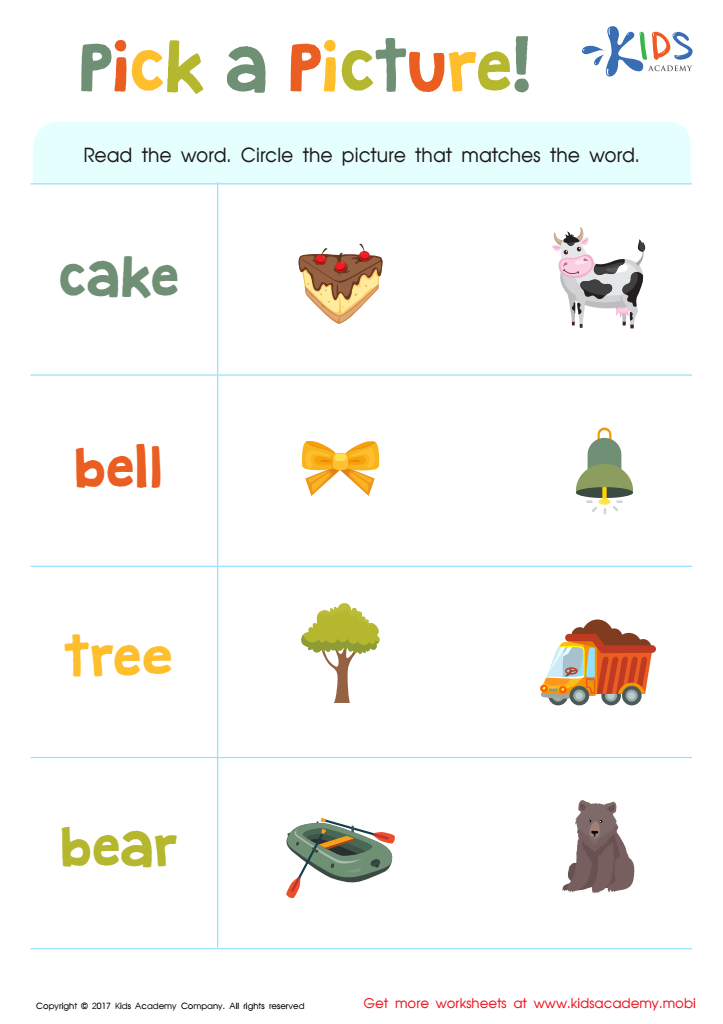
Pick a Picture Word Recognition Worksheet
 Assign to My Students
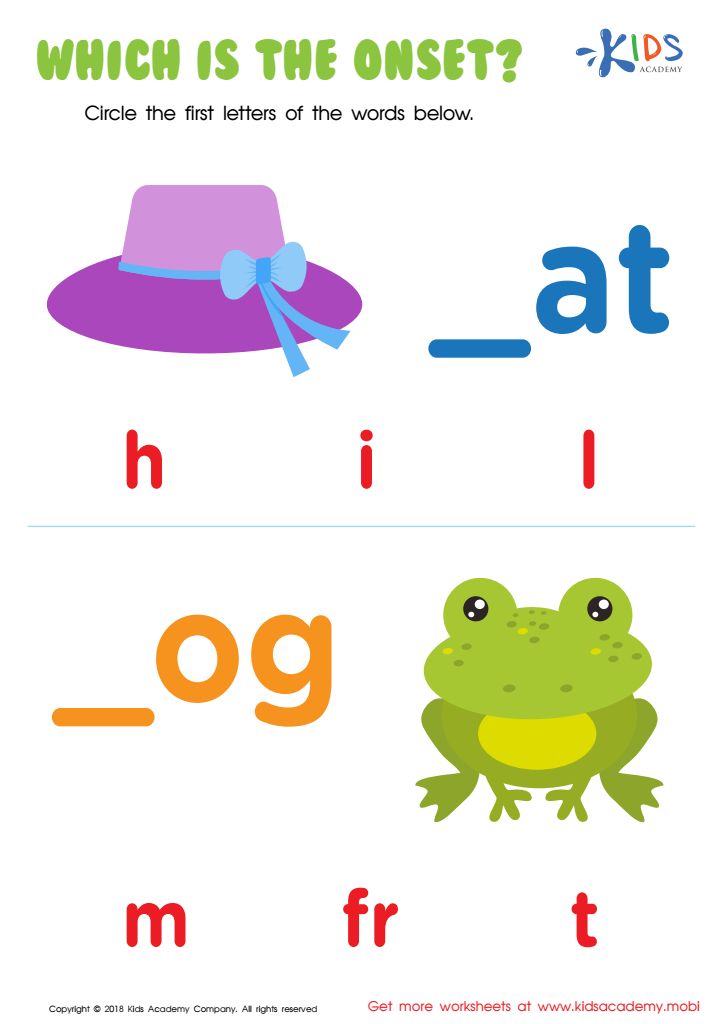
Which Is the Onset? Worksheet
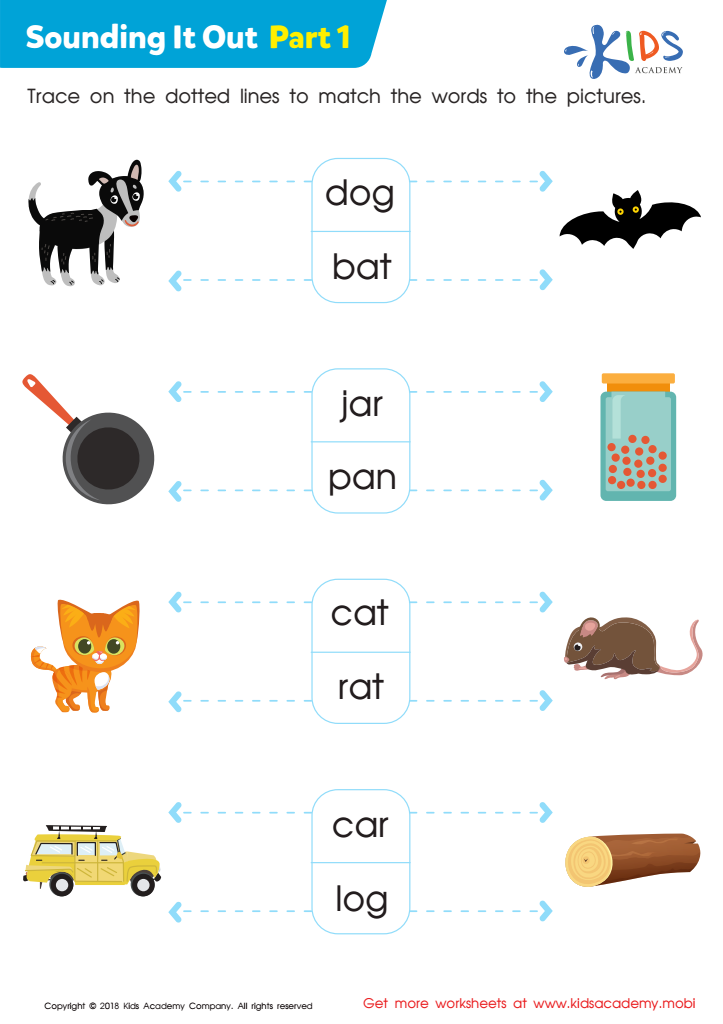
Sounding it Out: Part 1 Worksheet
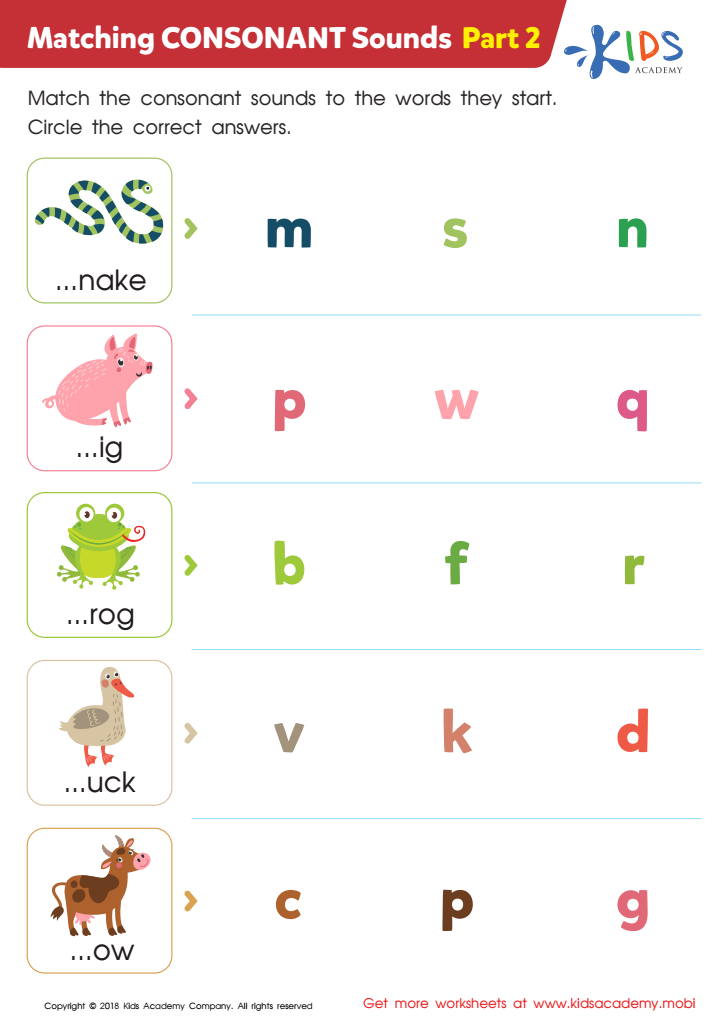
Matching Consonant Sounds: Part 2 Worksheet







Sound-letter correlation, also known as phonemic awareness and phonics, is crucial for developing early literacy skills in children aged 3-9. Understanding this relationship helps children recognize that letters represent specific sounds in words, which is foundational for reading and writing. When parents and teachers emphasize sound-letter correlation, they equip children with the tools necessary to decode unfamiliar words, fostering confidence and independence as readers.
Research shows that early exposure to phonics instruction positively impacts children's reading skills, boosting their overall academic performance. For instance, children who grasp sound-letter relationships are better at spelling and more adept at reading comprehension, leading to greater success in school. Additionally, these skills are not just essential for academic achievement but are also vital for effective communication in daily life.
Moreover, when parents engage in activities that promote sound-letter correlation, such as reading aloud, playing word games, or practicing letter-sound matching, they create a rich language environment that supports their child's learning. This collaborative approach between home and school reinforces the importance of literacy and encourages a love for reading, setting a strong foundation for lifelong learning. Thus, caring about sound-letter correlation is essential for cultivating proficient, confident readers.








