Spatial awareness development Worksheets for Ages 3-9
3 filtered results
-
From - To
Our Spatial Awareness Development Worksheets for ages 3-9 are designed to enhance young minds' understanding of their environment and spatial relationships. These engaging and educational worksheets cover essential skills such as shape recognition, object orientation, and spatial vocabulary, which are critical for early learning. Tailored to different age groups, they provide fun, hands-on activities that help children develop their ability to navigate and understand the world around them. Perfect for both classroom and home use, our worksheets support cognitive growth, fine motor skills, and problem-solving abilities, ensuring a solid foundation for future learning.
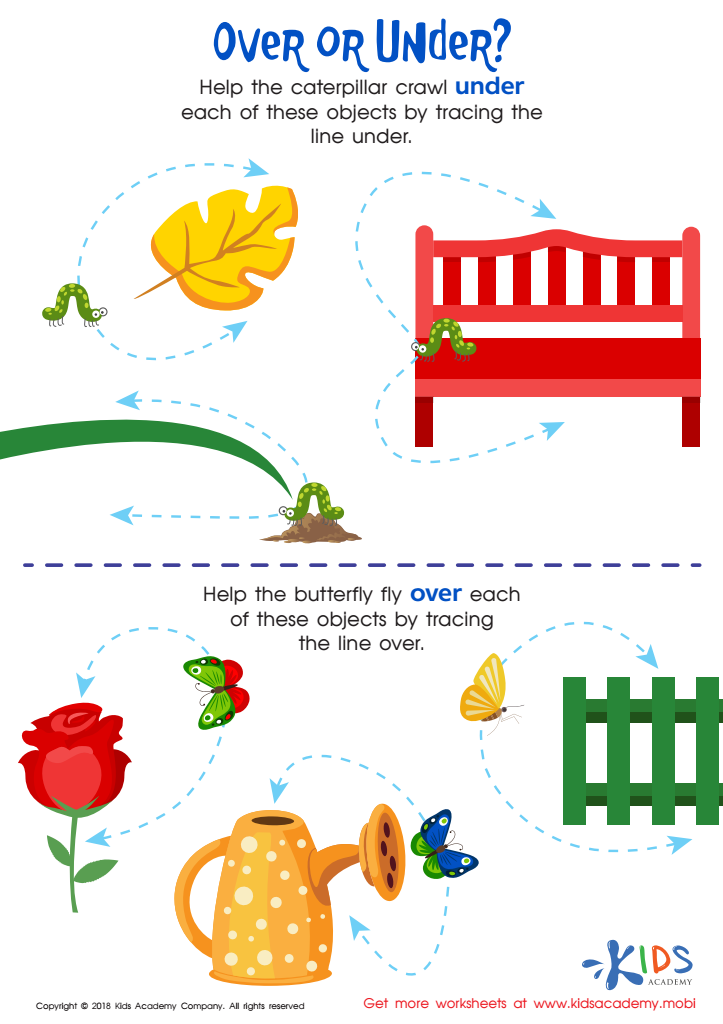
Over or Under? Worksheet
 Assign to My Students
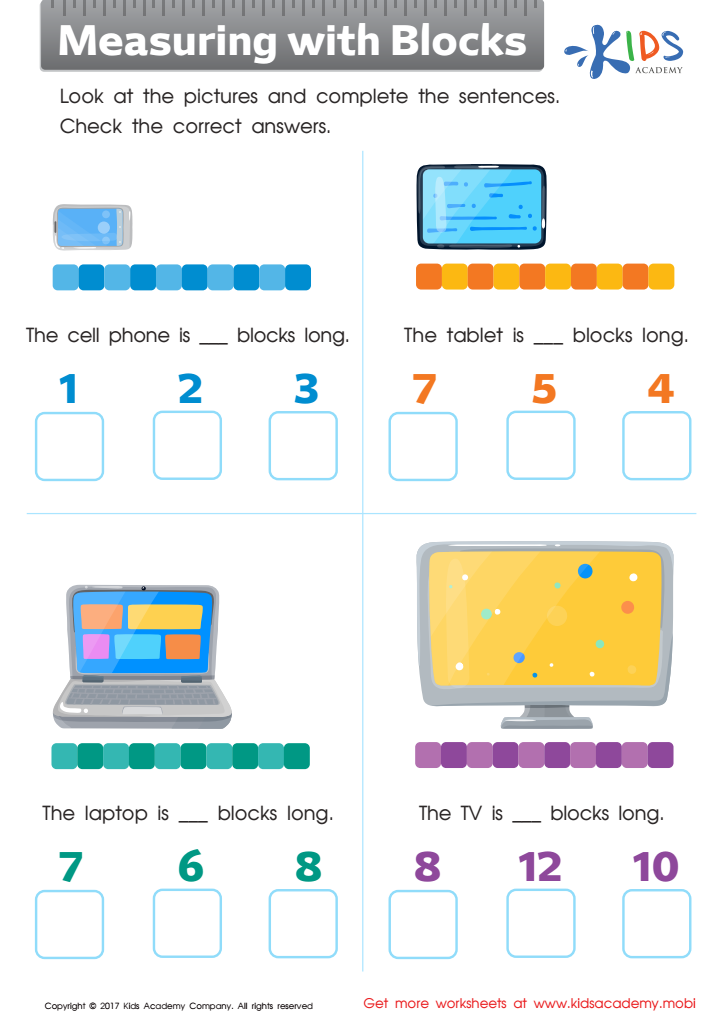
Measuring with Blocks Worksheet
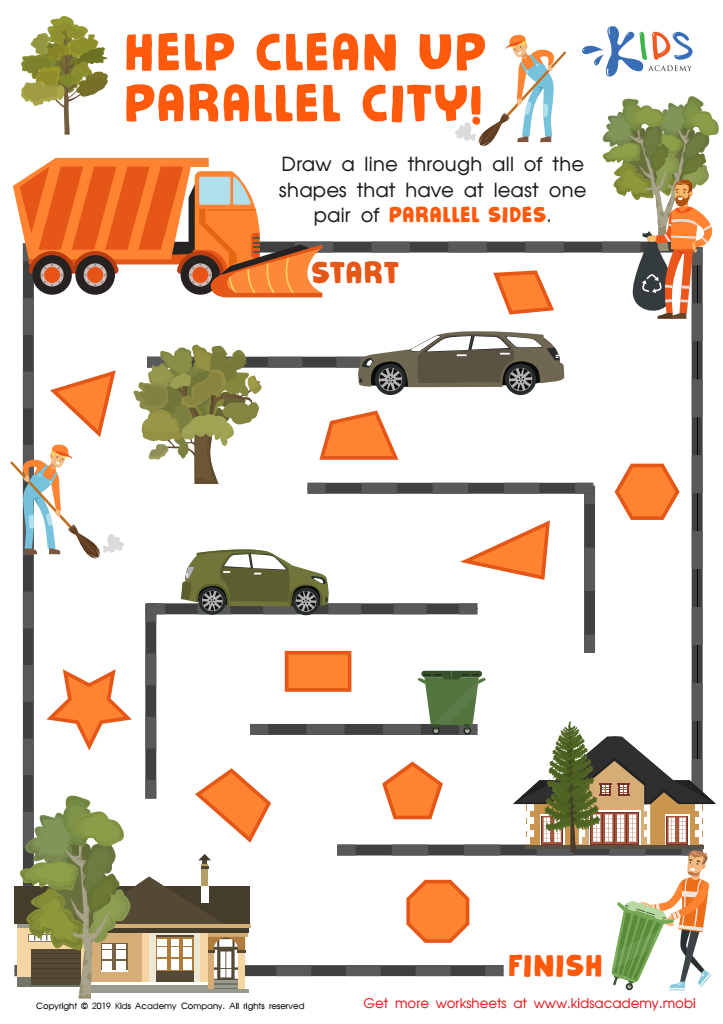
Help Clean Up Parallel City Worksheet







Spatial awareness is a crucial aspect of a child's development that parents and teachers should not overlook, especially between the ages of 3 to 9. During these formative years, children are rapidly growing and their cognitive and motor skills are developing at a remarkable pace. Spatial awareness—the understanding of near and far, direction, and the relationships between objects in space—plays a vital role in everyday tasks and overall learning.
First, spatial awareness contributes to a child's physical development. It helps children navigate their environment safely, enhancing their coordination and balance. For instance, activities like climbing stairs, riding a bike, and playing sports all require a sound understanding of space and movement.
Second, it is integral to academic success. Subjects such as mathematics, science, and even reading depend on spatial skills. Shape recognition, patterning, and understanding geometric relationships all stem from strong spatial awareness. Consequently, children who excel in spatial reasoning tend to perform better in these areas.
Lastly, fostering spatial awareness encourages problem-solving skills. It helps children visualize solutions, think abstractly, and develop logical thinking patterns. Activities like puzzles, building blocks, and drawing not only make learning fun but also nurture these essential skills.
By investing in the development of spatial awareness, parents and teachers can lay down a strong foundation for a child’s overall cognitive growth, academic achievements, and practical life skills.








