Syllable identification Worksheets for Ages 3-9
7 filtered results
-
From - To
Boost your child's reading proficiency with our engaging Syllable Identification Worksheets, designed for ages 3-9. These carefully crafted worksheets transform learning into play, offering colorful exercises that help young learners effortlessly identify and count syllables in words. Ideal for building phonological awareness, our printable materials cater to varying skill levels, ensuring a tailored educational experience. Created by experts in early childhood education, these activities support language development and pave the way for confident readers. Explore our collection today to inspire a lifelong love for reading and enhance your child's foundational literacy skills. Perfect for both classroom and home use!
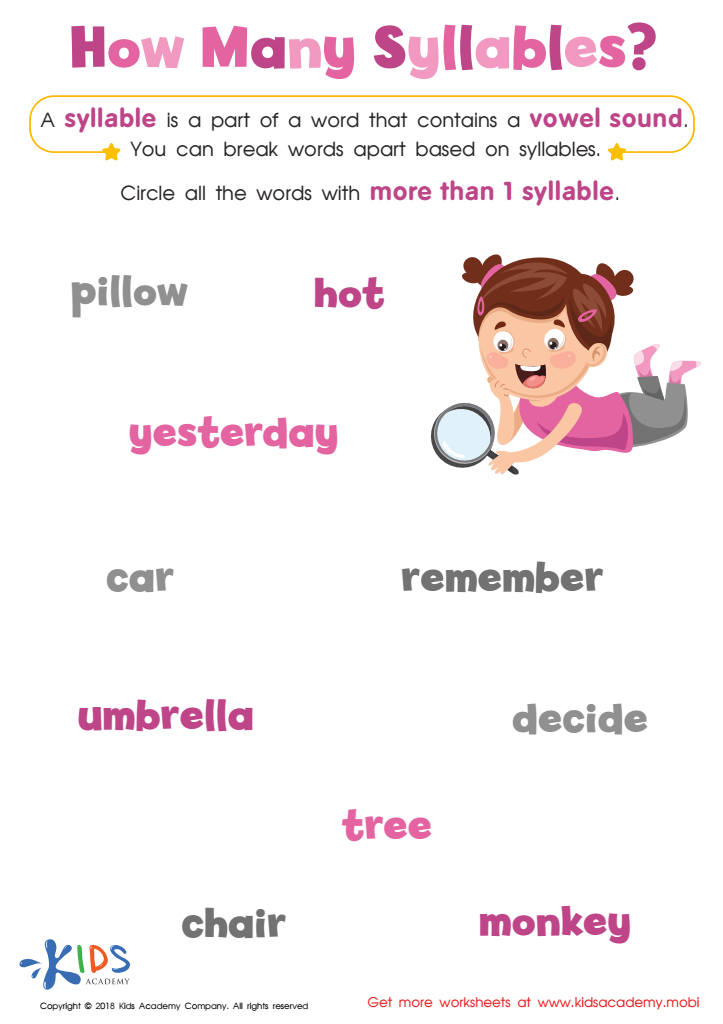
Reading: How Many Syllables Worksheet
 Assign to My Students
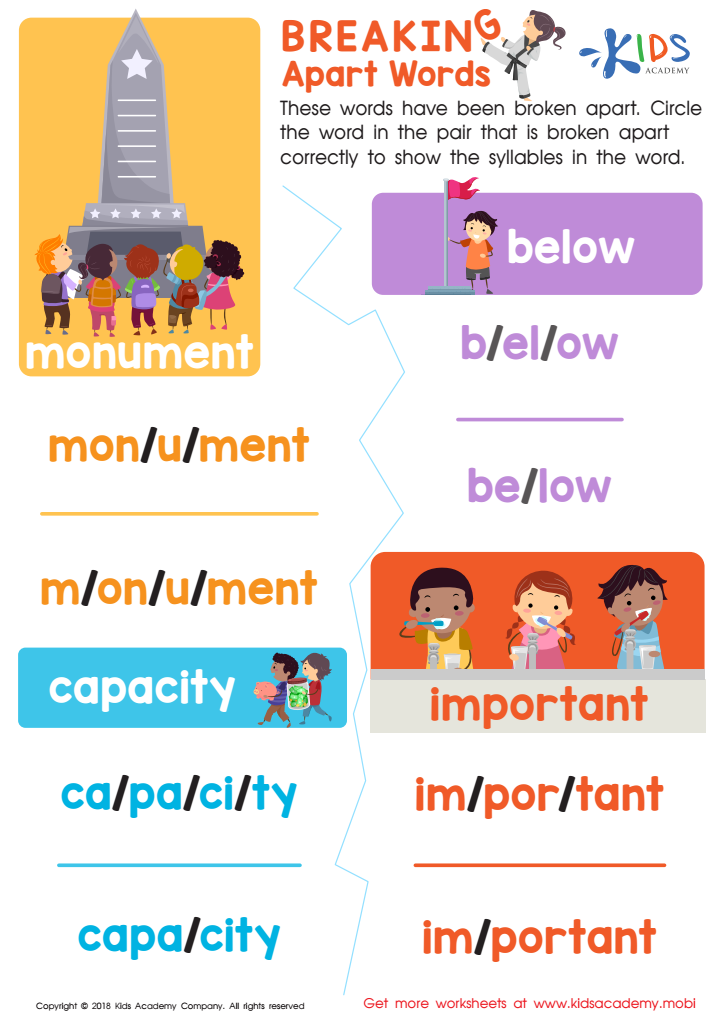
Breaking Apart Words Worksheet
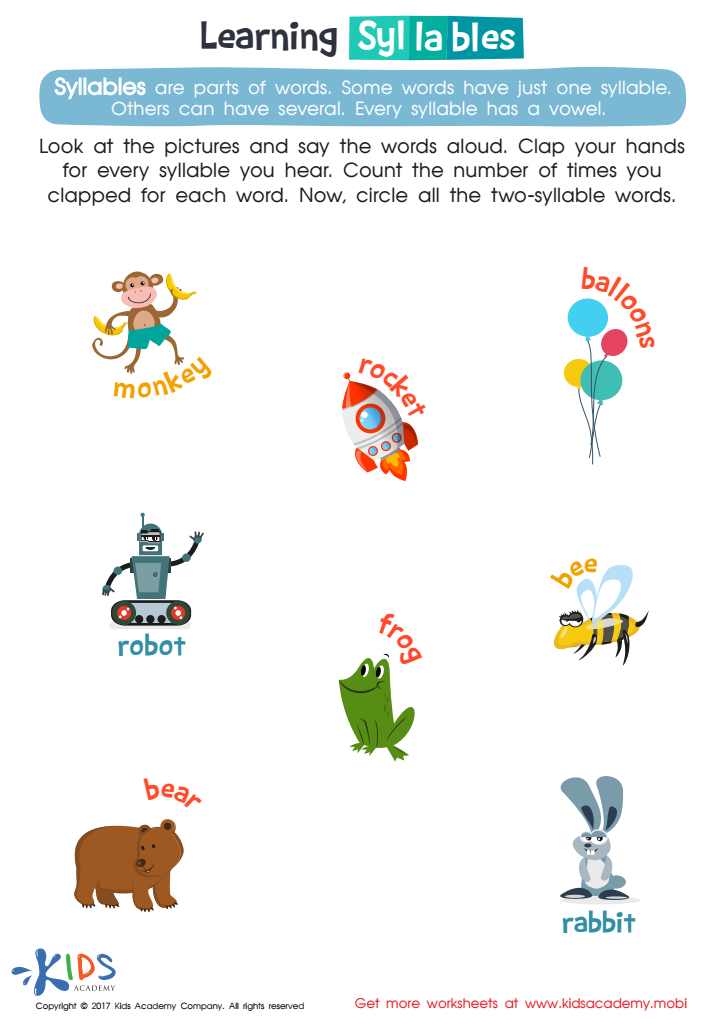
Learning Syllables Word Structure Worksheet
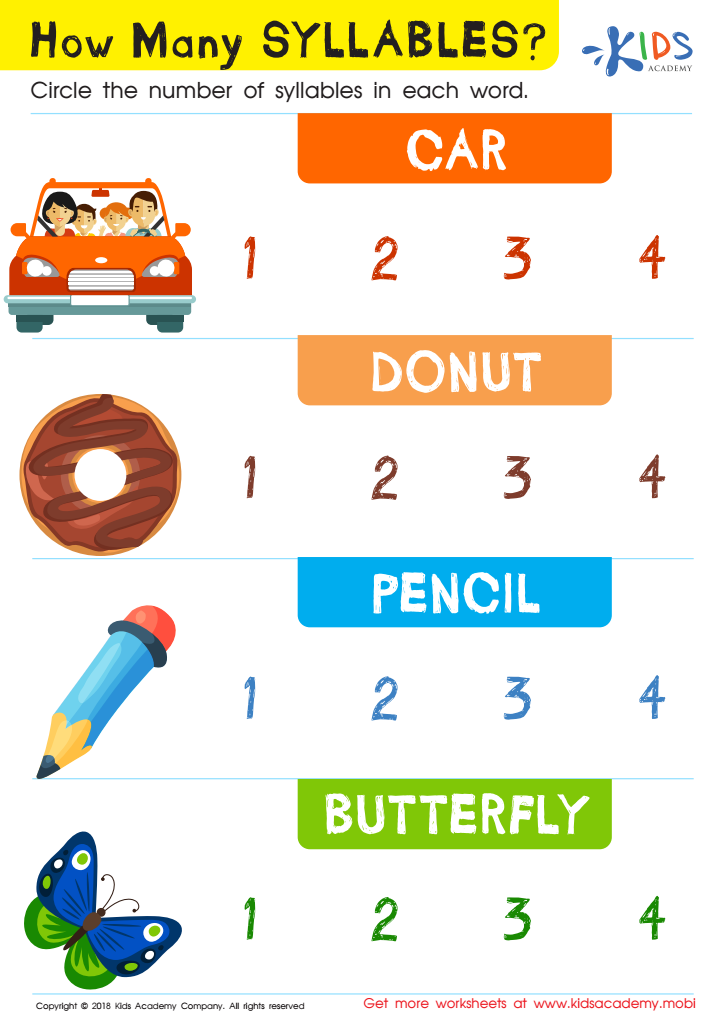
How Many Syllables? Worksheet
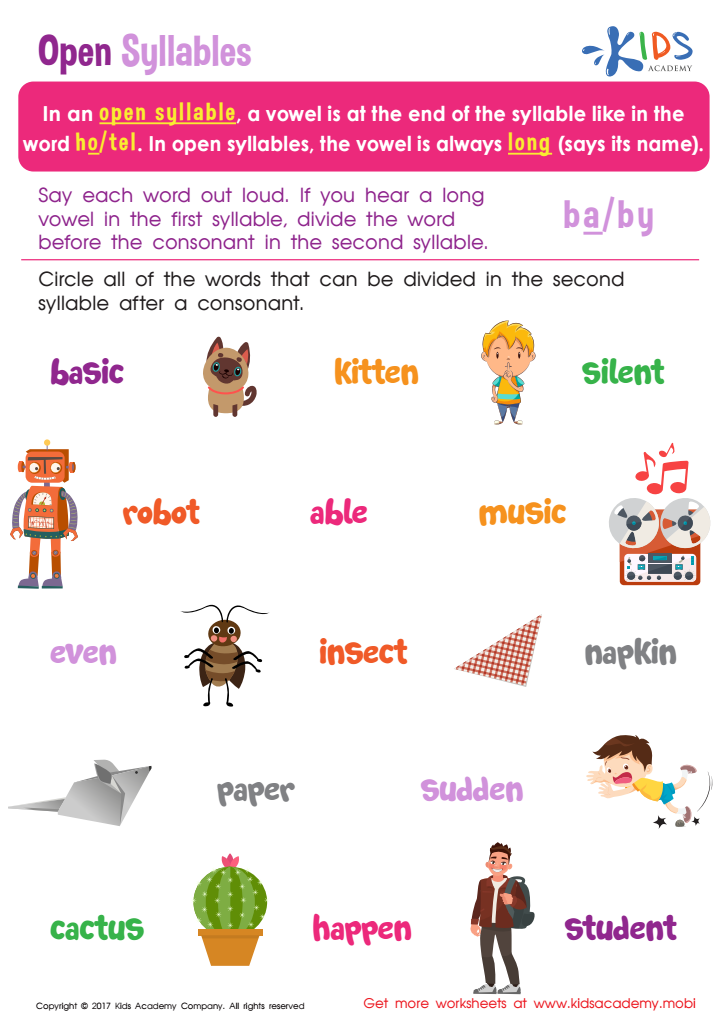
Open Syllable Printable Worksheet
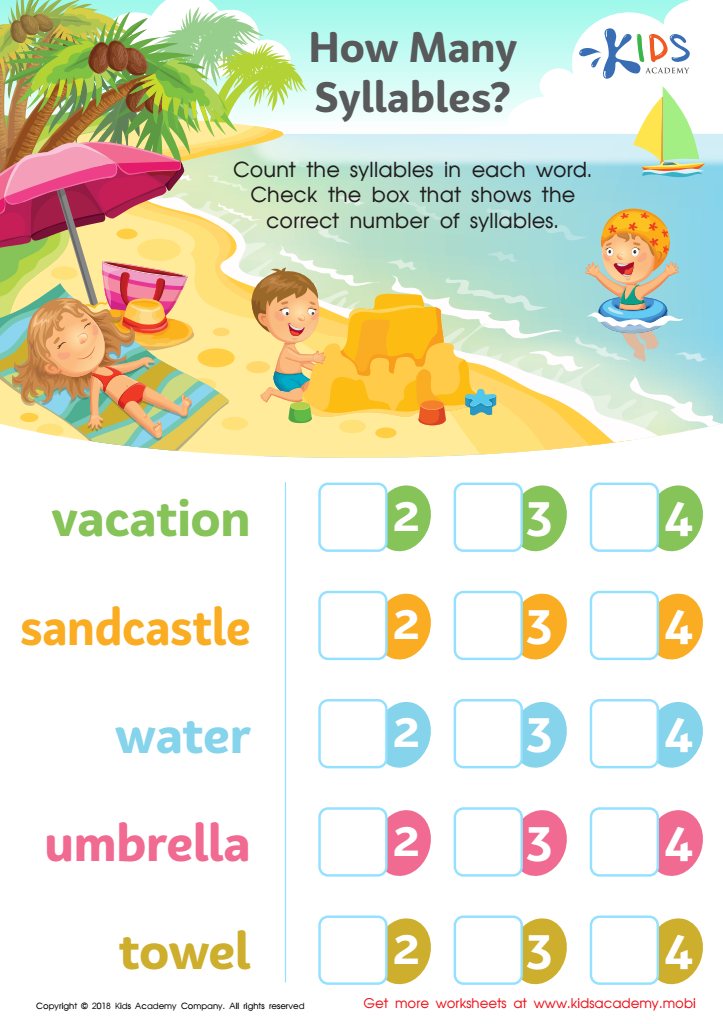
How Many Syllables Worksheet
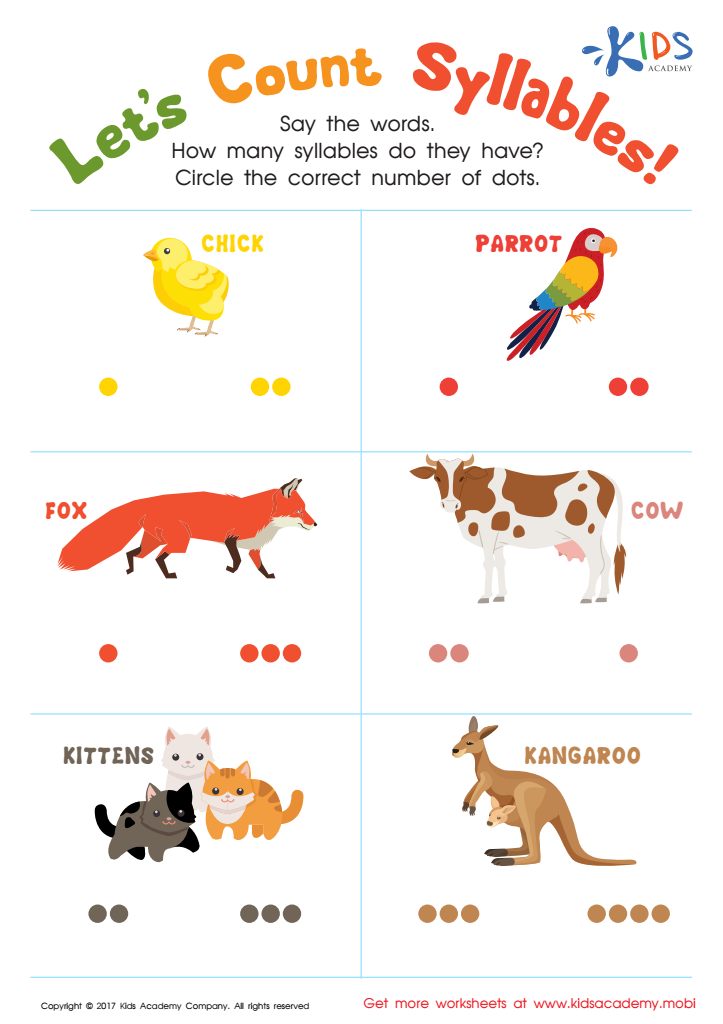
Lets Count Syllables Worksheet








Understanding syllables is a foundational skill crucial for young children's language and literacy development. Syllable identification—a key component in phonological awareness—helps children break down words into more manageable parts. This skill is integral for several reasons:
First, it aids in reading proficiency. Young readers learn to decode unfamiliar words more easily by recognizing syllables. For example, knowing that "banana" breaks into three syllables (ba-na-na), simplifies the reading process. Mastering syllable segmentation can make reading smoother and more fluent.
Second, it supports spelling. When children understand syllables, they become more adept at spelling. It allows them to write longer, complex words correctly by recognizing each part of the word.
Third, syllable awareness contributes to better pronunciation and speech clarity. Knowing where the syllable breaks occur can help children articulate words more accurately, thereby improving communication skills.
Moreover, recognizing syllables enhances vocabulary development. This skill enables children to understand word structures and internal patterns, making it easier to grasp new words and their meanings.
Parents and teachers play pivotal roles in nurturing these skills through engaging and interactive activities such as clapping out syllables, games, and story reading. Investing time and effort in syllable identification will lead to significant long-term educational benefits for children aged 3-9.








