Understanding food chains Worksheets for Ages 3-9
3 filtered results
-
From - To
Explore our engaging "Understanding Food Chains Worksheets" designed for children ages 3-9! These educational resources offer a fun and interactive way to introduce young learners to the concept of food chains, showcasing how plants and animals interact in nature. With colorful visuals and age-appropriate activities, your child will develop essential skills such as observation, critical thinking, and connections to their environment. Each worksheet encourages creativity and promotes a deeper understanding of ecosystems. Perfect for homeschooling or classroom use, these worksheets make learning about ecology enjoyable and accessible. Help your child discover the wonders of nature's food webs today!
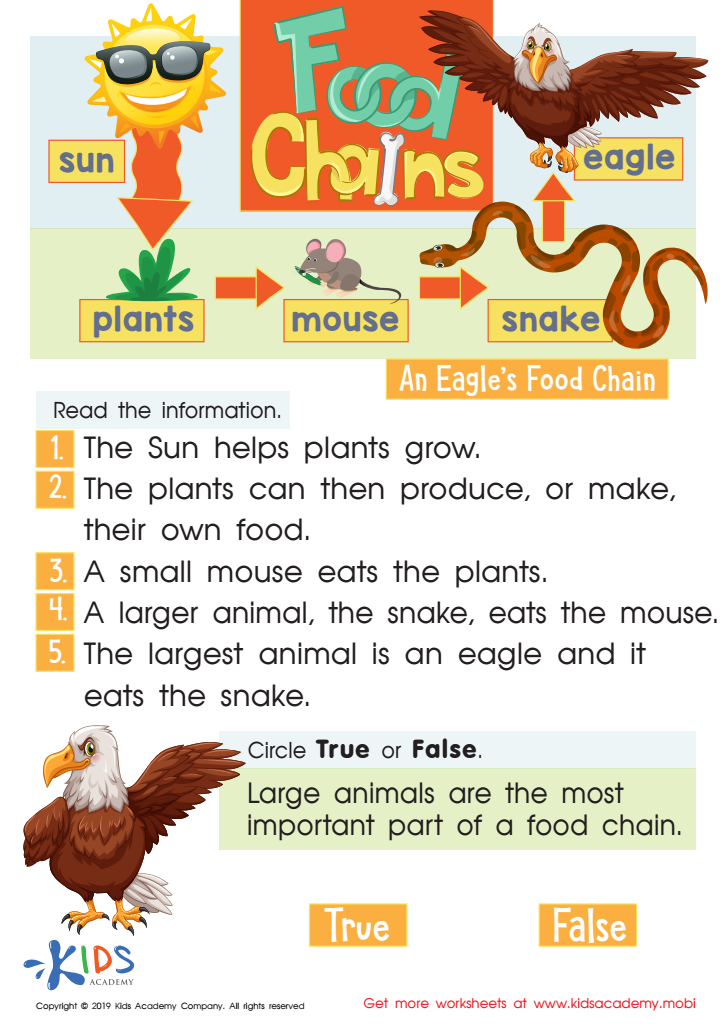
Food Chains Worksheet
 Assign to My Students
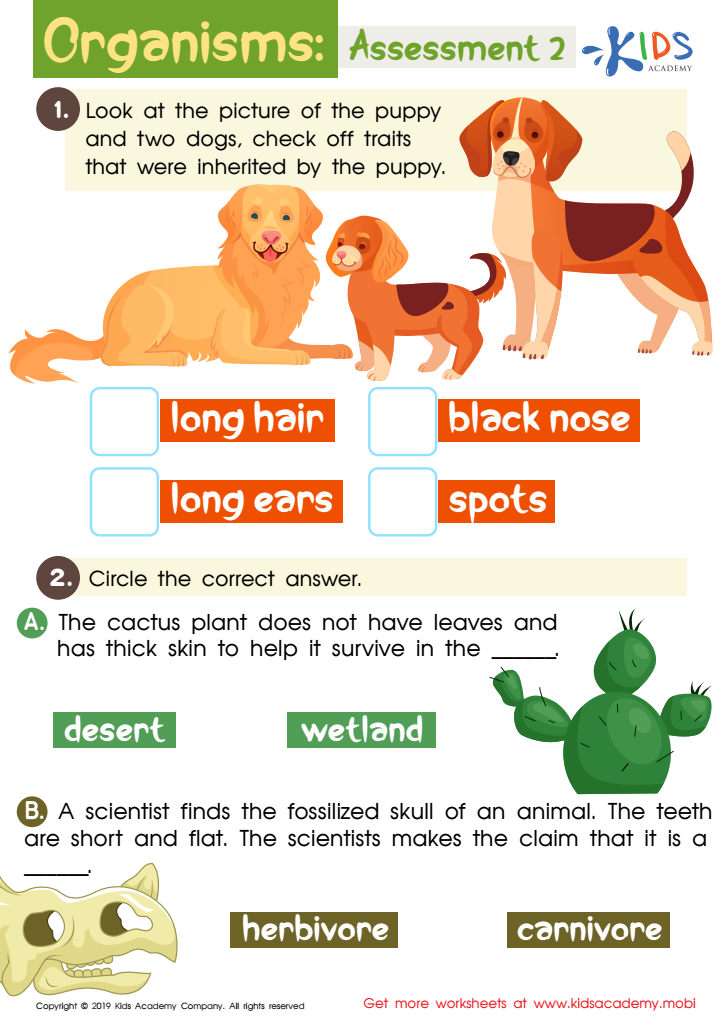
Organisms: Assessment 2 Worksheet
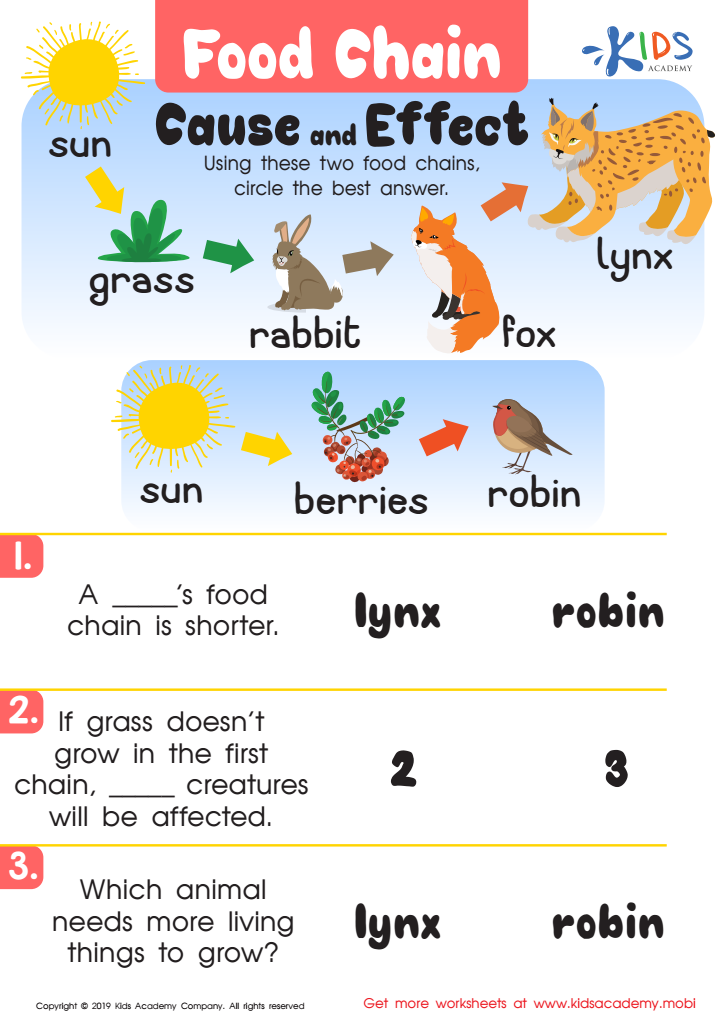
Food Chain Cause Worksheet








Understanding food chains is crucial for children aged 3-9 because it lays the foundation for their comprehension of ecosystems and environmental science. At this age, children are naturally curious about the world around them and teaching them about food chains fosters that curiosity into a meaningful framework.
By learning what food chains are, children develop an appreciation for how living organisms are interconnected. They begin to understand the roles of producers, consumers, and decomposers within their environment, which is vital for developing ecological awareness. This understanding encourages respect for nature and instills a sense of responsibility toward protecting the environment.
Additionally, discussions around food chains promote critical thinking skills as kids analyze the relationships between different creatures and their habitats. It serves as an opportunity to explore topics like predator-prey relationships, the concept of balance in nature, and the impact of food sourcing on local ecosystems.
Moreover, integrating topics like food chains into classrooms and homes makes learning interactive and fun through activities, such as creating food chain diagrams or field trips. This can enhance parent-child bonding through shared educational experiences. Ultimately, comprehending food chains fosters an early awareness of biology and environmental stewardship in young learners.








