Understanding number value Worksheets for Ages 3-9
4 filtered results
-
From - To
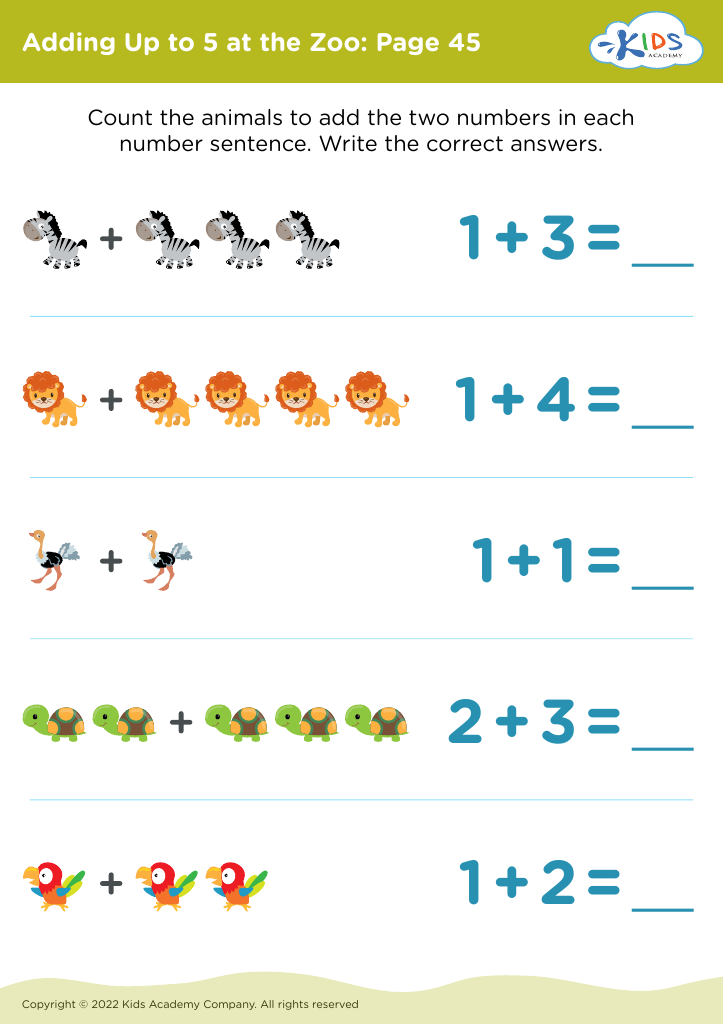
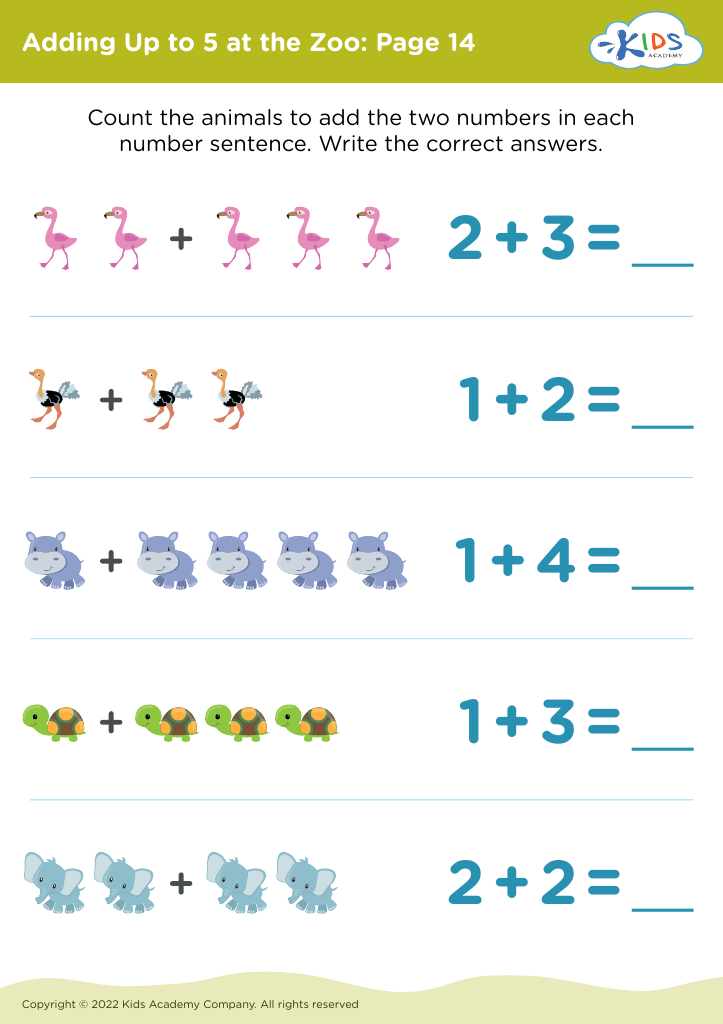
Explore our "Understanding Number Value Worksheets" designed for children aged 3 to 9! These engaging and interactive worksheets help young learners grasp foundational math concepts, such as recognizing and comparing numbers and understanding their value in fun, intuitive ways. Through colorful illustrations and age-appropriate activities, children will develop essential numeracy skills that are crucial for their academic growth. Our resources support parents and educators in fostering a love for math, making learning both enjoyable and effective. Dive into our collection today and watch your child gain confidence in understanding number values with ease and excitement!
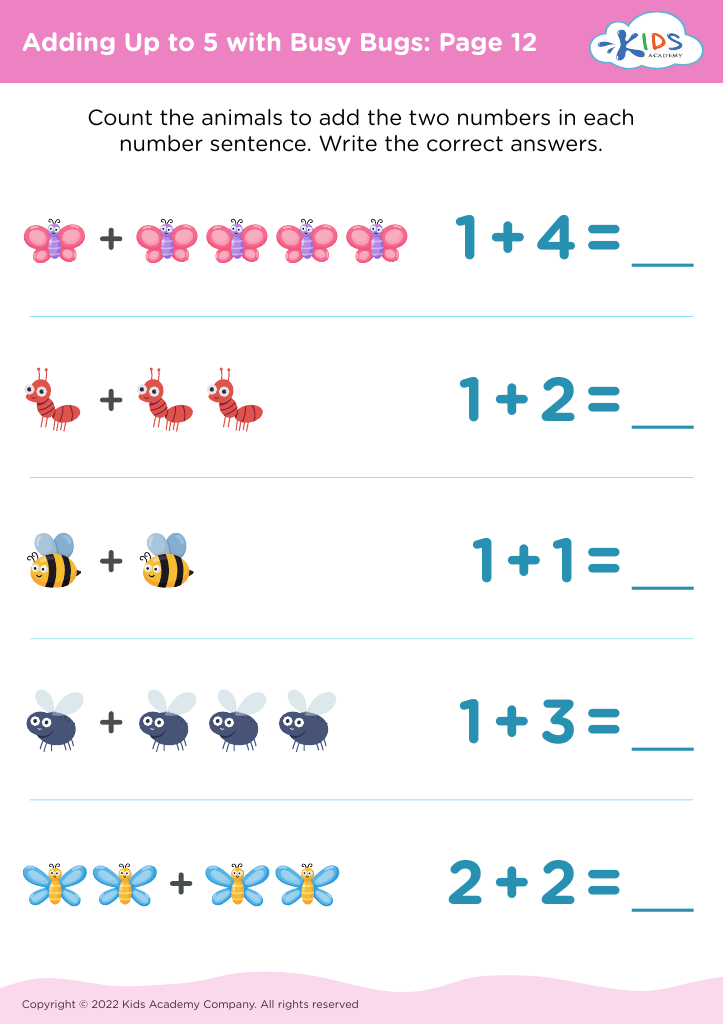
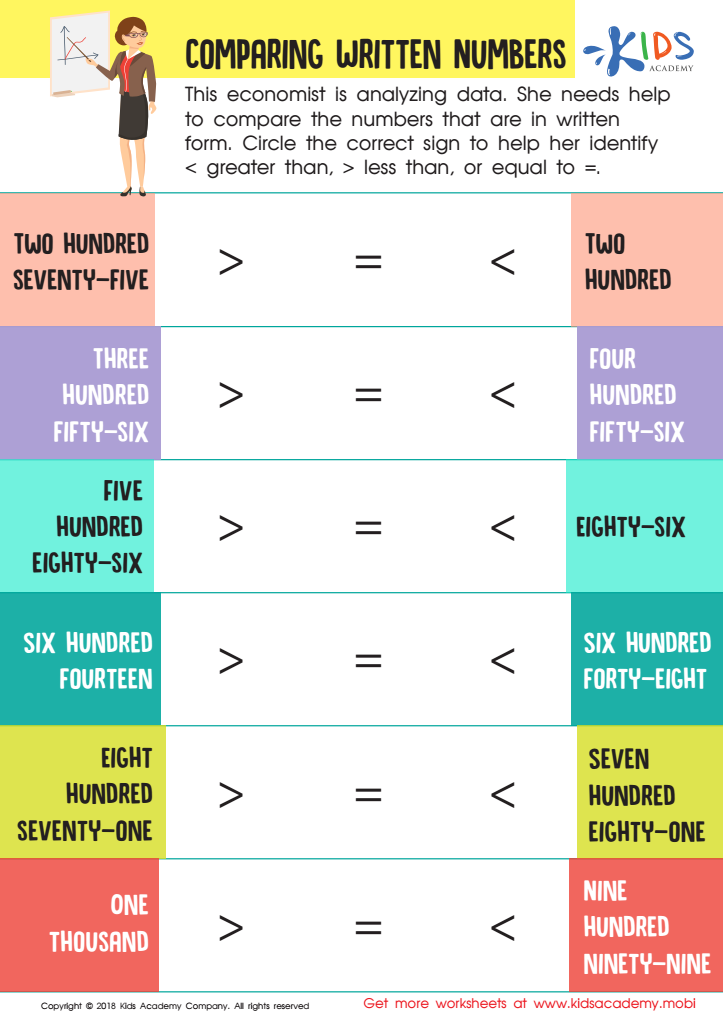
Comparing Written Numbers Worksheet
 Assign to My Students







Understanding number value is crucial for children aged 3-9, as it lays the foundation for their mathematical development and overall cognitive skills. At this age, children are developing their ability to recognize numbers, understand quantity, and grasp the concept of more or less. This skill is essential not only for early math proficiency but also for problem-solving abilities across various subjects.
Parents and teachers should care about this concept because it fosters critical thinking and logical reasoning. When children understand the value of numbers, they begin to relate math to real-world situations, such as counting objects, comparing sizes, or managing money. This understanding develops their confidence and reduces math anxiety, preparing them for more complex mathematical concepts in later grades.
Moreover, number sense encourages a positive relationship with math. Engaging children through playful activities—like counting games or sorting objects—can make learning enjoyable and effective. Additionally, a strong foundation in number value supports academic achievement later on, as students who struggle with basic math often face challenges in advanced mathematics.
In summary, nurturing an understanding of number value during these formative years not only enhances children's mathematical skills but also supports their overall intellectual and emotional growth.








