
Understanding opposites Worksheets for Ages 3-9
7 filtered results
Difficulty Level
Grade
Age
-
From - To
Subject
Activity
Standards
Introduce your child to the world of contrasts with our "Understanding Opposites Worksheets for Ages 3-9." Designed to enhance vocabulary, critical thinking, and cognitive skills, these expertly crafted worksheets are perfect for young learners. Through engaging illustrations and interactive activities, children will learn to identify and differentiate between opposites, such as big and small, hot and cold, or happy and sad. Each worksheet is tailored to progressively challenge kids within this age range, ensuring they remain motivated and excited. Turn learning into a fun and educational experience, preparing your child for future academic success. Explore our collection today and make opposites attract!
Favorites
With answer key
Interactive
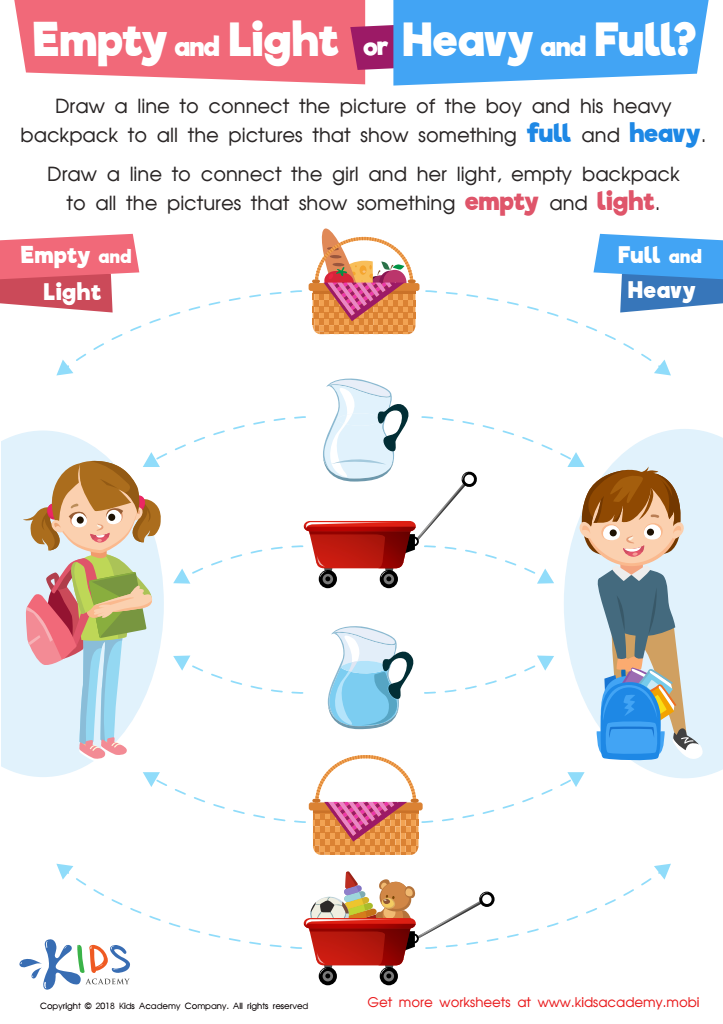
Empty and Light or Heavy and Full? Worksheet
Kids can have trouble understanding measurement, like the differences between heavy and light. This worksheet helps them associate full with heavy and empty with light, using familiar images. Plus, it's a fun way to practice fine motor skills, tracing the lines to connect the pictures.
 Assign to My Students
Empty and Light or Heavy and Full? Worksheet
Worksheet
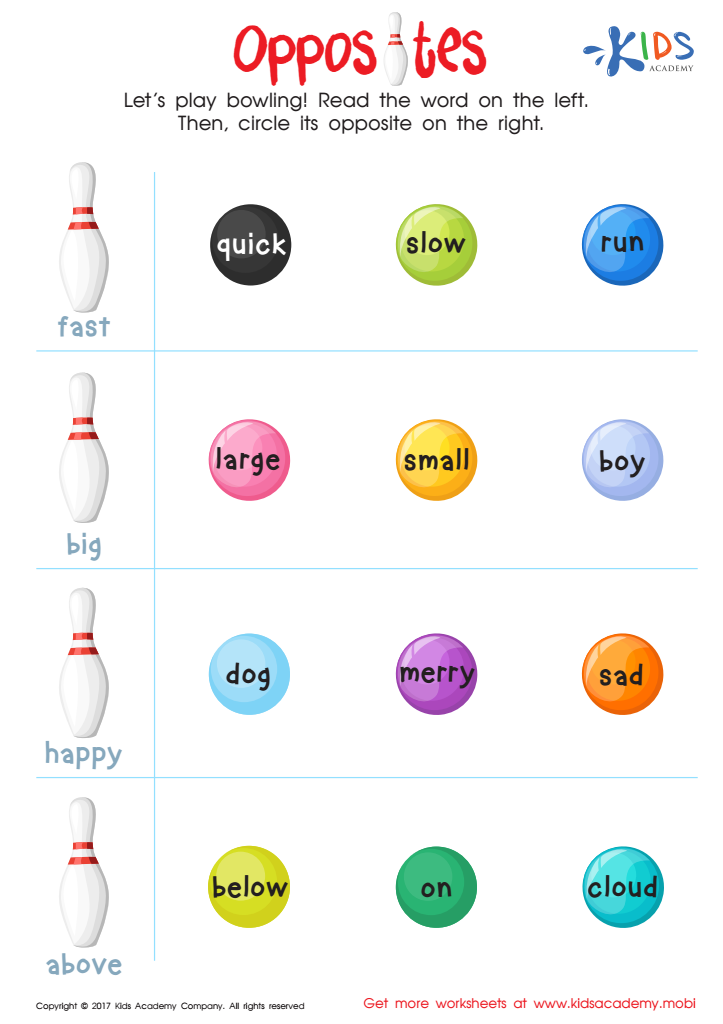
Opposites Worksheet
Have your students identify and circle the opposites of the words on the left. As a fun bowling-themed exercise, read the words and ask your kids if they know the opposites. Look through the options on the right and see if the answer is there; then, circle the correct answers.
Opposites Worksheet
Worksheet
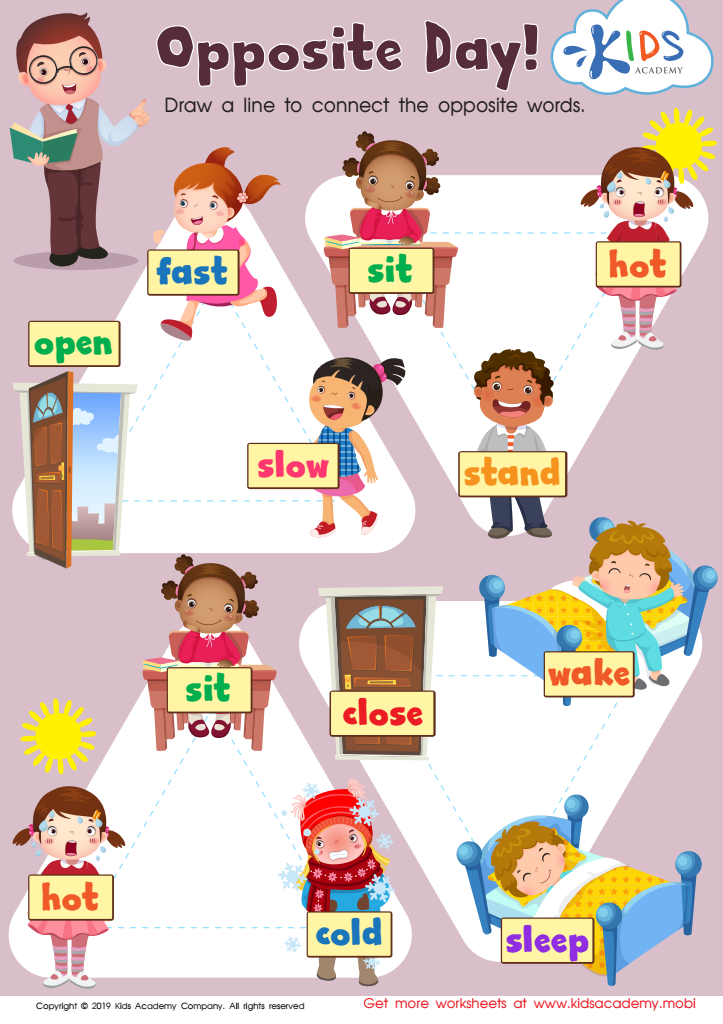
Opposite Day Worksheet
Early learners need to know about opposites to improve their higher-order thinking and critical thinking. This fun worksheet helps them understand the concept, practice opposite words, read high-frequency words and work on fine motor skills. Download the traceable PDF to get started.
Opposite Day Worksheet
Worksheet
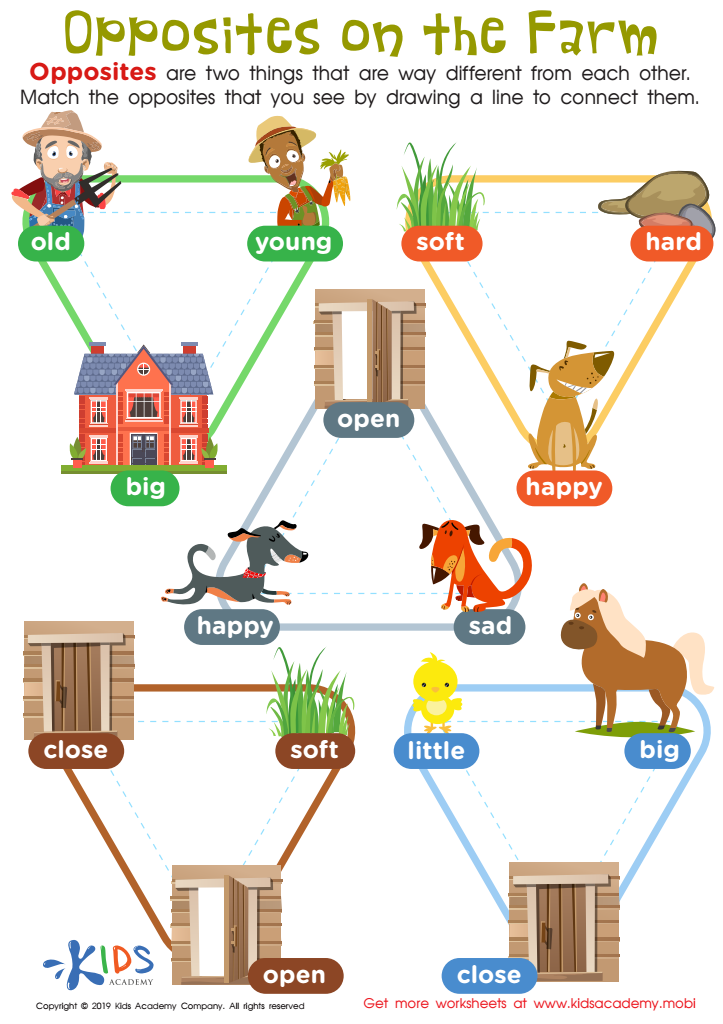
Opposites on the Farm Worksheet
Teaching children the concept of opposites is important for their development. This worksheet offers a fun way to practice. Kids can use traceable lines to match farm imagery with pairs of opposites. It's a great way to help them compare and contrast, a key skill for reading, math, writing and more.
Opposites on the Farm Worksheet
Worksheet
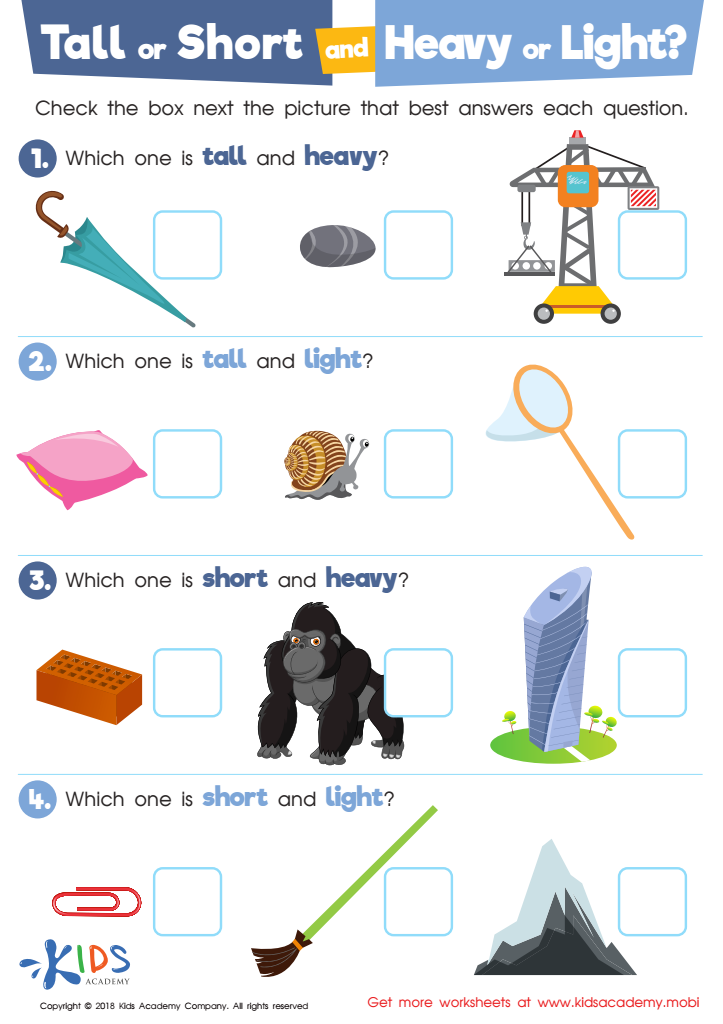
Tall or Short and Heavy or Light? Worksheet
Young children can find basic measurement concepts tricky. This PDF introduces them to the appropriate vocabulary for describing heavy, light, tall and short items, by using familiar pictures. It helps them accurately select which items fit each category.
Tall or Short and Heavy or Light? Worksheet
Worksheet
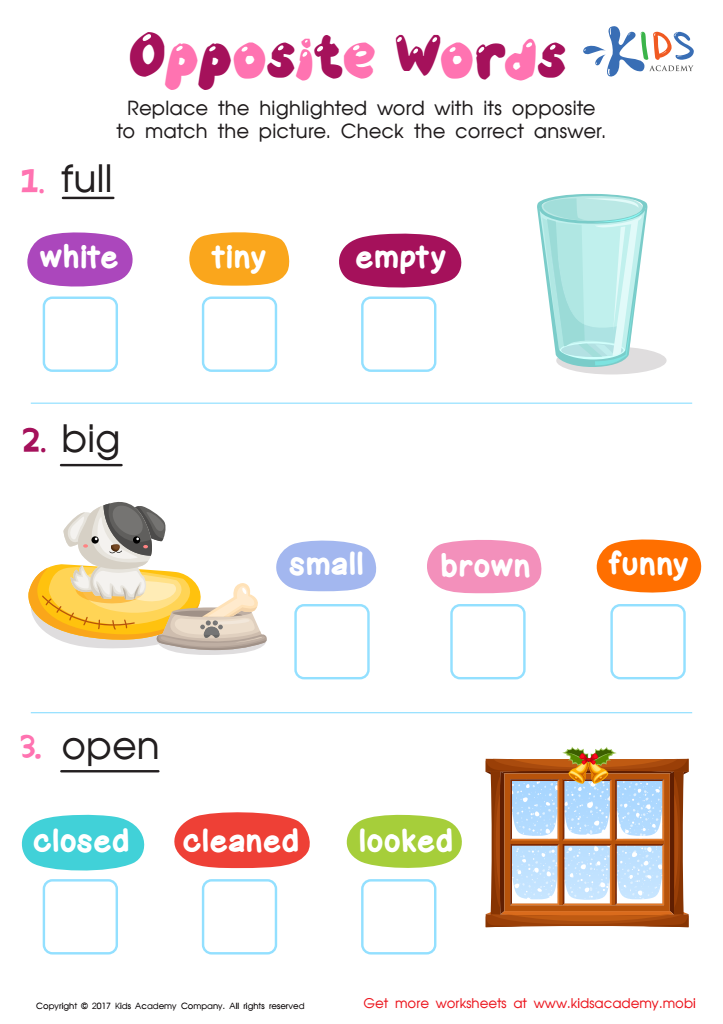
Opposite Words Worksheet
Help your child learn words and opposites. Look through a worksheet with them. Ask if they can read the underlined words. Then, ask which highlighted word is the opposite of the underlined word. The answer should match the picture.
Opposite Words Worksheet
Worksheet
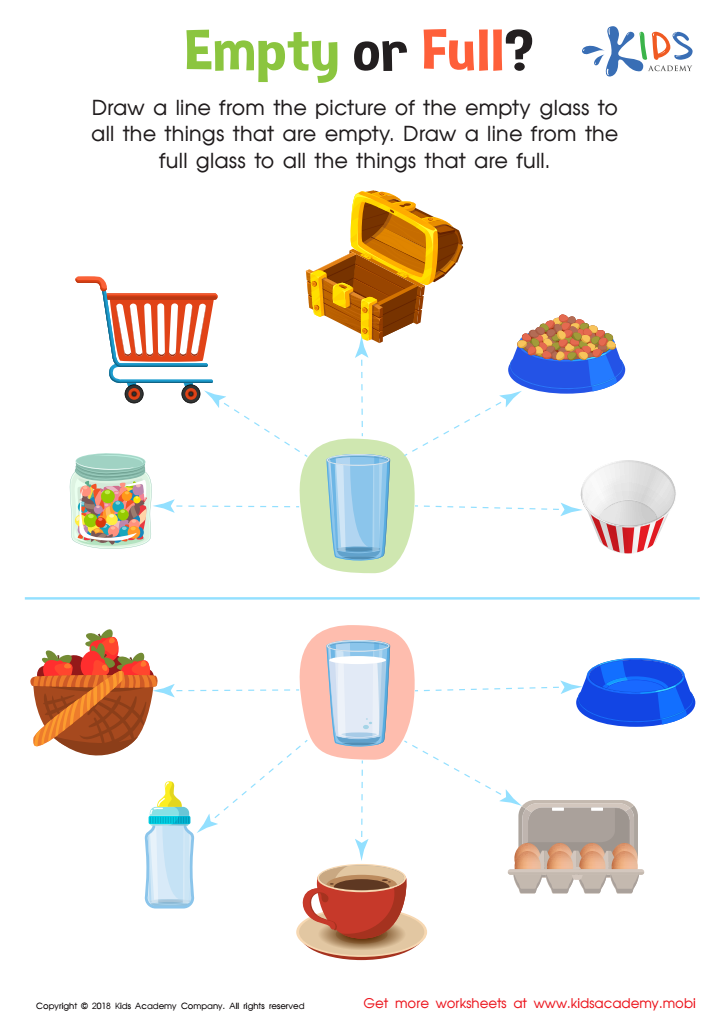
Empty or Full? Worksheet
Let students get to grips with the concepts of empty and full with this PDF worksheet. It uses fun, bright pictures to help them comprehend the difference and also helps develop fine-motor skills with tracing lines. Kids will be proud of themselves as they get answers right!
Empty or Full? Worksheet
Worksheet
Join Kids Academy for Free
Who is primarily going to use this learning content?





.jpg)
Understanding opposites is a fundamental cognitive skill essential for young children aged 3-9, and it's important for both parents and teachers to nurture this comprehension. Learning opposites helps children enhance their vocabulary and language development, enabling them to communicate more effectively. By grasping concepts like "big-small" and "hot-cold," children build a richer and more precise lexicon.
Cognitively, recognizing opposites fosters critical thinking and early problem-solving skills. It encourages children to categorize, compare, and contrast different objects and scenarios, leading to better analytical abilities. Simple exercises with opposites can make abstract thinking more tangible and relatable for young minds.
Socially, understanding opposites aids in developing empathy and social awareness. When children understand contrasting emotions such as “happy-sad” or “kind-mean,” they become more attuned to the feelings of others and learn appropriate social behaviors.
Besides, teaching opposites can be engaging and fun through games, stories, and interactive activities, which keeps children interested in learning. Whether sorting objects by size or discussing different weather extremes, these activities lay the foundation for later complex concepts in math and science.
In conclusion, the appreciation of opposites is foundational for language, cognitive, and social development in children. Parents and teachers play a critical role in cultivating this essential skill to support the overall growth of young learners.








