Understanding pollination Worksheets for Ages 3-9
4 filtered results
-
From - To
Discover the wonders of nature with our "Understanding Pollination Worksheets for Ages 3-9." Tailored for young learners, these engaging worksheets simplify the complex process of pollination, making it accessible and fun. Through vibrant illustrations and interactive activities, children will explore how bees, butterflies, and other pollinators help flowers grow and thrive. Our worksheets foster curiosity and enhance learning skills, encouraging kids to observe the natural world around them. Perfect for homeschooling or classroom settings, these printable resources support foundational science education and inspire future environmentalists. Help your child blossom with our easy-to-follow, educational worksheets today!
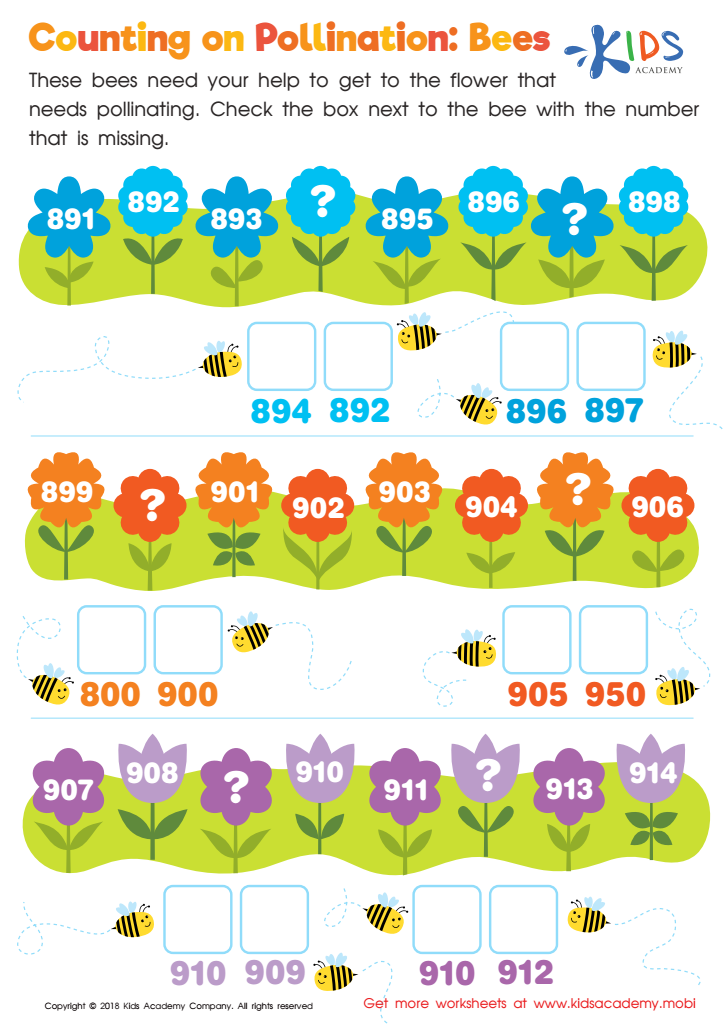
Counting on Pollination: Bees Worksheet
 Assign to My Students
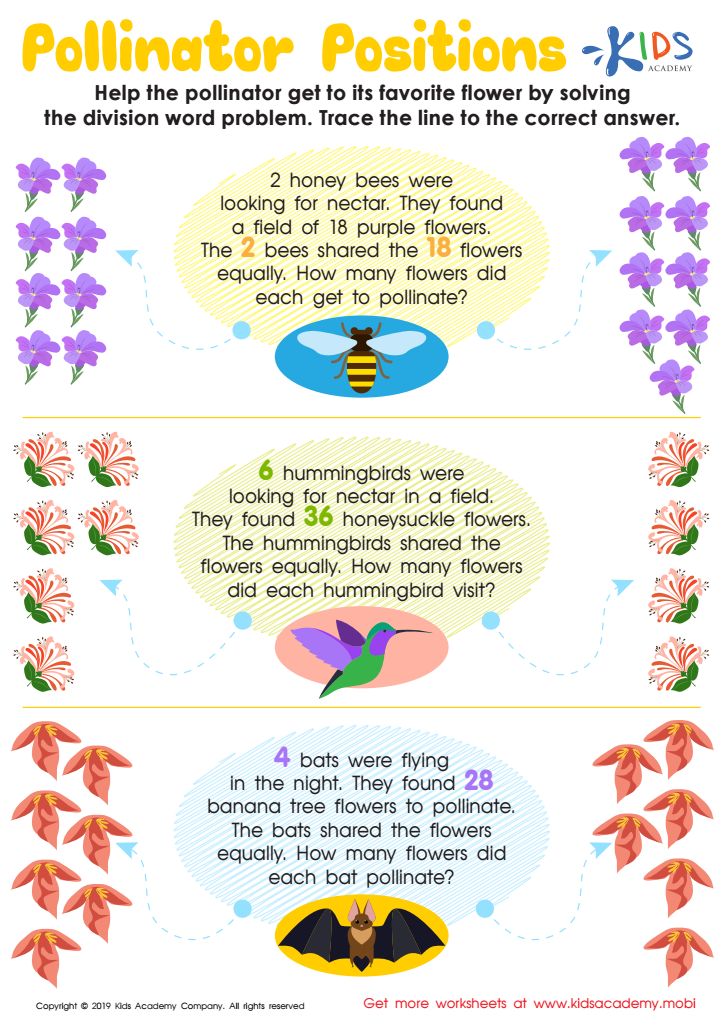
Pollinator Positions Worksheet
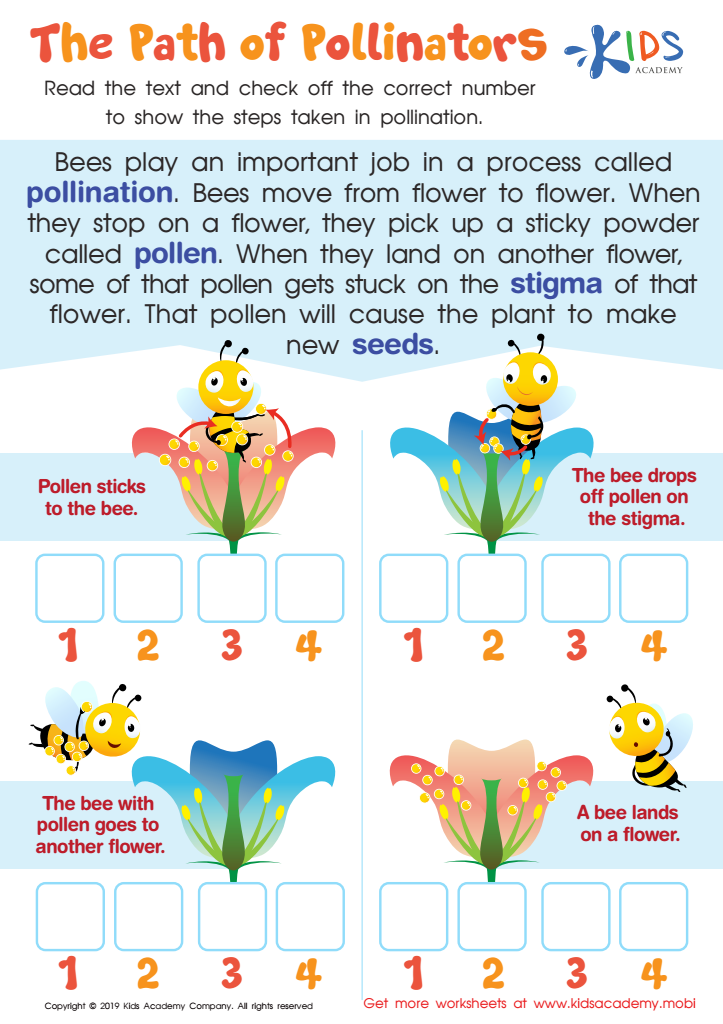
The Path of Pollinators Worksheet
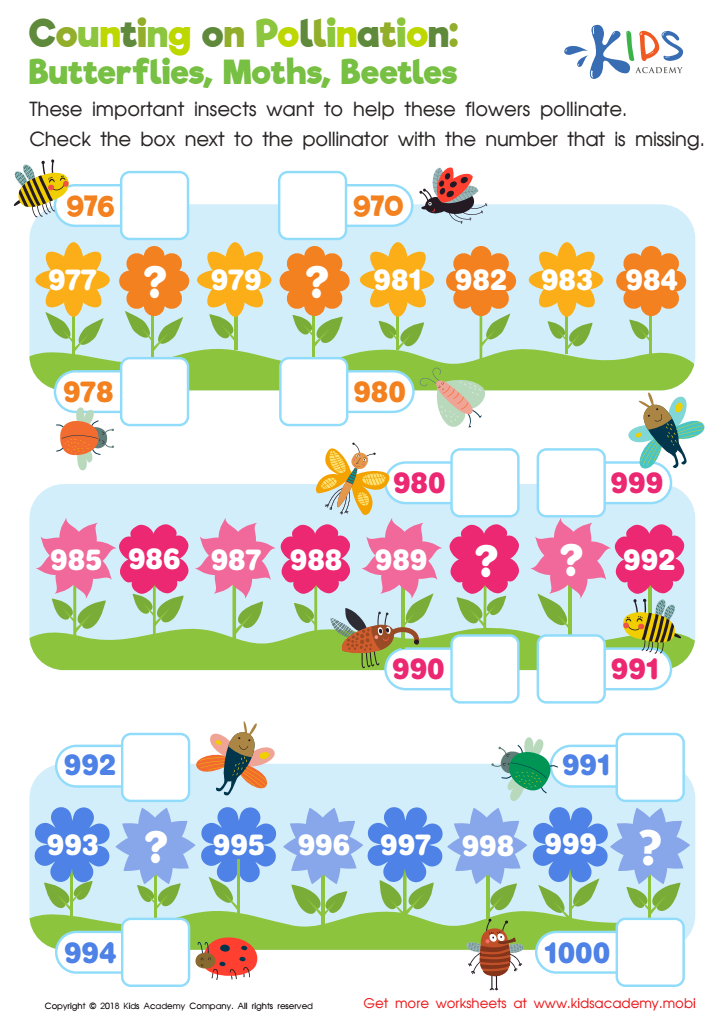
Counting on Pollination: Butterflies, Moths, Beetles Worksheet







Understanding pollination is essential for young children as it forms a foundational block in their curiosity about nature and science. For ages 3-9, these concepts fuel a sense of wonder and connection to the world around them. When parents and teachers introduce pollination, they help kids comprehend how plants grow and produce food, emphasizing the importance of bees, butterflies, and other pollinators.
Teaching kids about pollination also underscores the value of environmental protection. They learn that pollinators are vital for sustaining ecosystems, biodiversity, and even human food supplies. Awareness at this age can foster good habits like protecting pollinator habitats, planting flowers, and reducing pesticide use potential.
Moreover, grasping this concept enhances their scientific thinking. They learn to observe, ask questions, and understand life cycles. This kindles skills such as critical thinking, inquiry, and problem-solving.
Hands-on activities like planting seeds or observing flowers result in engaging, sensory-rich learning experiences. Younger children especially benefit from tactile, visual lessons, making complex ideas more relatable.
Ultimately, exploring pollination boosts children's appreciation for nature, promoting lifelong respect and stewardship for the environment. Early introduction helps build knowledgeable, responsible citizens for a sustainable future.








