Understanding Simple Machines Worksheets for Ages 3-9
4 filtered results
-
From - To
Discover the fascinating world of simple machines with our engaging worksheets, tailored for ages 3-9. These interactive printable sheets introduce young minds to the basics of levers, pulleys, wedges, screws, inclined planes, and wheels & axles. Designed to nurture early learning skills, each worksheet combines illustrations, easy-to-understand explanations, and fun activities to make complicated concepts accessible. Whether at home or in the classroom, these resources help children develop critical thinking, problem-solving abilities, and a love for science. Unlock your child's potential with our expertly crafted worksheets and watch their curiosity and knowledge soar!
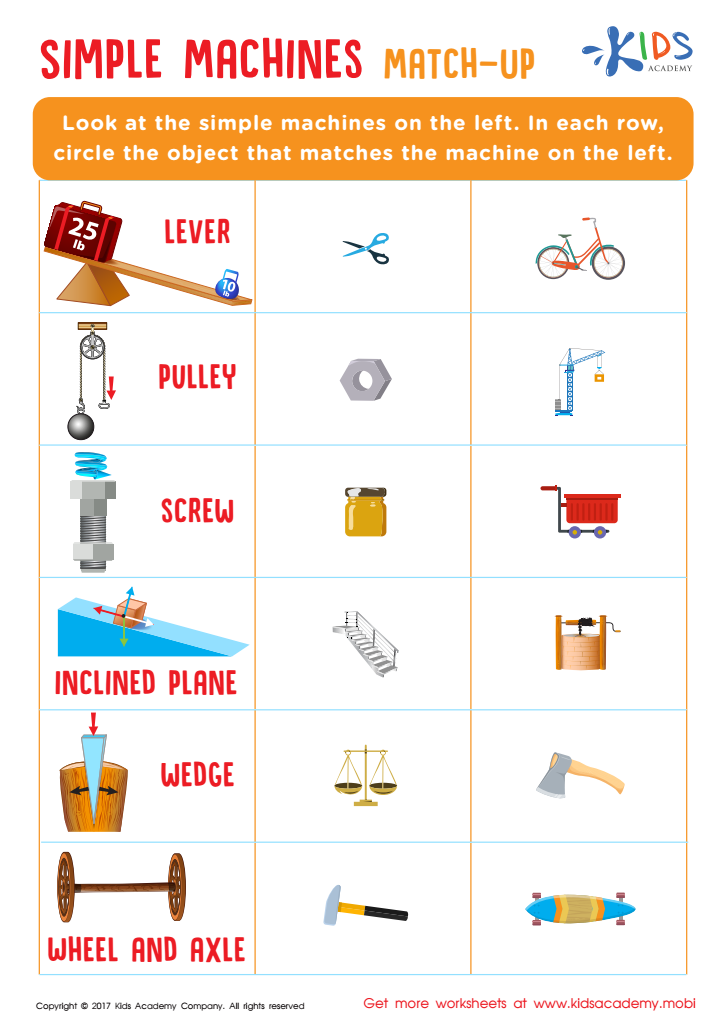
Simple Machines Worksheet
 Assign to My Students
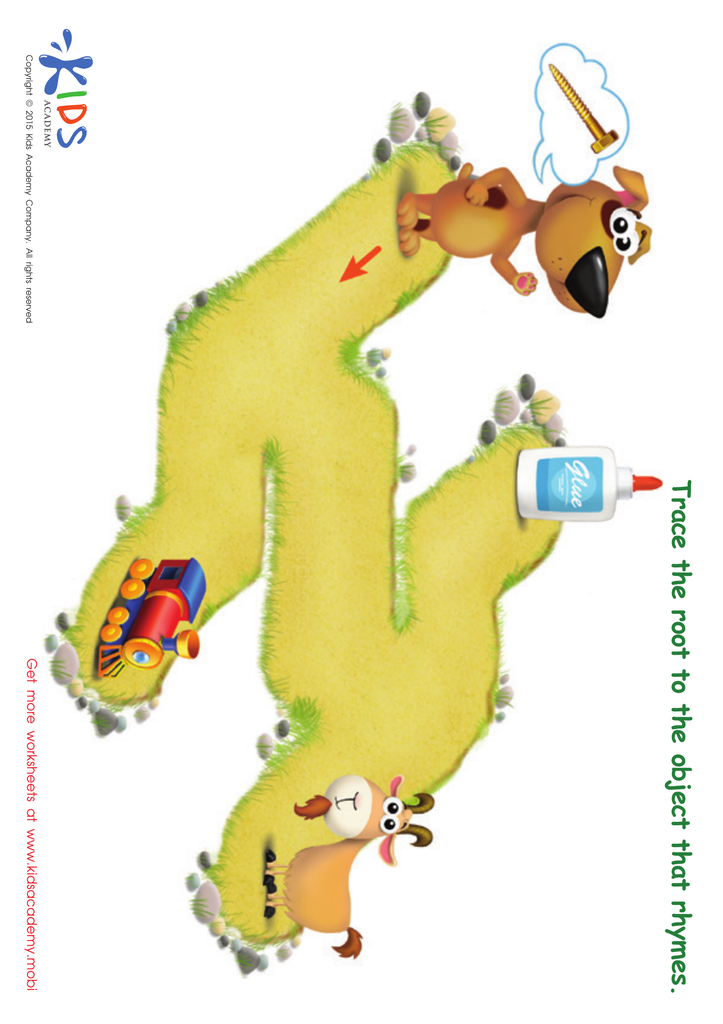
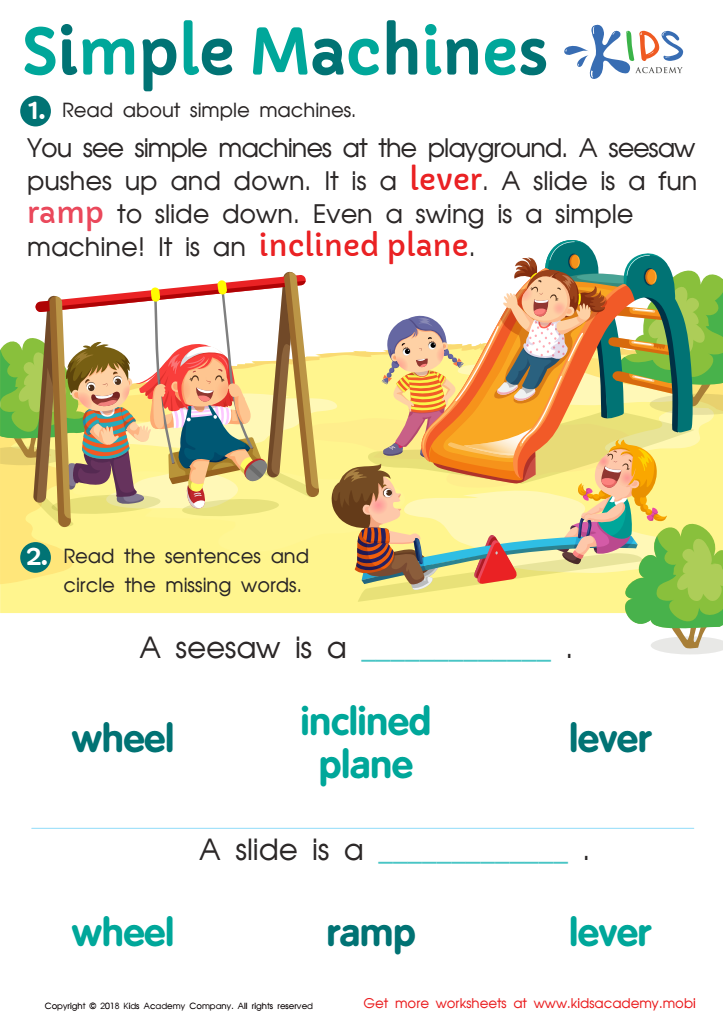
Simple Machines Worksheet
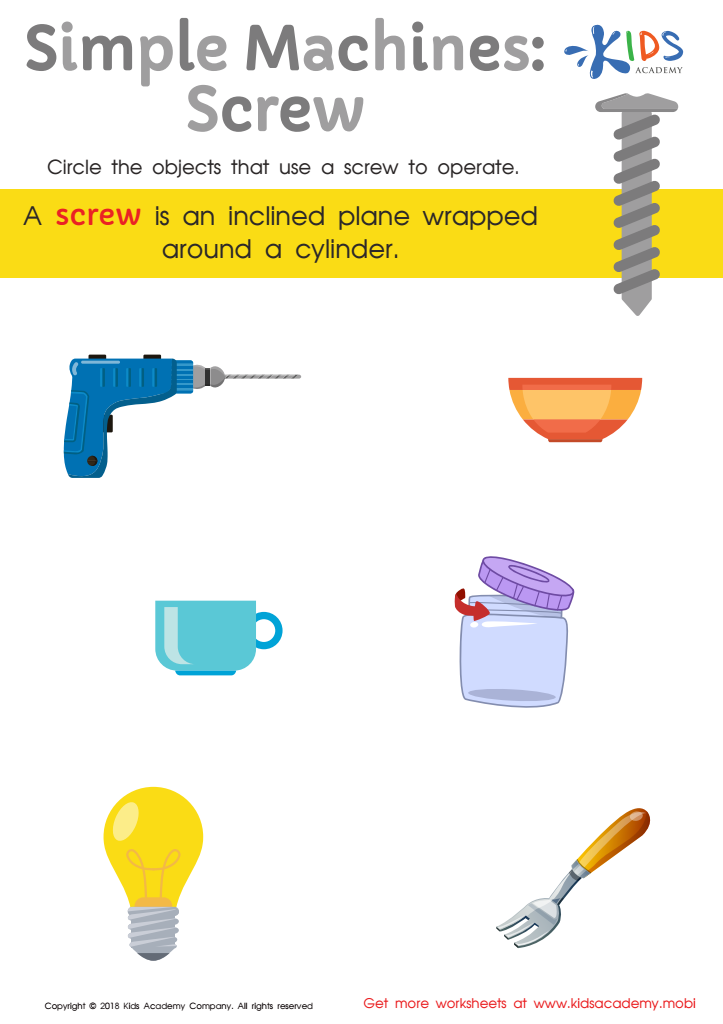
Simple Machines: Screw Worksheet








Understanding simple machines is crucial for children aged 3-9 because it lays the foundation for critical thinking, problem-solving, and a love for learning about the world. Simple machines, such as levers, pulleys, inclined planes, wheels and axles, screws, and wedges, help children grasp basic physics concepts that are essential for future academic success in science, technology, engineering, and mathematics (STEM).
By exploring these tools, children learn how objects move and how forces act upon them. This hands-on experience fosters curiosity and allows kids to see the practical application of abstract ideas. When parents and teachers introduce simple machines through play and exploration, children develop fine motor skills, spatial awareness, and a better understanding of mechanical functions.
Additionally, engaging with simple machines stimulates creativity and innovation. Kids think creatively to problem-solve and make connections between what they see in the classroom or at home and the broader world around them. For instance, recognizing that a playground seesaw is a lever helps translate that knowledge to real-life scenarios, reinforcing learning.
Furthermore, such early exposure promotes confidence and competence. Children perceive themselves as capable and inquisitive problem-solvers, setting a positive trajectory for lifelong learning. Therefore, prioritizing an understanding of simple machines equips kids with the tools they need to build foundational life skills.








