Understanding sizes Worksheets for Ages 3-9
4 filtered results
-
From - To
Discover our "Understanding Sizes Worksheets for Ages 3-9" - an engaging and educational collection designed to help children grasp the concept of different sizes. Through fun activities, kids will compare and contrast objects, enhancing their visual perception and cognitive skills. Perfect for young learners, our worksheets include colorful illustrations and interactive tasks that make learning an enjoyable experience. Tailored for various age groups from ages 3 to 9, these worksheets help your child develop foundational skills crucial for academic success. Foster your child's curiosity and confidence with our expertly crafted teaching resources today.
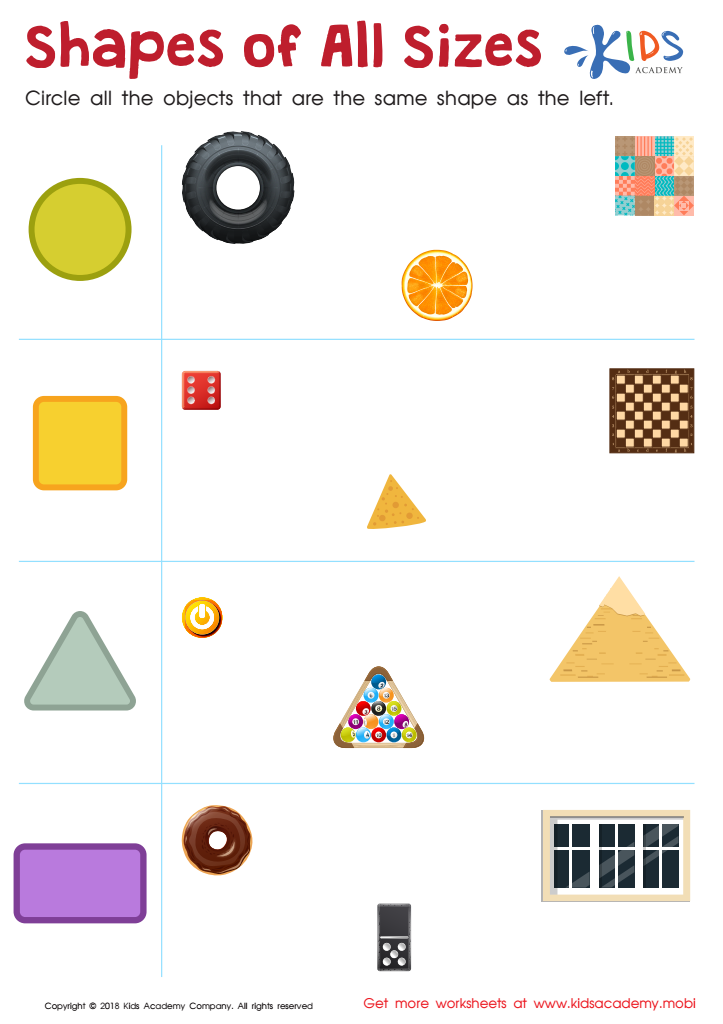
Shapes of All Sizes Worksheet
 Assign to My Students
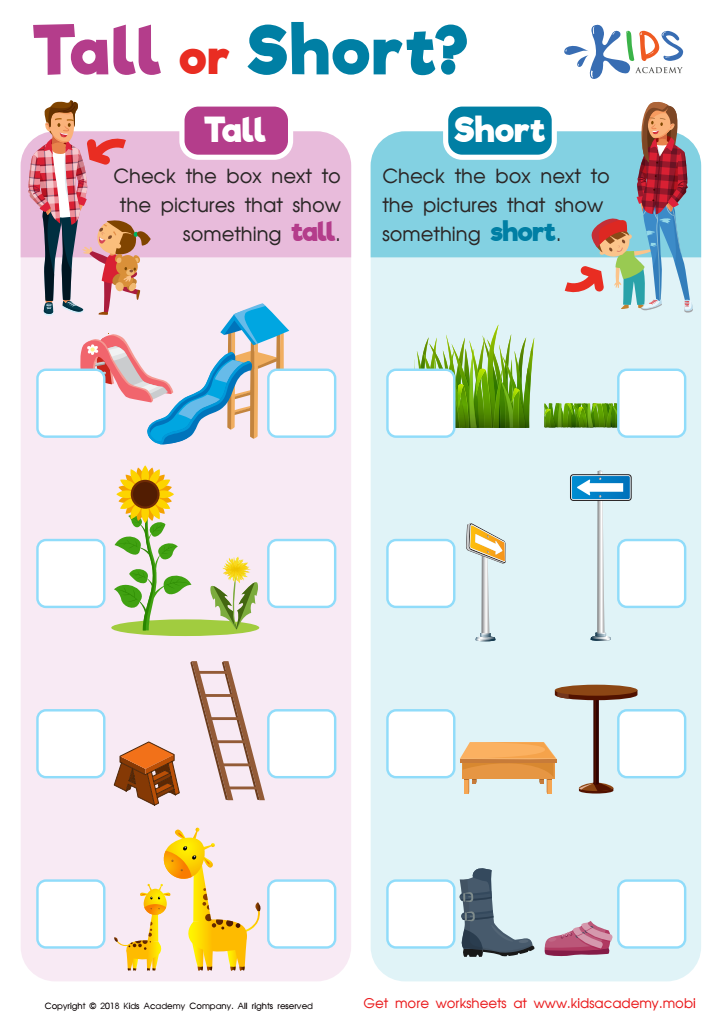
Tall or Short? Worksheet
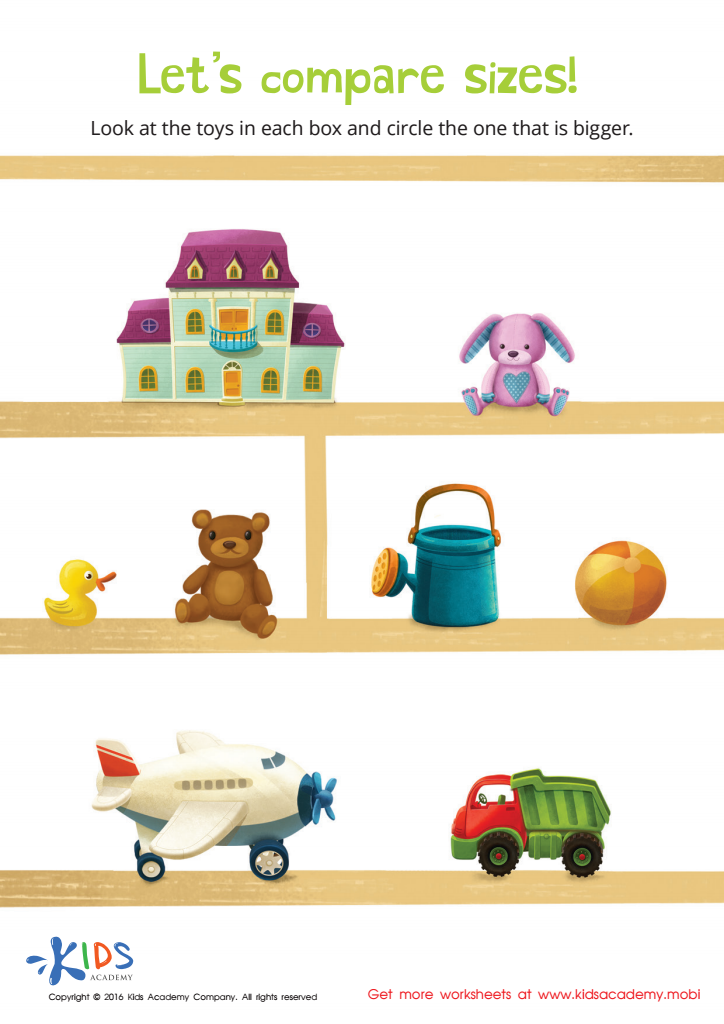
Classifying by Size Sorting Worksheet
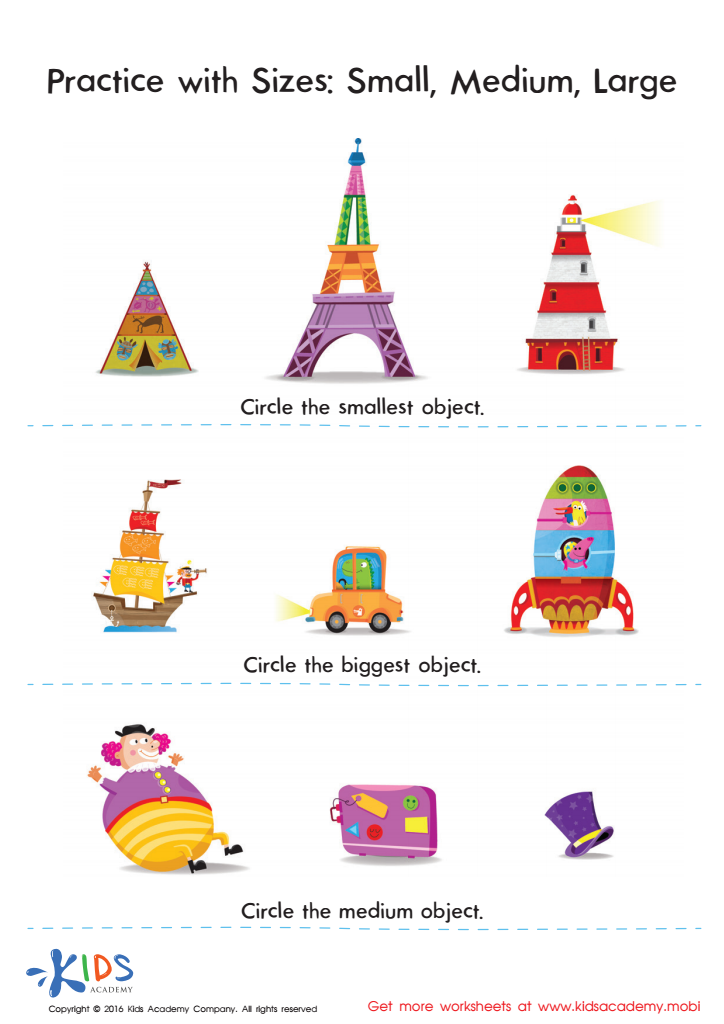








Understanding sizes is a fundamental skill that plays a crucial role in a child's cognitive and social development. For ages 3-9, grasping size concepts such as big, small, tall, and short helps children navigate the world more effectively. It enables them to compare objects, understand spatial relationships, and make sense of their environment.
From an academic perspective, size recognition is foundational for math and science learning. Skills such as measuring, ordering, and sorting depend on an understanding of size. For instance, knowing that one object is bigger than another can help in problem-solving and making predictions about how things interact.
Socially, discussing and understanding sizes enriches a child's vocabulary and communication skills. Conversations about size often involve descriptive language, critical thinking, and reasoning, all of which are essential for effective communication and collaborative play.
Lastly, everyday tasks become easier. Whether it's selecting the right size shirt, pouring the correct amount of juice, or stacking blocks, size awareness helps children perform daily activities independently.
Overall, parents and teachers should prioritize size concepts to support children’s holistic development, enhance academic readiness, and facilitate day-to-day problem-solving skills. A strong grasp of these basics sets the stage for more complex learning and independent functioning.








