
Underwater animal identification Worksheets for Ages 3-9
3 filtered results
Difficulty Level
Grade
Age
-
From - To
Subject
Activity
Standards
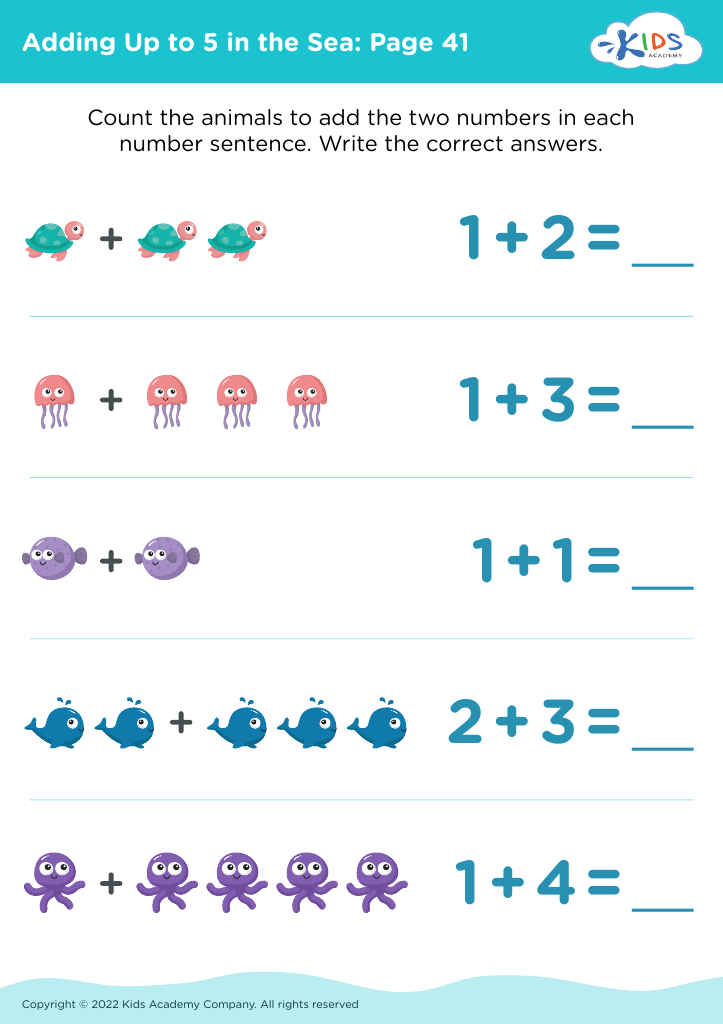
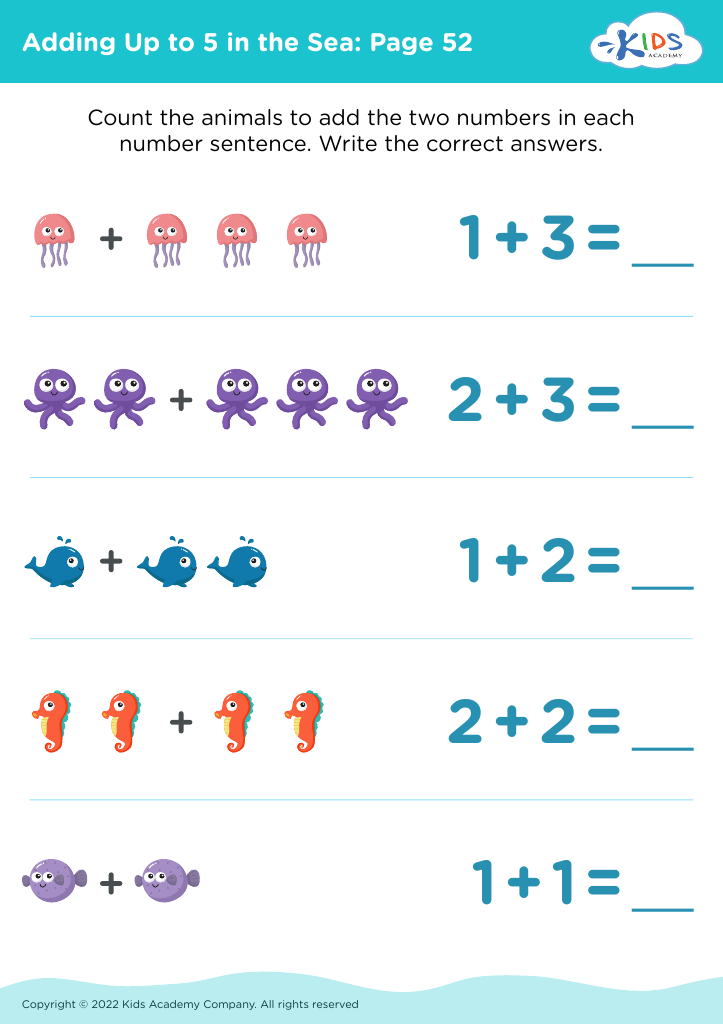
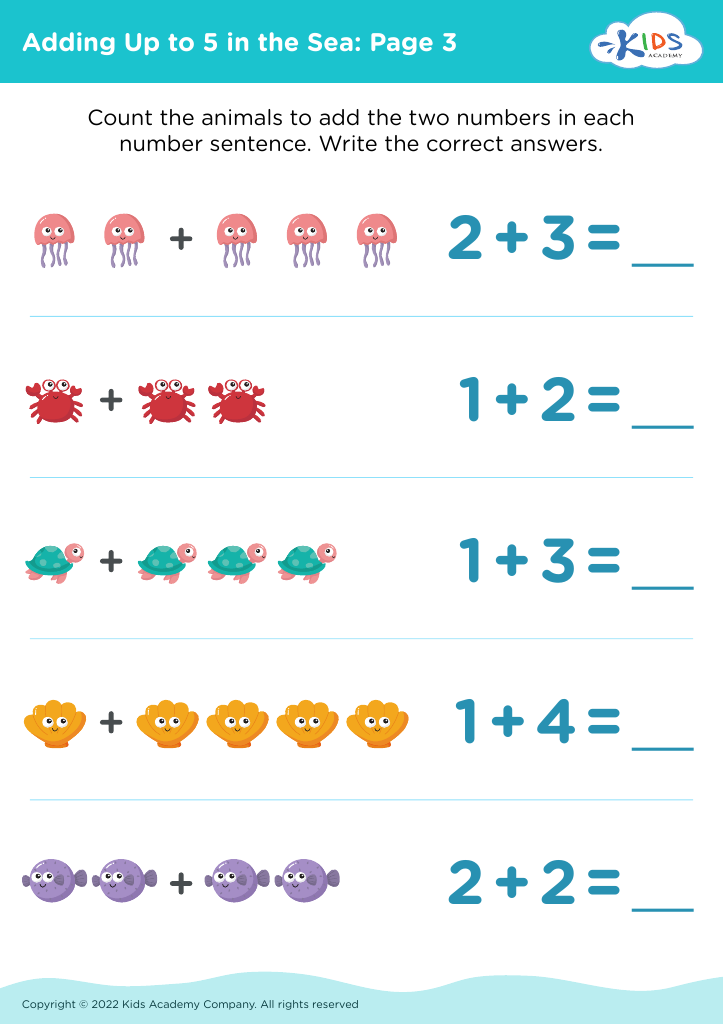
Discover the wonders of the underwater world with our engaging Underwater Animal Identification Worksheets designed for ages 3-9! These fun, educational resources help young learners identify and learn about various marine creatures while developing essential skills like reading, coloring, and problem-solving. Each worksheet features vibrant illustrations and interactive activities that captivate children's imaginations and encourage a love for marine life. Perfect for home or classroom, our worksheets promote important learning concepts in a playful and accessible format. Dive into adventure as your child explores the ocean's depths and expands their knowledge of underwater animals in a fun and engaging way!
Favorites
With answer key
Interactive
Join Kids Academy for Free
Who is primarily going to use this learning content?





Teaching children about underwater animal identification is crucial for their development and understanding of the natural world, especially for ages 3-9. At this age, children are naturally curious and eager to explore their surroundings. Introducing them to underwater animals fosters this curiosity and encourages a sense of wonder about marine life.
Understanding different underwater species promotes awareness of environmental conservation and biodiversity. Teaching children to recognize various marine animals can instill a sense of responsibility and respect for their habitats from a young age. Furthermore, this knowledge supports early science education, enhancing observational skills and vocabularies while laying a foundation for more complex scientific concepts in later years.
Additionally, incorporating underwater animal identification activities, such as matching games, crafts, or interactive lessons, makes learning engaging and fun. It also encourages parental involvement and can be a bonding experience where families explore local aquariums or marine habitats together. Developing a love for nature and understanding our oceans helps nurture environmentally conscious citizens who appreciate and strive to protect our planet's waters. Overall, fostering a connection to the underwater world is essential for empowering young learners with knowledge and respect for their environment.








