Visual perception development Worksheets for Ages 3-9
5 filtered results
-
From - To
Enhance your child's visual perception skills with our engaging worksheets designed for ages 3-9. At Kids Academy, we understand the importance of visual perception in early learning, impacting reading, writing, and overall cognitive development. Our expertly crafted worksheets offer a variety of activities that challenge young minds to improve pattern recognition, spatial awareness, memory, and attention to detail. With fun puzzles, matching games, and other interactive exercises, your child will boost essential skills in a playful and educational way. Visit us to explore our resourceful collection and support your child’s early learning journey today!
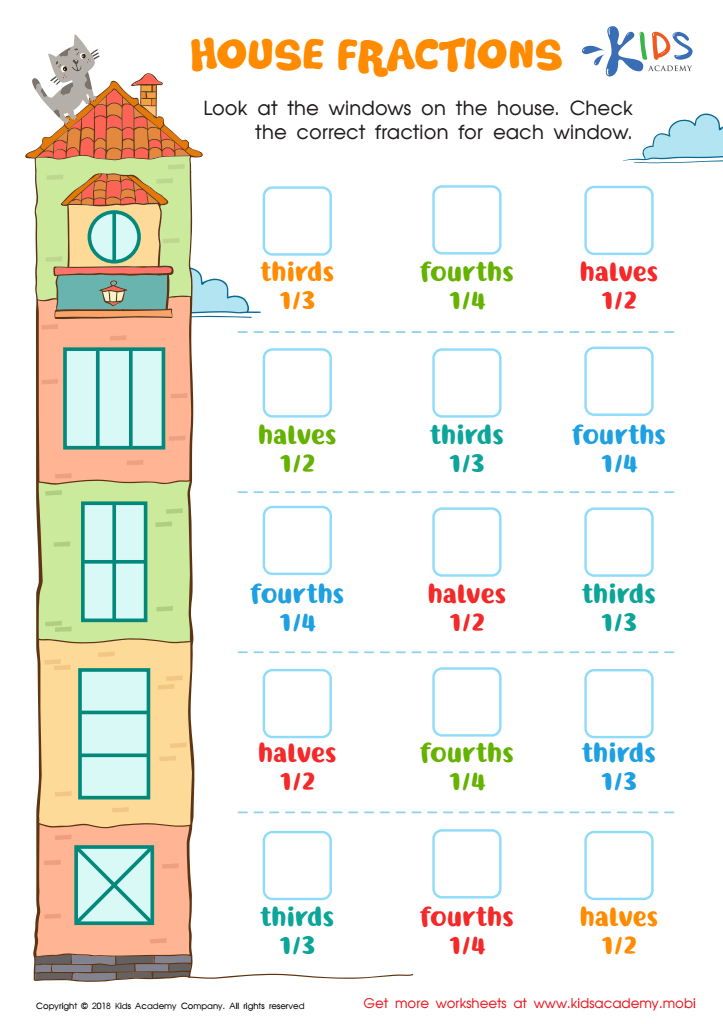
House Fractions Worksheet
 Assign to My Students
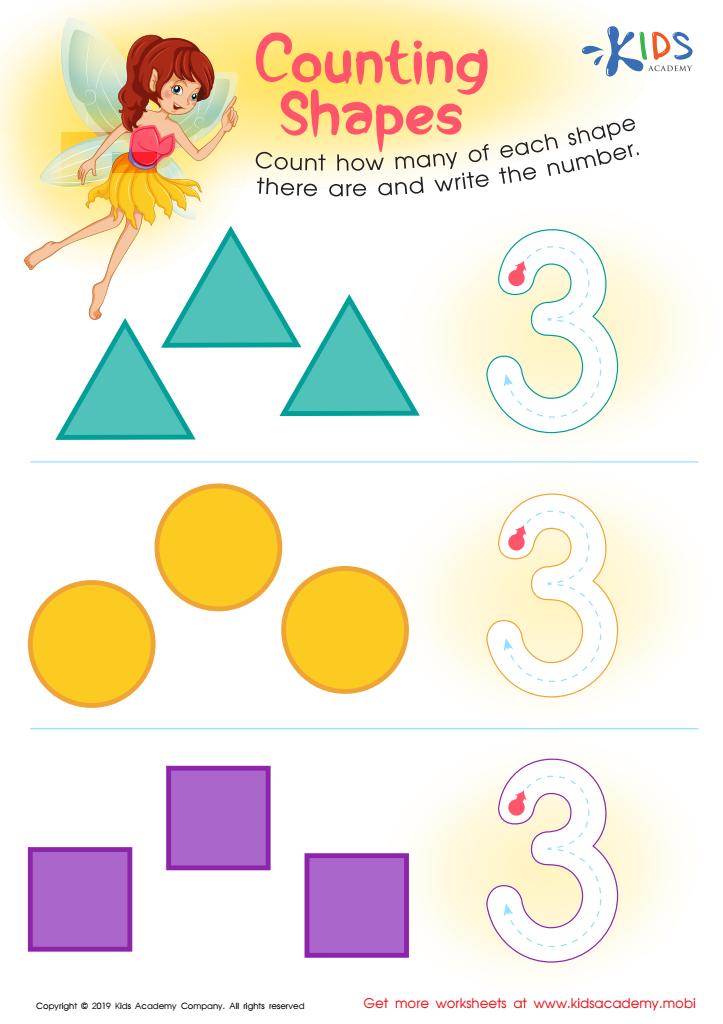
Counting Shapes Worksheet
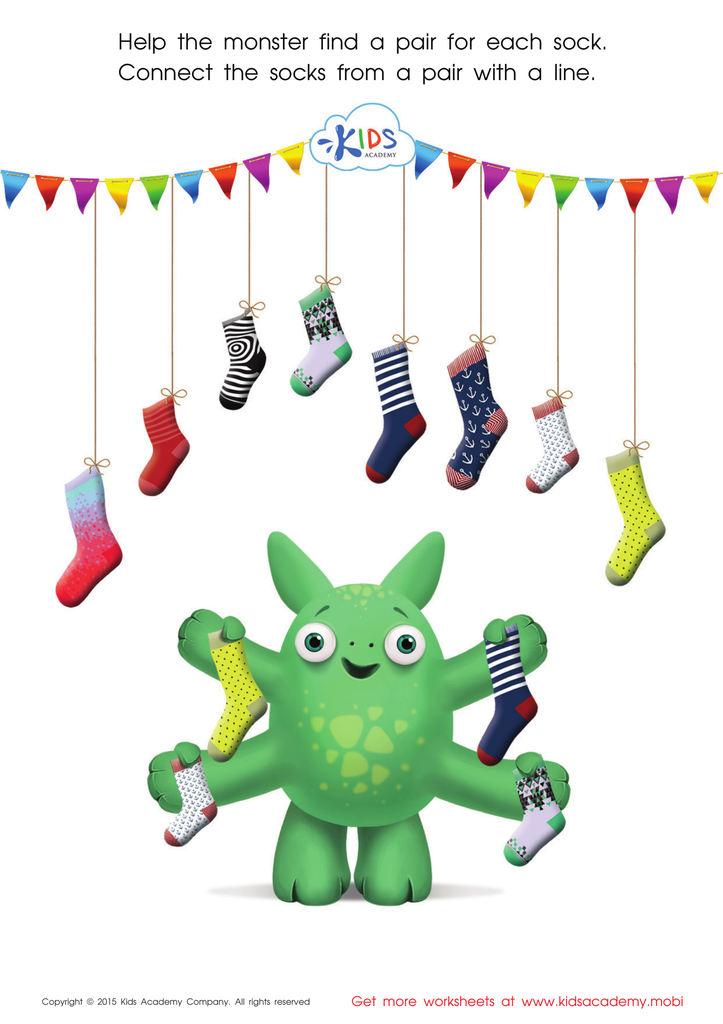
Math Matching Pairs Game: Monsterв's Socks Worksheet
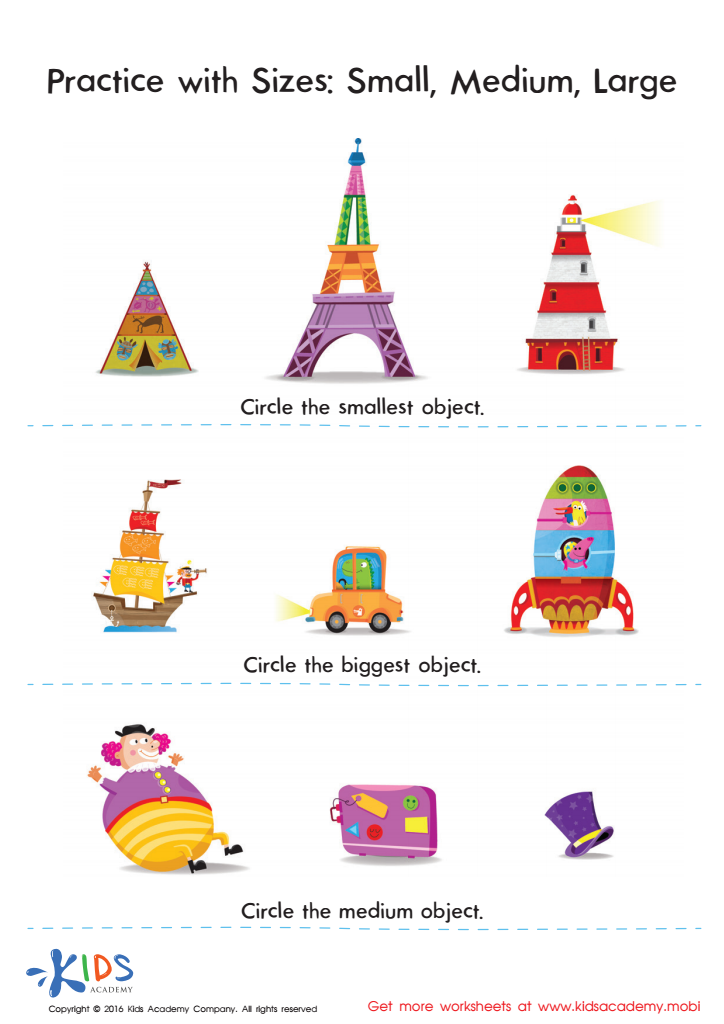







Visual perception is the ability to interpret and make sense of visual information from the surrounding environment. In children aged 3-9, visual perception development is critical as it forms the foundation for many essential life and academic skills. When parents and teachers prioritize visual perception development, they are promoting healthier brain development which directly impacts a child's learning and well-being.
Firstly, visual perception is crucial for reading and writing. Recognizing letters, understanding word patterns, and eventually grasping sentence structure all rely heavily on the ability to visually differentiate between shapes and symbols. Struggles in these areas can lead to academic difficulties and diminished confidence.
Secondly, fine motor skills, like cutting with scissors or sorting objects, are tied to how well a child uses visual information to guide their hands. These tasks are essential for daily activities and self-care, budding independence, and even social integration as children can engage more easily in common activities with peers.
Additionally, visual perception aids in spatial awareness, helping children navigate their physical world more confidently aside avoiding injuries. Well-developed visual perception also supports higher-order thinking skills such as problem-solving and organizing tasks.
Early identification and support can mitigate potential issues, making it vital for parents and teachers to engage actively in practices that enhance and observe this aspect of development. Quality interventions and enriched environments contribute not just to academic success, but to a well-rounded, capable, and confident child.








