Word identification Worksheets for Ages 3-9
15 filtered results
-
From - To
Discover a treasure trove of engaging word identification worksheets designed for children aged 3 to 9! Our collection supports early literacy development through fun, interactive activities that boost vocabulary, enhance comprehension, and build essential reading skills. Perfect for parents, educators, and caregivers, these printable worksheets cater to various skill levels, ensuring every child can enjoy learning at their own pace. With colorful visuals and age-appropriate themes, your little learners will find joy in practicing word recognition, matching, and contextual understanding. Visit our site to access high-quality resources that inspire a love for reading and pave the way for academic success!
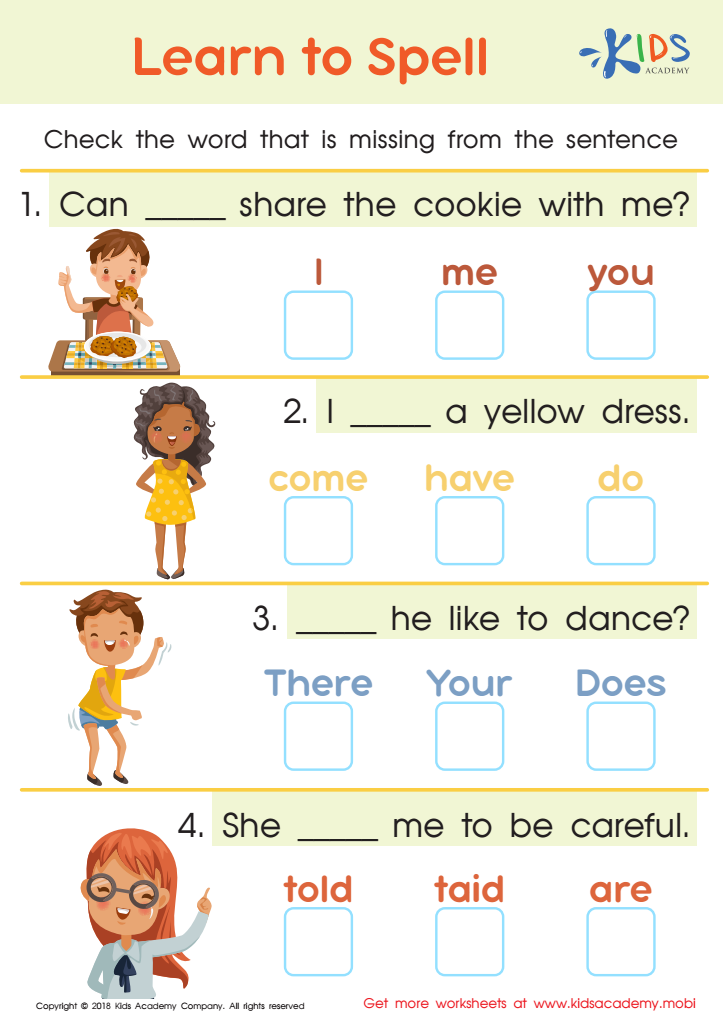
Learn to Spell Worksheet
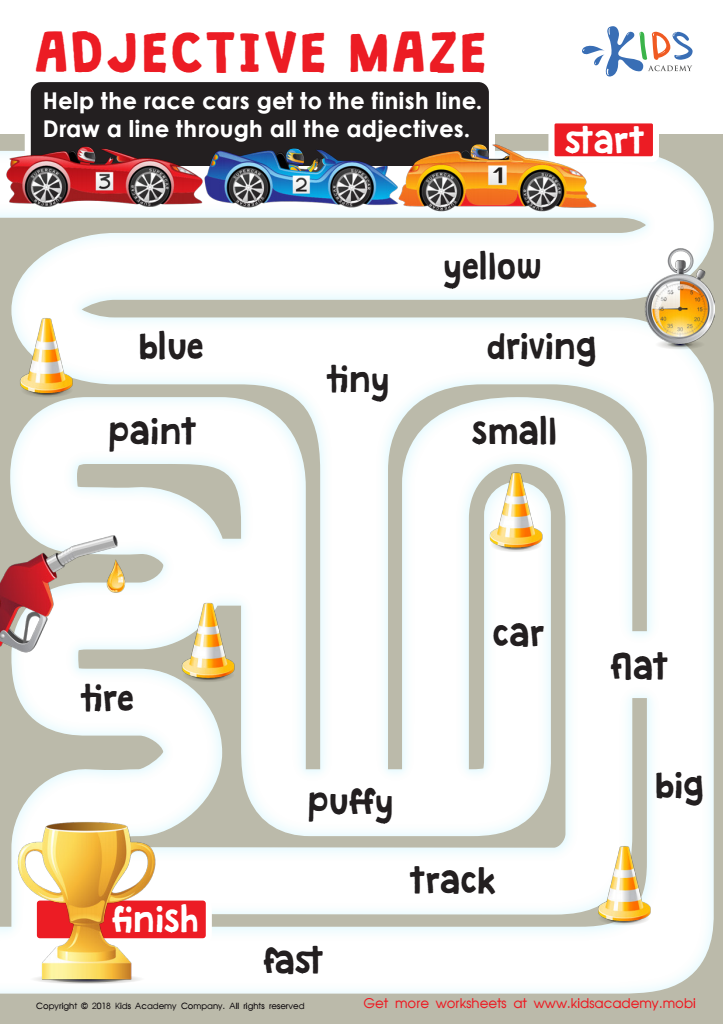
Adjective Maze Worksheet
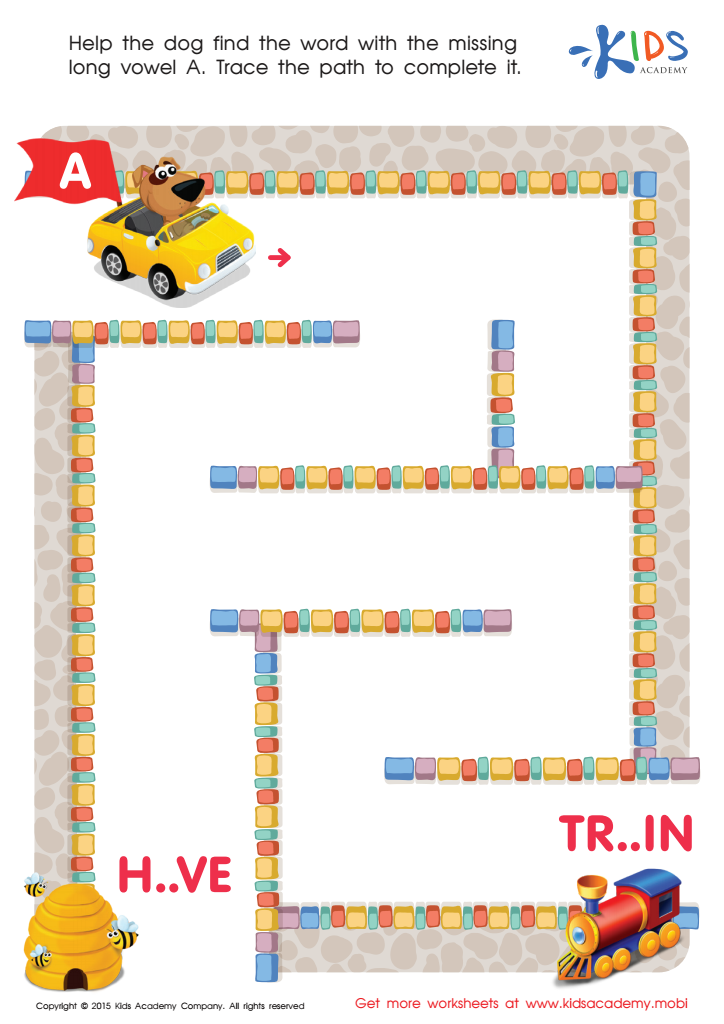
Long Vowel Sound A Worksheet
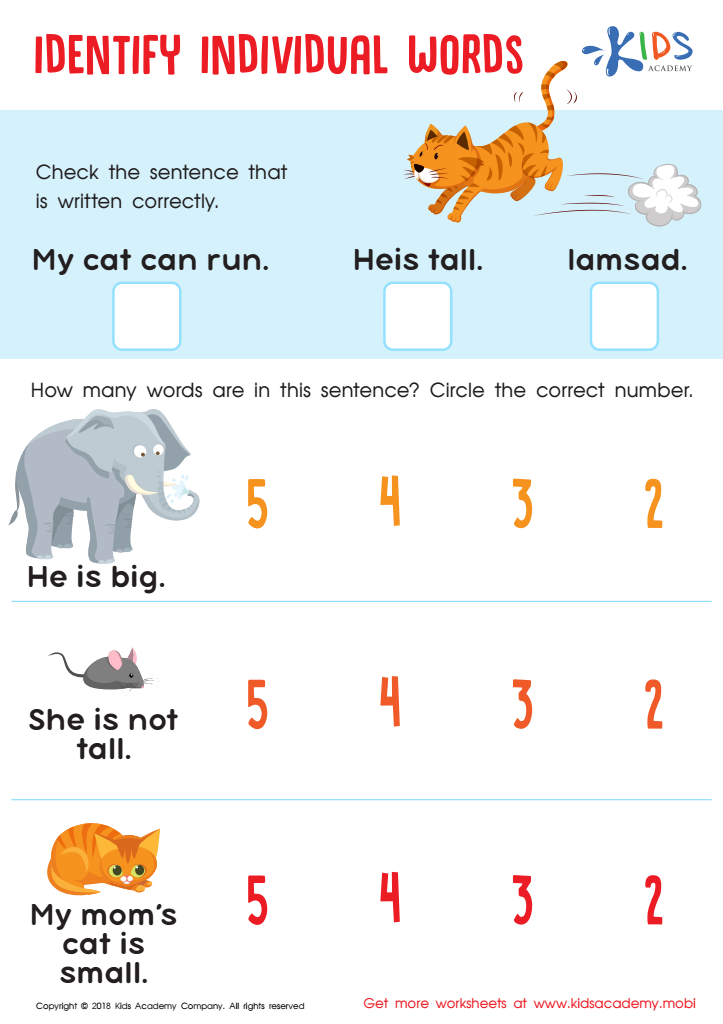
Identify Individual Words Worksheet
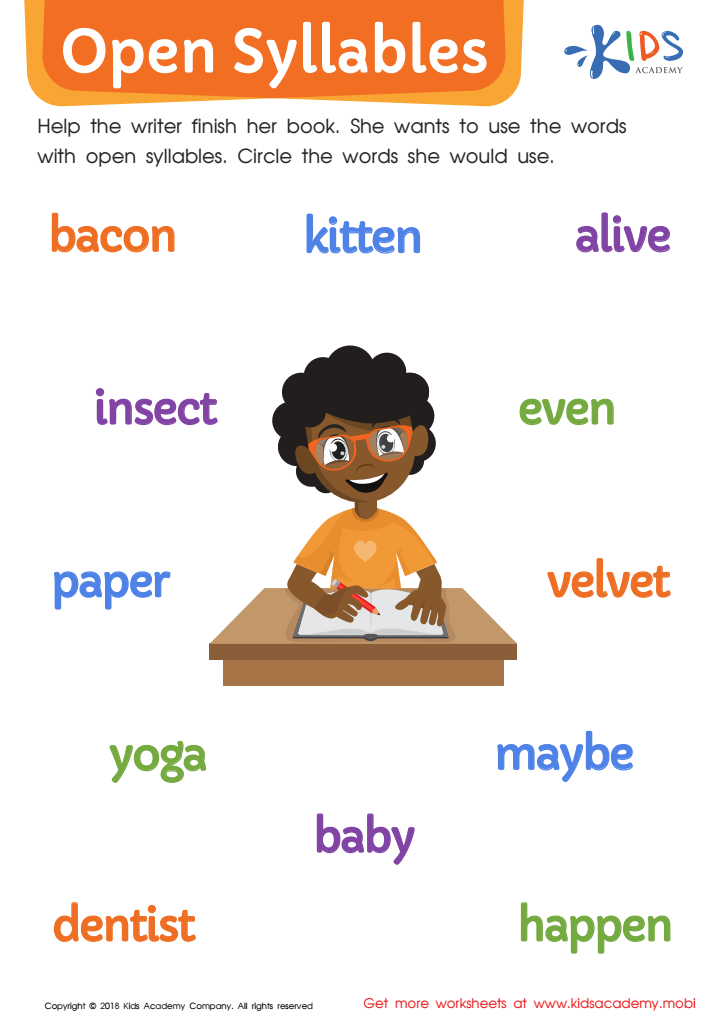
Open Syllables Worksheet
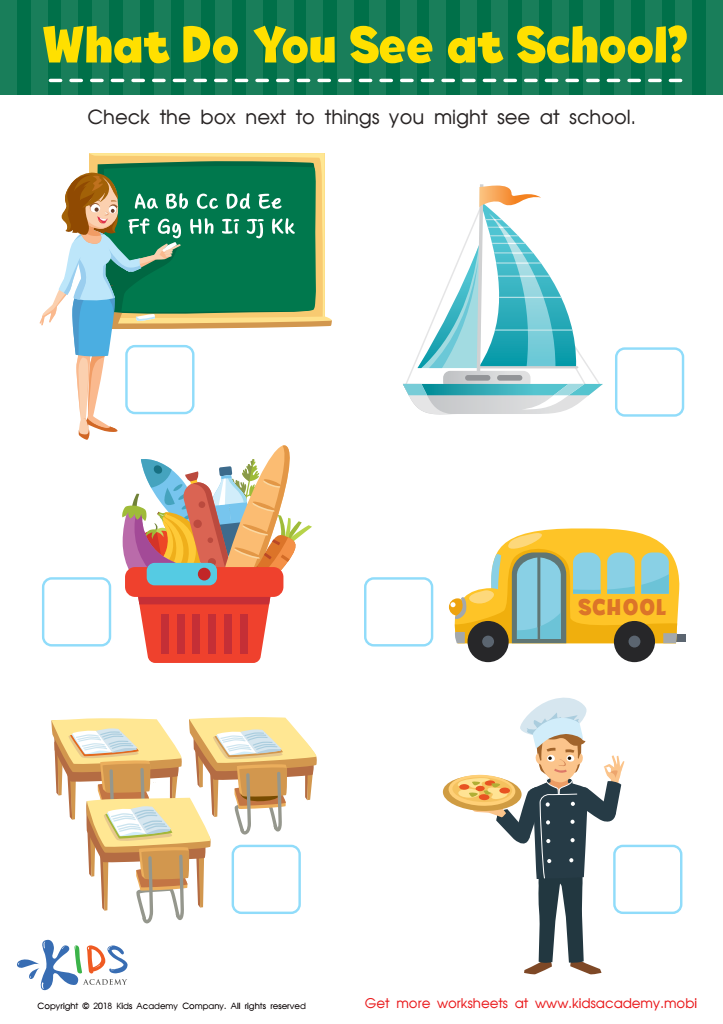
What Do you See at School? Worksheet
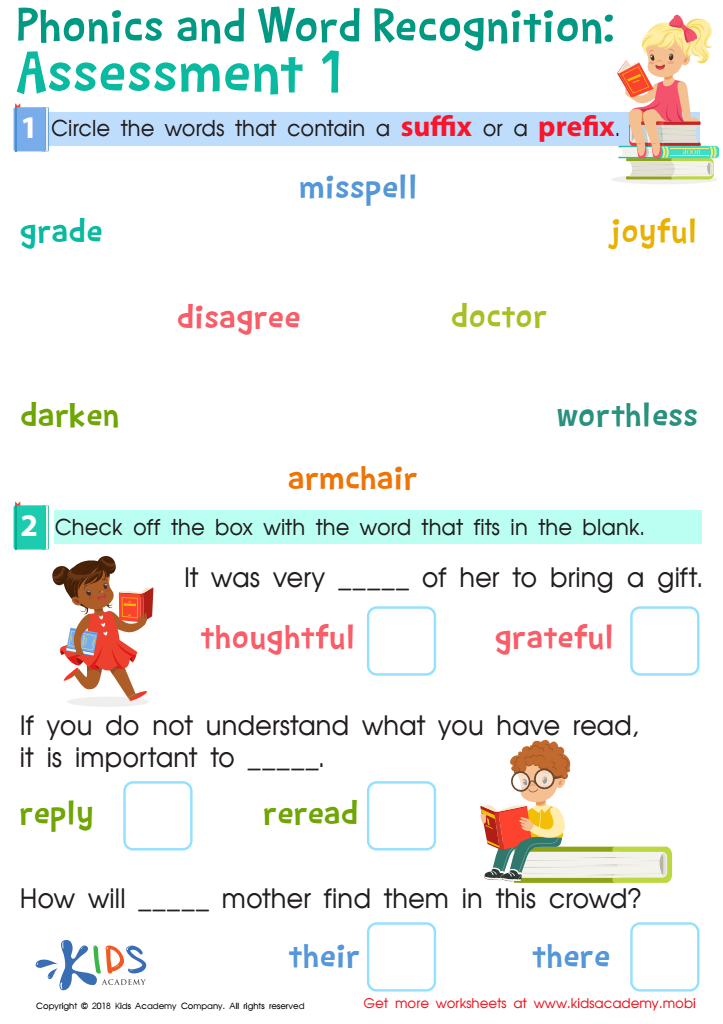
Phonics and Word Recognition: Assessment 1 Worksheet
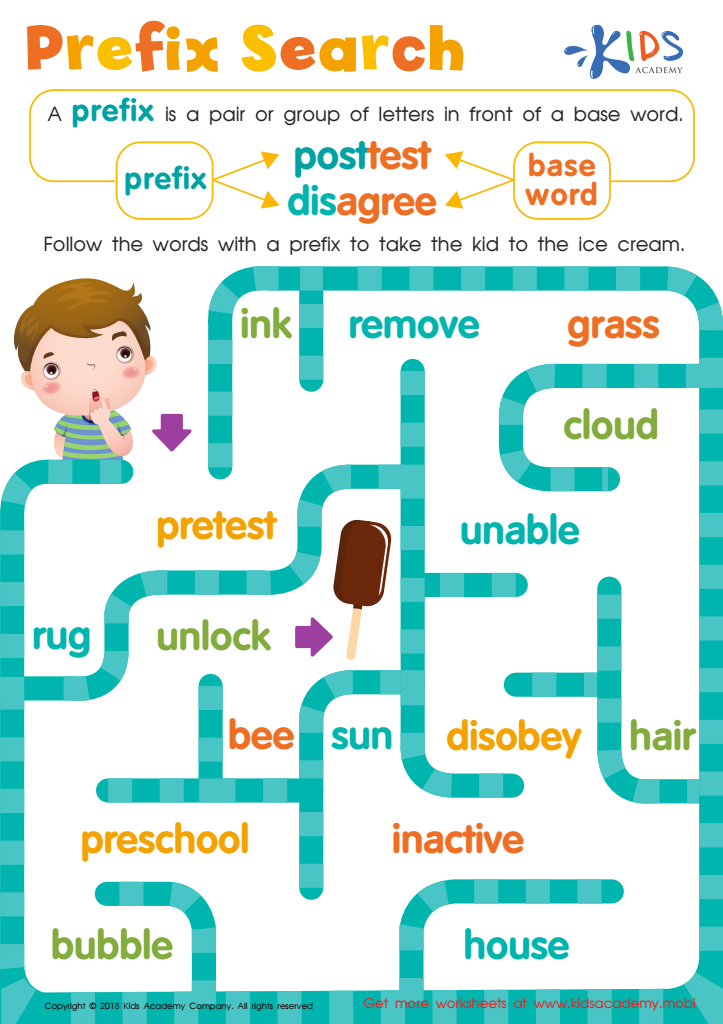
Reading: Prefix Search Worksheet
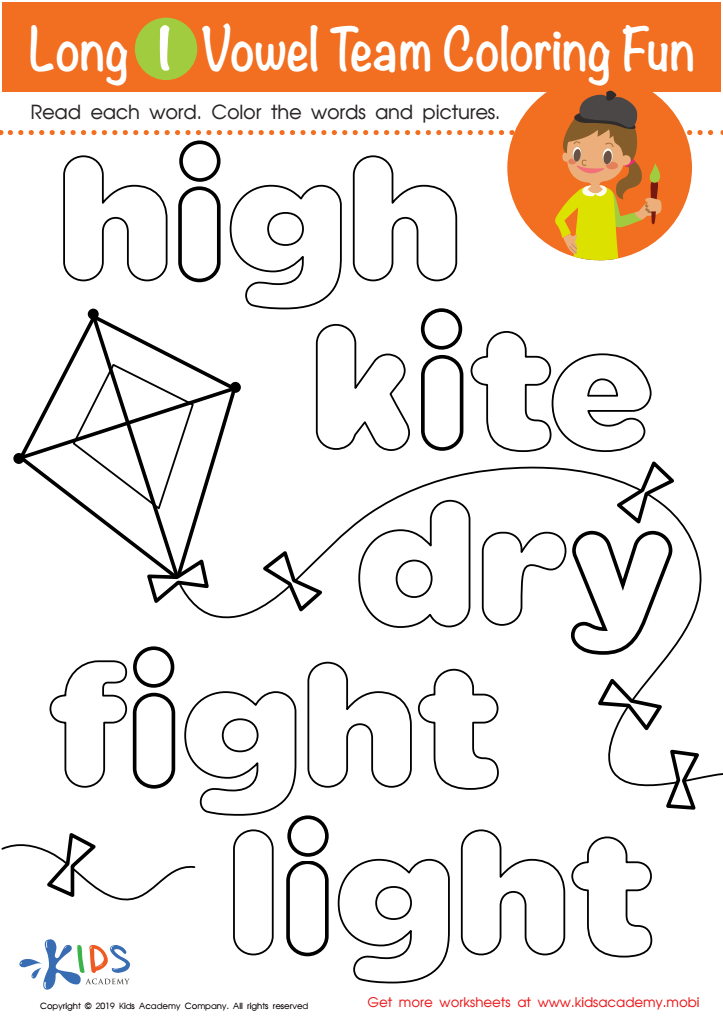
Long I Vowel Team Coloring Worksheet
 Assign to My Students
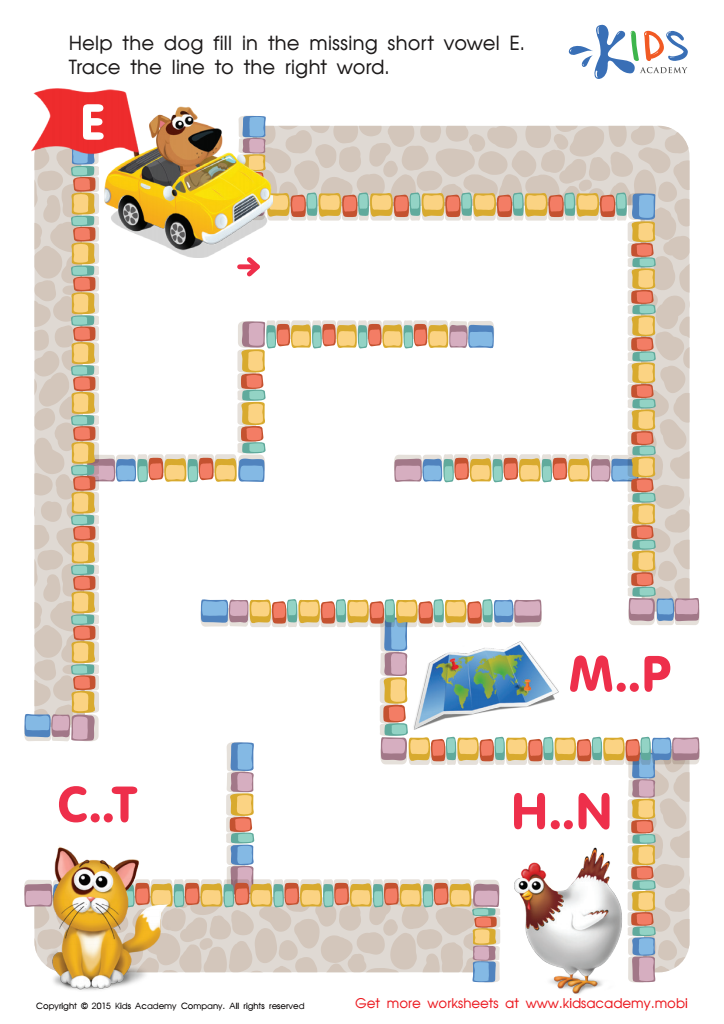
Short Vowel Sound E Worksheet
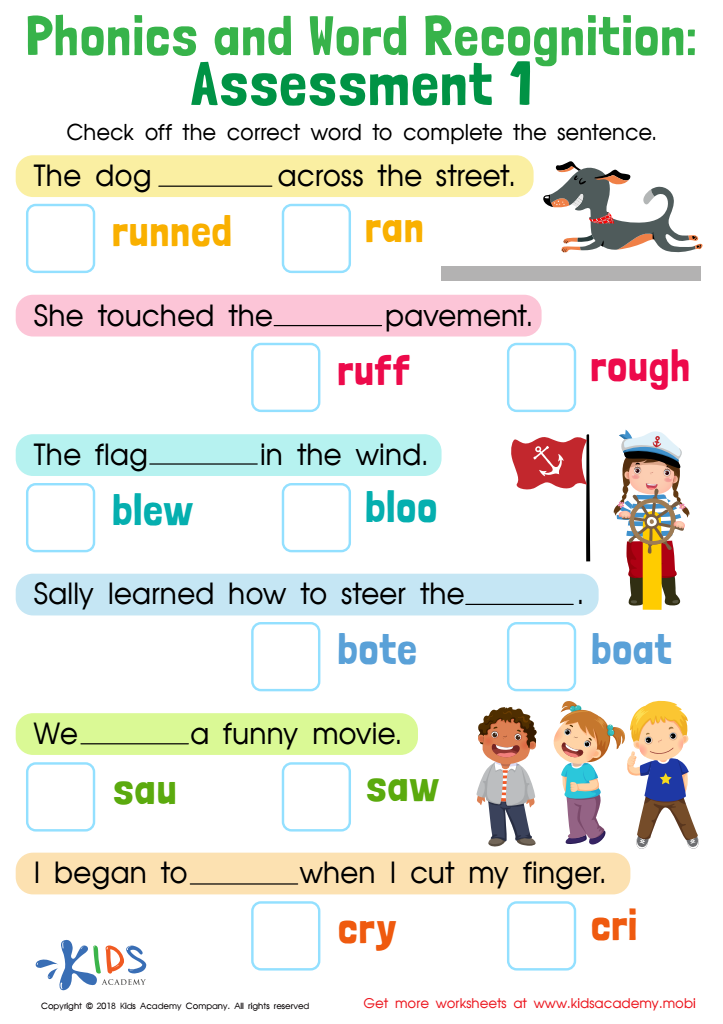
Phonics and Word Recognition: Assessment 1 Worksheet
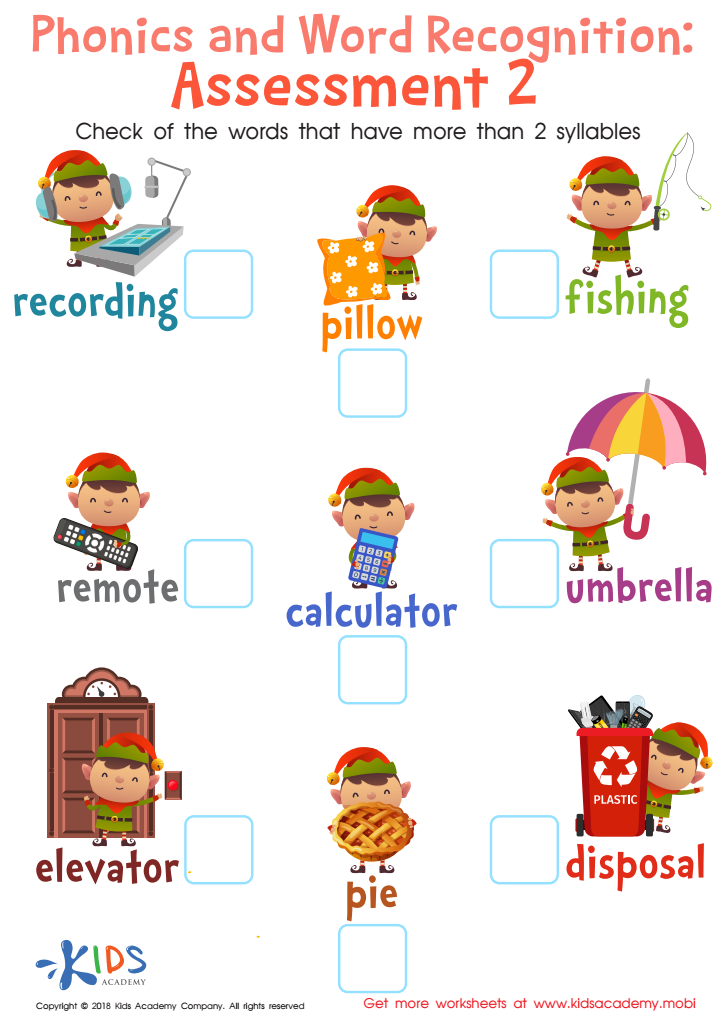
Phonics and Word Recognition: Assessment 2 Worksheet
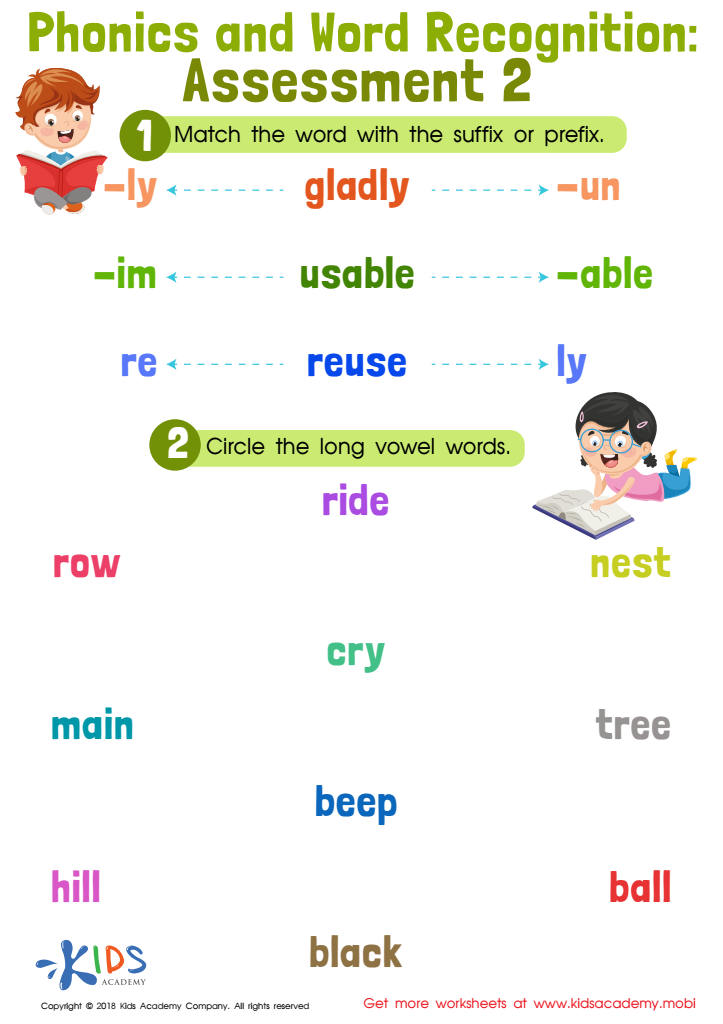
Phonics and Word Recognition: Assessment 2
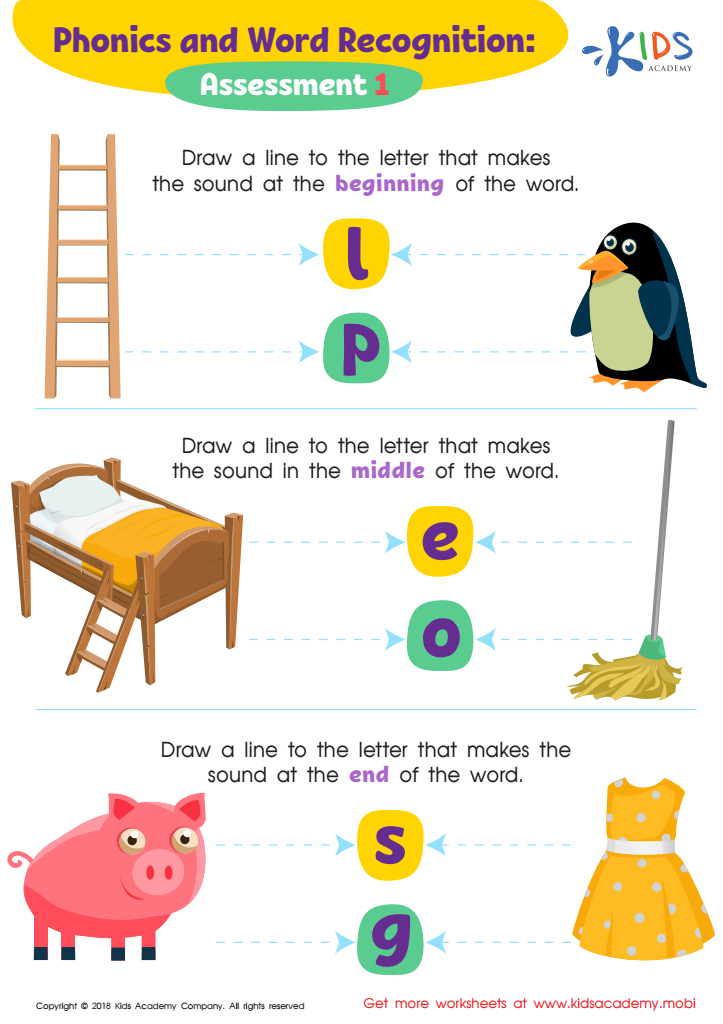
Phonics and Word Recognition: Assessment 1 ELA Worksheet








Word identification is a crucial skill for children aged 3 to 9 as it lays the foundation for literacy and overall academic success. This development phase is when children are most receptive to language learning; they begin to make connections between sounds and letters, which is essential for reading. Parents and teachers should prioritize word identification because it helps boost vocabulary acquisition, enabling children to express themselves more effectively and engage in conversations with peers and adults.
Moreover, skilled word identification equips children with the ability to decode new words independently. This autonomy fosters confidence in their reading abilities and promotes a lifelong love for literature. Furthermore, early proficiency in identifying words is linked to better comprehension skills, which are critical for grasping complex concepts in other subjects as they progress in school.
Additionally, focusing on word identification during the ages of 3-9 can prevent future learning difficulties and reduce the risk of literacy-related challenges. Engaging children through fun activities—like games, stories, and phonics—can make this learning enjoyable and intuitive. Overall, both parents and teachers play a vital role in supporting this key developmental milestone, ultimately shaping a child's future academic journey and fostering a positive attitude toward learning.








