Filters

50 filtered results

Clear all filters
Favorites
With answer key
Interactive

50 filtered results

Difficulty Level

Grade


Check out this FREE Trial Lesson on Adding Up to 5 for age 3-9!

L

Favorites
With answer key
Interactive
  • 3-9
  • Addition Practice
  • Adding Up to 5
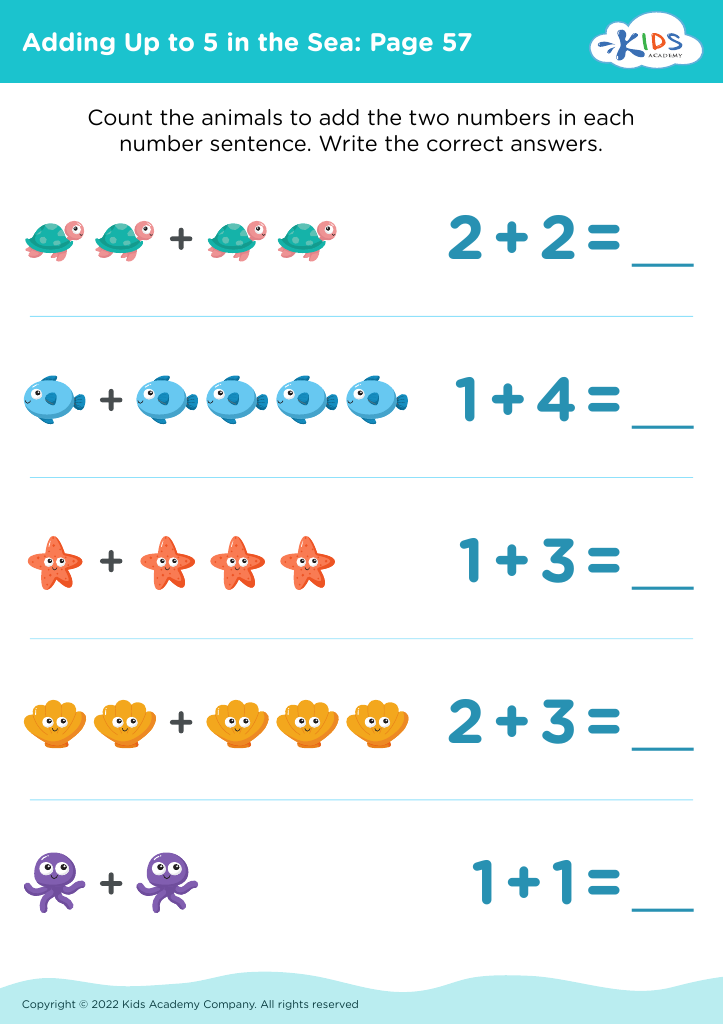
Adding Up to 5 in the Sea: Page 57
Worksheet
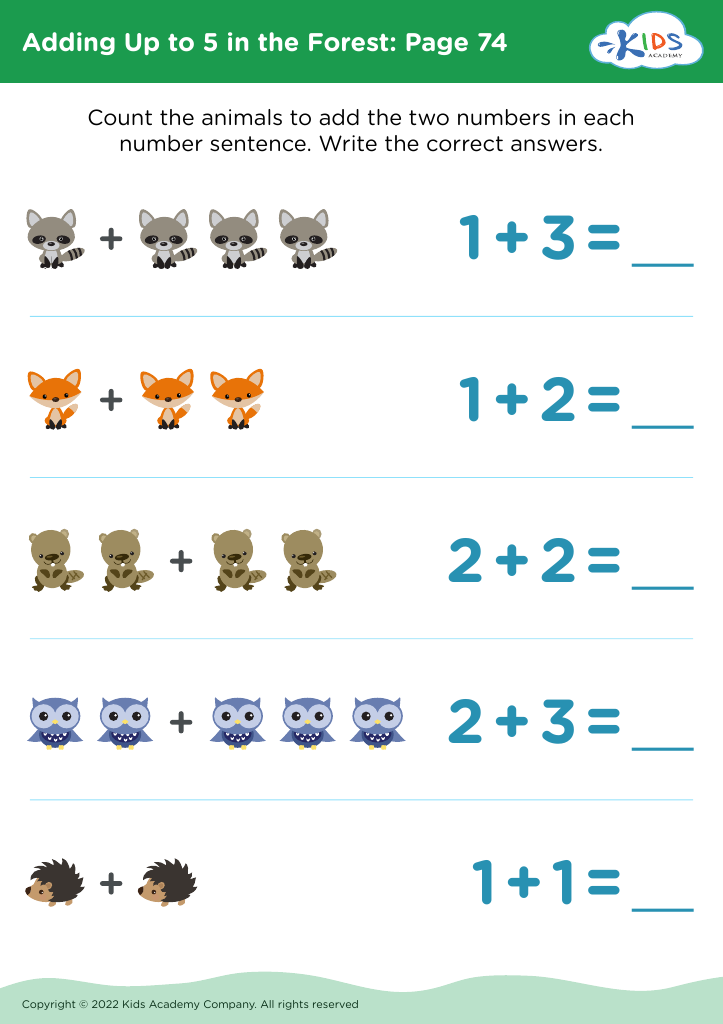
Adding Up to 5 in the Forest: Page 74
Worksheet
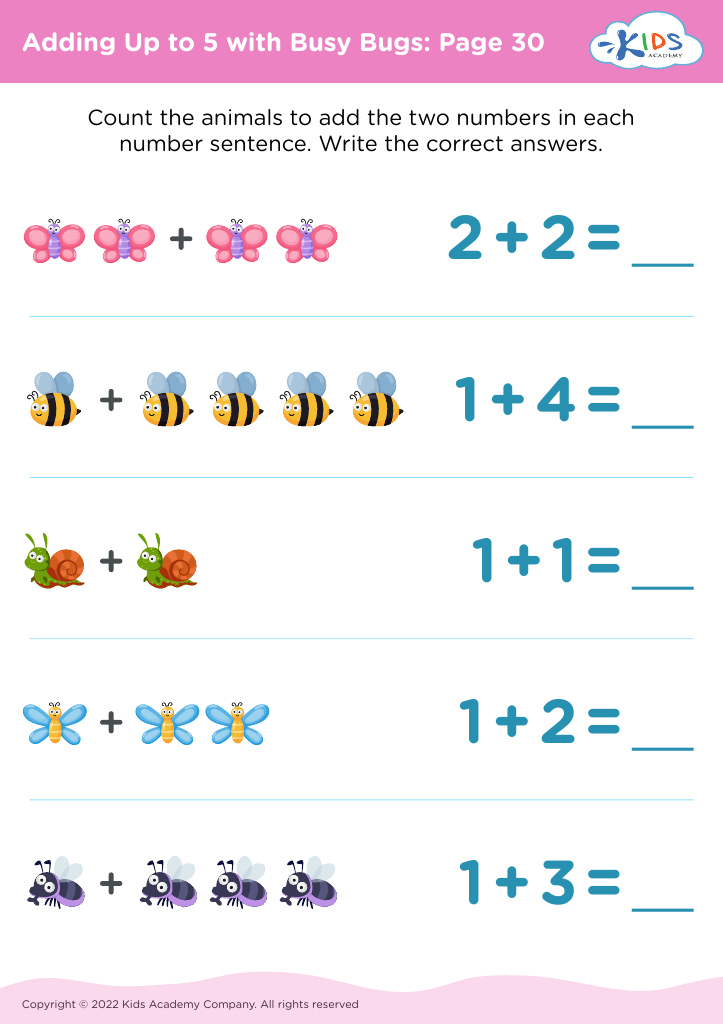
Adding Up to 5 with Busy Bugs: Page 30
Worksheet
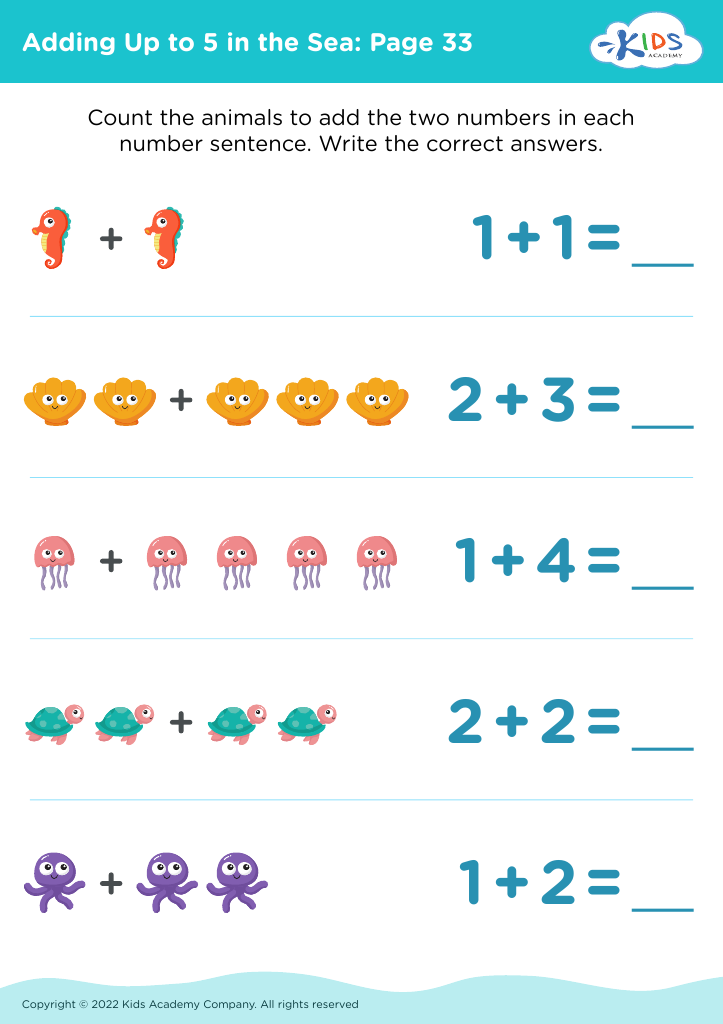
Adding Up to 5 in the Sea: Page 33
Worksheet
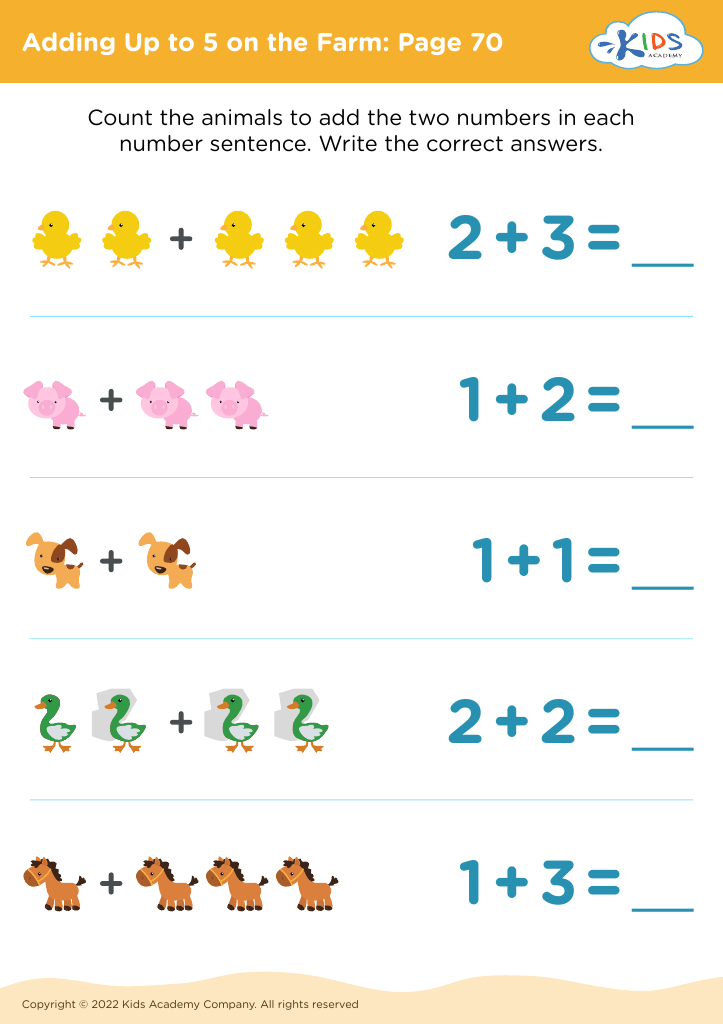
Adding Up to 5 on the Farm: Page 70
Worksheet
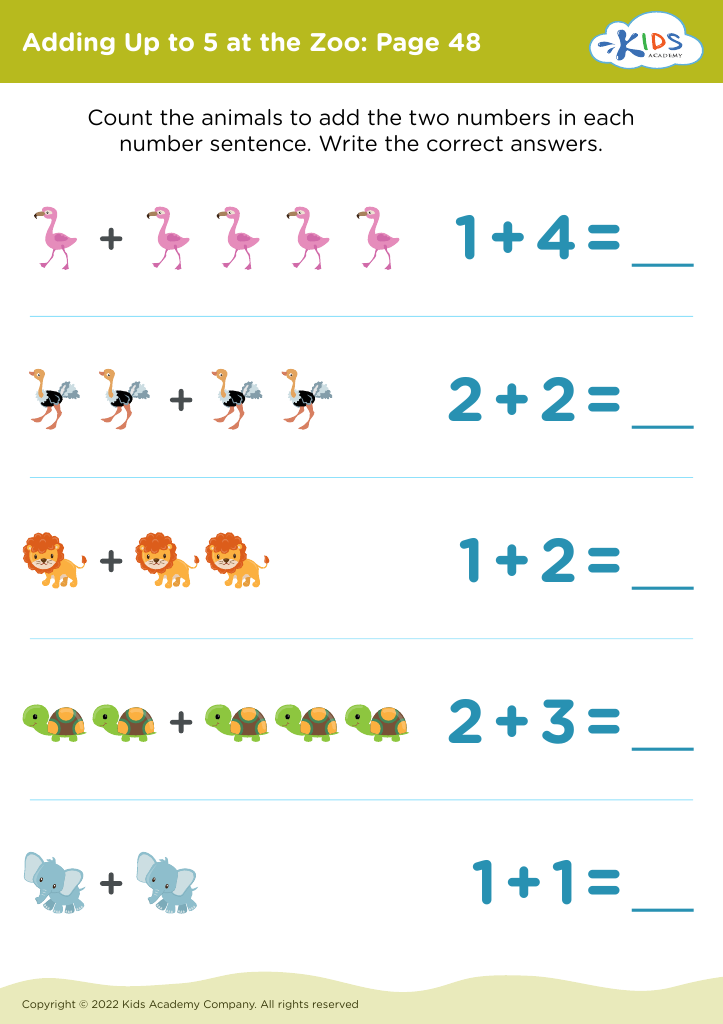
Adding Up to 5 at the Zoo: Page 48
Worksheet
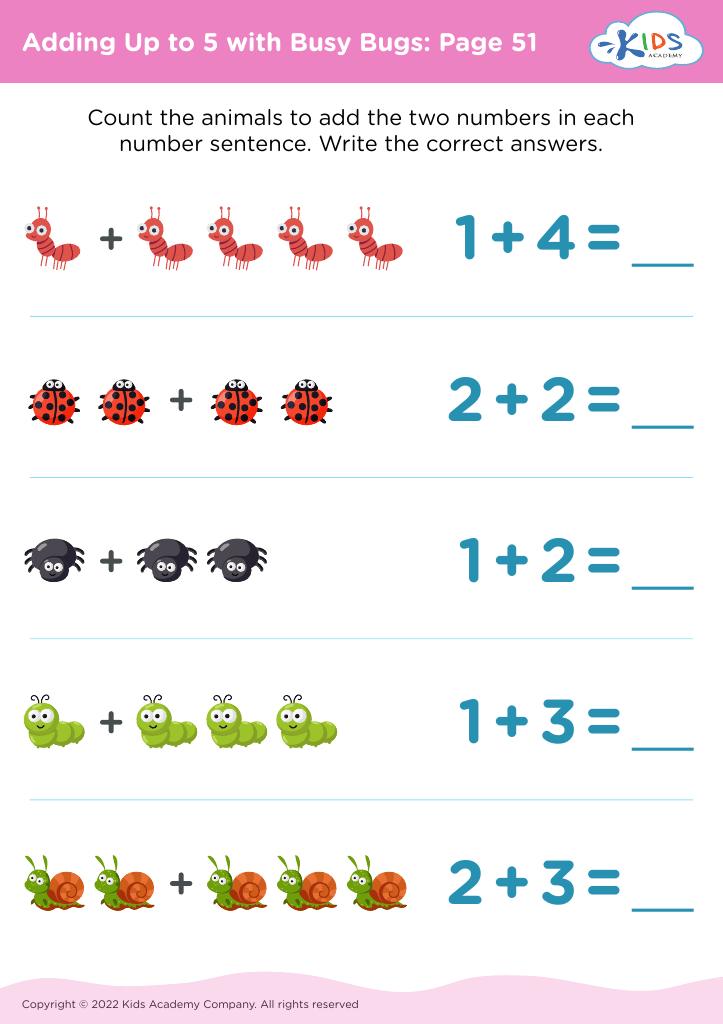
Adding Up to 5 with Busy Bugs: Page 51
Worksheet
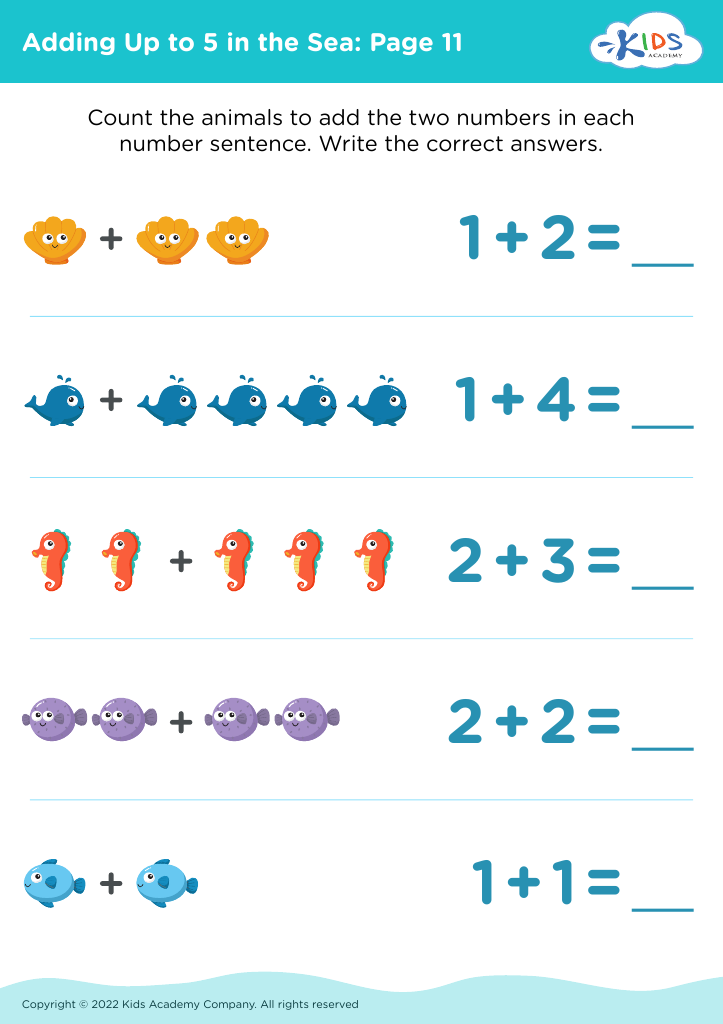
Adding Up to 5 in the Sea: Page 11
Worksheet
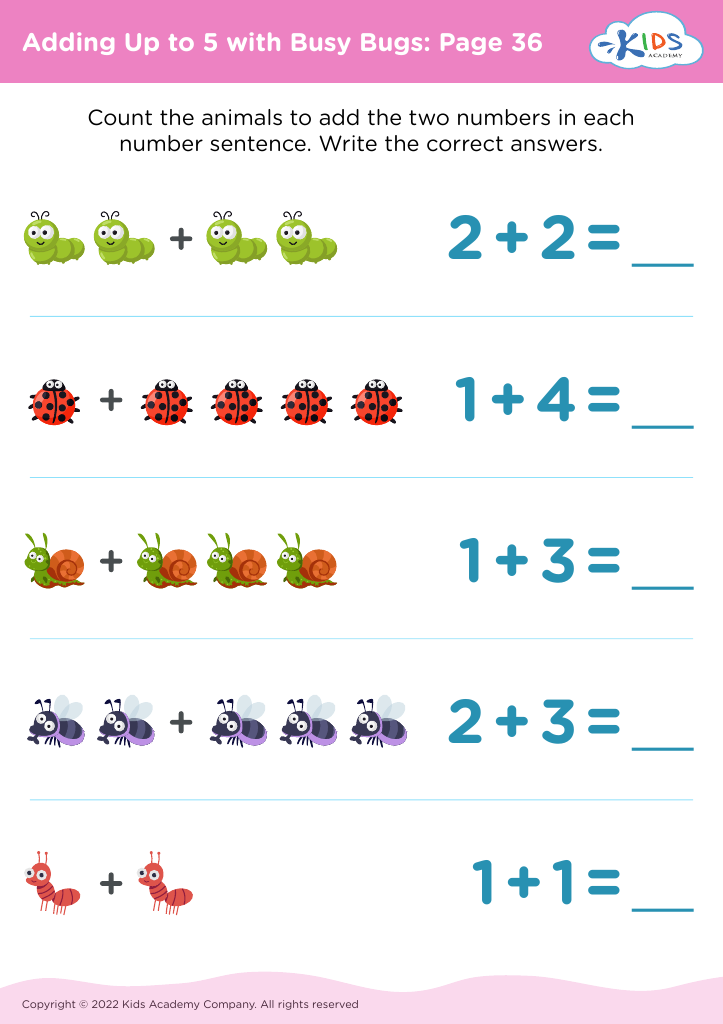
Adding Up to 5 with Busy Bugs: Page 36
Worksheet
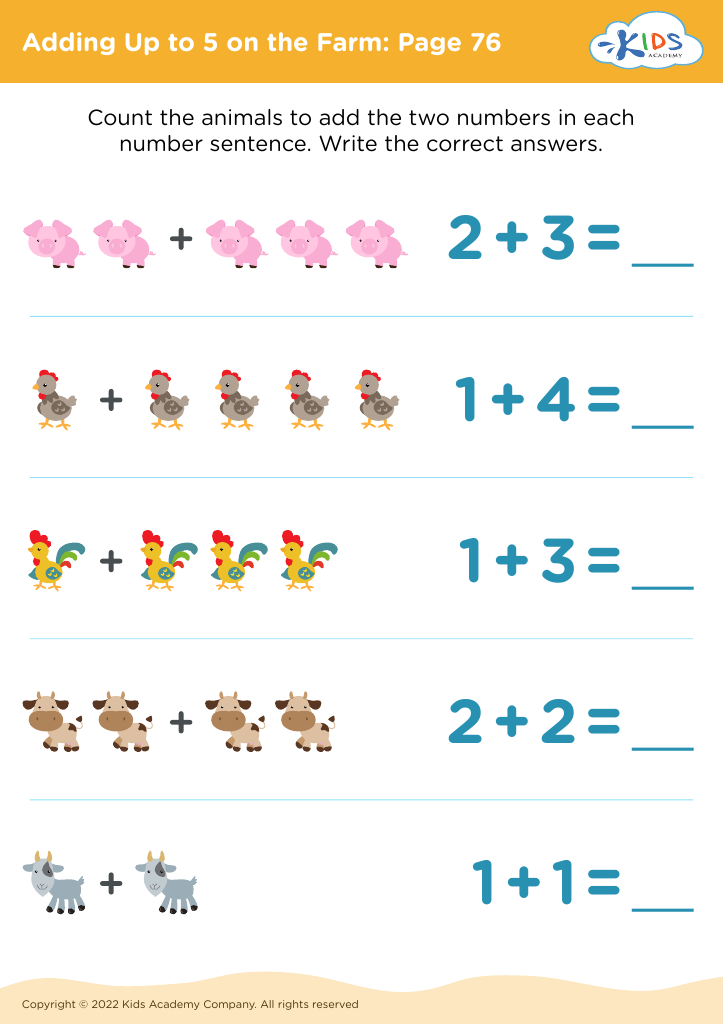
Adding Up to 5 on the Farm: Page 76
Worksheet
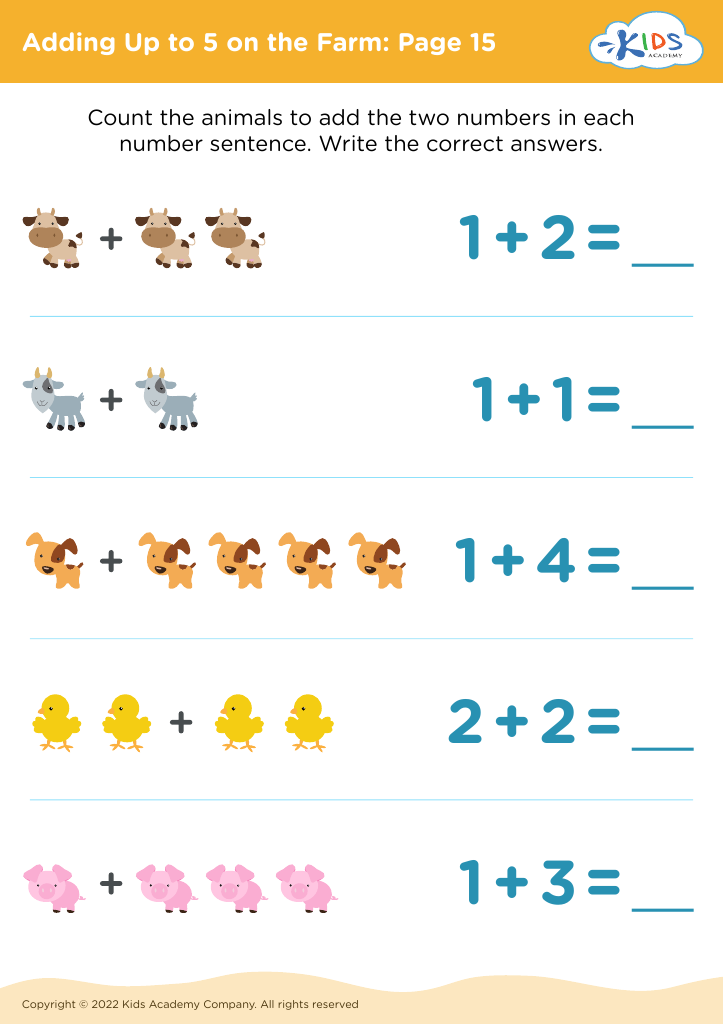
Adding Up to 5 on the Farm: Page 15
Worksheet
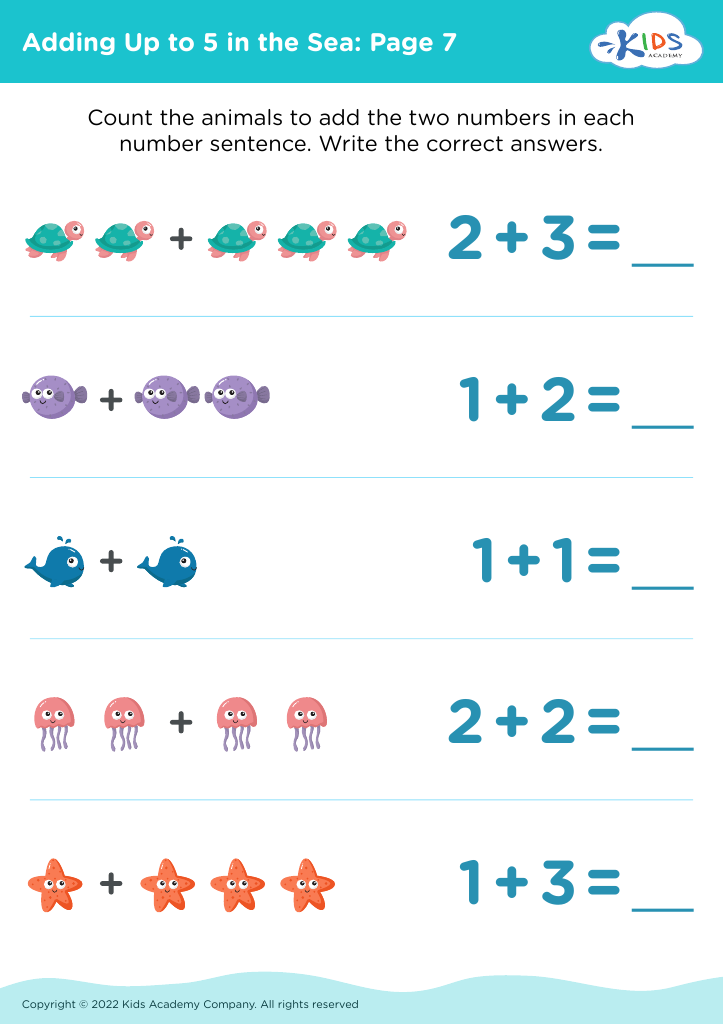
Adding Up to 5 in the Sea: Page 7

Adding Up to 5 in the Sea: Page 7

Adding Up to 5 in the Sea: Page 7
Worksheet
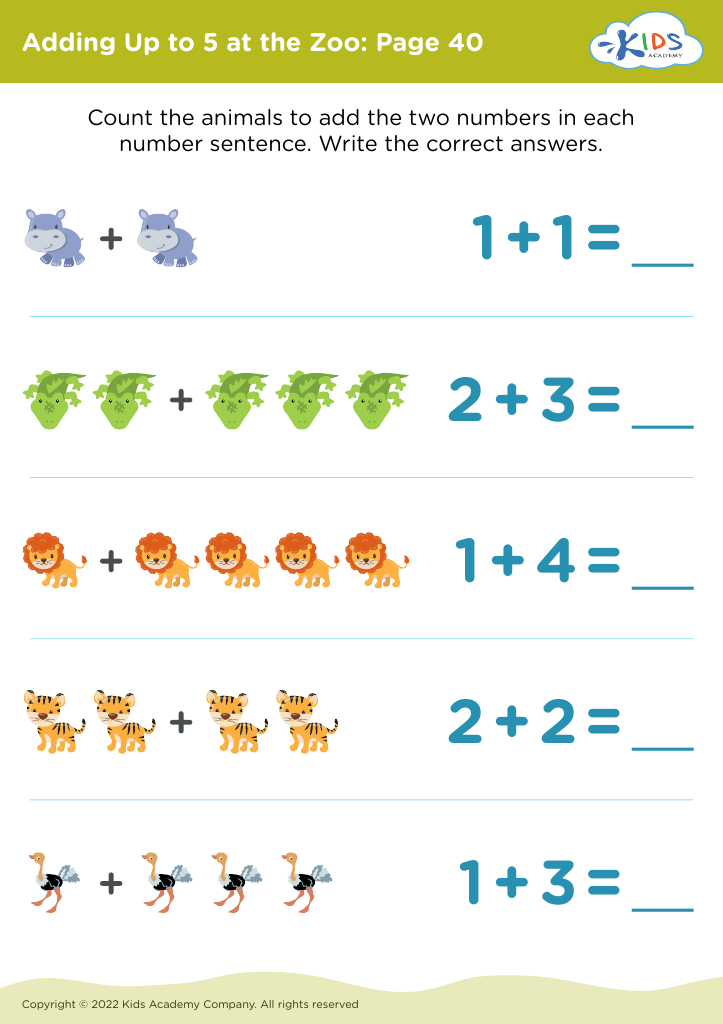
Adding Up to 5 at the Zoo: Page 40
Worksheet
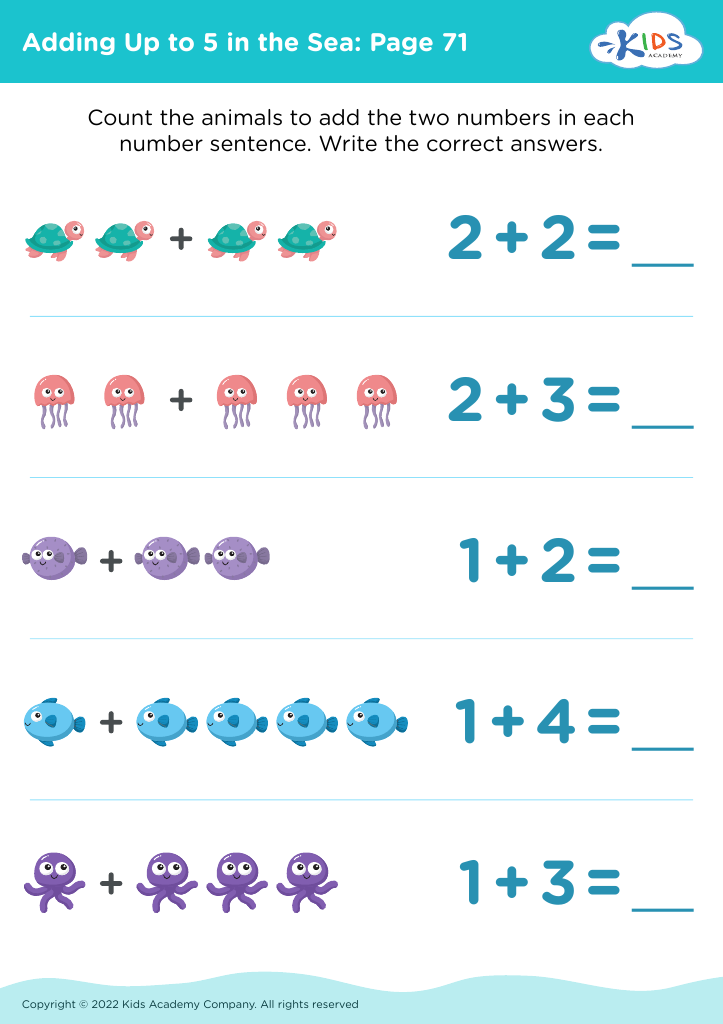
Adding Up to 5 in the Sea: Page 71
Worksheet
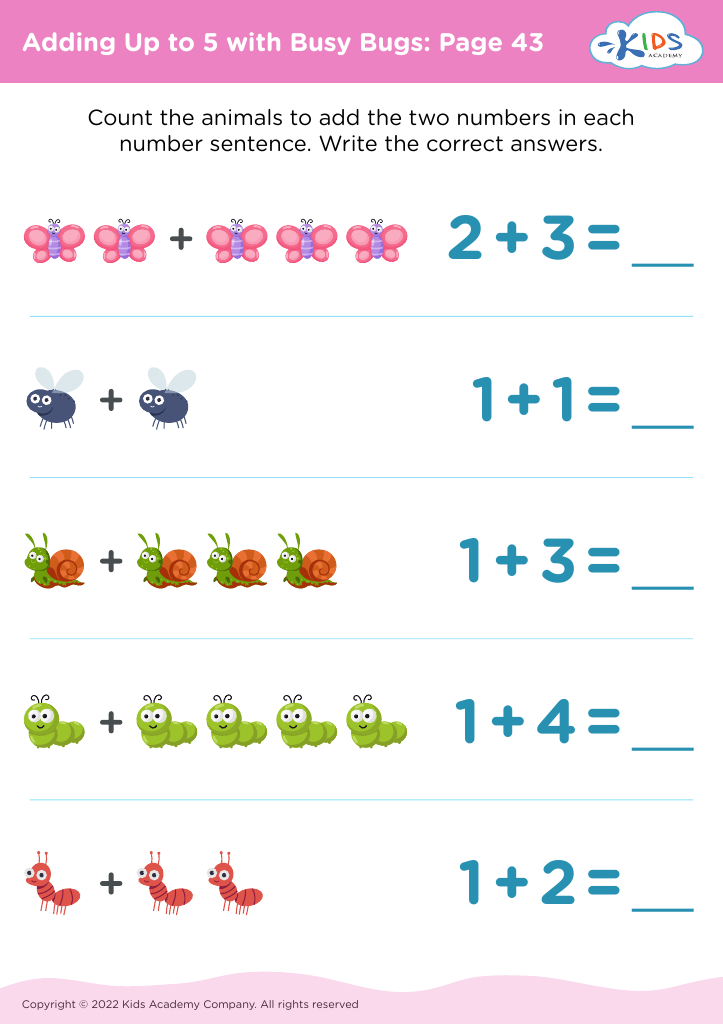
Adding Up to 5 with Busy Bugs: Page 43
Worksheet
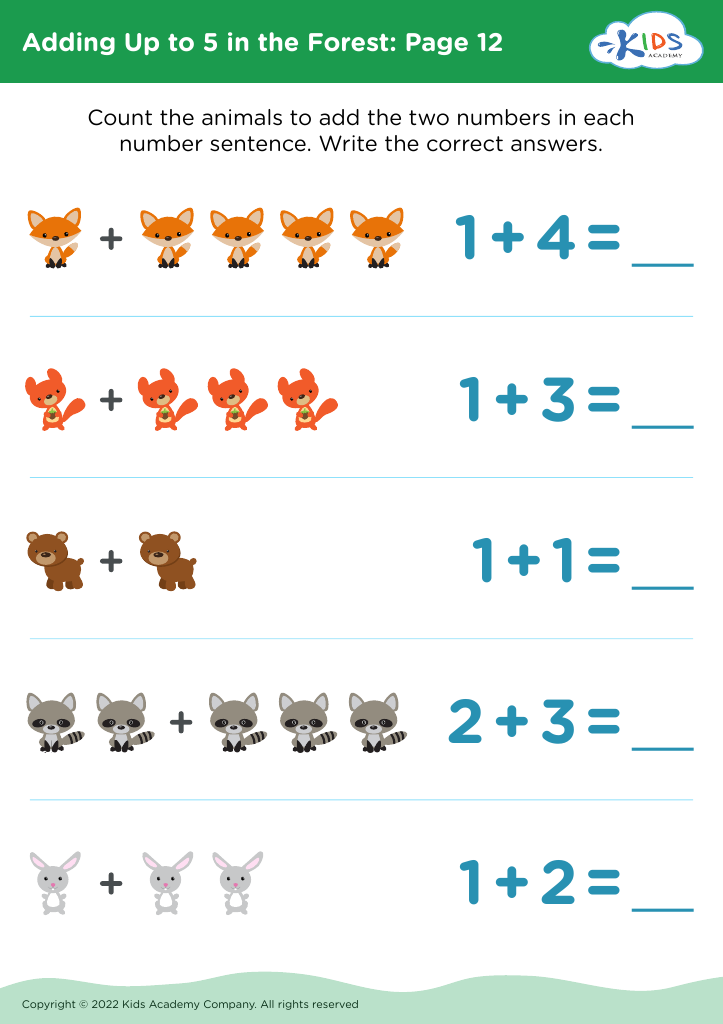
Adding Up to 5 in the Forest: Page 12
Worksheet
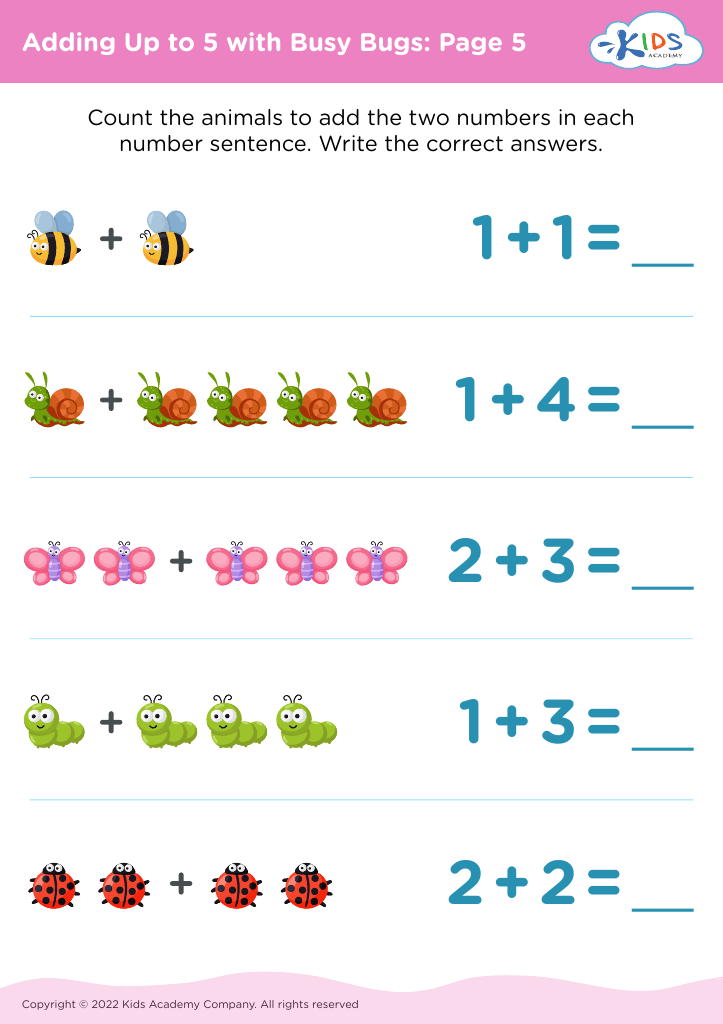
Adding Up to 5 with Busy Bugs: Page 5
Worksheet
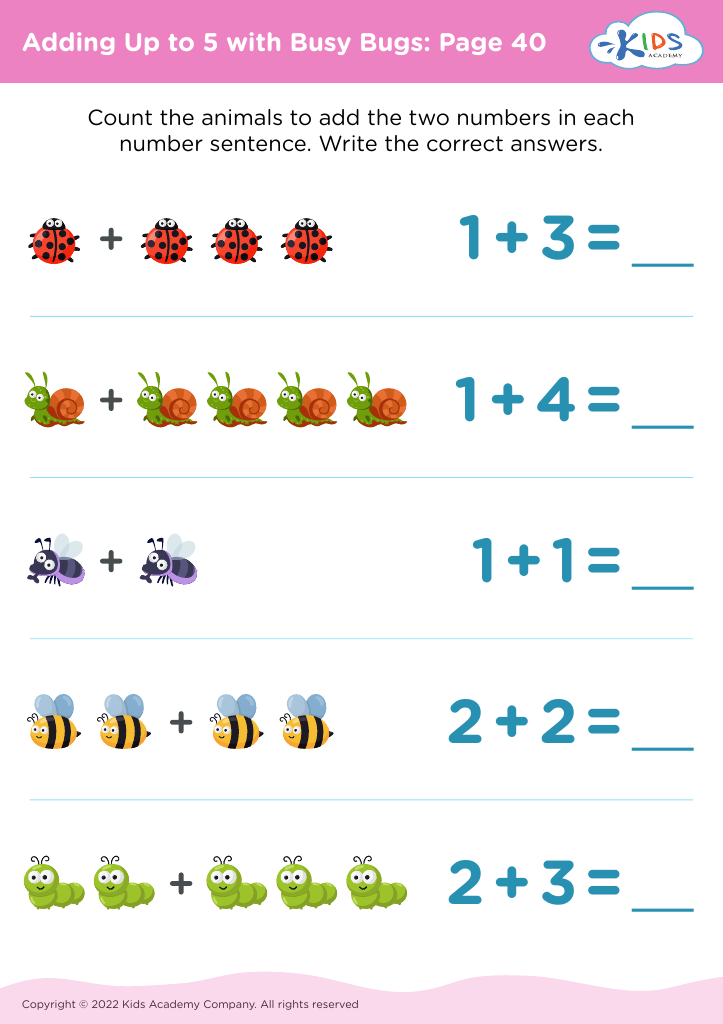
Adding Up to 5 with Busy Bugs: Page 40
Worksheet
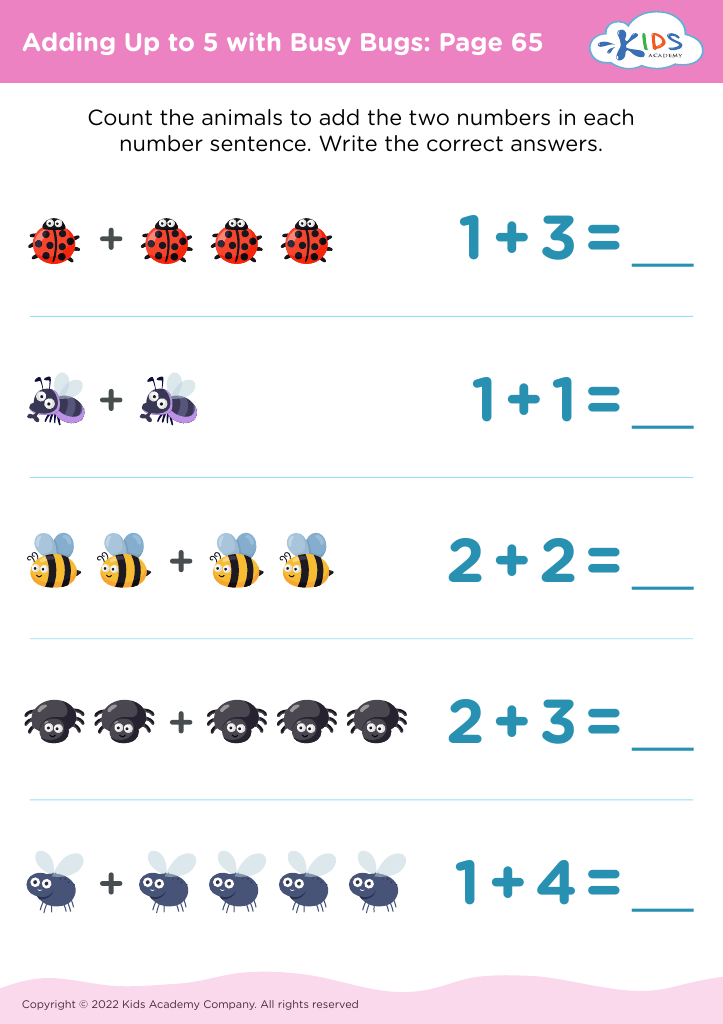
Adding Up to 5 with Busy Bugs: Page 65
Worksheet
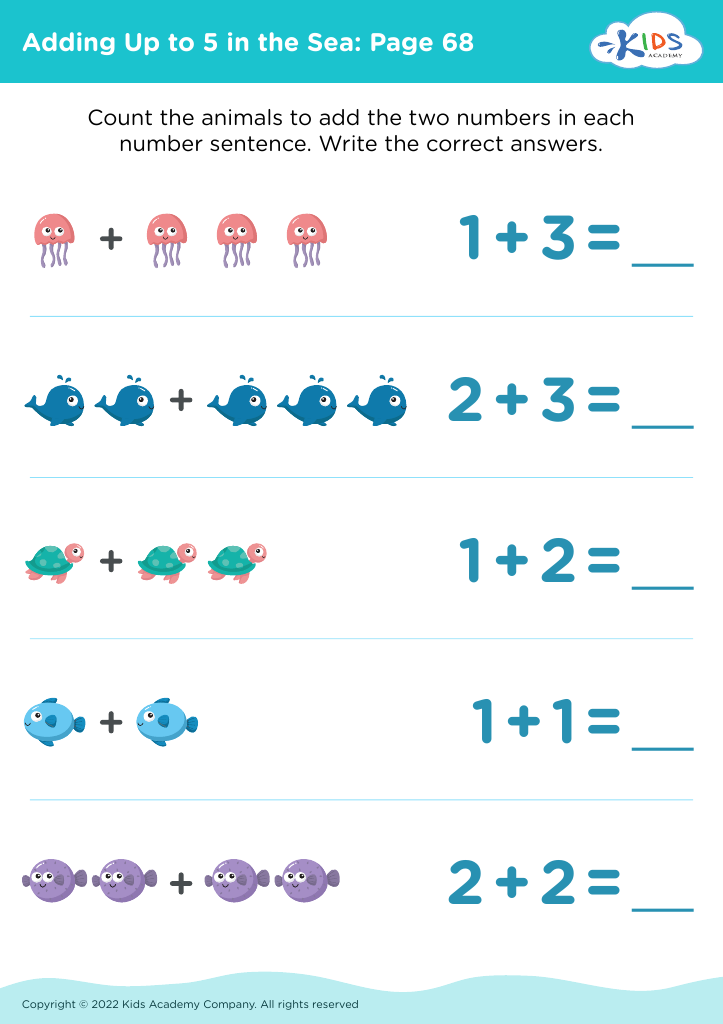
Adding Up to 5 in the Sea: Page 68
Worksheet
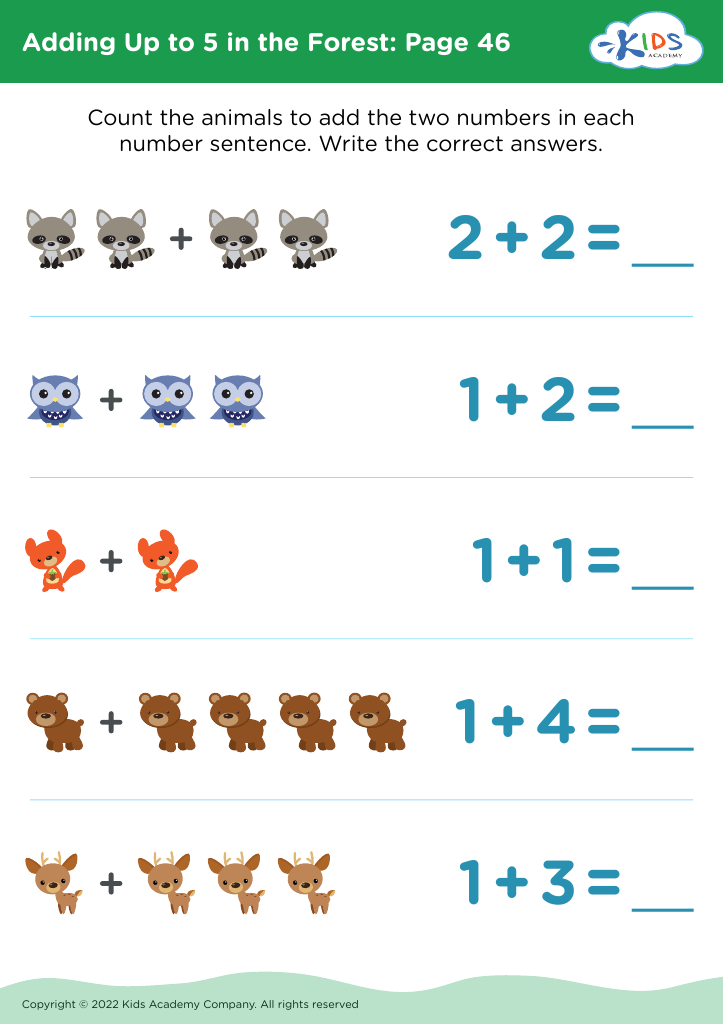
Adding Up to 5 in the Forest: Page 46
Worksheet
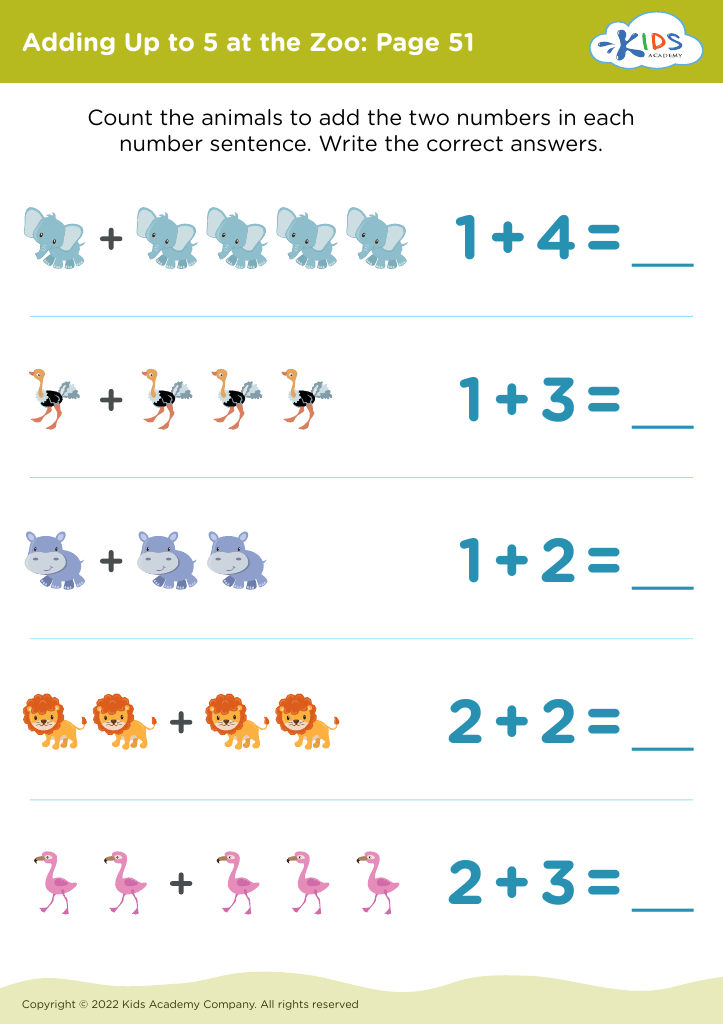
Adding Up to 5 at the Zoo: Page 51
Worksheet
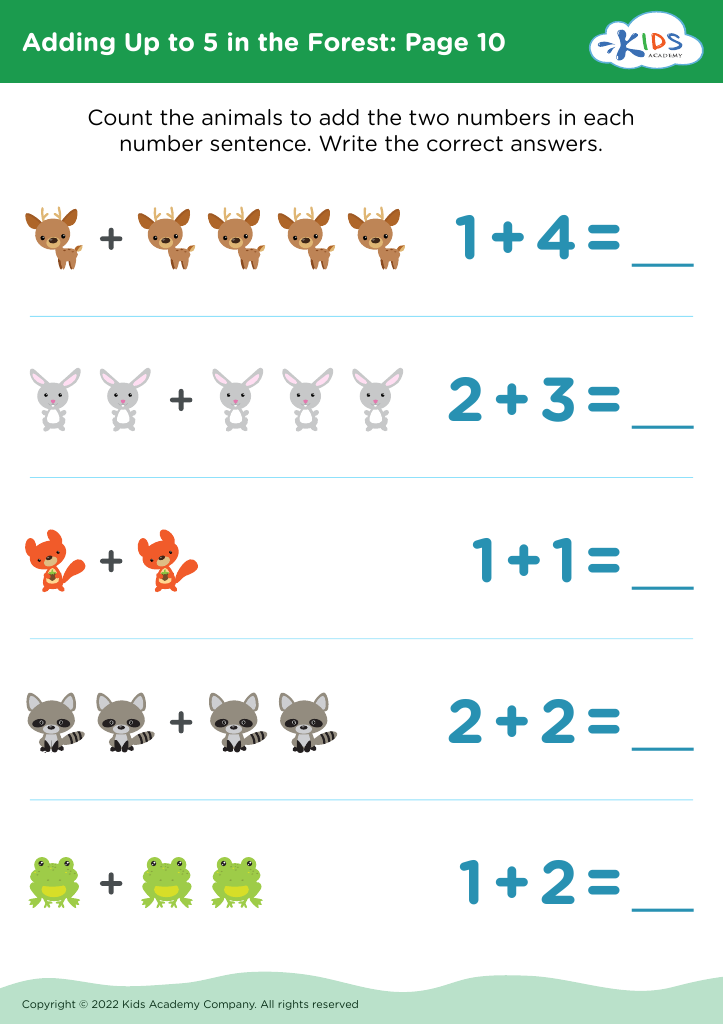
Adding Up to 5 in the Forest: Page 10
Worksheet
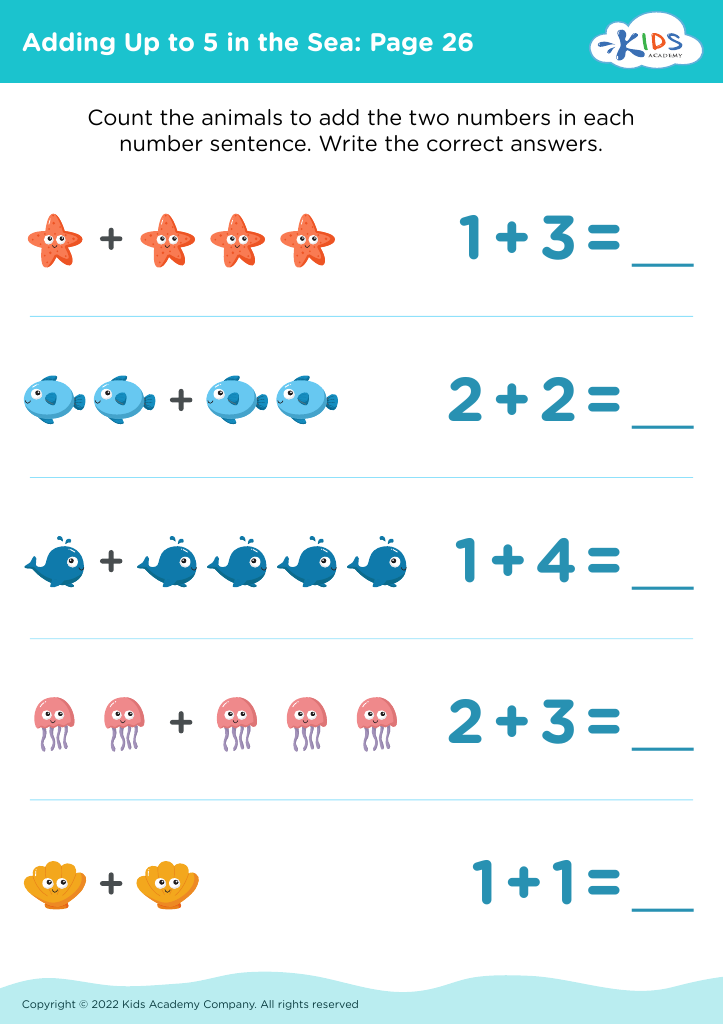
Adding Up to 5 in the Sea: Page 26
Worksheet


Addition practice adding up to 5 is crucial for children aged 3-9 for several reasons. Firstly, foundational math skills are best developed early; mastering basic addition at a young age paves the way for more complex arithmetic in later grades. Establishing confidence in simple mathematics encourages a positive attitude towards the subject, which can affect a child's overall academic performance.

Practicing addition within the small range up to 5 helps solidify their understanding of number concepts, reinforcing counting skills and the concept of quantity. This foundational knowledge is essential for developing problem-solving skills and logical thinking.

Furthermore, early addition enhances memory, strengthens focus, and builds cognitive abilities. It is also foundational for practical life skills; being able to perform simple arithmetic is essential in various daily tasks, such as counting objects, telling time, and handling money.

Teachers and parents play critical roles in providing opportunities for consistent practice. Structured activities, games, and everyday applications can make learning enjoyable and memorable. Caring about early addition skills signifies an investment in the child’s future academic success and practical life skills, laying the groundwork for confident and competent mathematical understanding.