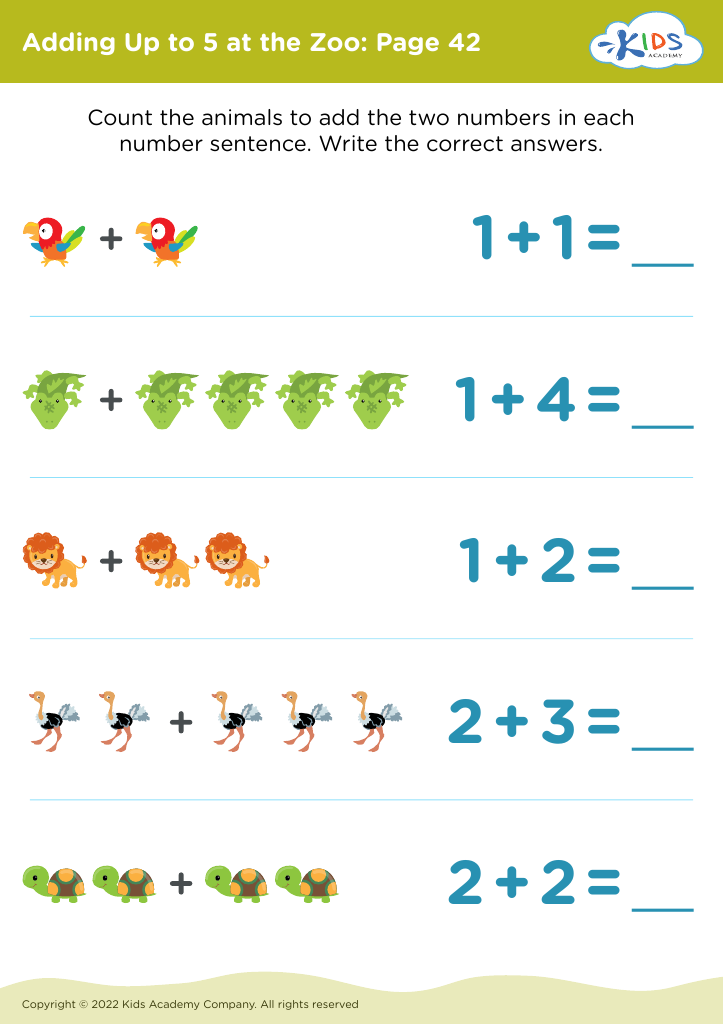
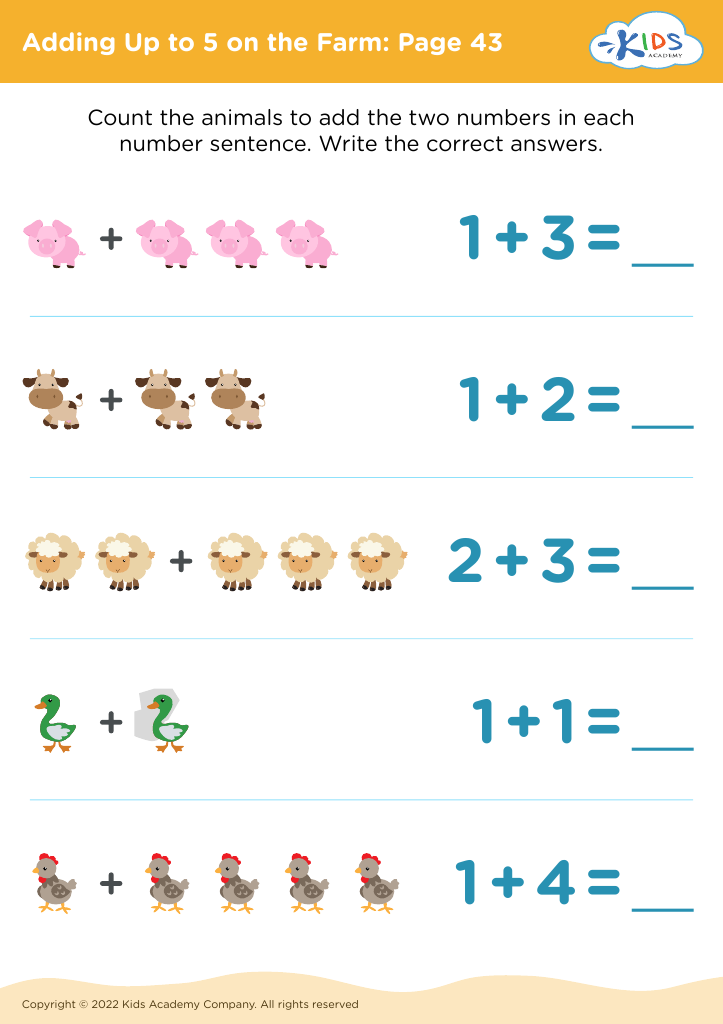
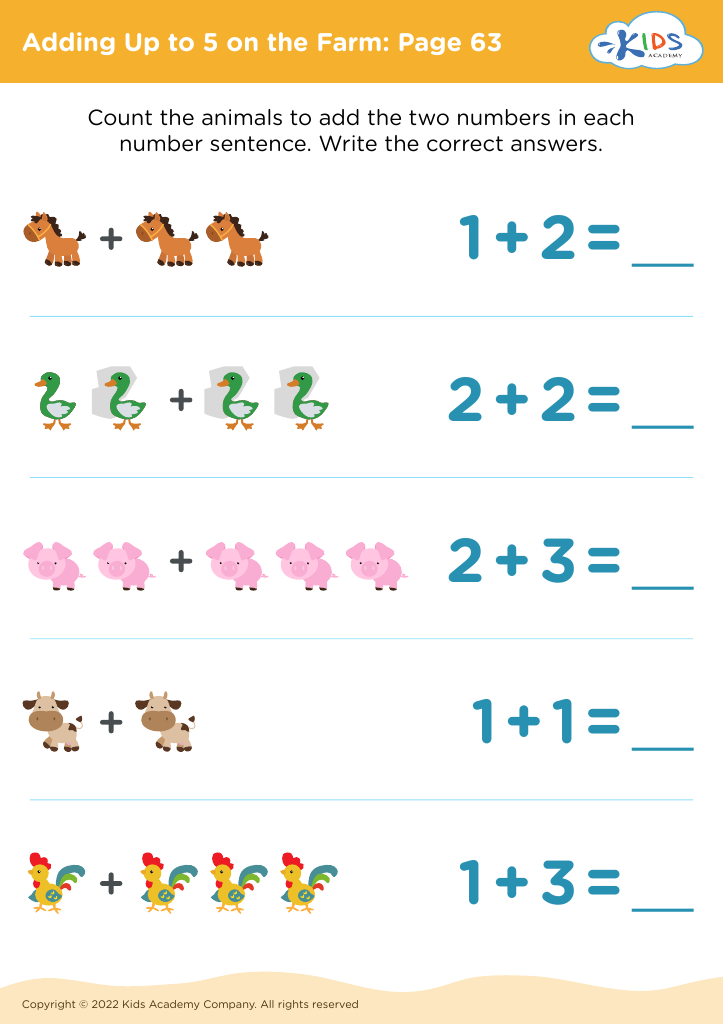
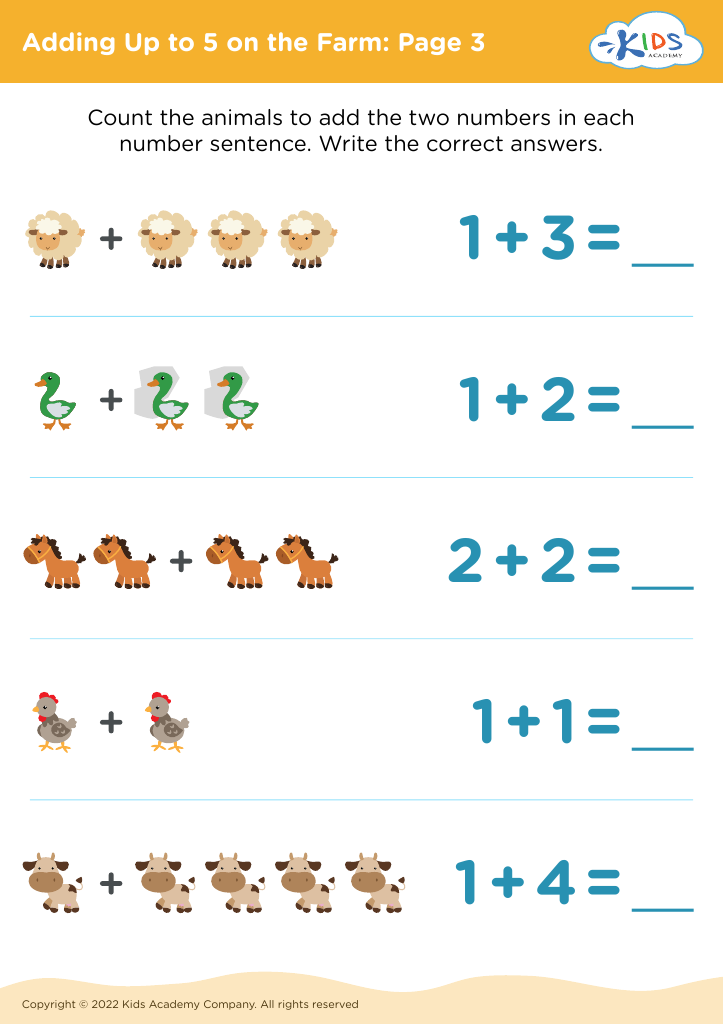
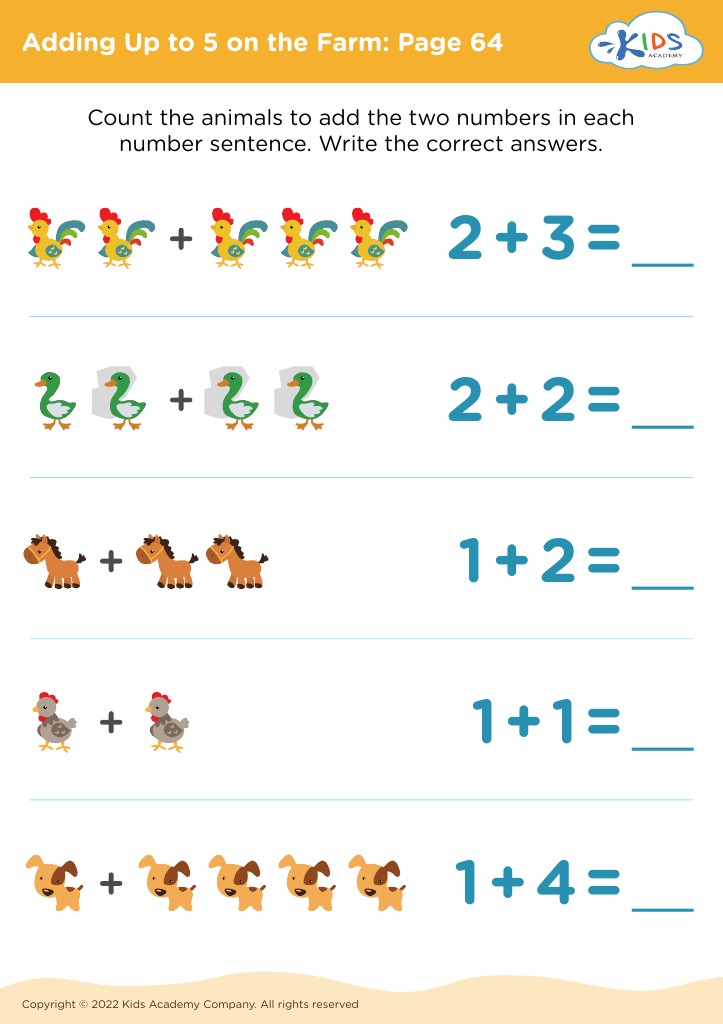
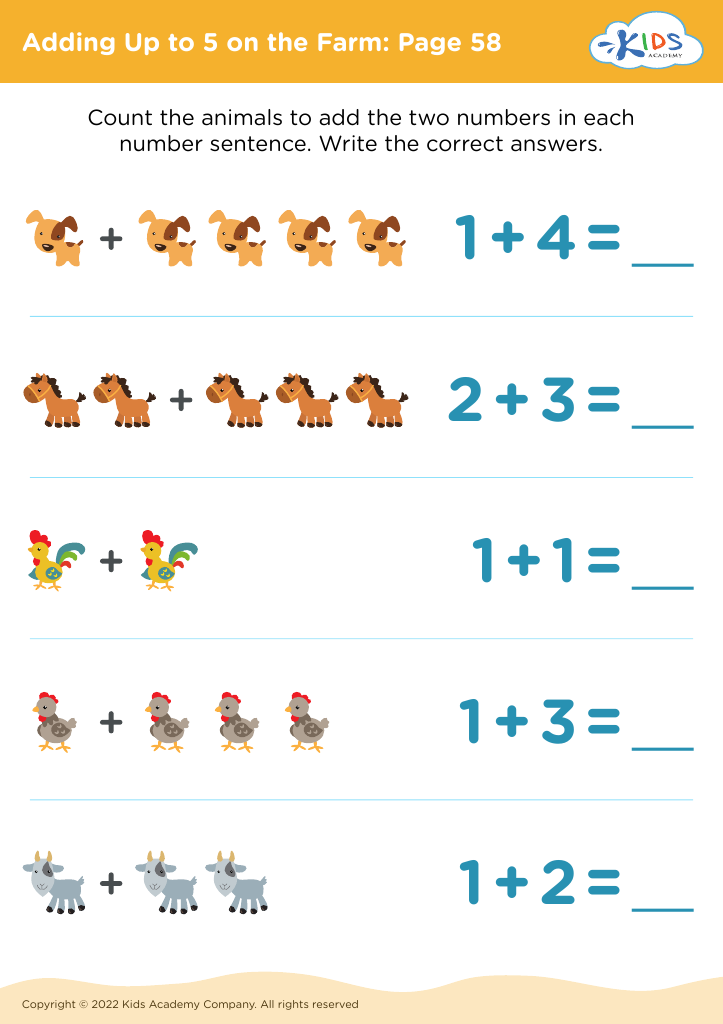
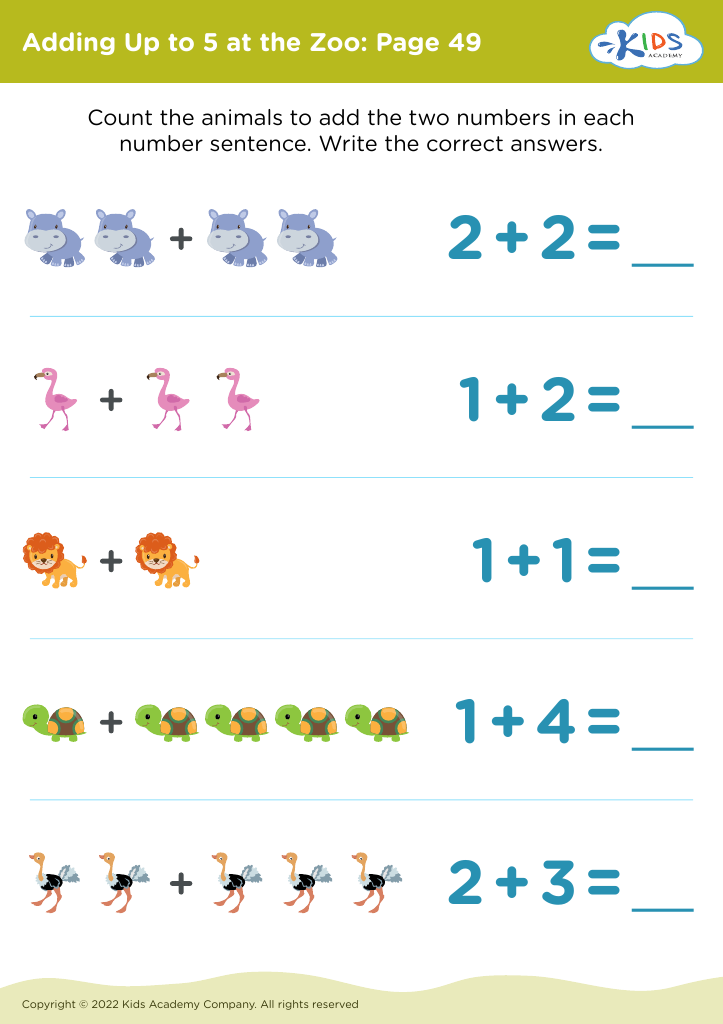
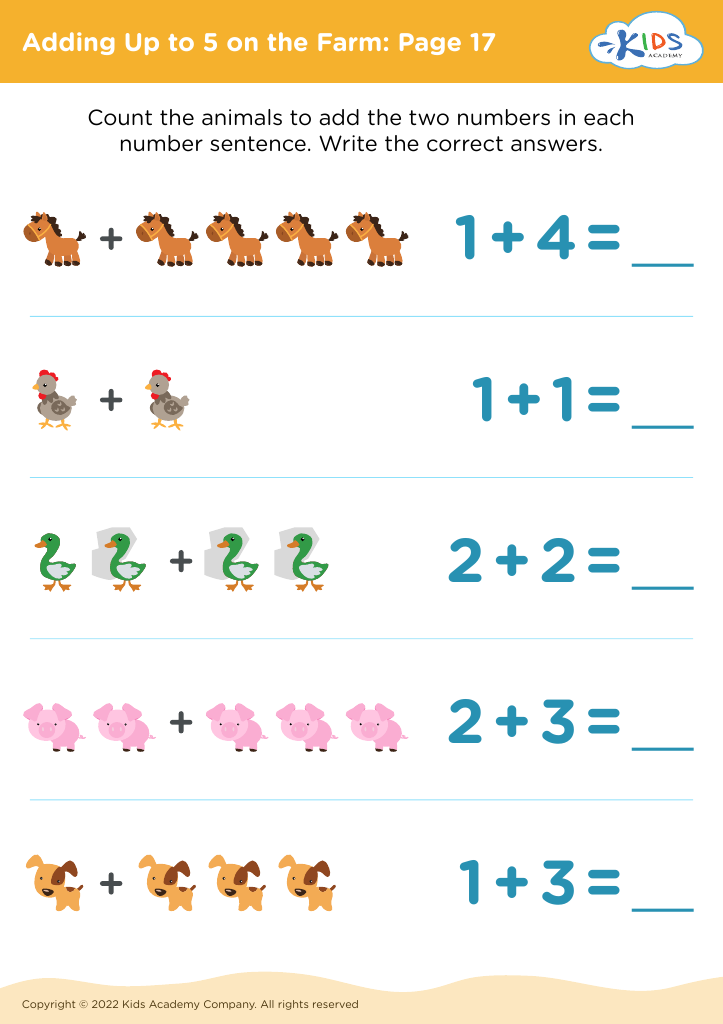
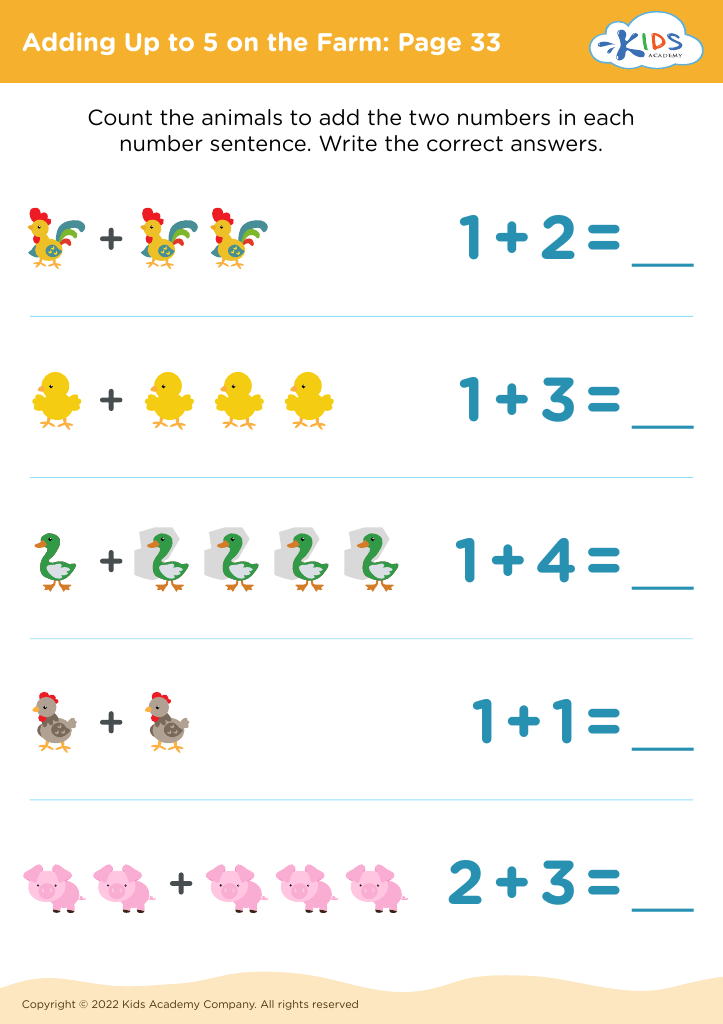
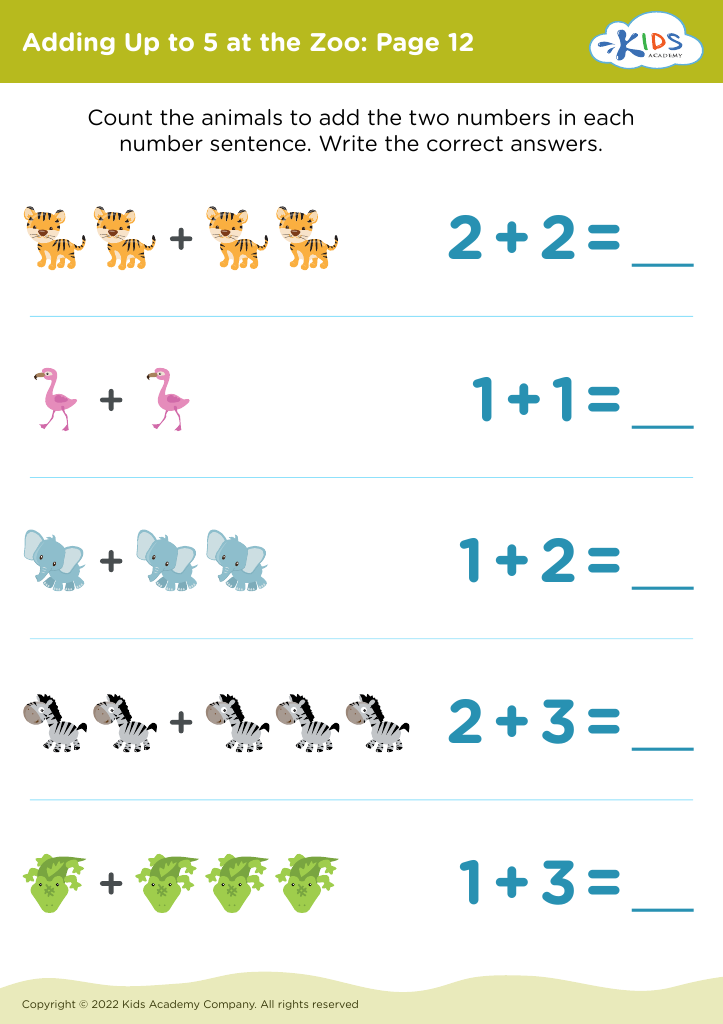
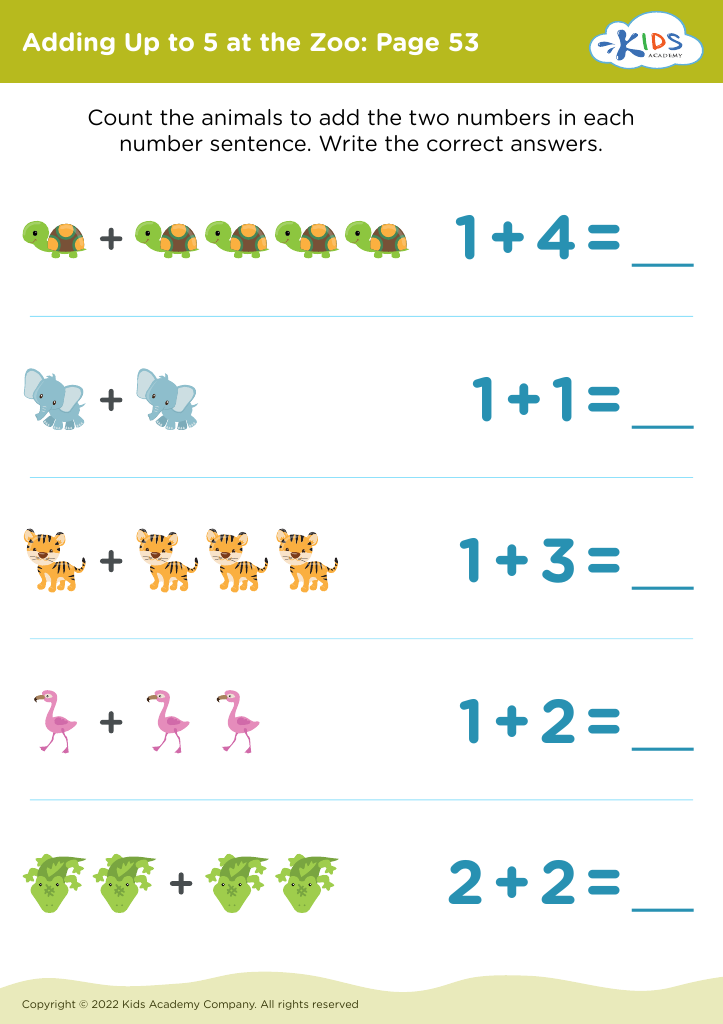
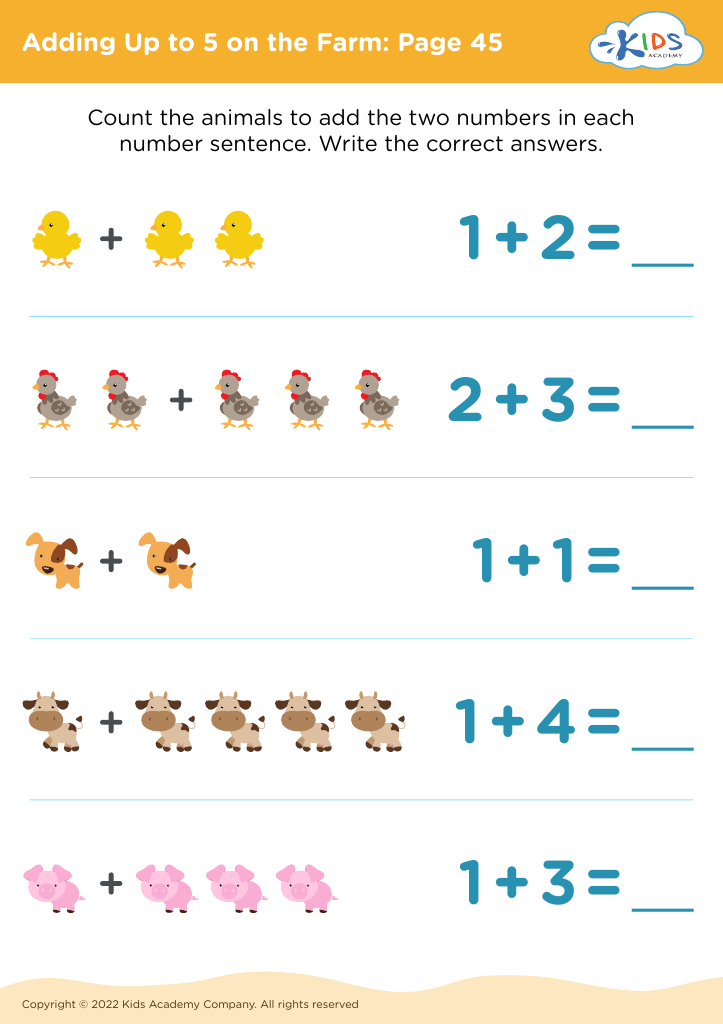
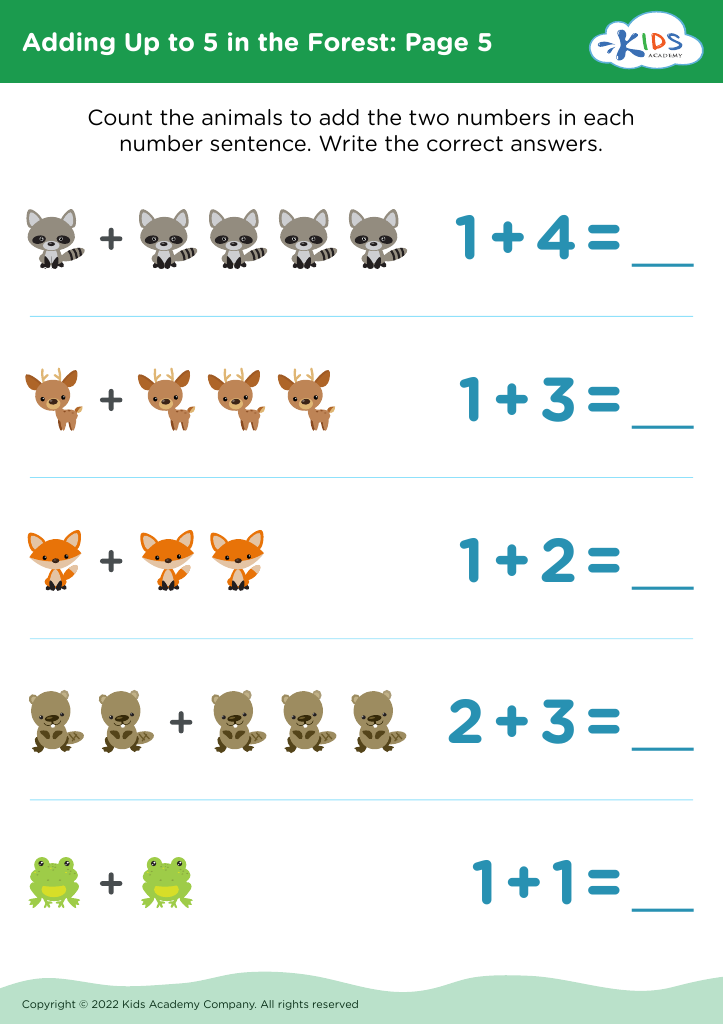
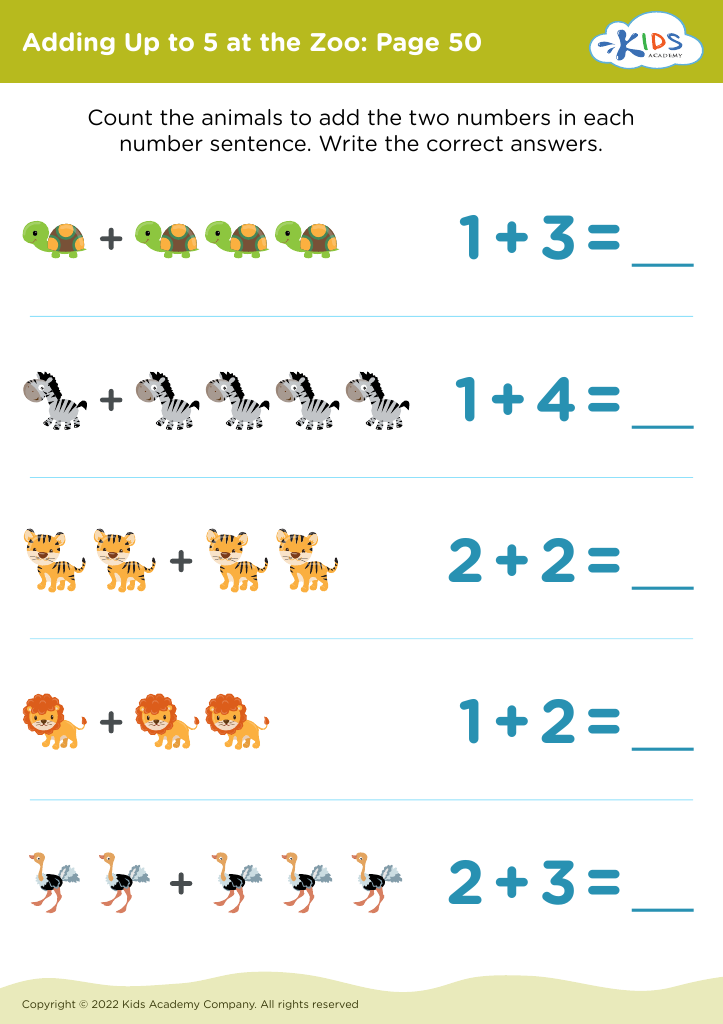
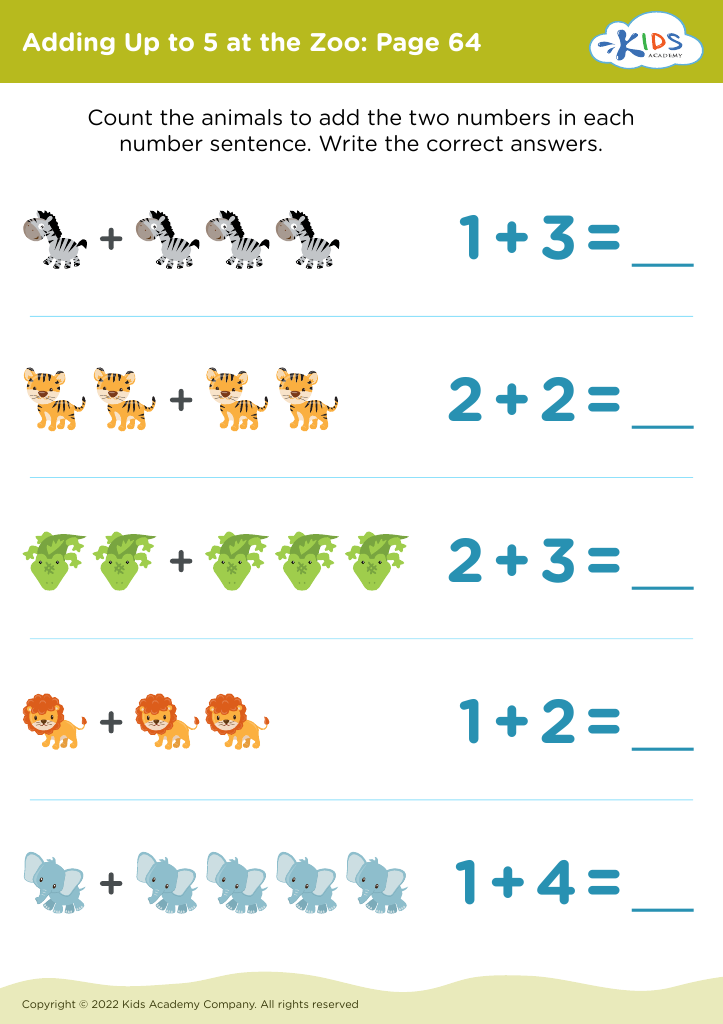
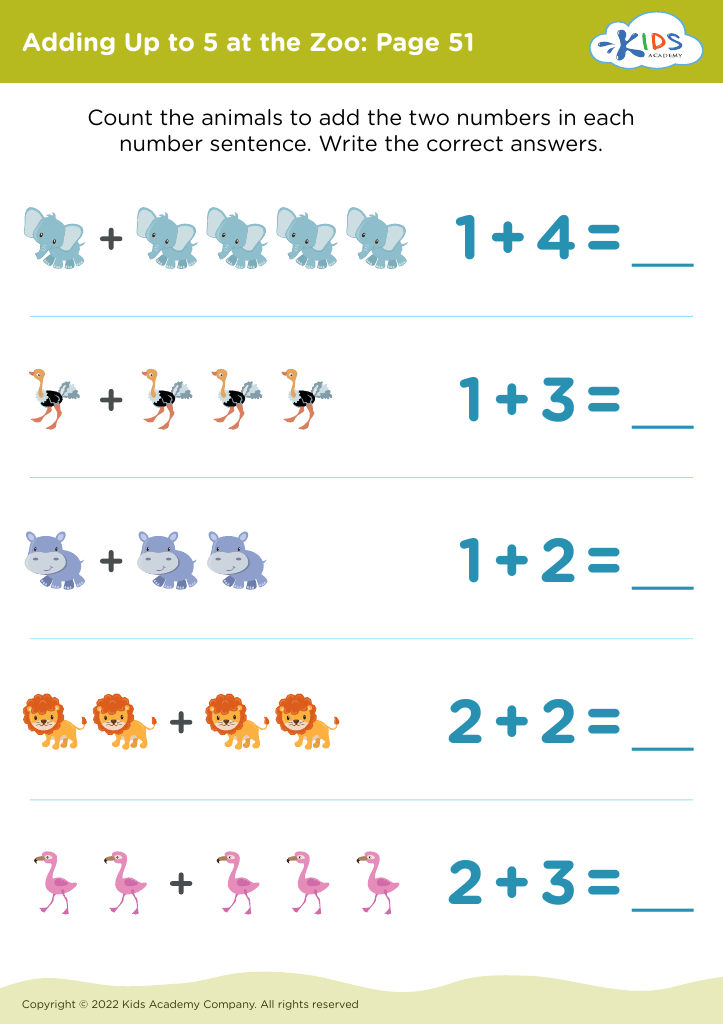
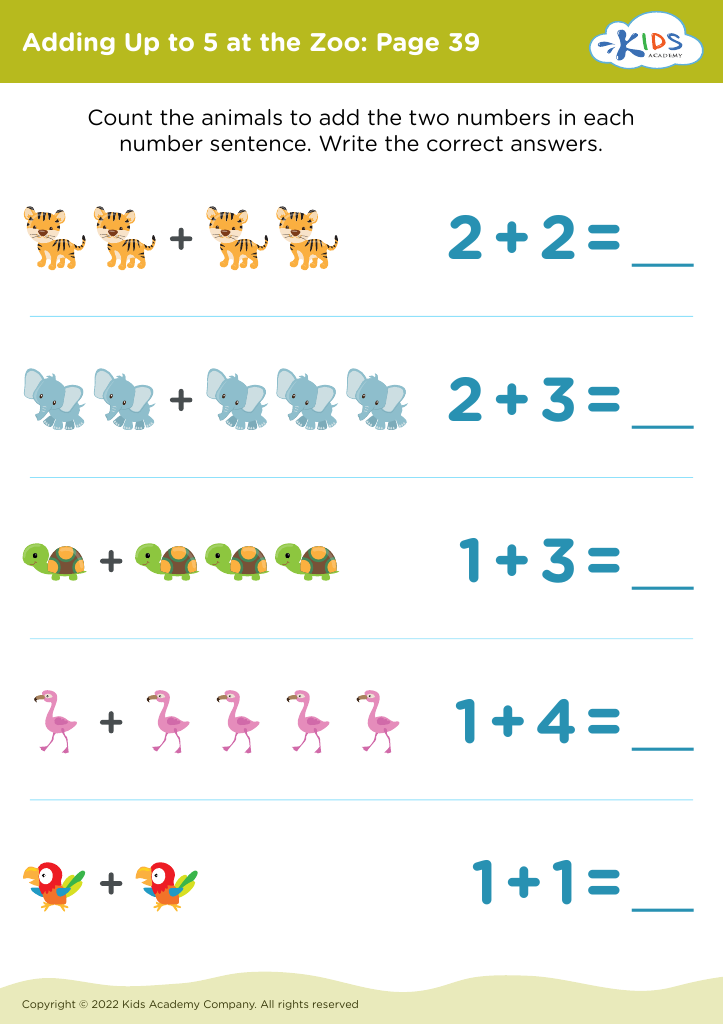
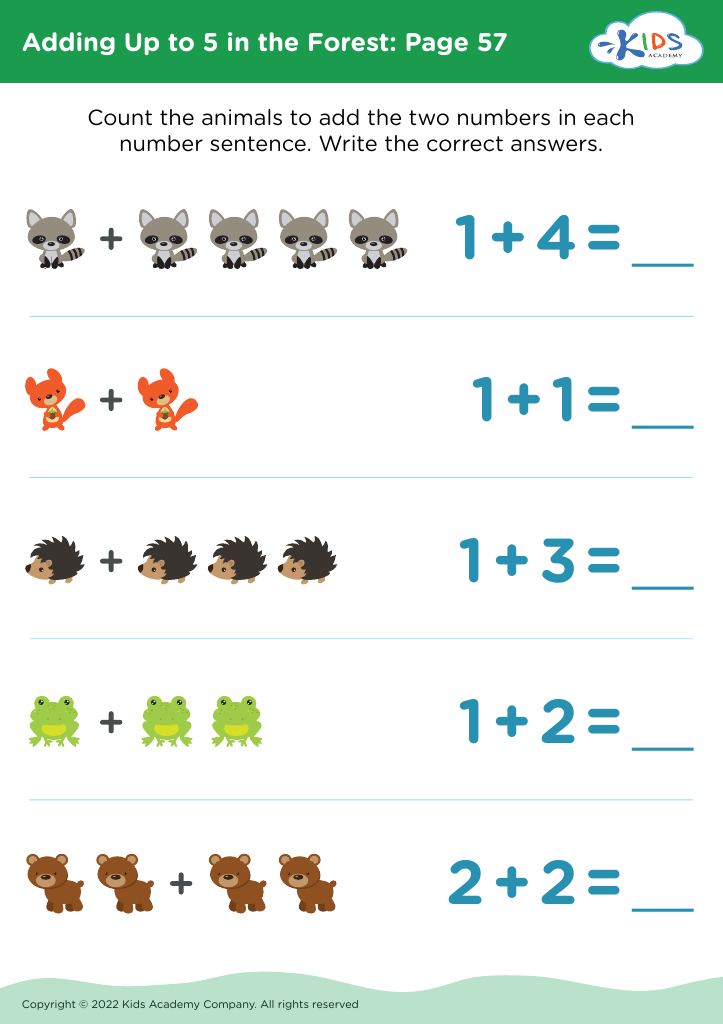







Animal recognition and addition within the context of early education is essential for several reasons. First, it taps into children's natural curiosity and fascination with animals, making learning engaging and fun. By incorporating animal recognition into addition exercises, children can relate numbers to real-world objects they are familiar with, fostering a deeper understanding of mathematical concepts.
For parents and teachers of children aged 3 to 9, integrating animals into early math lessons helps enhance cognitive skills. Young learners improve their pattern recognition and memory by associating animals with numbers. This process lays the groundwork for future mathematical concepts.
Moreover, learning about animals also promotes language development. Children are introduced to new vocabulary related to different species, habitats, and behaviors, enhancing their overall communication skills.
Recognizing animals alongside basic math concepts encourages social skills through group activities and discussions, reinforcing collaboration and teamwork. Additionally, this approach nurtures an appreciation for nature, promoting empathy and environmental awareness among young learners.
In summary, fostering a link between animal recognition and early addition not only promotes academic skills but also enriches emotional and social development, highlighting the holistic value of this integrated learning approach.








