Filters

349 filtered results

Clear all filters
Favorites
With answer key
Interactive

349 filtered results

Difficulty Level

Grade


Subject

    Check out this FREE Trial Lesson on Adding Up to 5 for age 3-9!

    H

    Favorites
    With answer key
    Interactive
    • 3-9
    • Number Recognition
    • Adding Up to 5
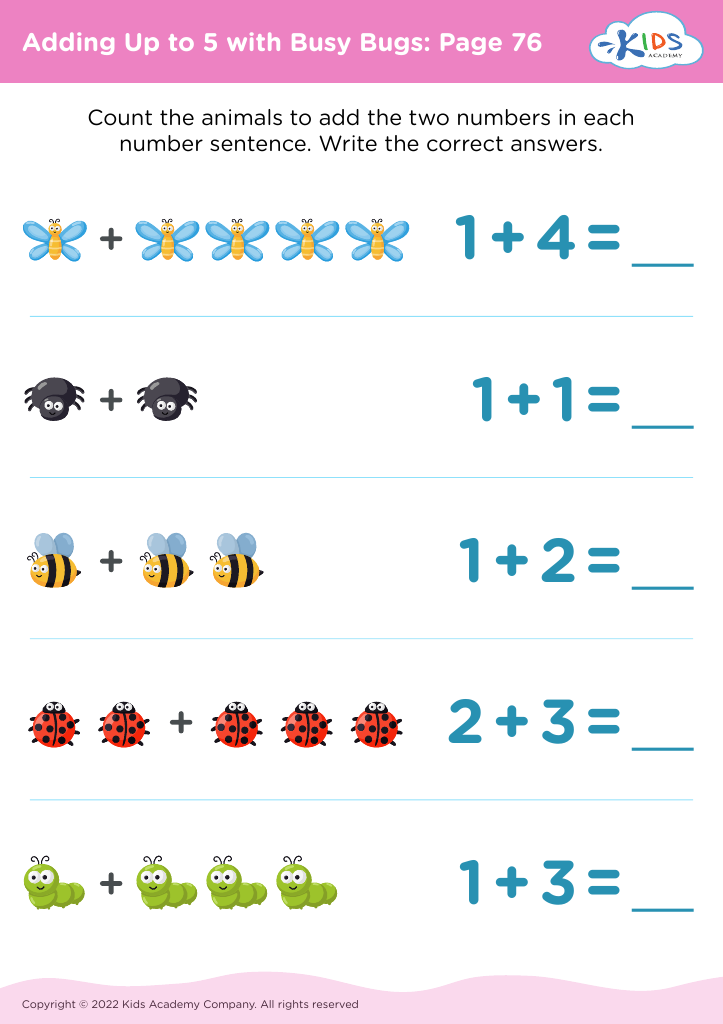
    Adding Up to 5 with Busy Bugs: Page 76
    Adding Up to 5 with Busy Bugs: Page 76
    Adding Up to 5 with Busy Bugs: Page 76
    Worksheet
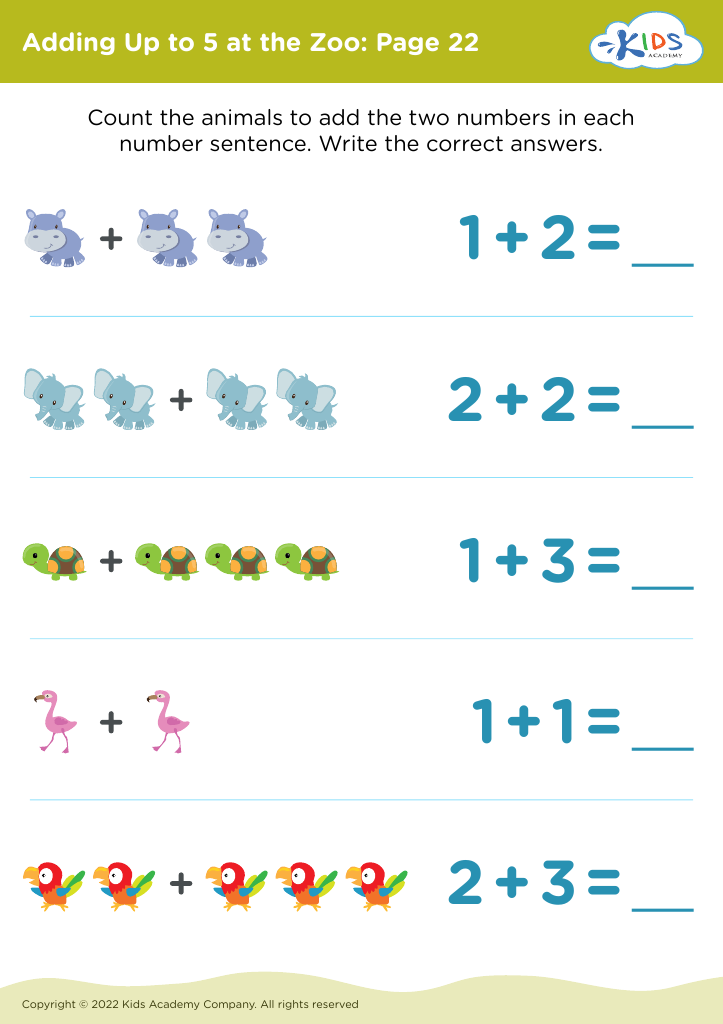
    Adding Up to 5 at the Zoo: Page 22
    Adding Up to 5 at the Zoo: Page 22
    Adding Up to 5 at the Zoo: Page 22
    Worksheet
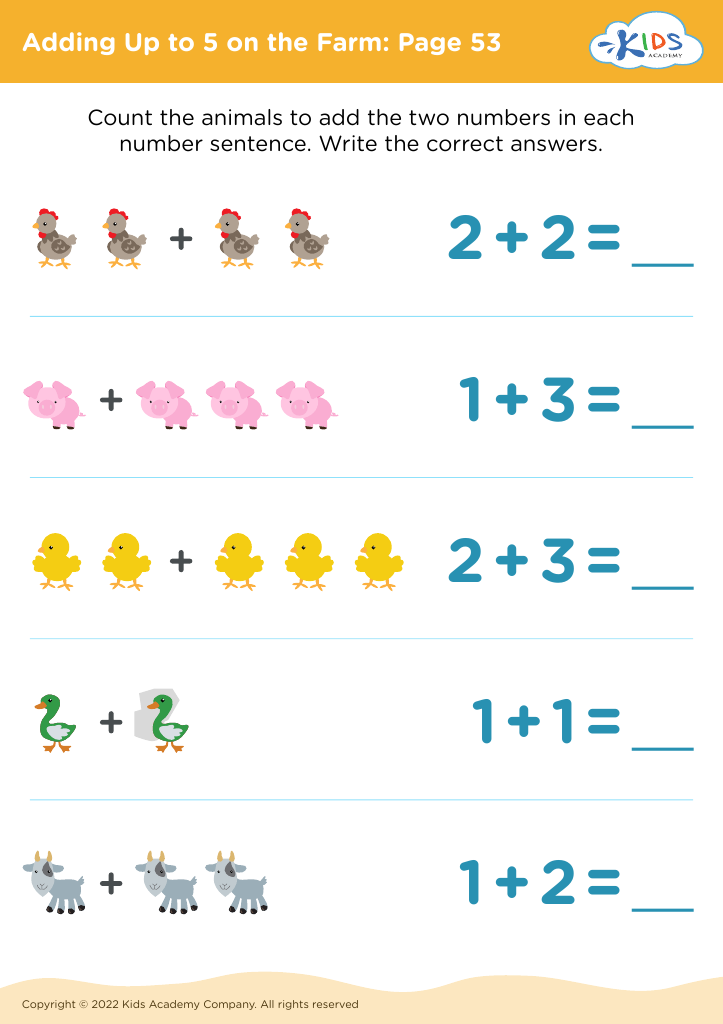
    Adding Up to 5 on the Farm: Page 53
    Adding Up to 5 on the Farm: Page 53
    Adding Up to 5 on the Farm: Page 53
    Worksheet
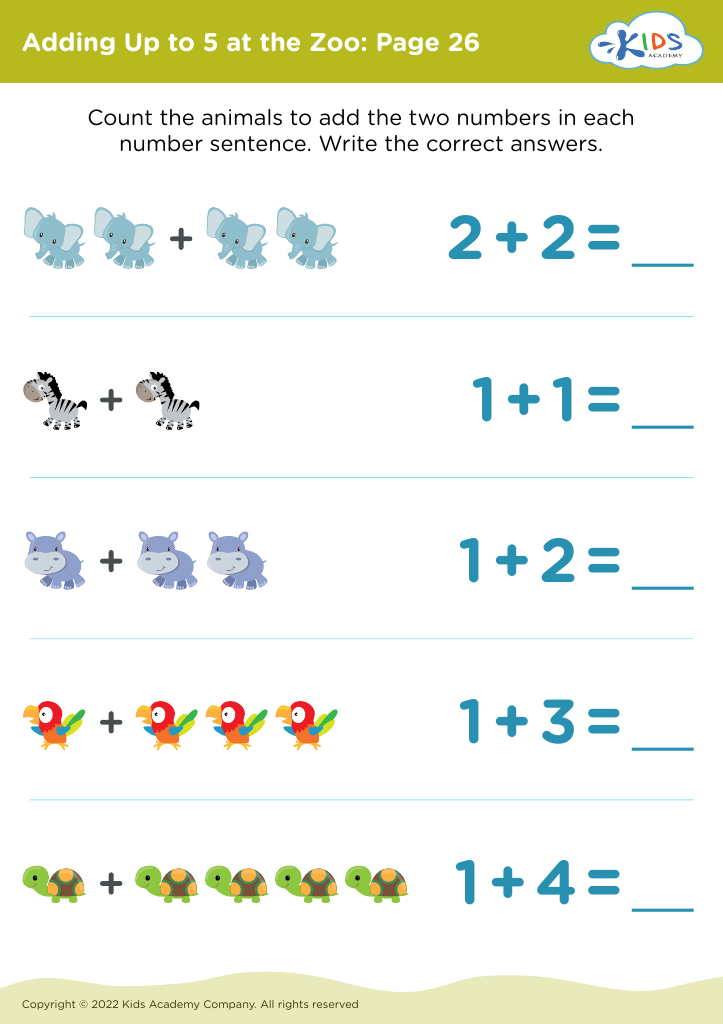
    Adding Up to 5 at the Zoo: Page 26
    Adding Up to 5 at the Zoo: Page 26
    Adding Up to 5 at the Zoo: Page 26
    Worksheet
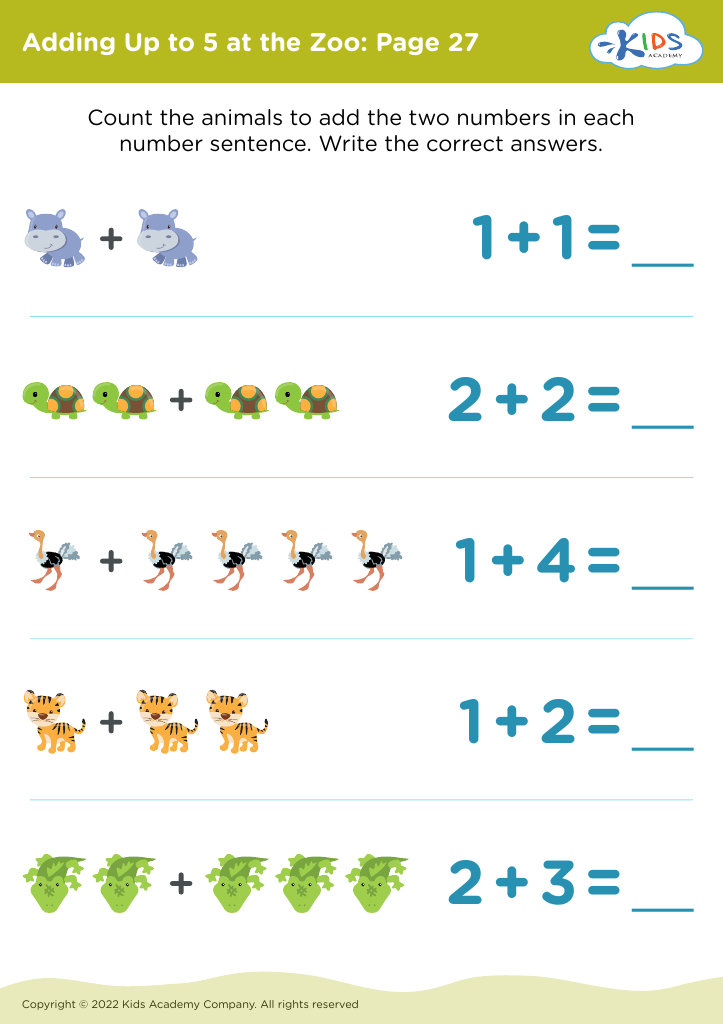
    Adding Up to 5 at the Zoo: Page 27
    Adding Up to 5 at the Zoo: Page 27
    Adding Up to 5 at the Zoo: Page 27
    Worksheet
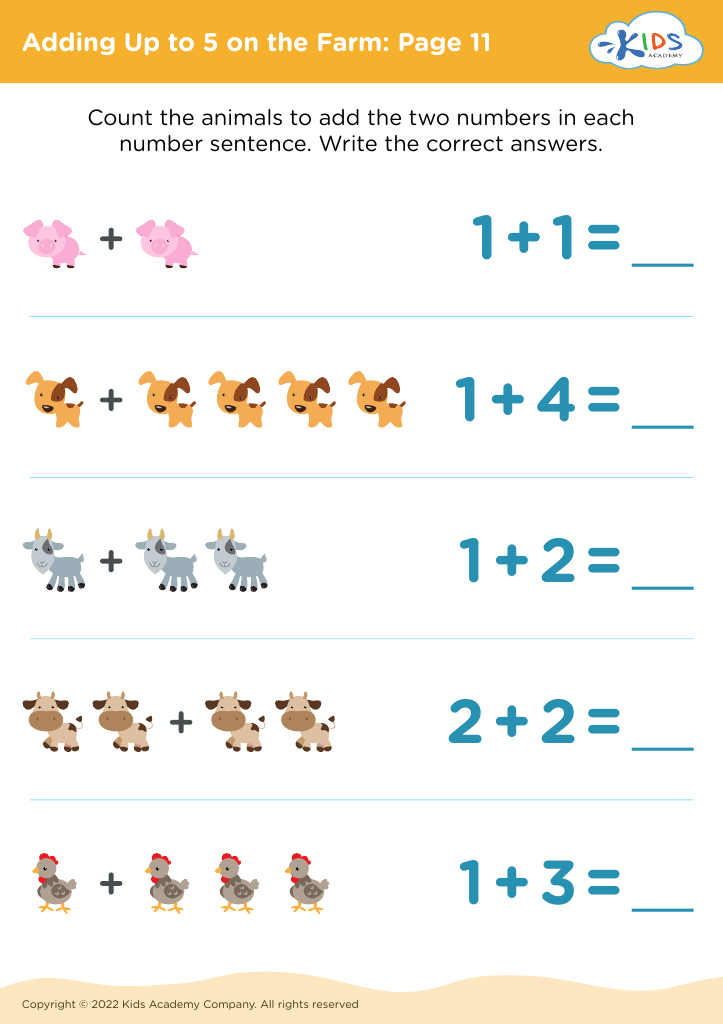
    Adding Up to 5 on the Farm: Page 11
    Adding Up to 5 on the Farm: Page 11
    Adding Up to 5 on the Farm: Page 11
    Worksheet
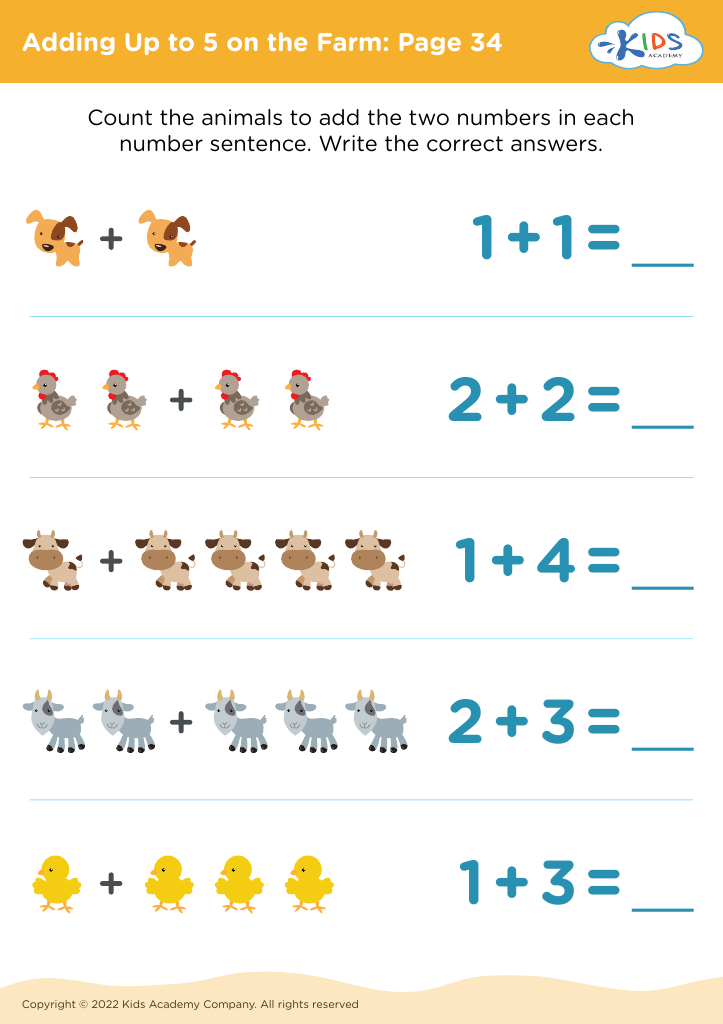
    Adding Up to 5 on the Farm: Page 34
    Adding Up to 5 on the Farm: Page 34
    Adding Up to 5 on the Farm: Page 34
    Worksheet
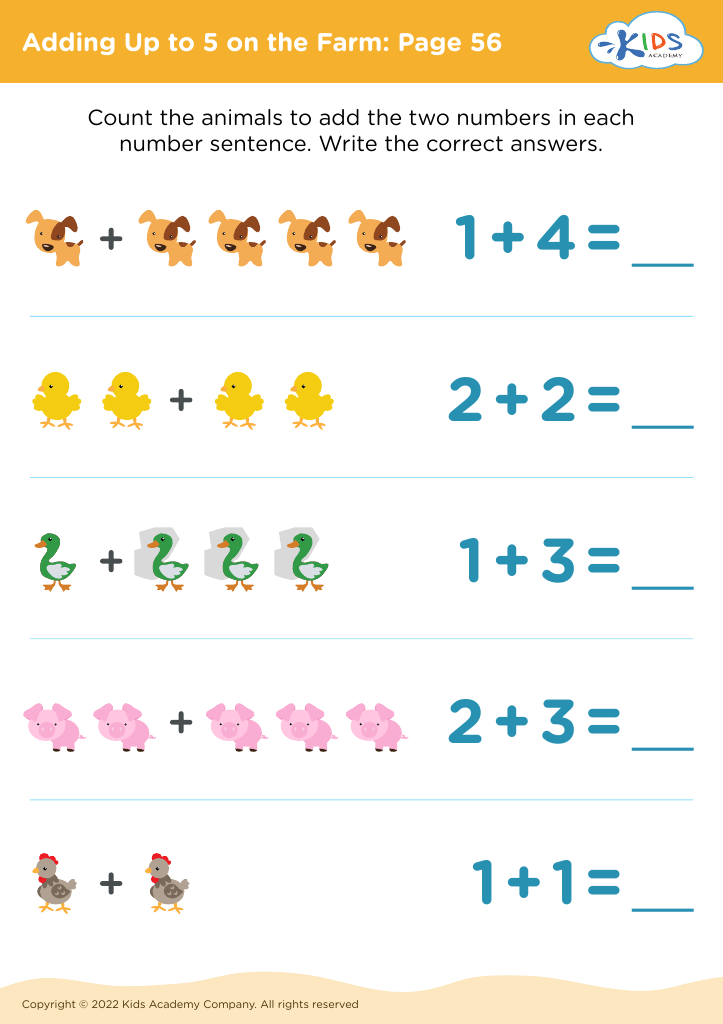
    Adding Up to 5 on the Farm: Page 56
    Adding Up to 5 on the Farm: Page 56
    Adding Up to 5 on the Farm: Page 56
    Worksheet
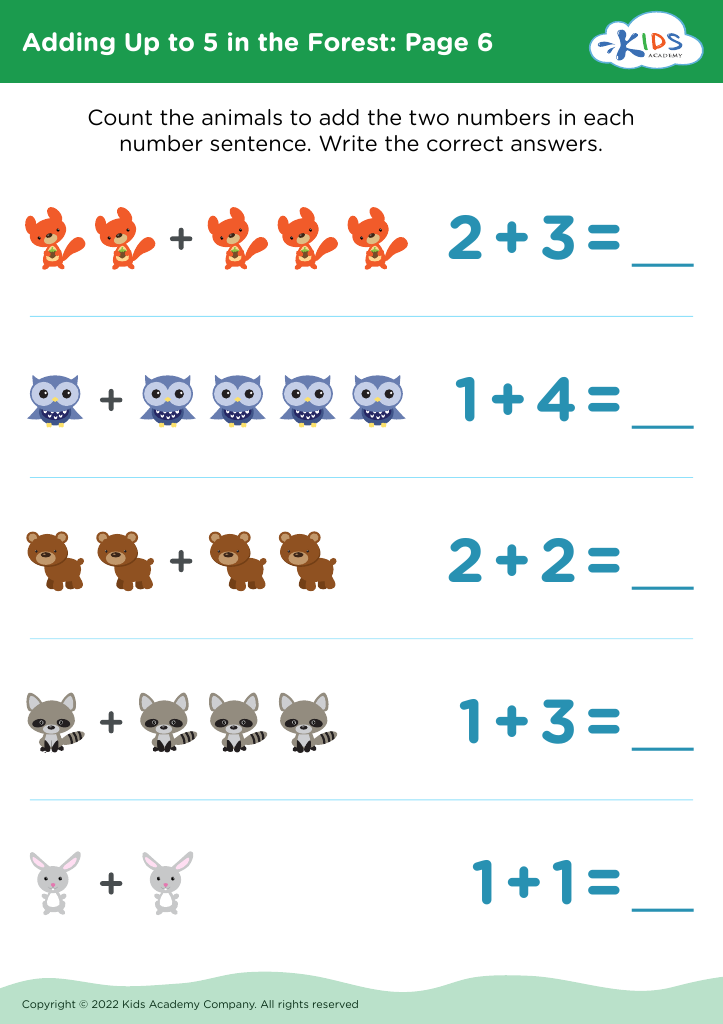
    Adding Up to 5 in the Forest: Page 6
    Adding Up to 5 in the Forest: Page 6
    Adding Up to 5 in the Forest: Page 6
    Worksheet
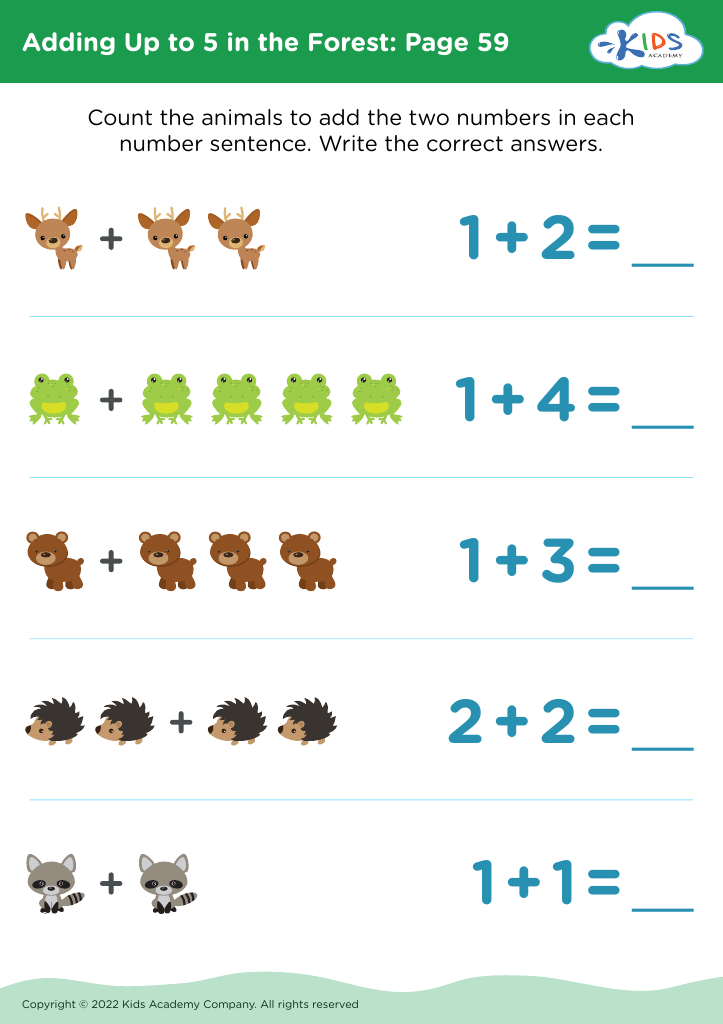
    Adding Up to 5 in the Forest: Page 59
    Adding Up to 5 in the Forest: Page 59
    Adding Up to 5 in the Forest: Page 59
    Worksheet
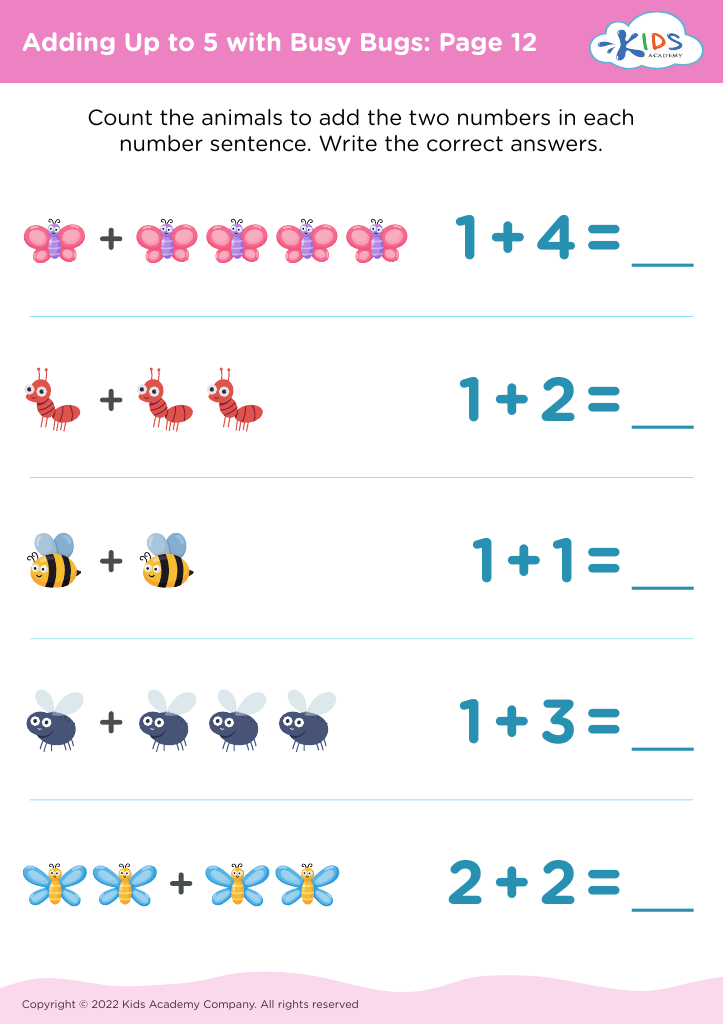
    Adding Up to 5 with Busy Bugs: Page 12
    Adding Up to 5 with Busy Bugs: Page 12
    Adding Up to 5 with Busy Bugs: Page 12
    Worksheet
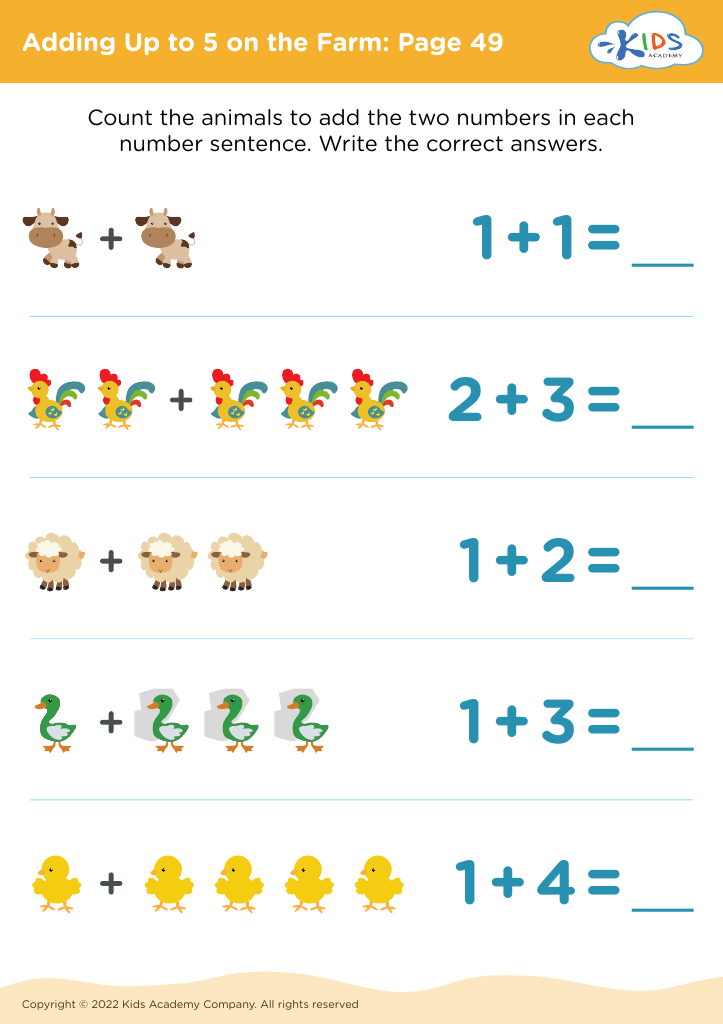
    Adding Up to 5 on the Farm: Page 49
    Adding Up to 5 on the Farm: Page 49
    Adding Up to 5 on the Farm: Page 49
    Worksheet
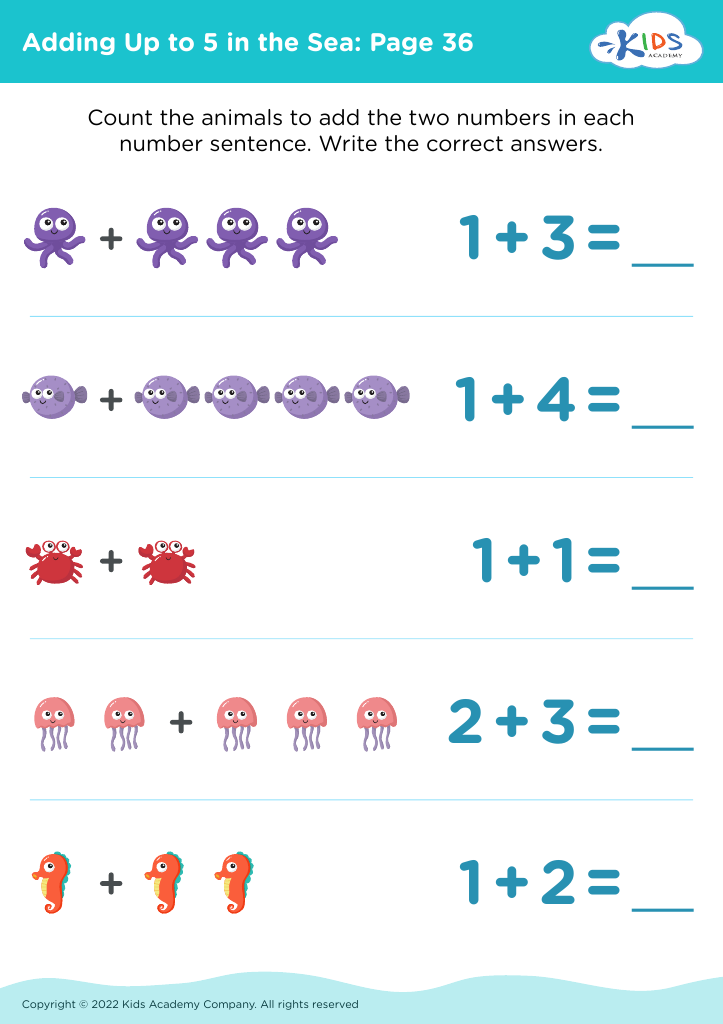
    Adding Up to 5 in the Sea: Page 36
    Adding Up to 5 in the Sea: Page 36
    Adding Up to 5 in the Sea: Page 36
    Worksheet
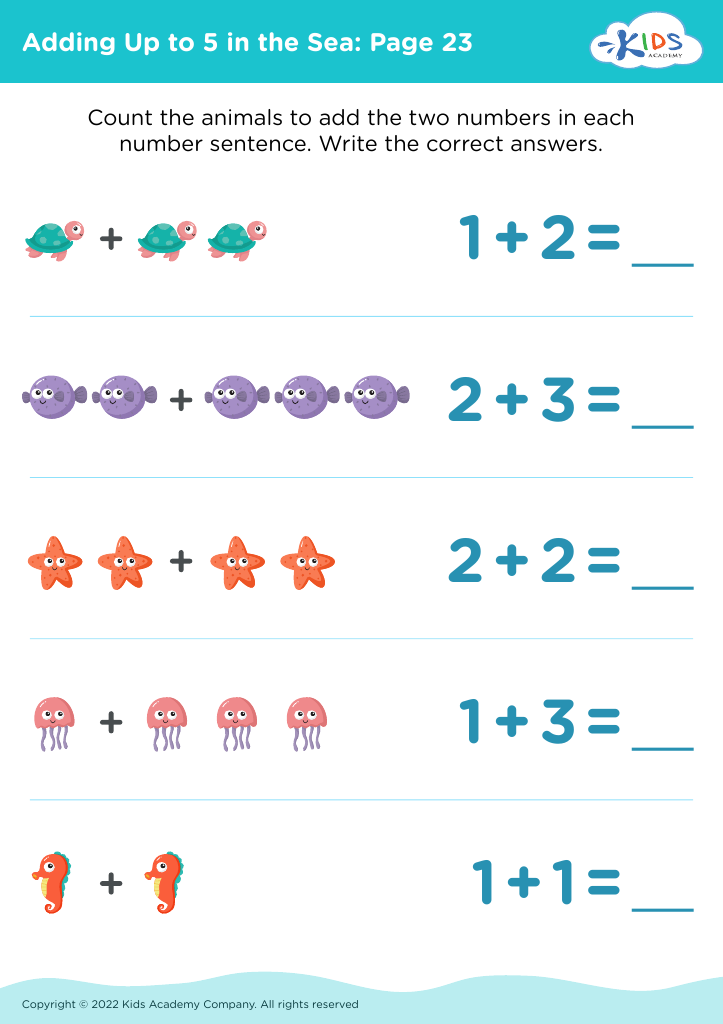
    Adding Up to 5 in the Sea: Page 23
    Adding Up to 5 in the Sea: Page 23
    Adding Up to 5 in the Sea: Page 23
    Worksheet
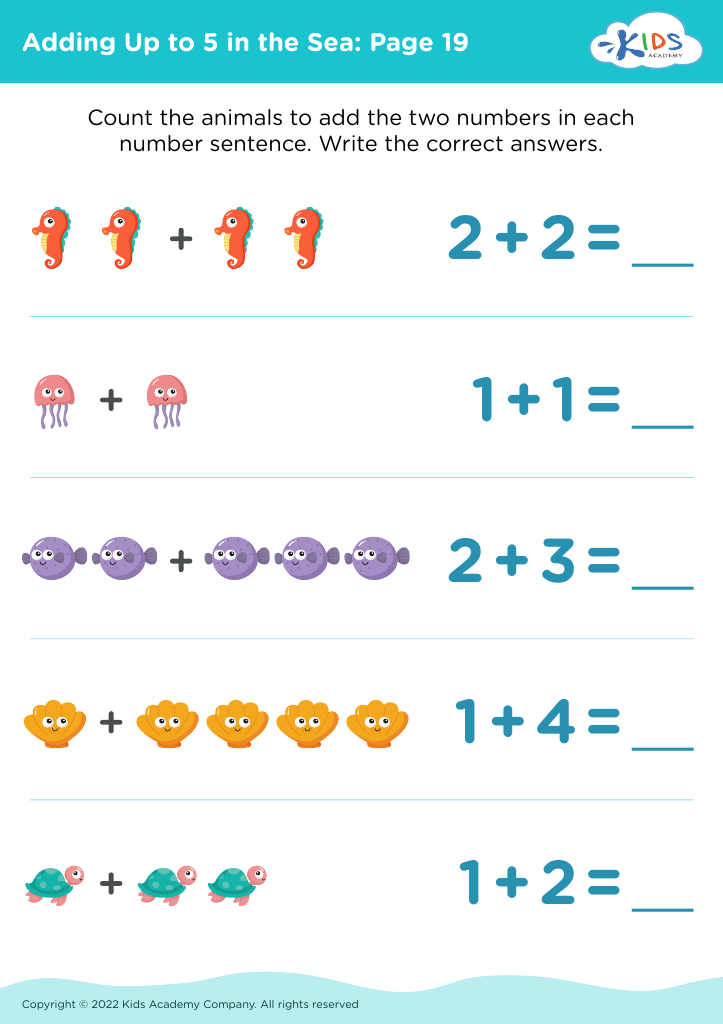
    Adding Up to 5 in the Sea: Page 19
    Adding Up to 5 in the Sea: Page 19
    Adding Up to 5 in the Sea: Page 19
    Worksheet
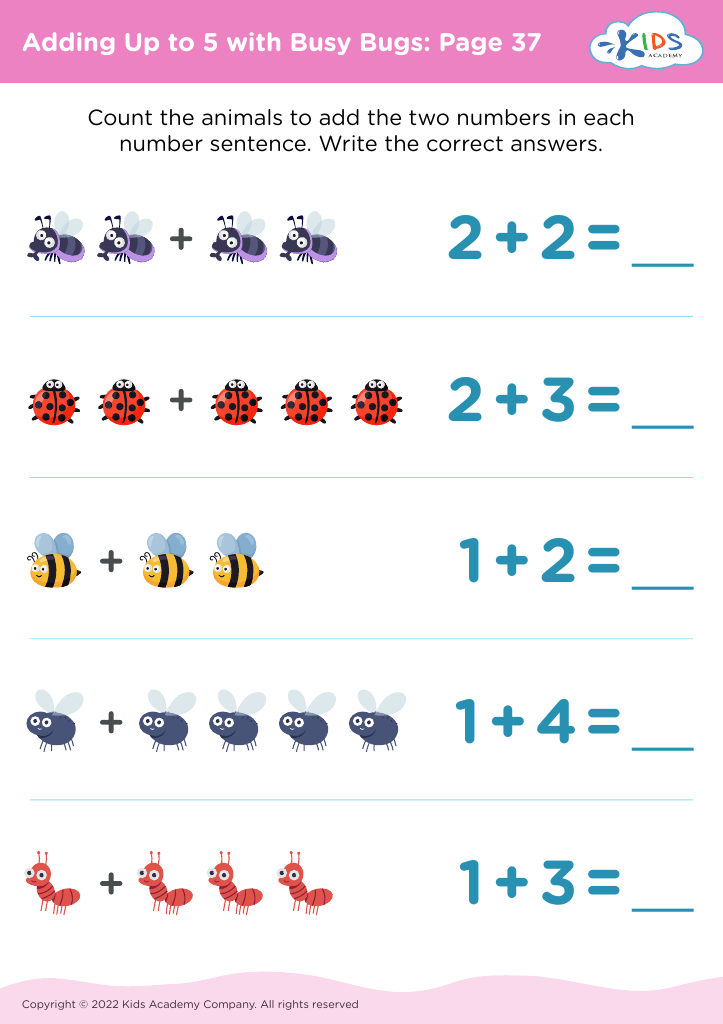
    Adding Up to 5 with Busy Bugs: Page 37
    Adding Up to 5 with Busy Bugs: Page 37
    Adding Up to 5 with Busy Bugs: Page 37
    Worksheet
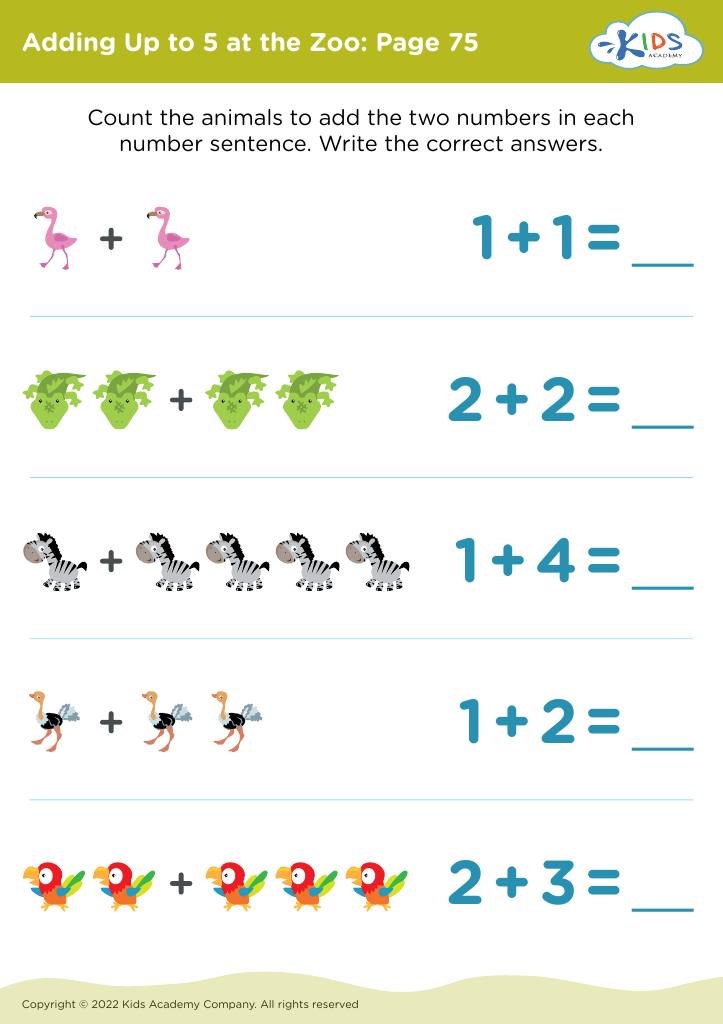
    Adding Up to 5 at the Zoo: Page 75
    Adding Up to 5 at the Zoo: Page 75
    Adding Up to 5 at the Zoo: Page 75
    Worksheet
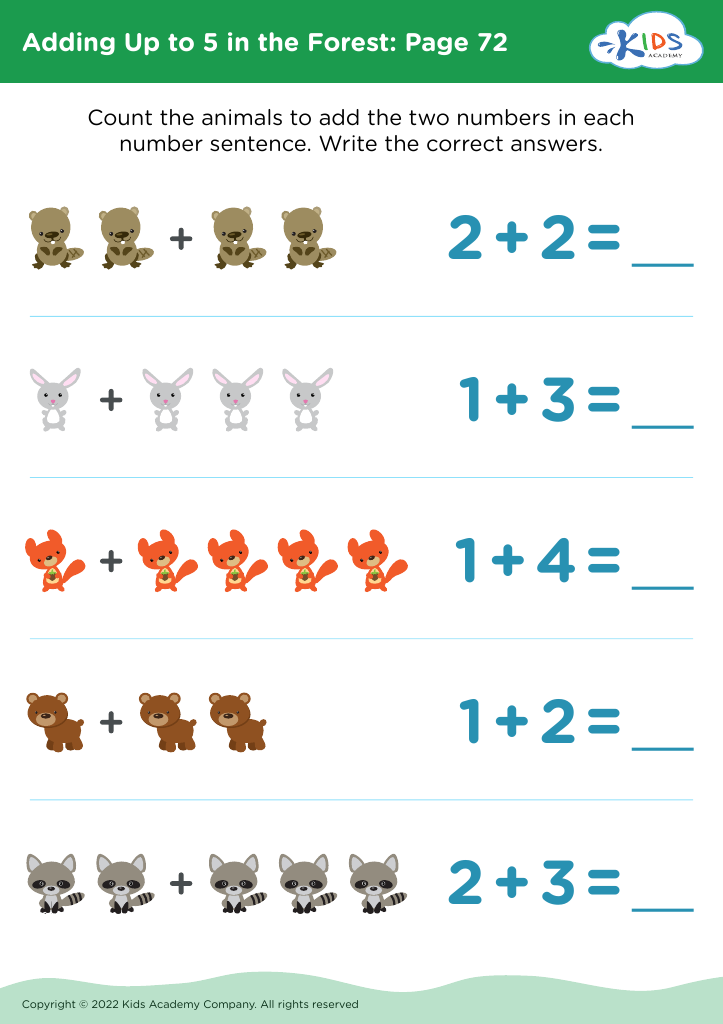
    Adding Up to 5 in the Forest: Page 72
    Adding Up to 5 in the Forest: Page 72
    Adding Up to 5 in the Forest: Page 72
    Worksheet
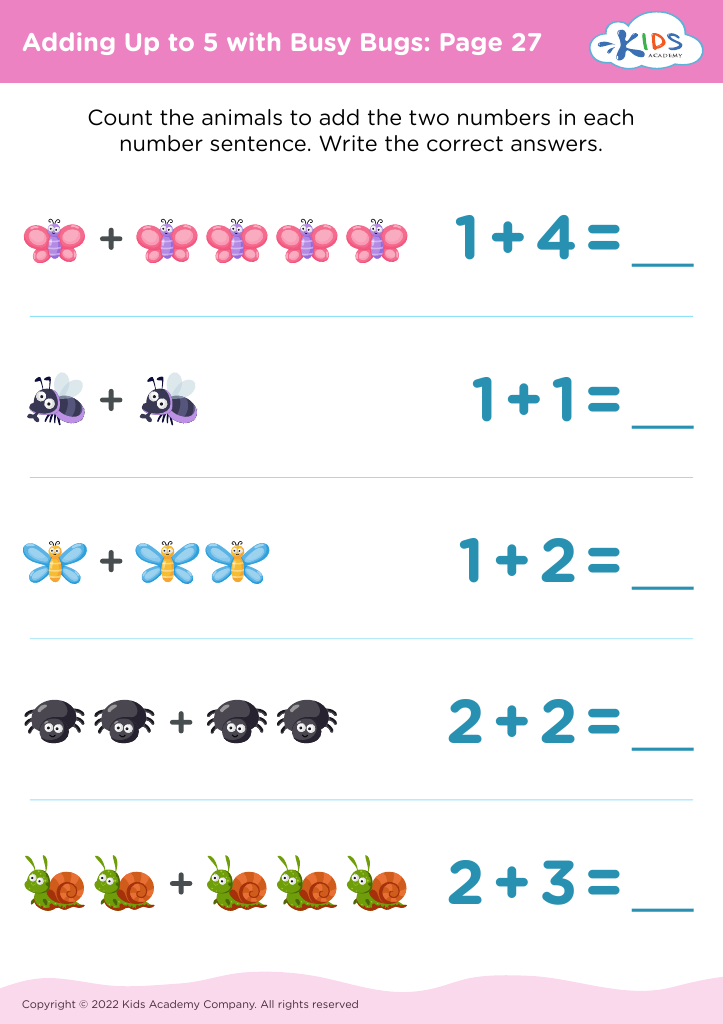
    Adding Up to 5 with Busy Bugs: Page 27
    Adding Up to 5 with Busy Bugs: Page 27
    Adding Up to 5 with Busy Bugs: Page 27
    Worksheet
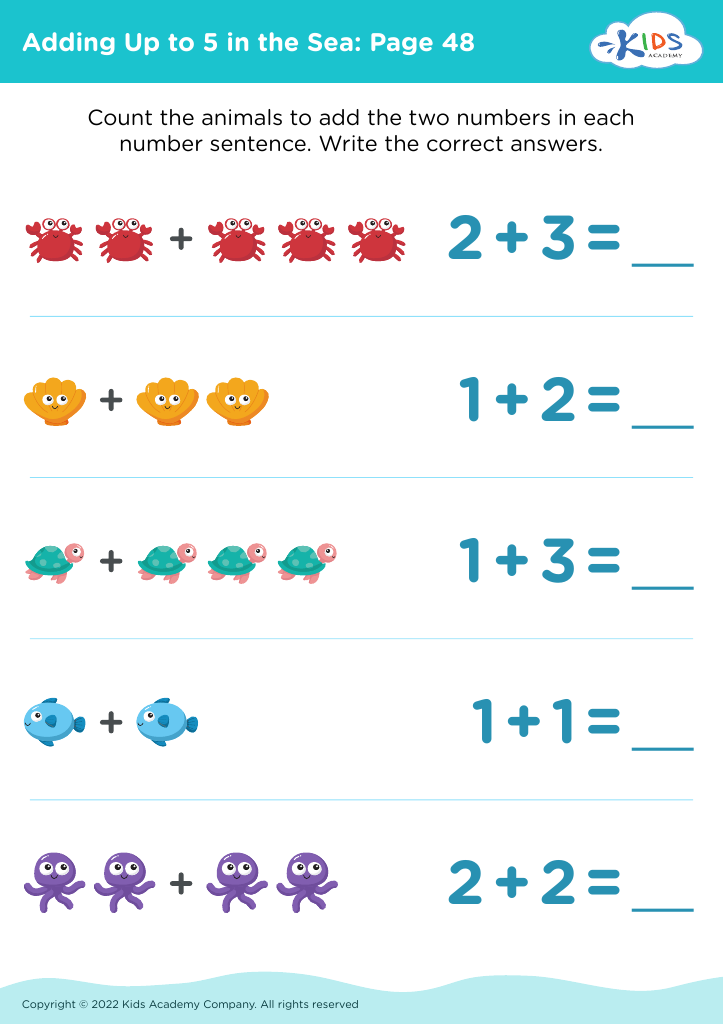
    Adding Up to 5 in the Sea: Page 48
    Adding Up to 5 in the Sea: Page 48
    Adding Up to 5 in the Sea: Page 48
    Worksheet
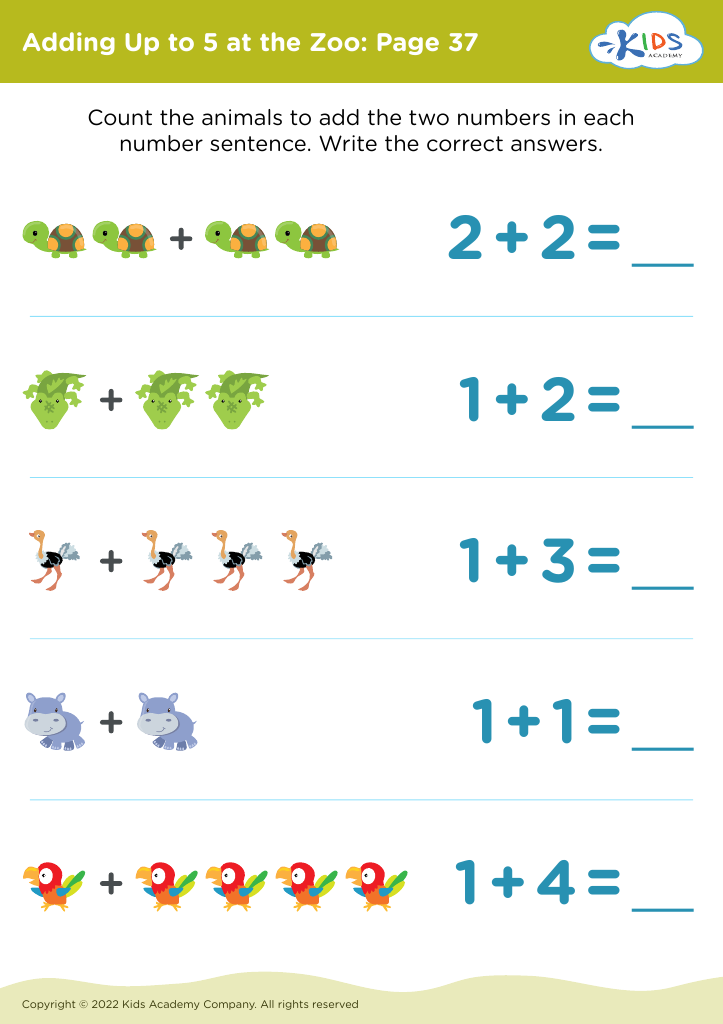
    Adding Up to 5 at the Zoo: Page 37
    Adding Up to 5 at the Zoo: Page 37
    Adding Up to 5 at the Zoo: Page 37
    Worksheet
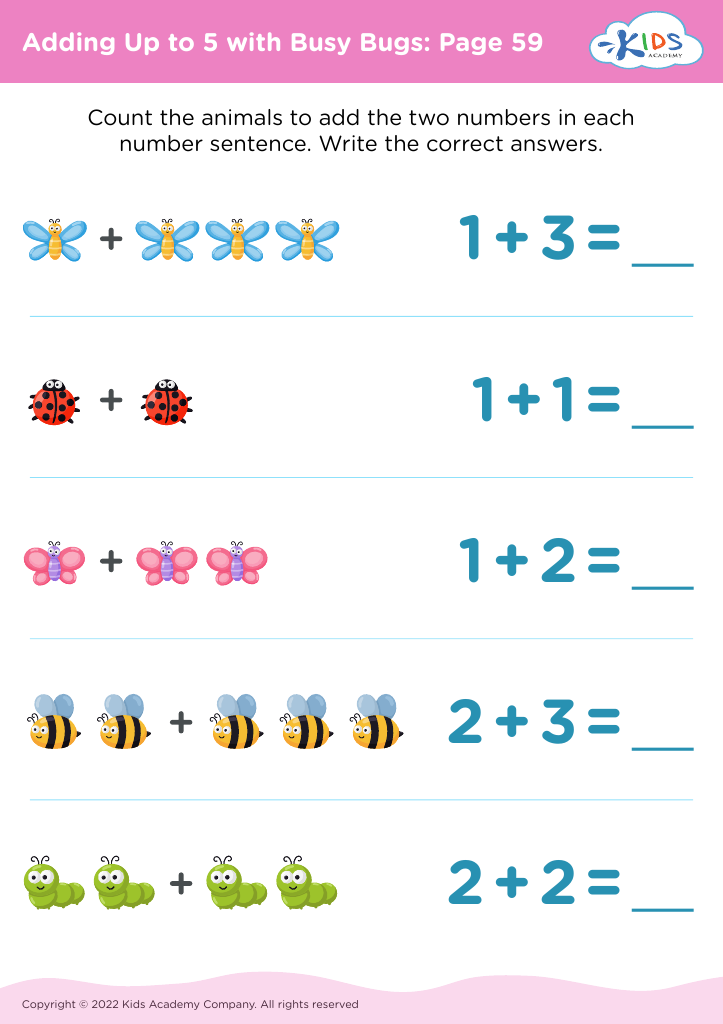
    Adding Up to 5 with Busy Bugs: Page 59
    Adding Up to 5 with Busy Bugs: Page 59
    Adding Up to 5 with Busy Bugs: Page 59
    Worksheet
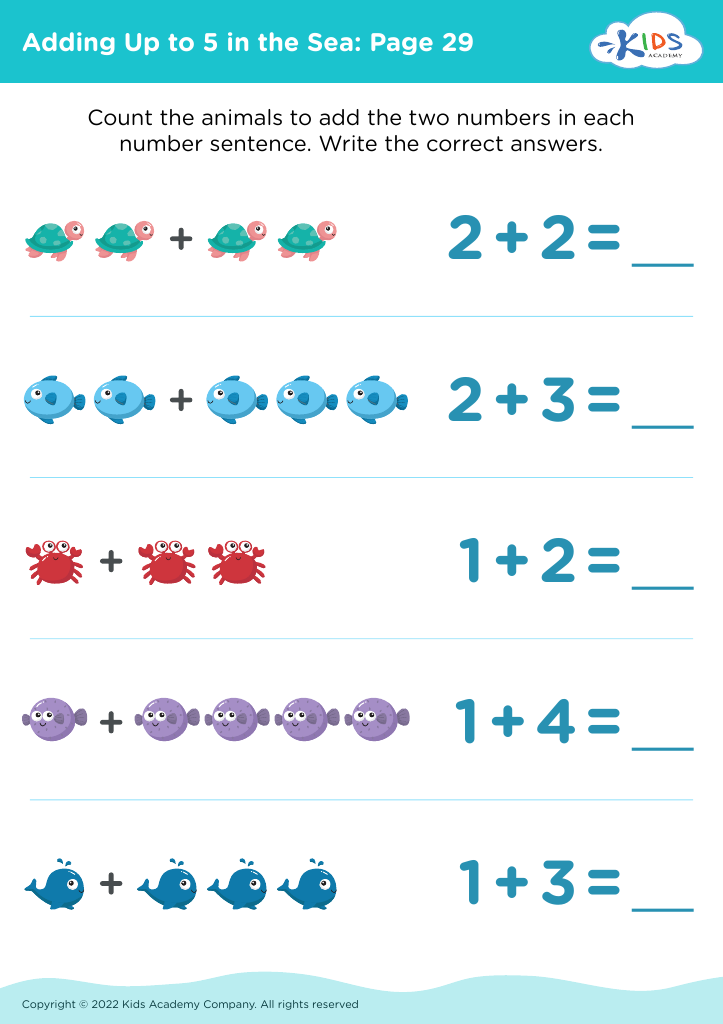
    Adding Up to 5 in the Sea: Page 29
    Adding Up to 5 in the Sea: Page 29
    Adding Up to 5 in the Sea: Page 29
    Worksheet
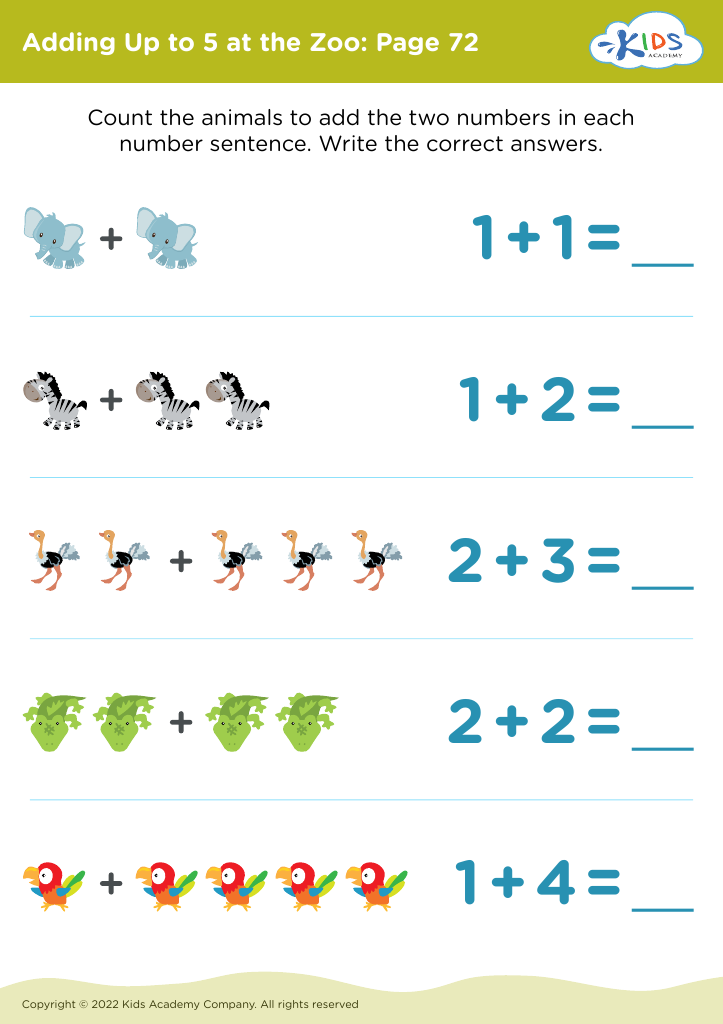
    Adding Up to 5 at the Zoo: Page 72
    Adding Up to 5 at the Zoo: Page 72
    Adding Up to 5 at the Zoo: Page 72
    Worksheet


    Number recognition and basic addition skills are foundational aspects of early mathematics education, crucial for children aged 3 to 9. When children learn to recognize numbers and add up to 5, they develop important cognitive skills that facilitate their academic growth.

    Firstly, understanding numbers up to 5 introduces children to basic counting, pattern recognition, and the concept of quantities. These essential skills help build a strong mathematical foundation that prepares them for more complex concepts such as addition, subtraction, and problem-solving in their later years.

    Secondly, the confidence gained from mastering these early math skills can enhance self-esteem and foster a positive relationship with learning. For preschoolers, handling small numbers and simple arithmetic improves their ability to focus, follow instructions, and achieve milestones that encourage further learning exploration.

    Moreover, early number recognition is linked to literacy development. Recognizing number words and their corresponding digits supports language skills and encourages the integration of math into everyday activities, promoting a holistic learning approach.

    Parents and teachers play a crucial role by creating engaging learning environments and offering consistent practice. Understanding the significance of number recognition and basic addition ensures that children develop a healthy, balanced, and enthusiastic approach to math from an early age.