Filters

17 filtered results

Clear all filters
Favorites
With answer key
Interactive

17 filtered results

Difficulty Level

Grade


Discover our "Understanding Quantity: Adding Up to 5 Worksheets" designed for children ages 3-9. These engaging printables help kids grasp fundamental addition skills while learning to count up to 5. Perfect for early learners, each worksheet combines colorful visuals with fun activities to simplify the concept of quantity. These exercises not only enhance basic math proficiency but also boost problem-solving abilities and critical thinking. Ideal for both classroom and home settings, our worksheets make learning enjoyable and effective. Unlock your child’s potential in math with our expertly crafted resources today!
Check out this FREE Trial Lesson on Adding Up to 5 for age 3-9!

Sorting Objects into 3 Categories

Favorites
With answer key
Interactive
  • 3-9
  • Understanding quantity
  • Adding Up to 5
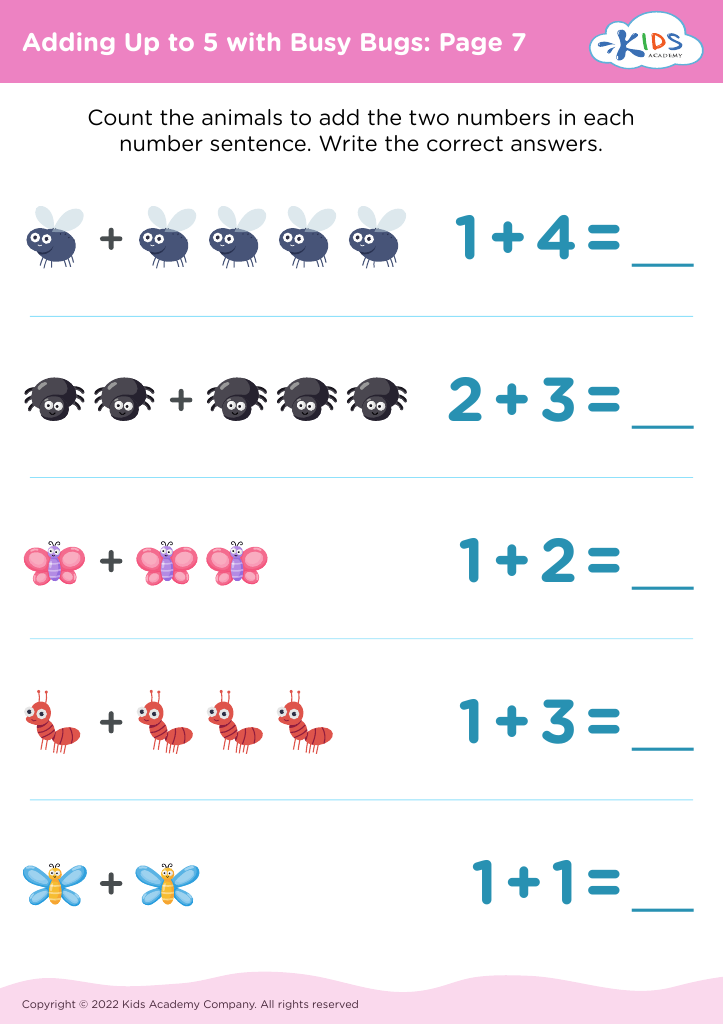
Adding Up to 5 with Busy Bugs: Page 7
Worksheet
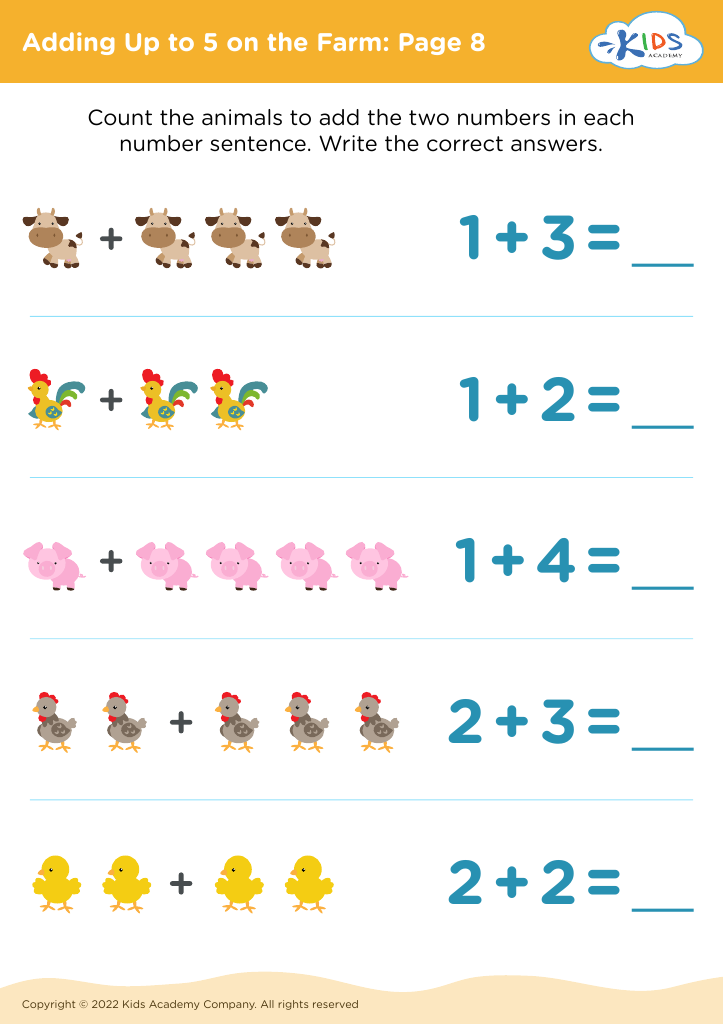
Adding Up to 5 on the Farm: Page 8
Worksheet
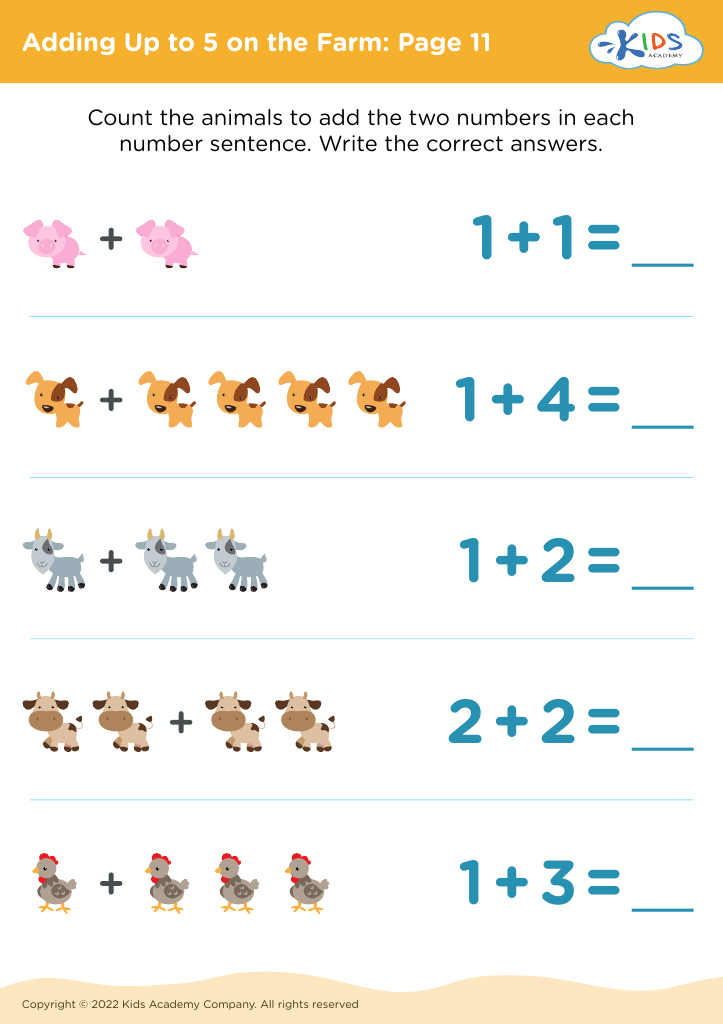
Adding Up to 5 on the Farm: Page 11
Worksheet
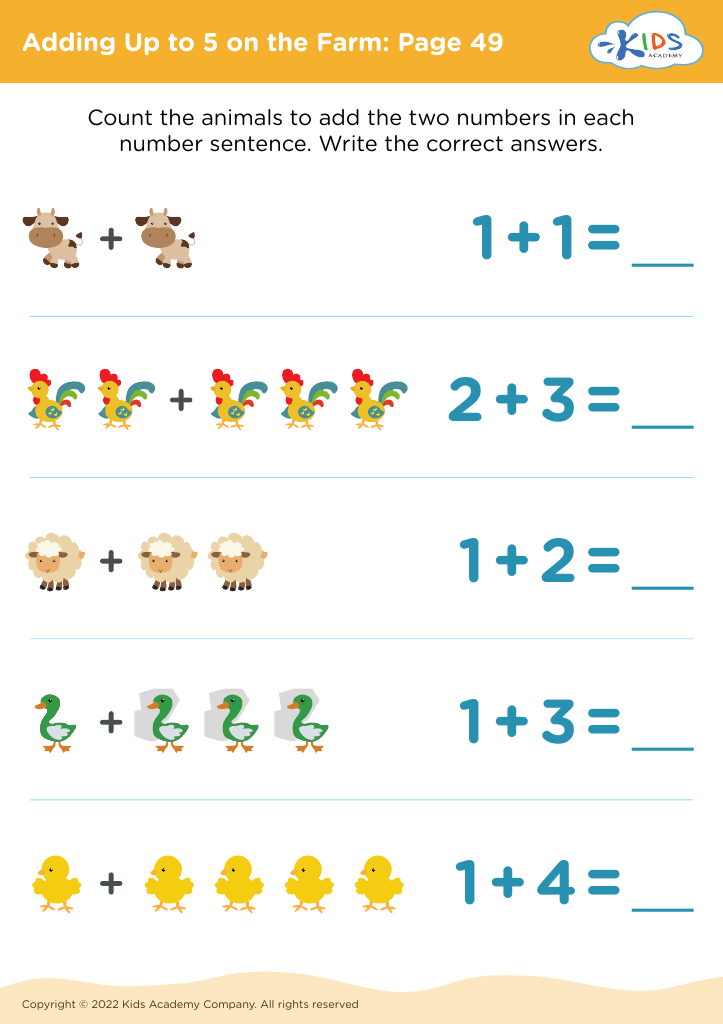
Adding Up to 5 on the Farm: Page 49
Worksheet
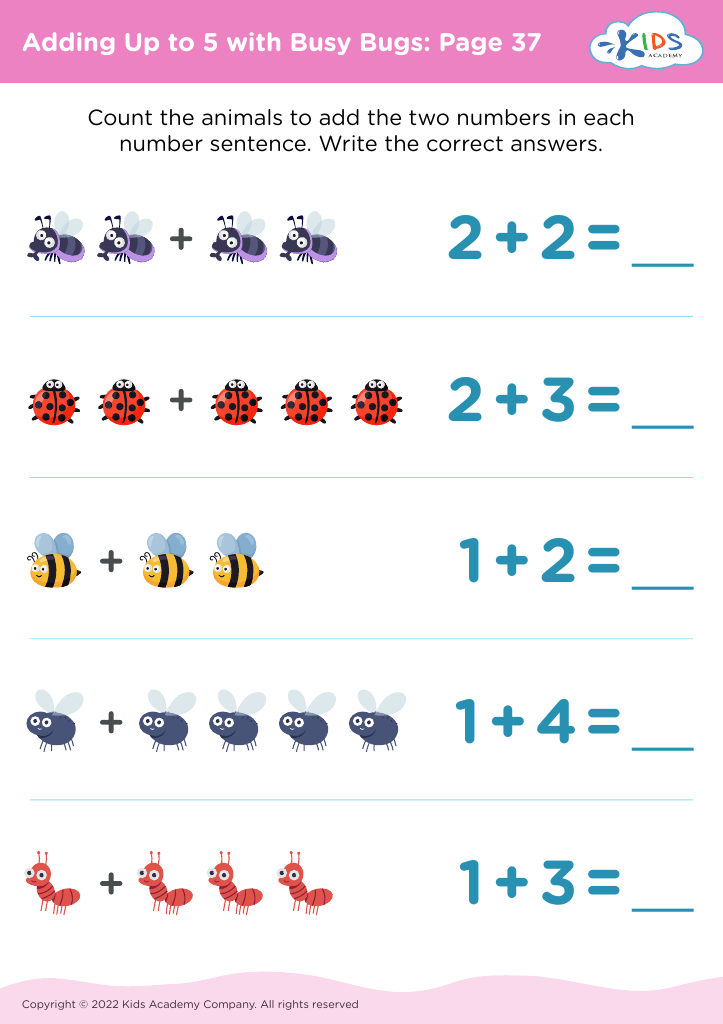
Adding Up to 5 with Busy Bugs: Page 37
Worksheet
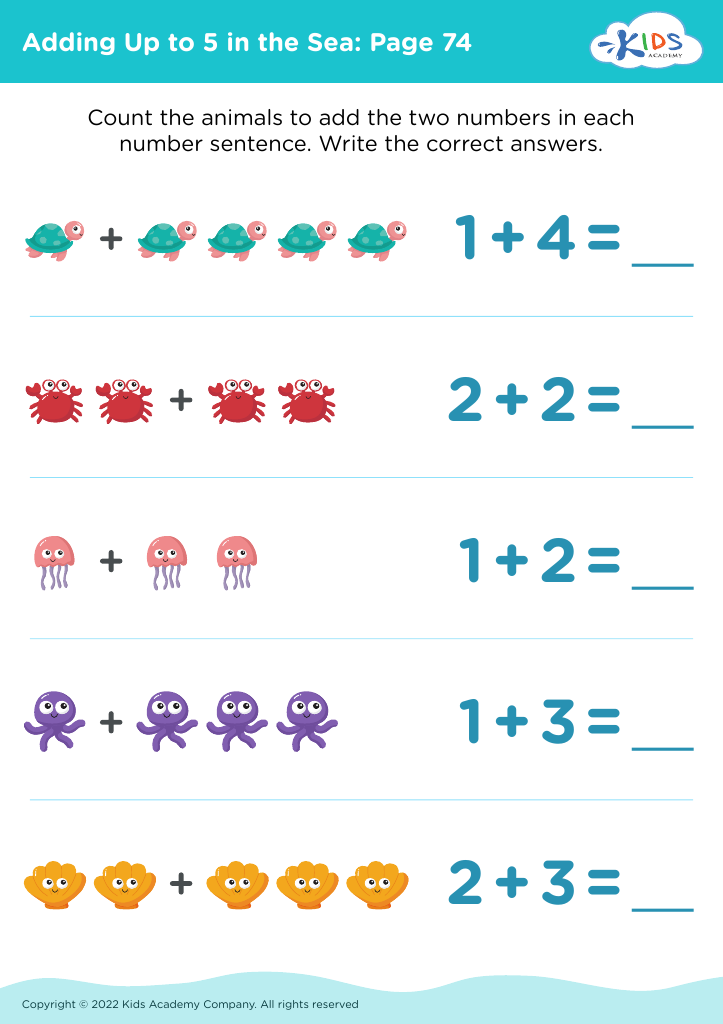
Adding Up to 5 in the Sea: Page 74
Worksheet
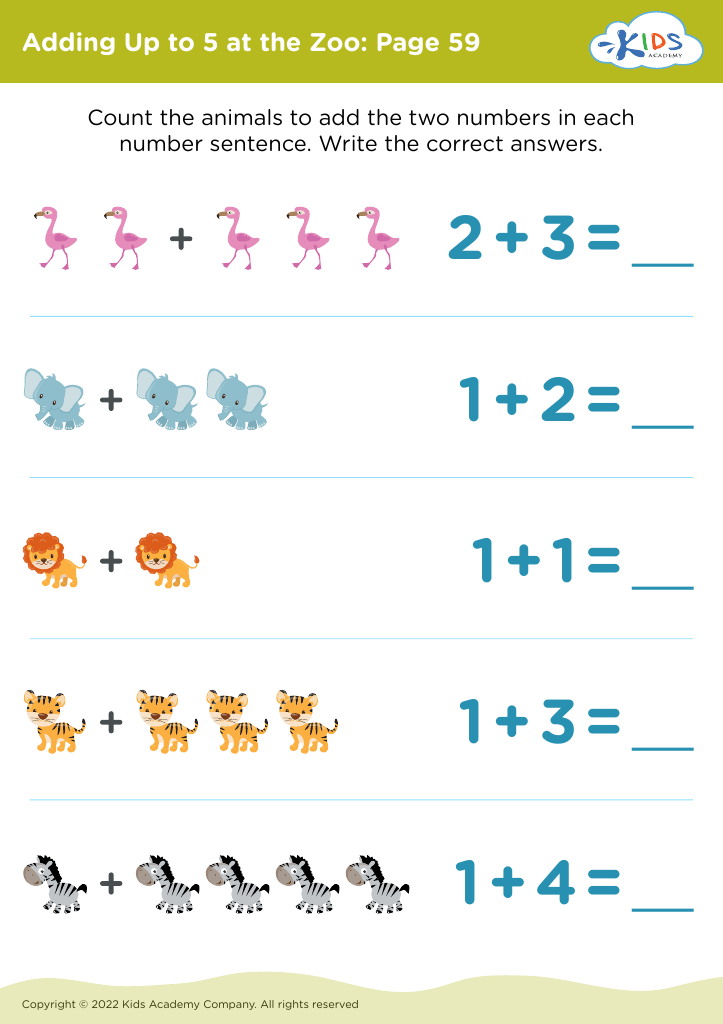
Adding Up to 5 at the Zoo: Page 59
Worksheet
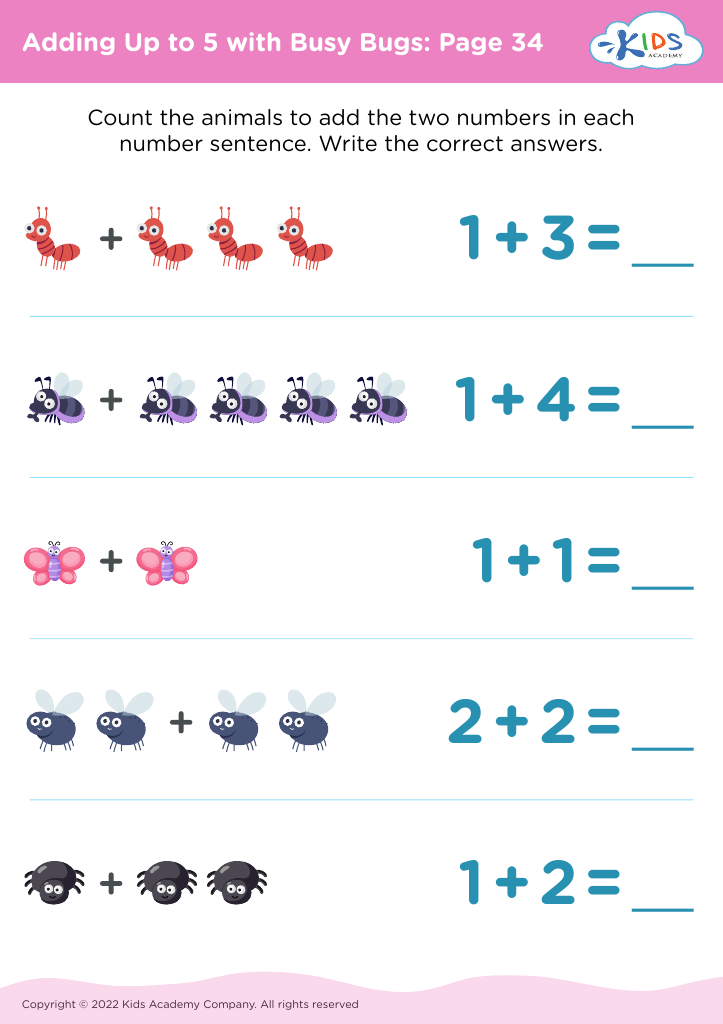
Adding Up to 5 with Busy Bugs: Page 34
Worksheet
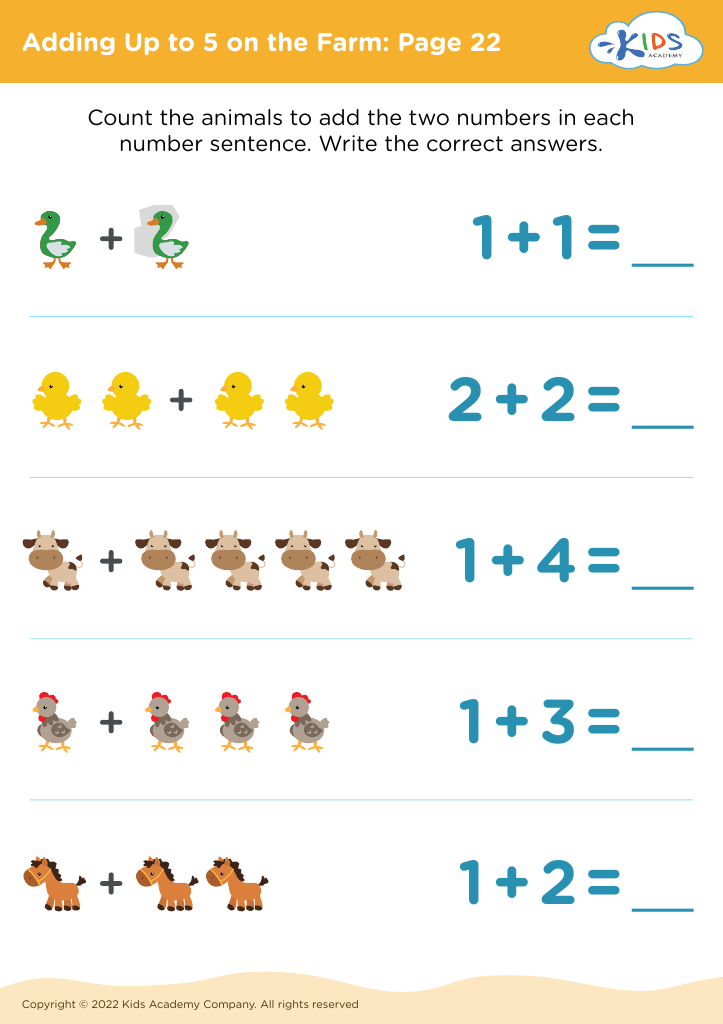
Adding Up to 5 on the Farm: Page 22
Worksheet
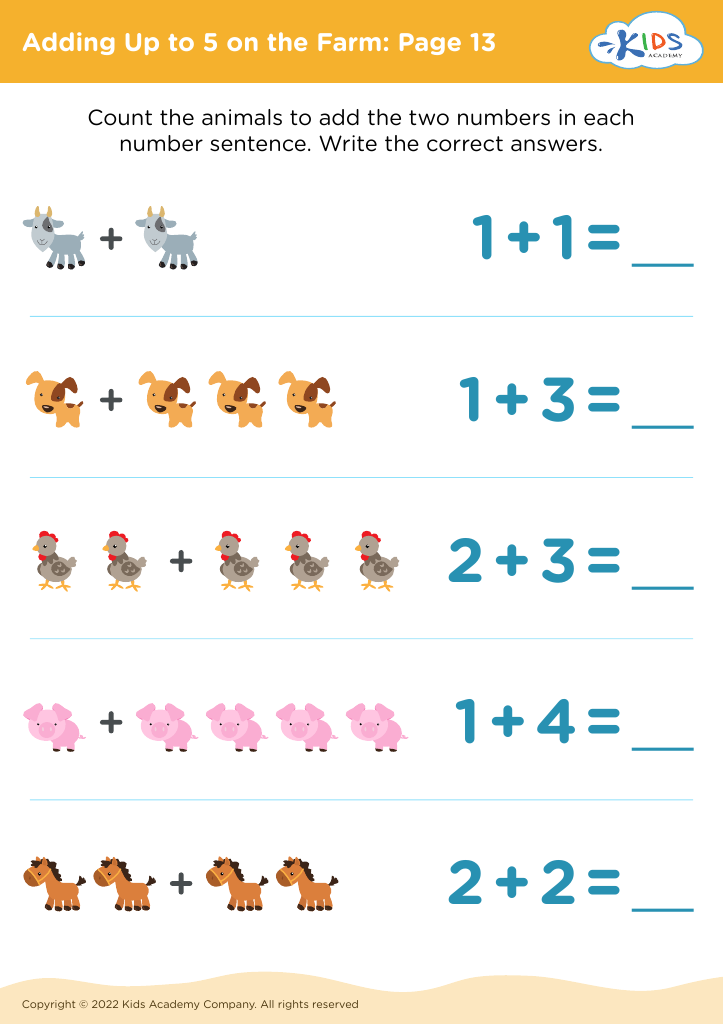
Adding Up to 5 on the Farm: Page 13
Worksheet
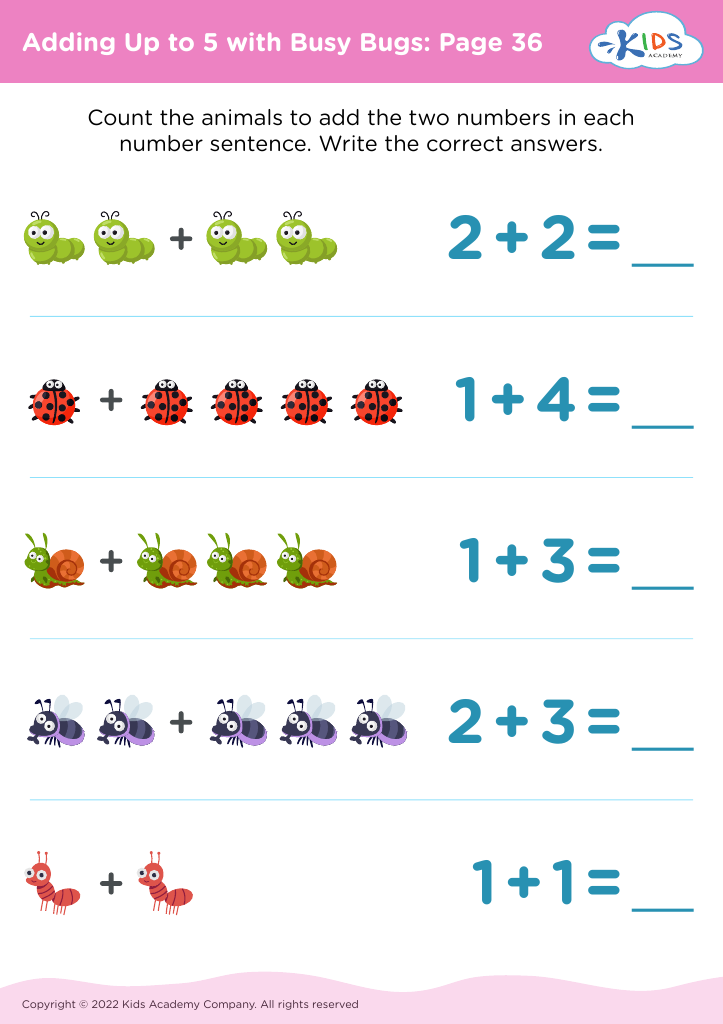
Adding Up to 5 with Busy Bugs: Page 36
Worksheet
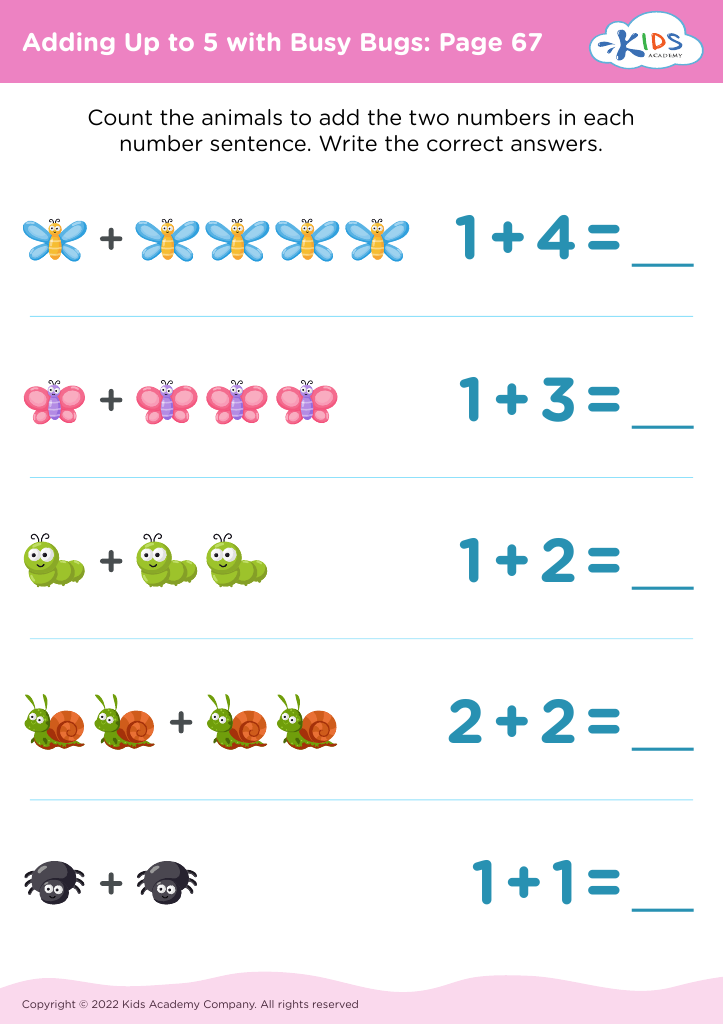
Adding Up to 5 with Busy Bugs: Page 67
Worksheet
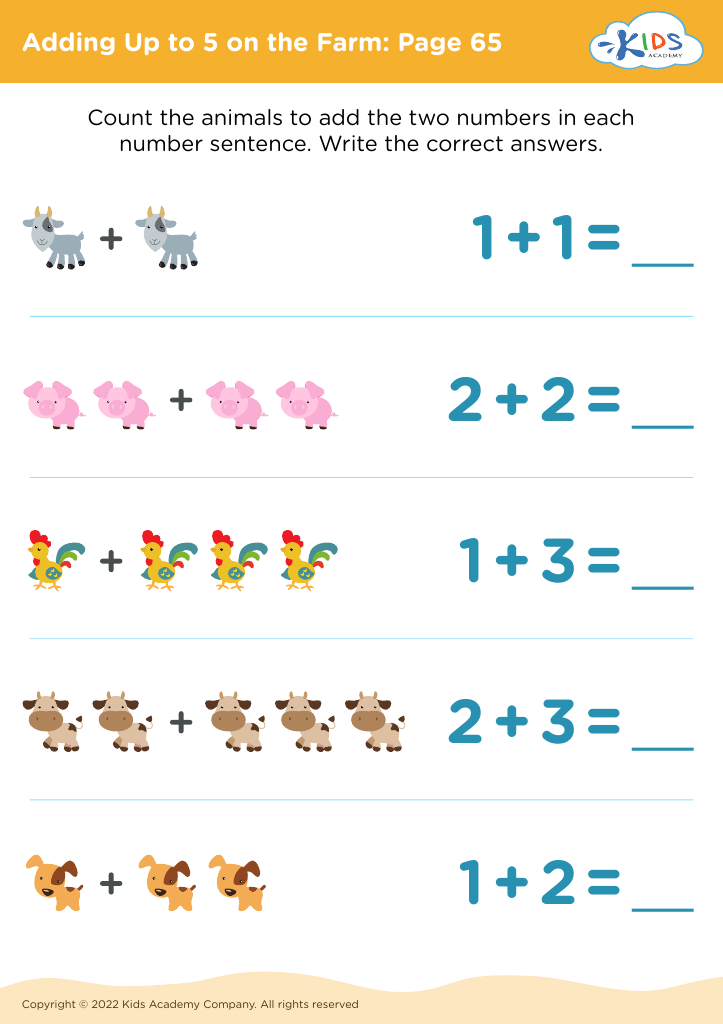
Adding Up to 5 on the Farm: Page 65
Worksheet
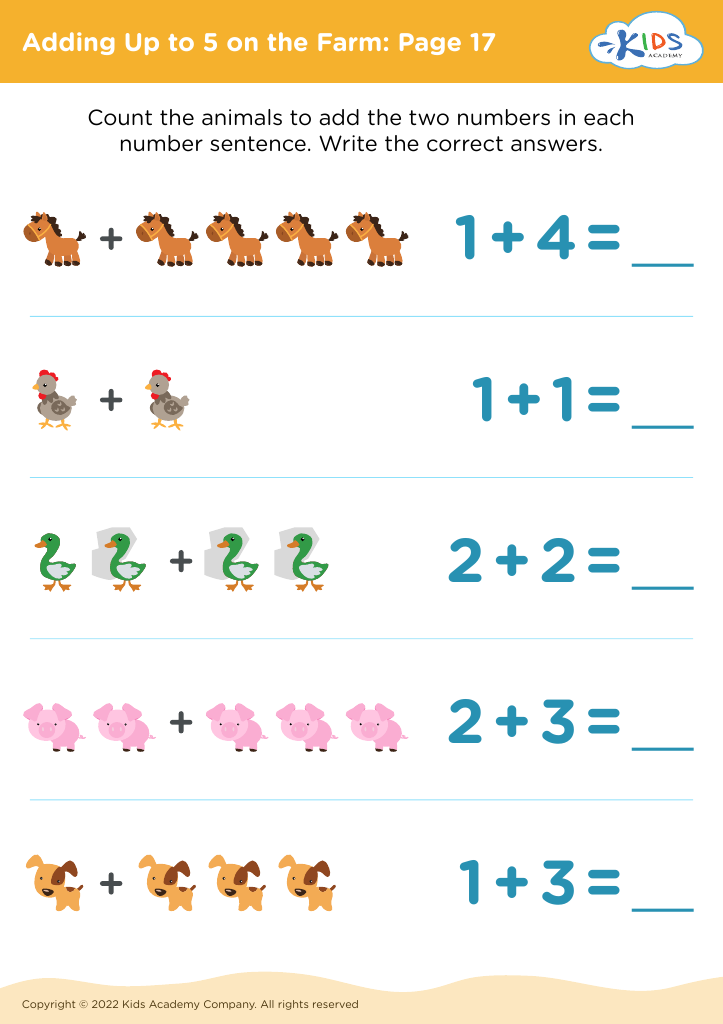
Adding Up to 5 on the Farm: Page 17
Worksheet
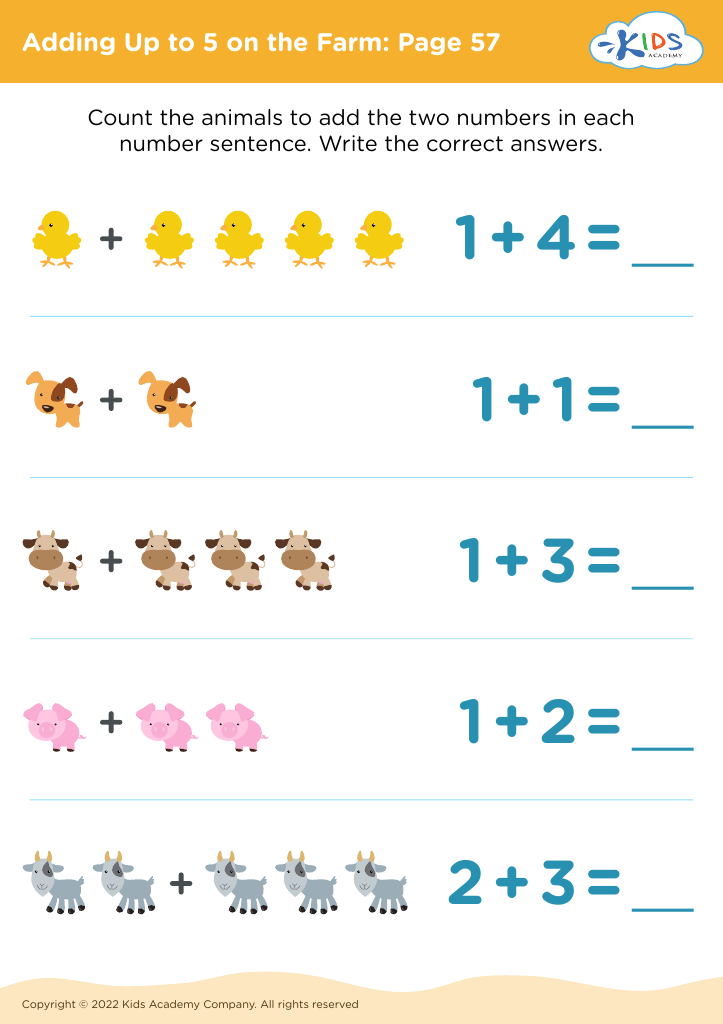
Adding Up to 5 on the Farm: Page 57
Worksheet
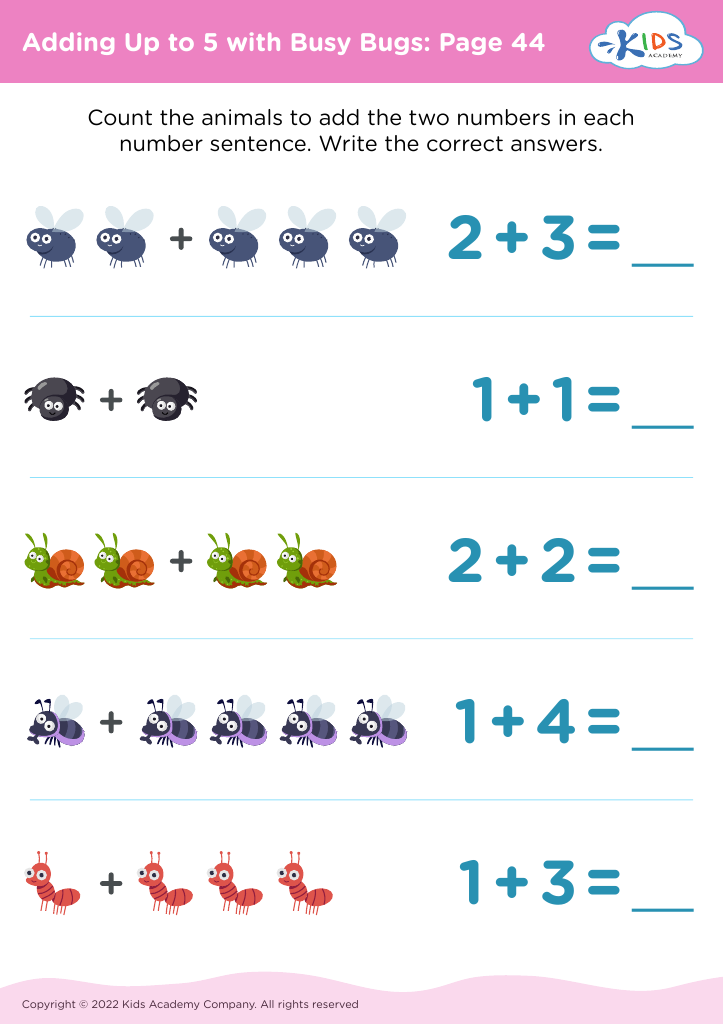
Adding Up to 5 with Busy Bugs: Page 44
Worksheet
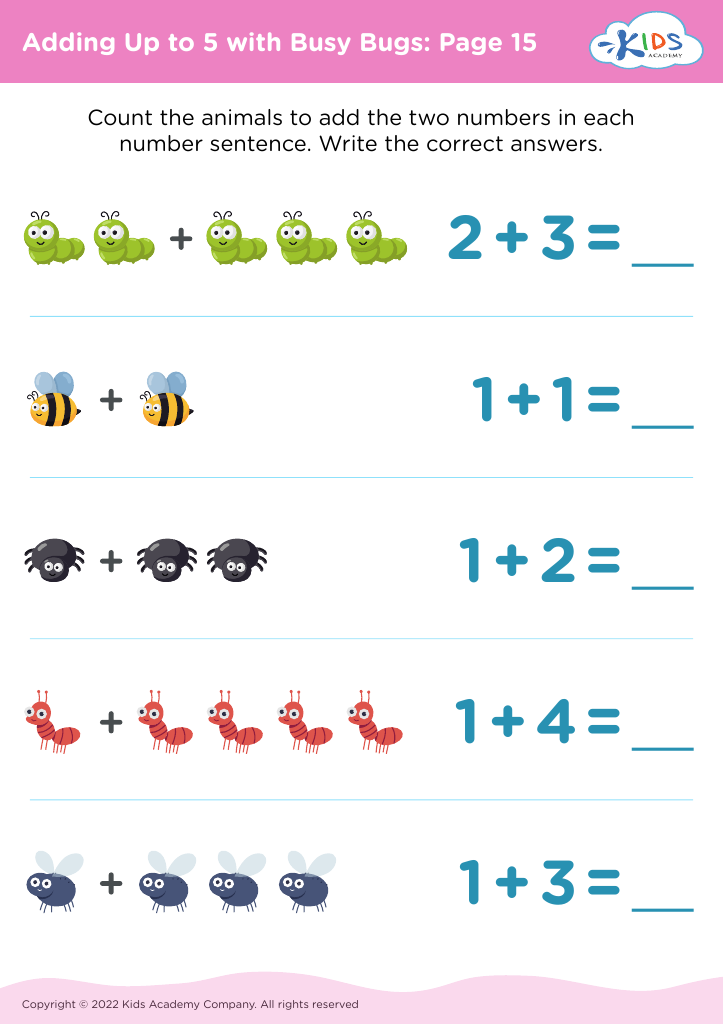
Adding Up to 5 with Busy Bugs: Page 15
Worksheet


Understanding quantity and the ability to add up to 5 are foundational math skills for young children aged 3-9. These early math experiences set the stage for future success in more complex mathematical concepts. For parents and teachers, there are several compelling reasons to focus on this critical early skill.

Firstly, grasping how to add up to 5 helps children develop number sense, which is the ability to understand and work with numbers flexibly. This is crucial for everyday tasks, such as counting objects, telling time, and managing money. A strong number sense forms the basis for higher-level math skills, including addition, subtraction, multiplication, and division.

Secondly, early math skills are closely linked to overall cognitive development. Activities that involve adding small quantities promote problem-solving abilities, pattern recognition, and logical thinking. These skills are not just important for math; they are essential for learning in other subjects as well.

Moreover, children who master these early math concepts are more likely to enjoy learning and feel confident in their abilities. This confidence can reduce math anxiety and foster a positive attitude towards learning in general.

By prioritizing an understanding of quantities up to 5, parents and teachers are setting children up for academic success and lifelong practical skills. The benefits thus extend far beyond the classroom, enhancing overall cognitive development and confidence.