Visual Learning Adding Up to 5 Worksheets for Ages 3-9 - Page 2
84 filtered results
-
From - To
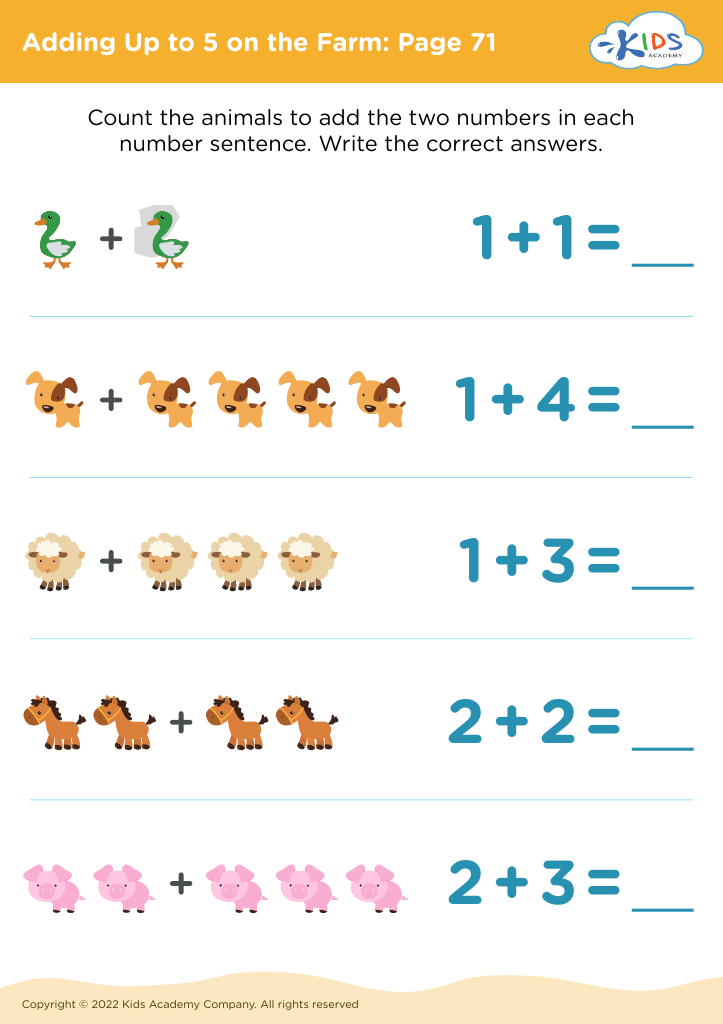
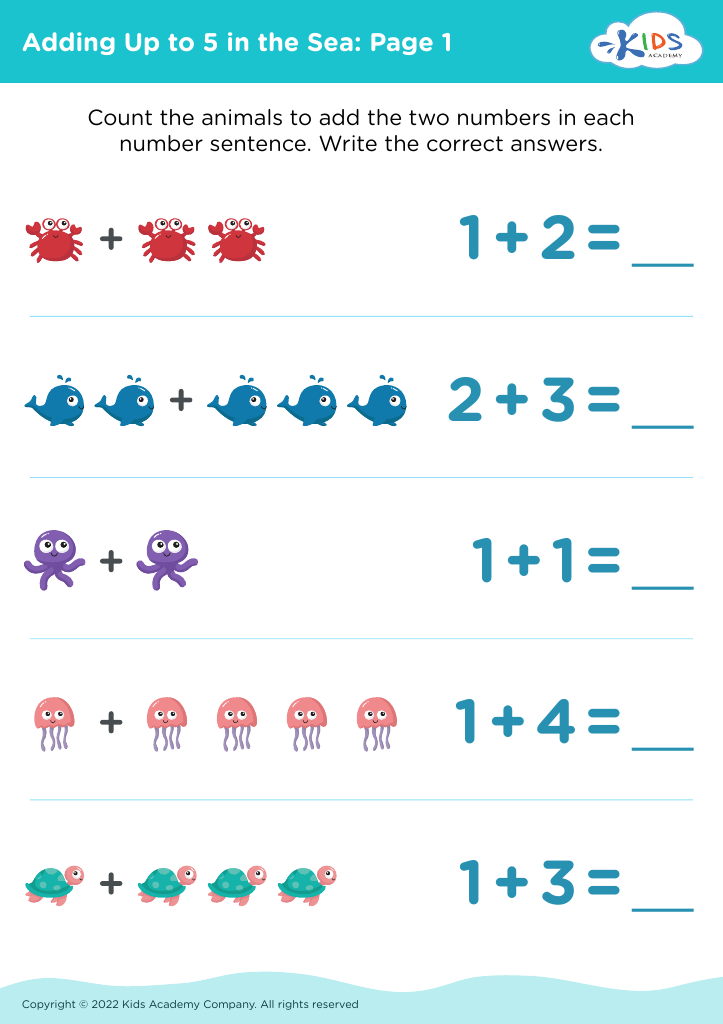
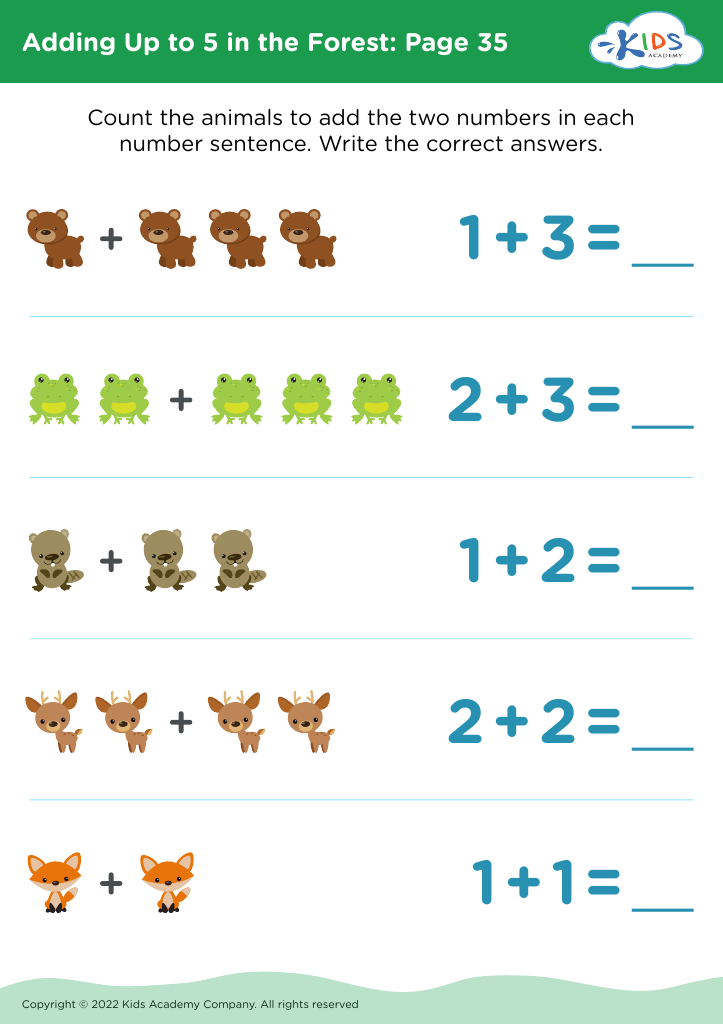
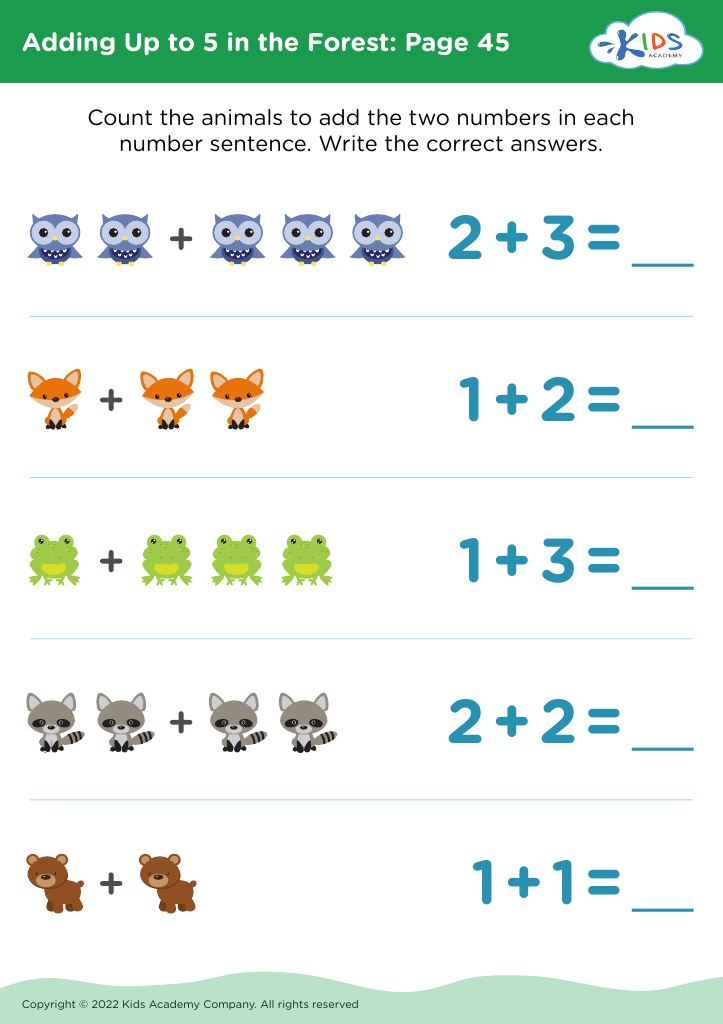
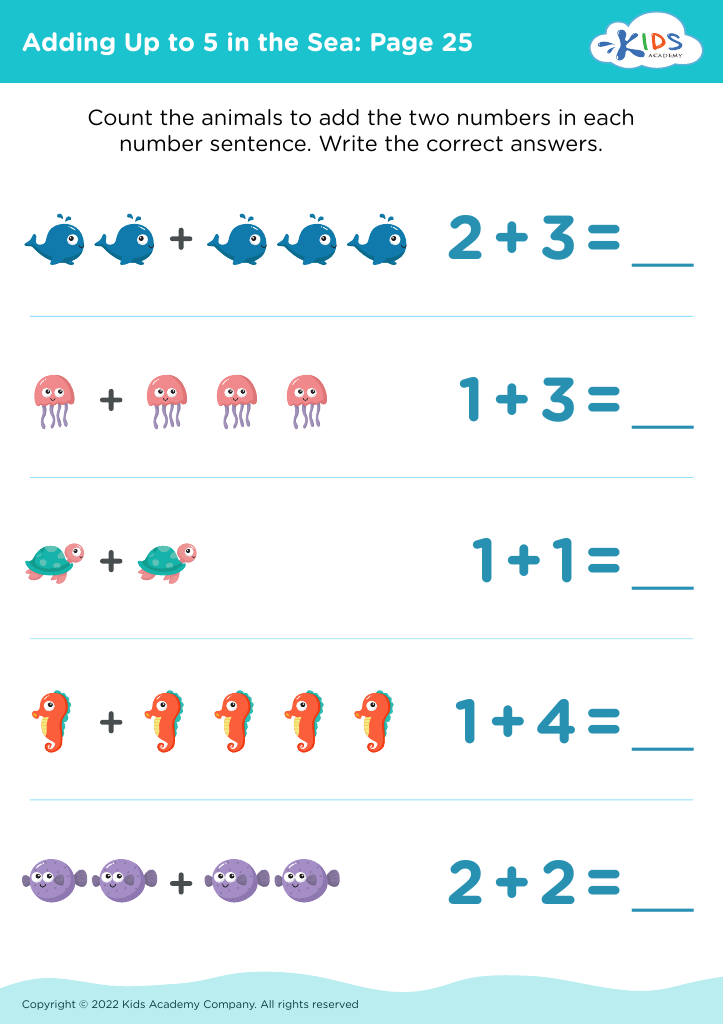
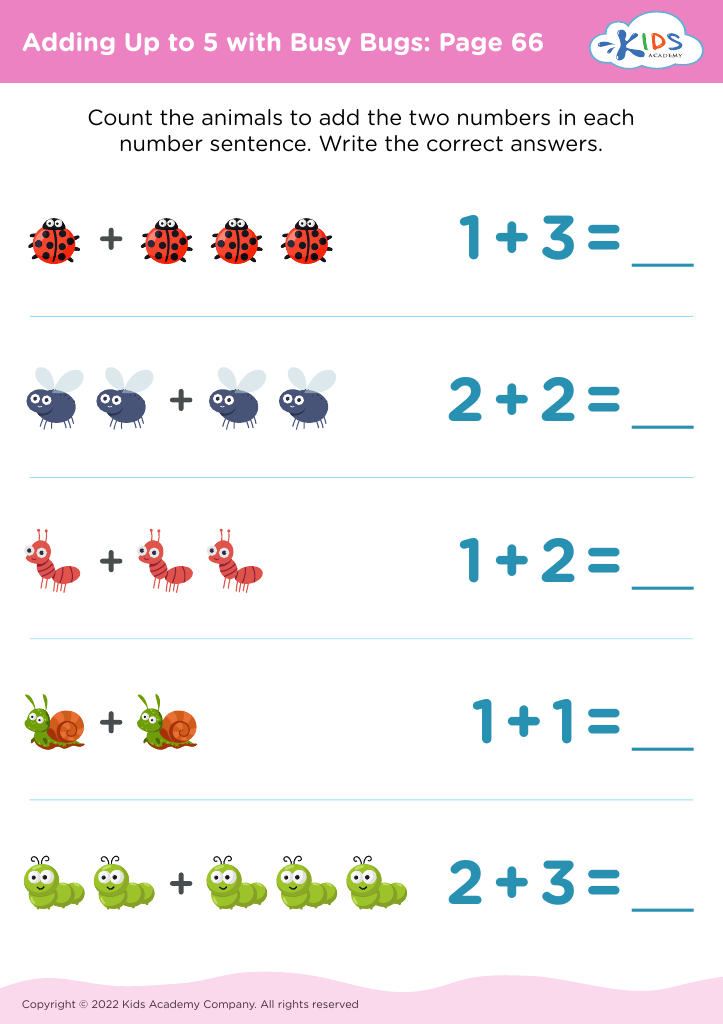
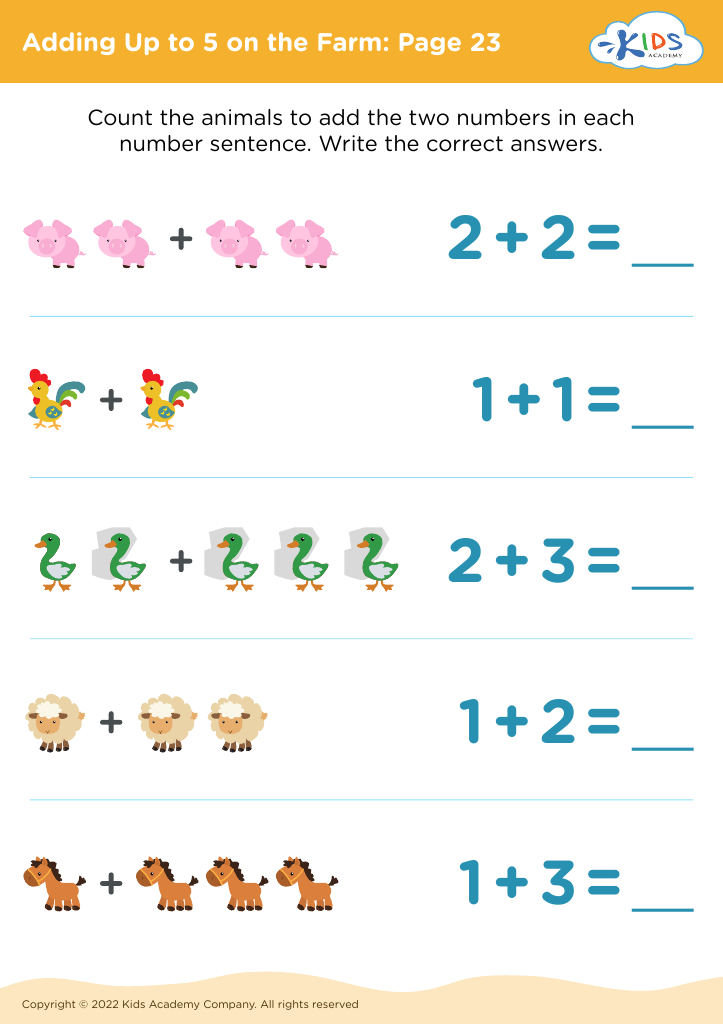
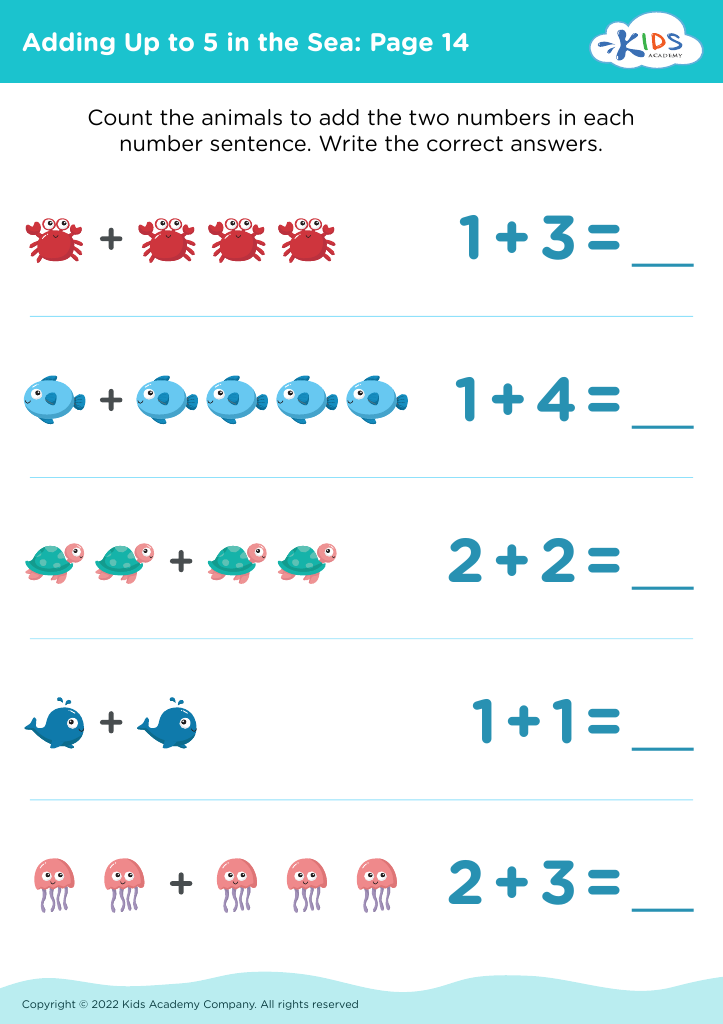
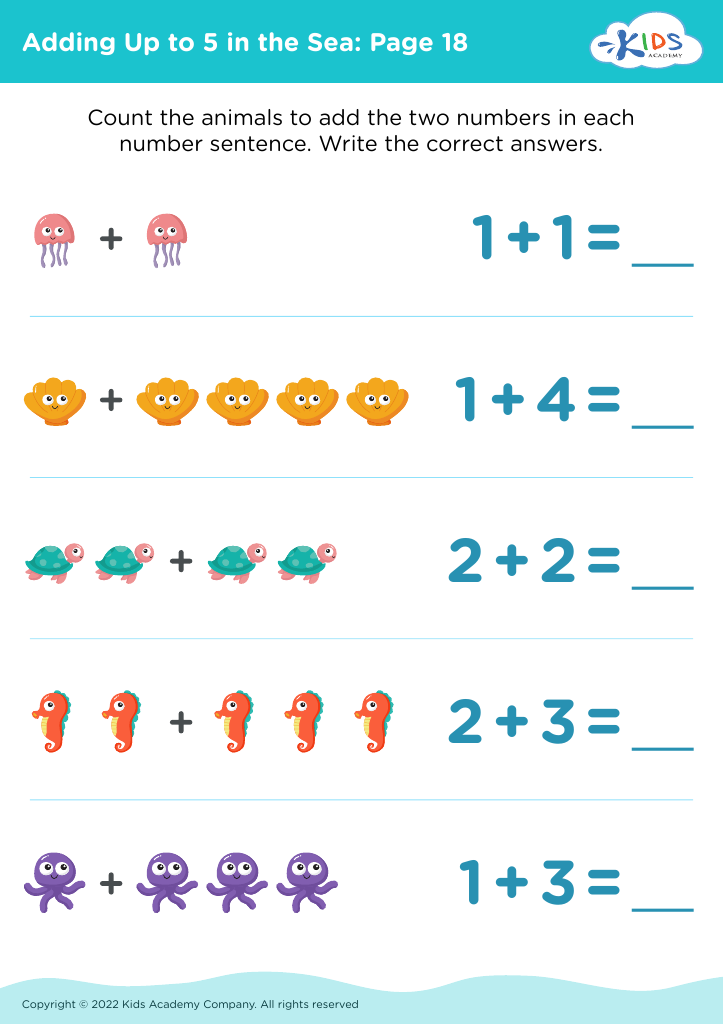
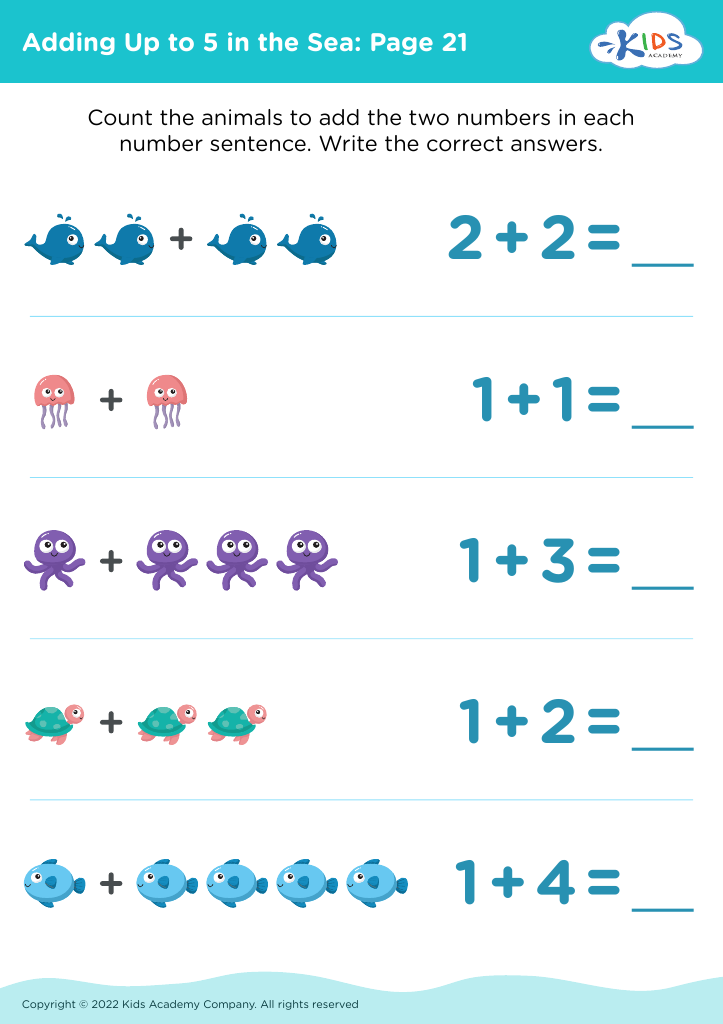
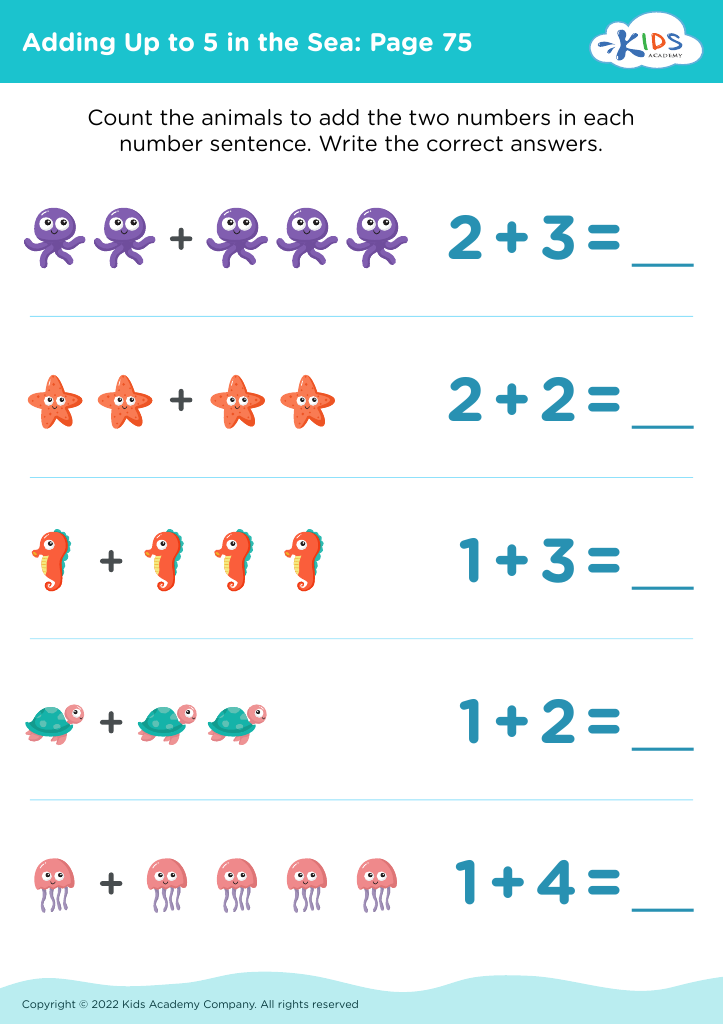
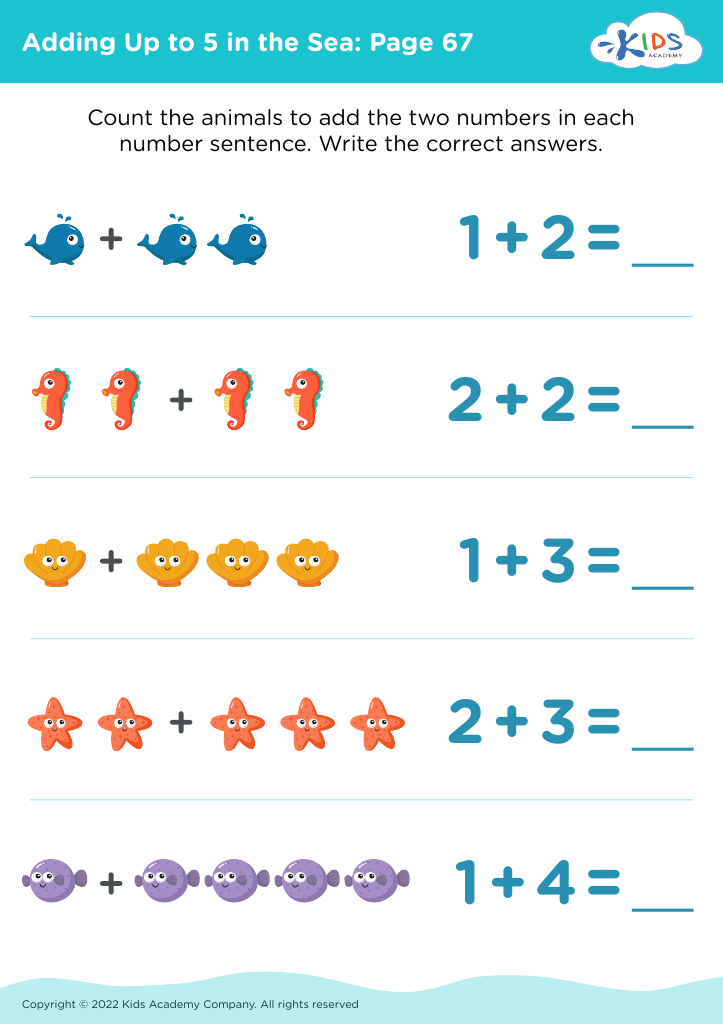
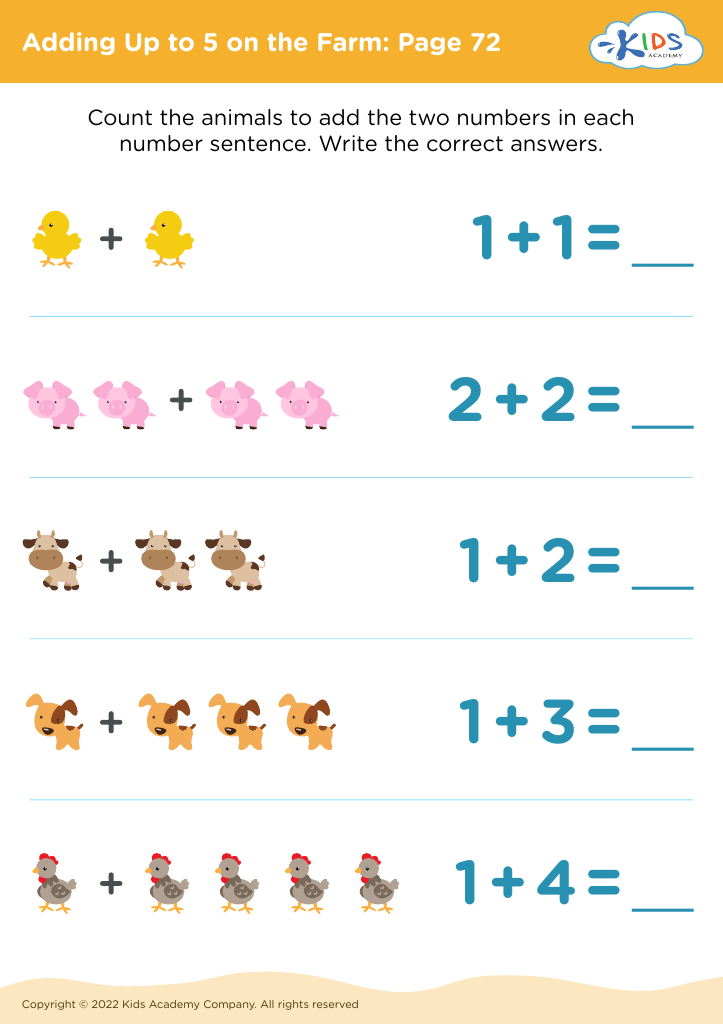
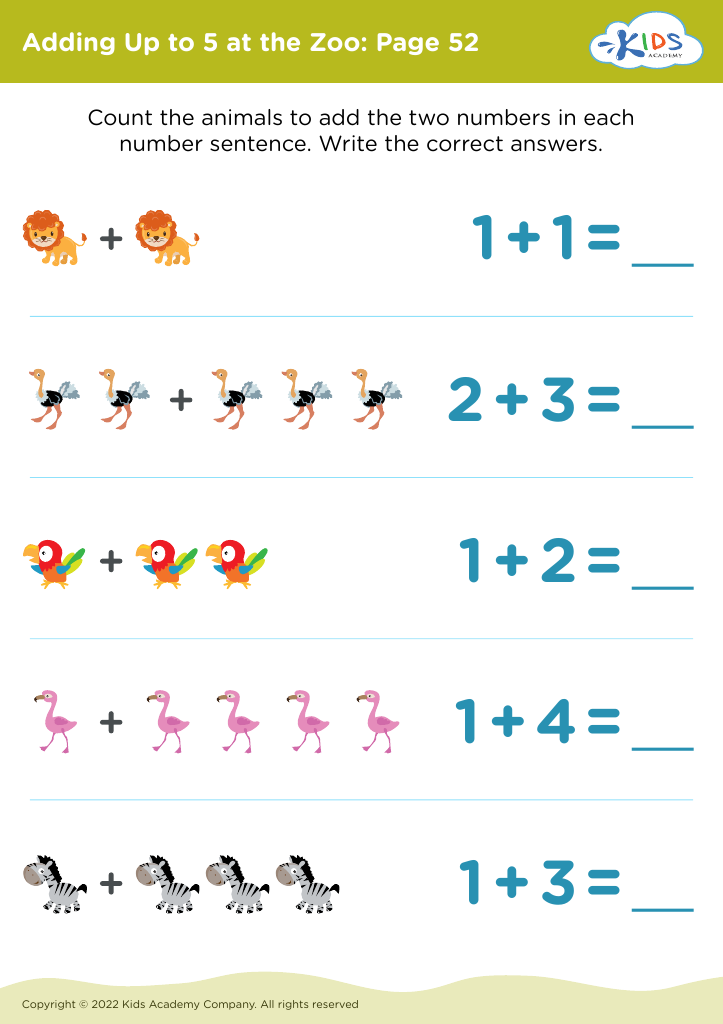
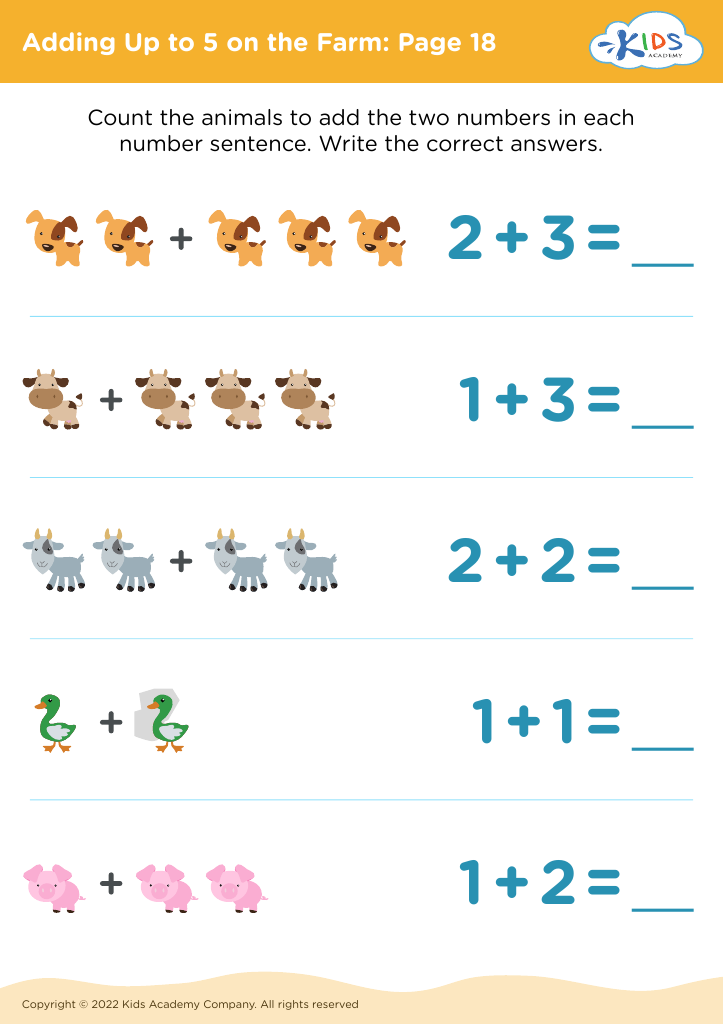
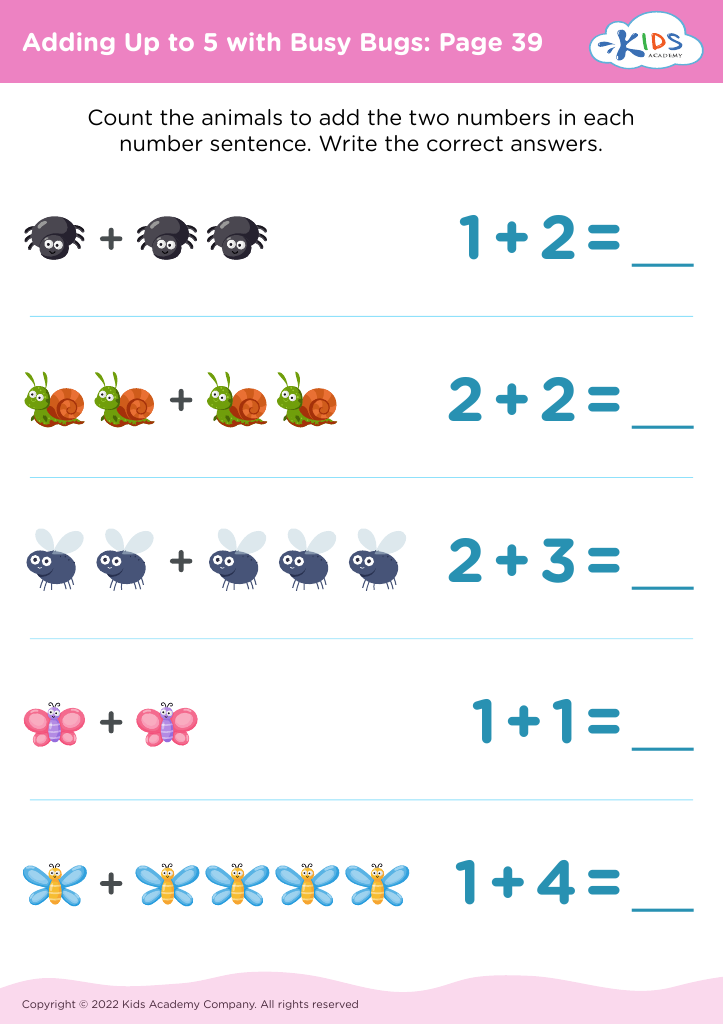
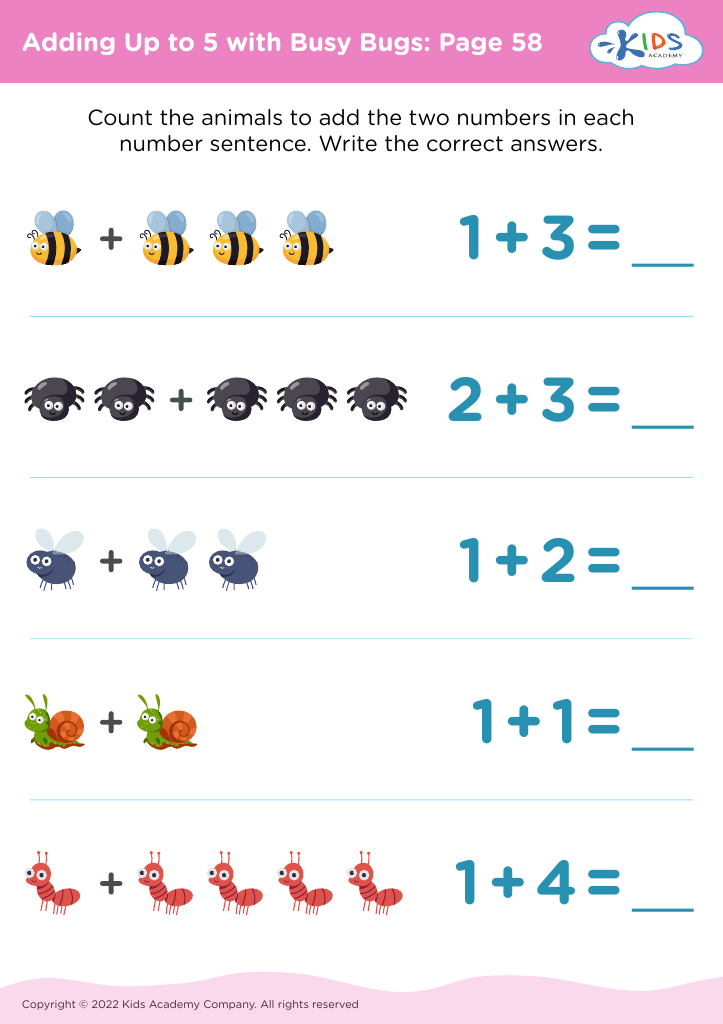
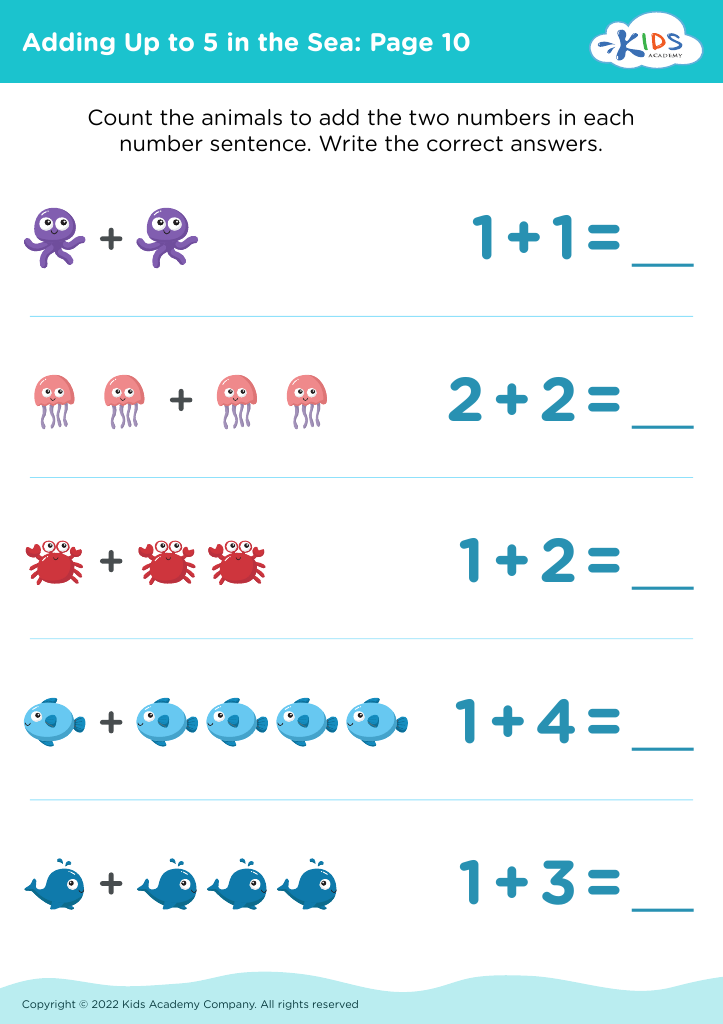
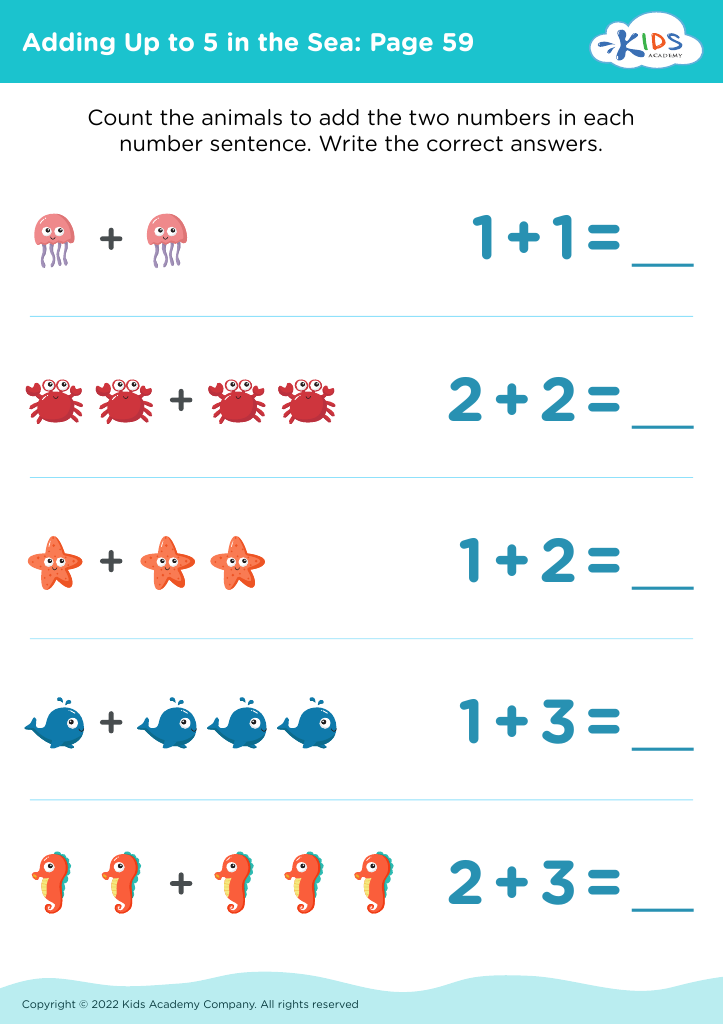
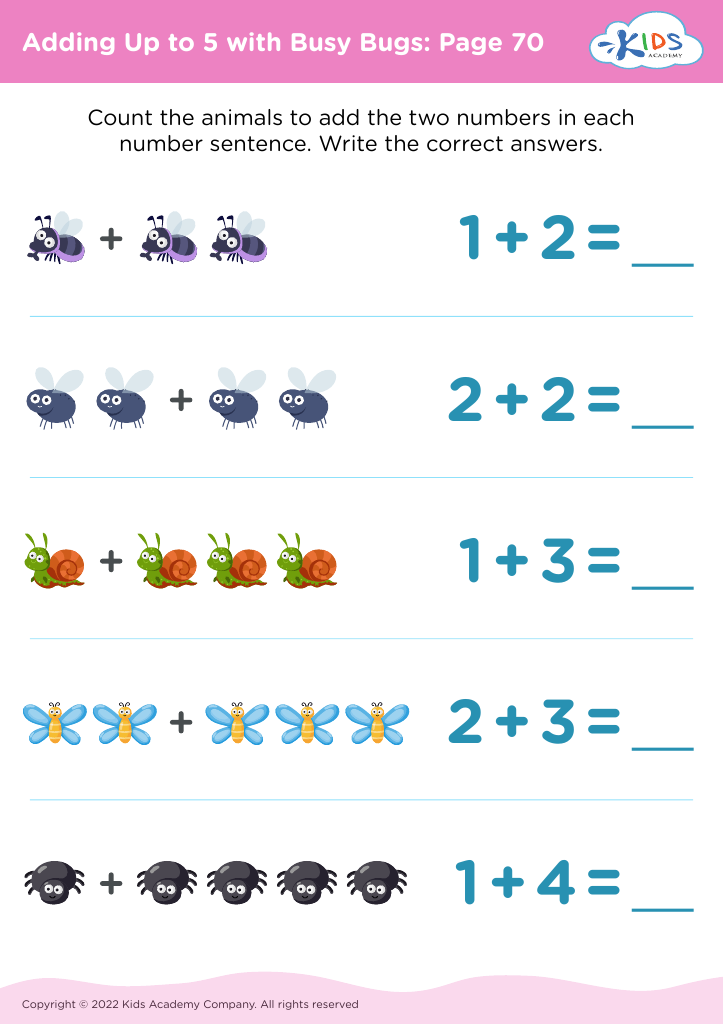
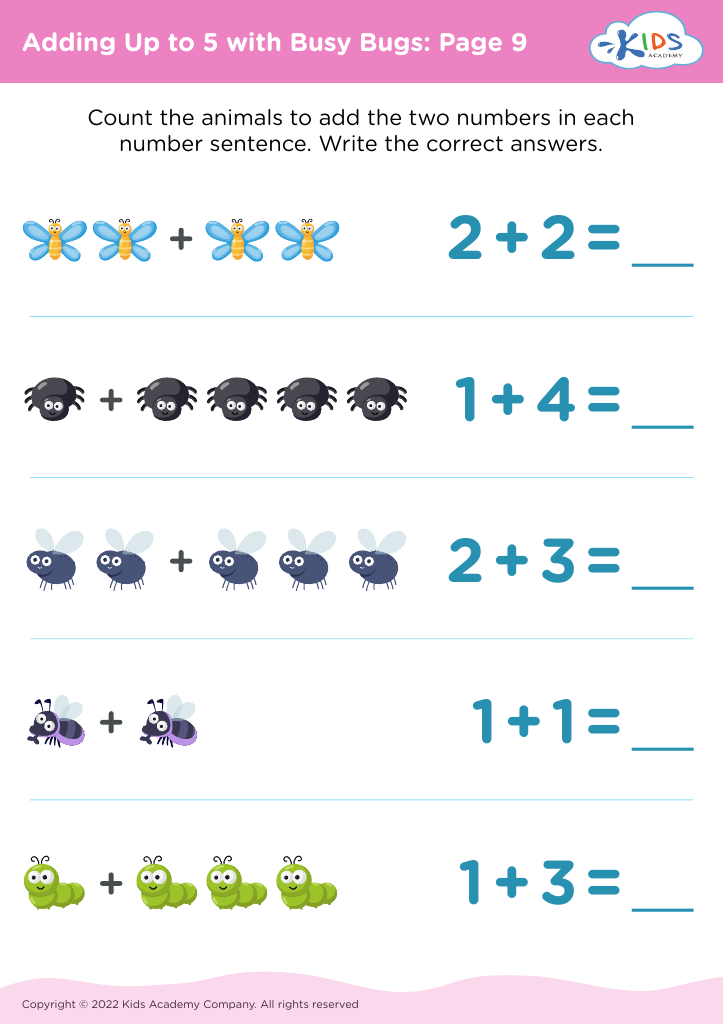
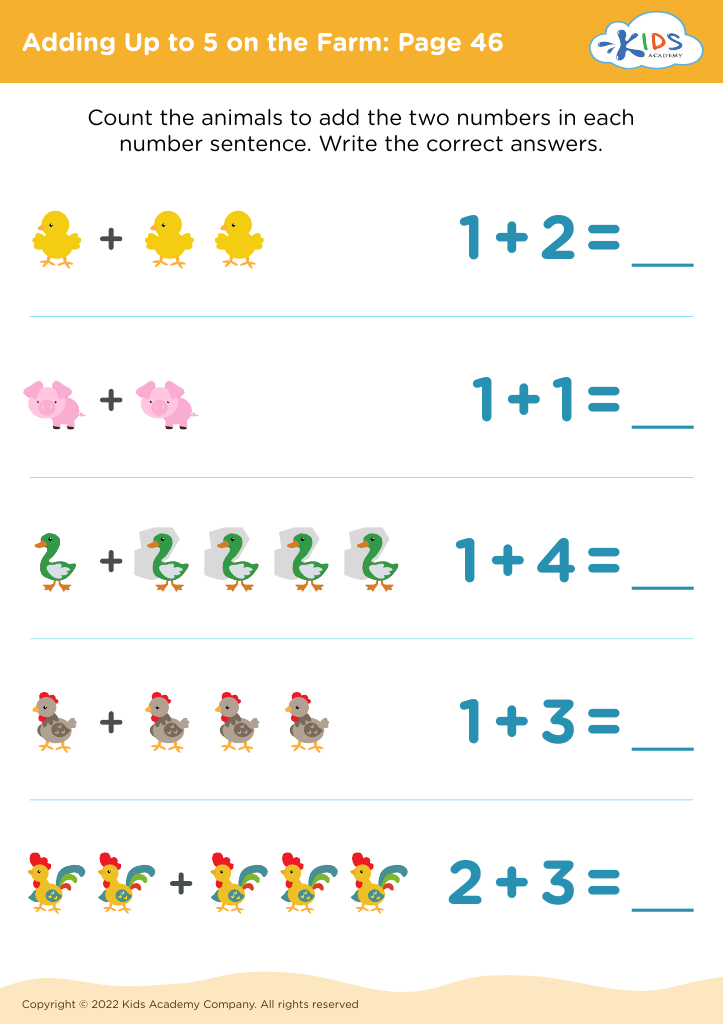
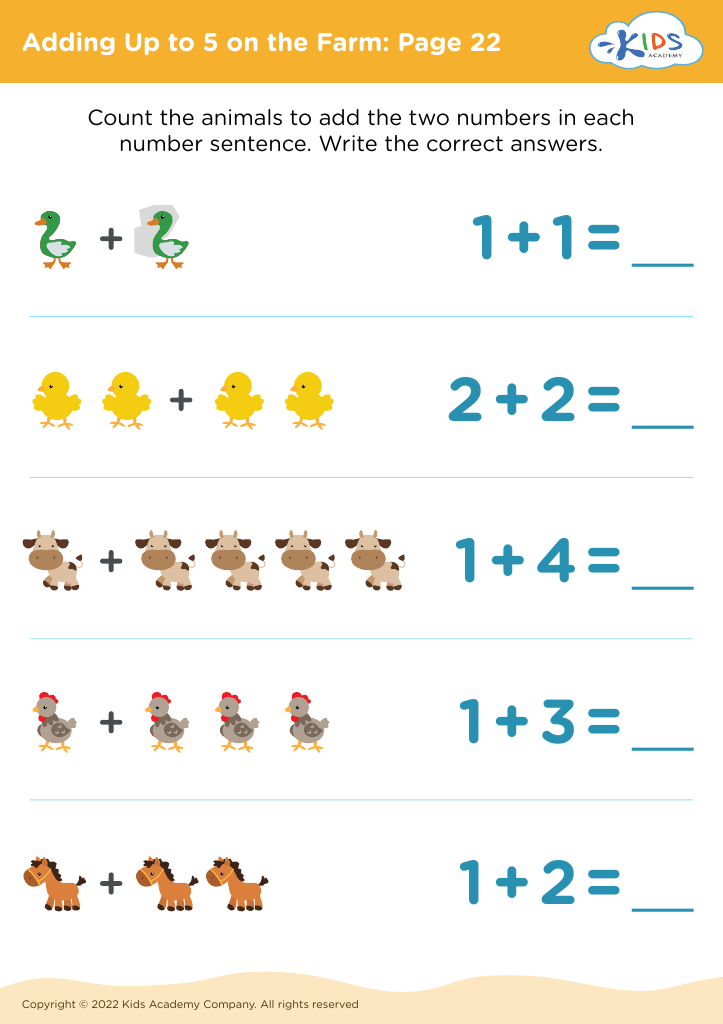
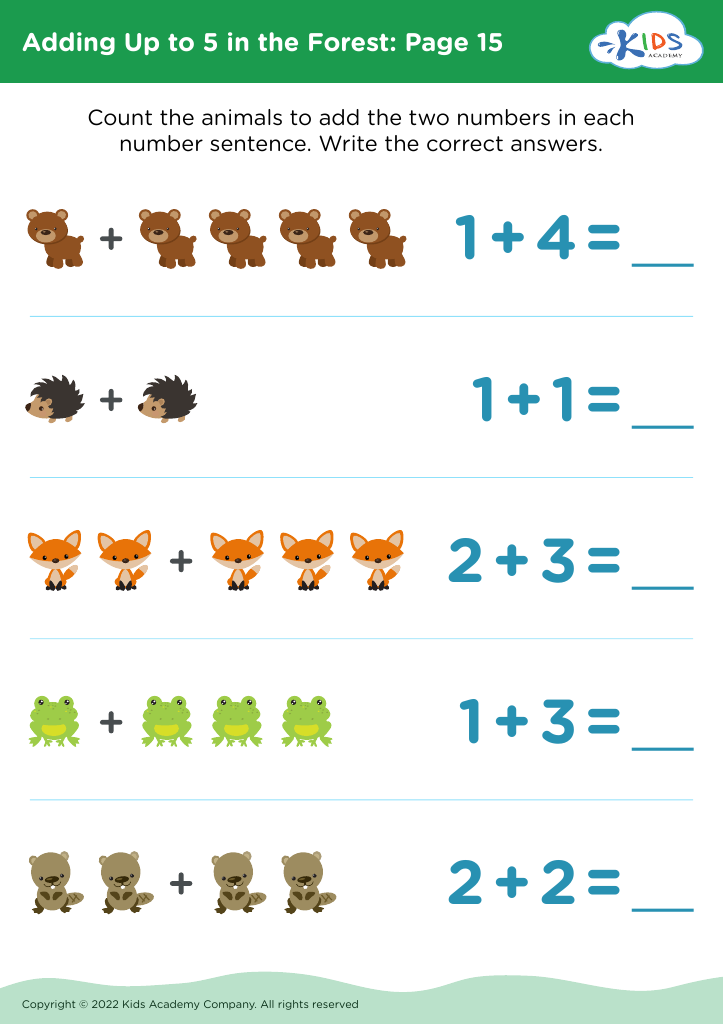








Visual learning is crucial for young children aged 3-9, particularly when introducing foundational concepts like basic addition. When parents and teachers actively incorporate visual aids into lessons, such as colorful charts, number lines, and manipulatives, they create an engaging and tangible learning environment. Visual tools help children to better grasp mathematical ideas by making abstract concepts concrete. Young learners often think in pictures, and visual representation can assist them in visualizing addition as a process of combining groups rather than merely memorizing facts.
Moreover, children in this age group thrive on interactive and hands-on experiences. Using visual aids fosters excitement and curiosity, keeping them invested in the learning process. It also accommodates various learning styles; while some children are visual learners, others might benefit from the tactile experience of handling physical objects, reinforcing their understanding through multiple pathways.
By focusing on visual learning, parents and teachers not only enhance children's mathematical comprehension but also build their confidence and interest in math as a whole. This foundational understanding in early childhood paves the way for future academic success, ensuring children are well-equipped for more advanced concepts as they progress in their education. Thus, promoting visual learning in addition sums is essential for nurturing early numeracy skills.








