Animal identification Addition & Subtraction Worksheets for Ages 3-9 - Page 2
28 filtered results
-
From - To
Animal Sanctuary Worksheet
 Assign to My Students








Animal identification, combined with basic addition and subtraction, is a fantastic educational strategy for children ages 3-9. For parents and teachers, there are several compelling reasons to incorporate this engaging method into early education.
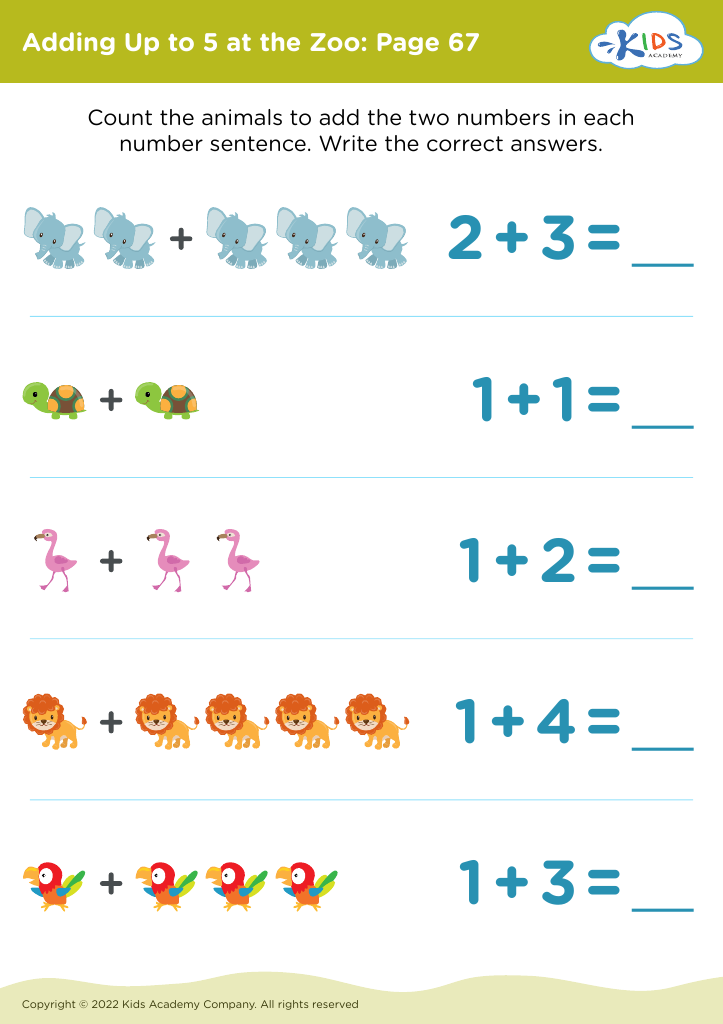
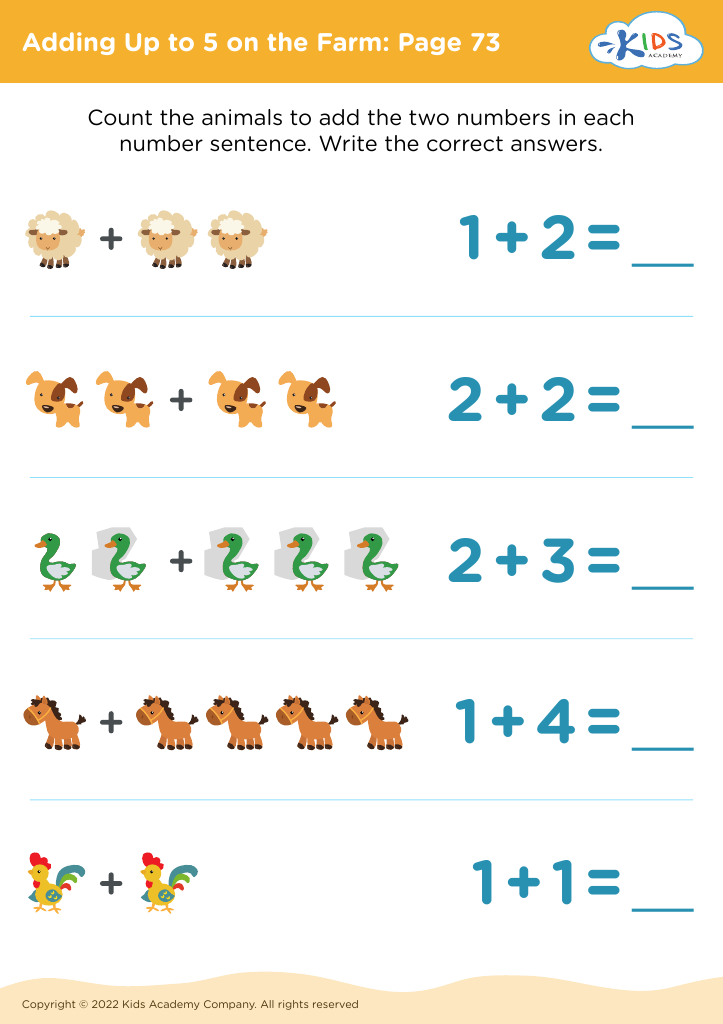
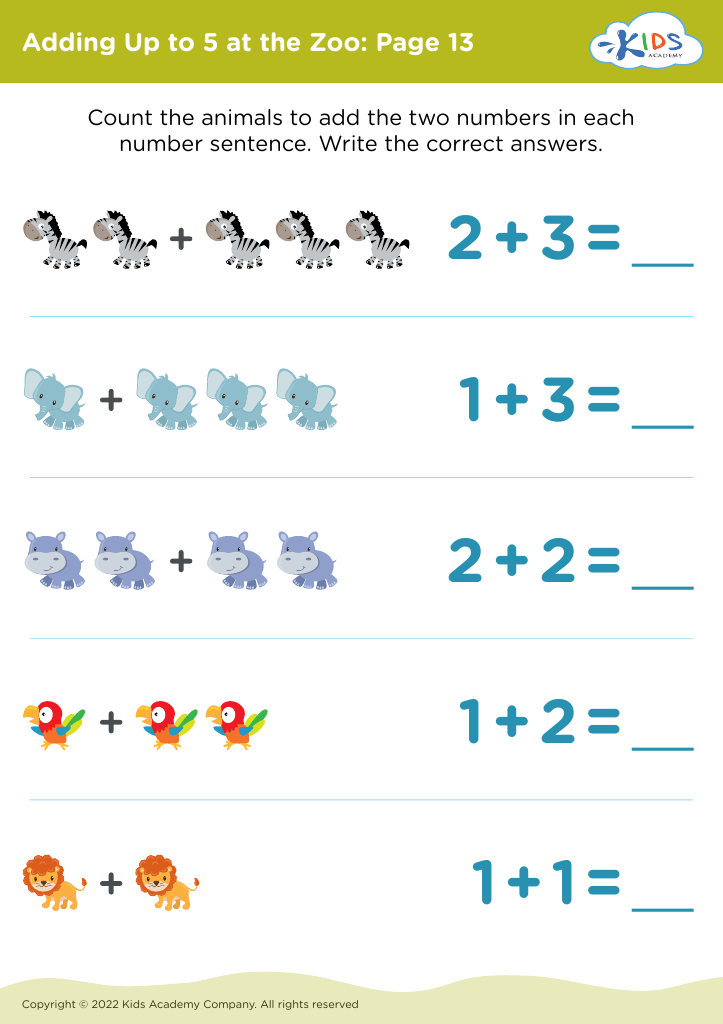
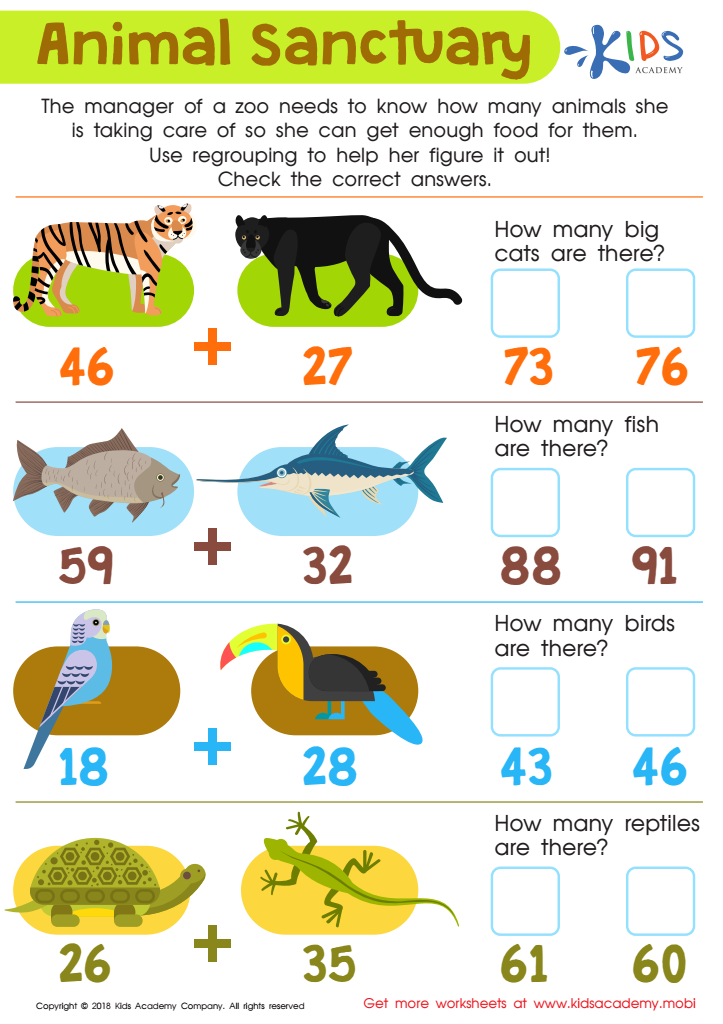
First, blending animal identification with math concepts caters to young children's natural curiosity and love for animals, making learning more enjoyable. When a child identifies an elephant or a giraffe and then counts them, they build both their cognitive skills and engagement with the subject matter.
Second, this combination supports dual learning objectives. By associating numbers with animals, children enhance their memory and recall abilities, fostering a deeper understanding of basic math concepts. For example, if a child counts three lions and then adds two more, simple equations like 3 + 2 become meaningful and easier to grasp.
Moreover, these activities nurture problem-solving skills and critical thinking. Kids not only learn to recognize animals and numbers but also develop the ability to perform simple calculations, setting a solid foundation for future math learning.
Finally, integrating animals promotes inclusivity and cultural awareness. Many children have a universal recognition of animals from various cultures, helping to broaden their worldview as they learn to appreciate worldwide biodiversity.
In essence, parents and teachers should embrace animal identification addition and subtraction for its multi-faceted enrichment, seamlessly blending fun with foundational learning.








