Comparing numbers Addition & Subtraction Worksheets for Ages 3-9
4 filtered results
-
From - To
Explore our engaging "Comparing Numbers: Addition & Subtraction Worksheets" designed specifically for children aged 3-9! Our carefully crafted worksheets aim to enhance foundational math skills by focusing on comparing numbers through fun and interactive exercises. These worksheets facilitate the understanding of numerical relationships, helping young learners grasp concepts like greater than, less than, and equal to. With a variety of colorful formats and activities, your child will not only practice addition and subtraction but also develop critical thinking and analytical abilities. Perfect for home schooling or as supplementary practice, embark on a math journey that makes learning enjoyable and effective!
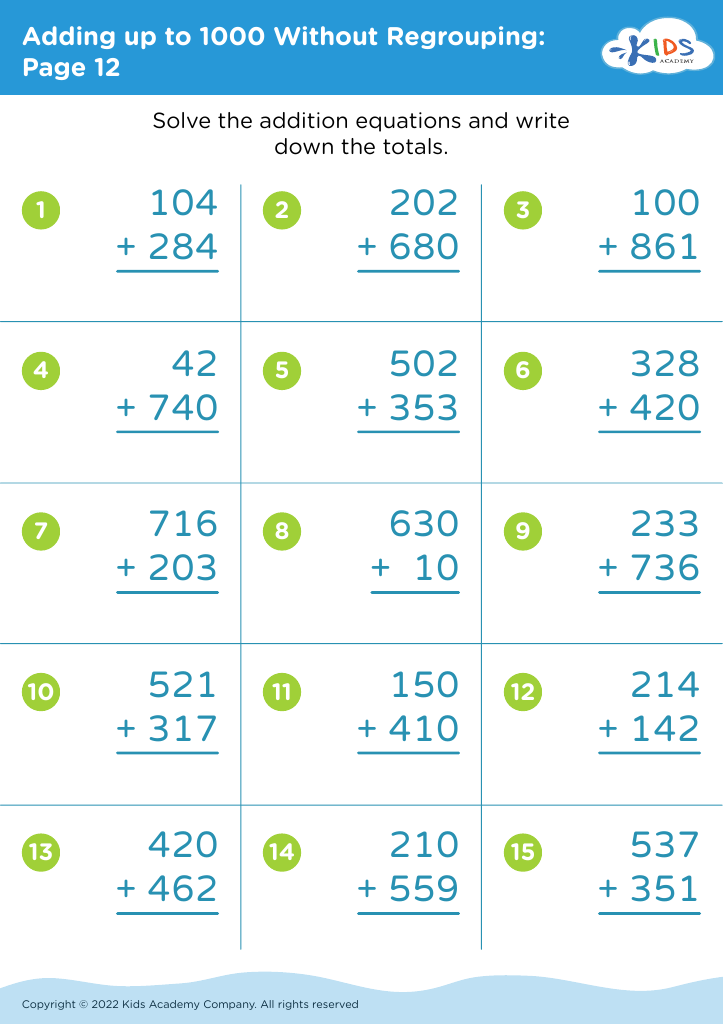
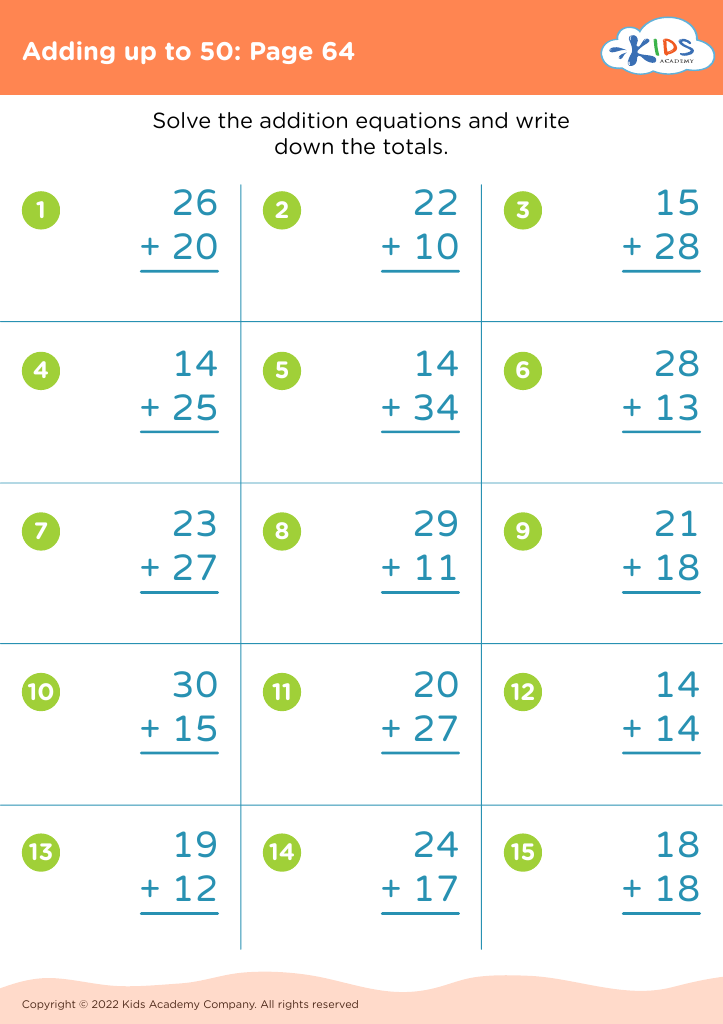
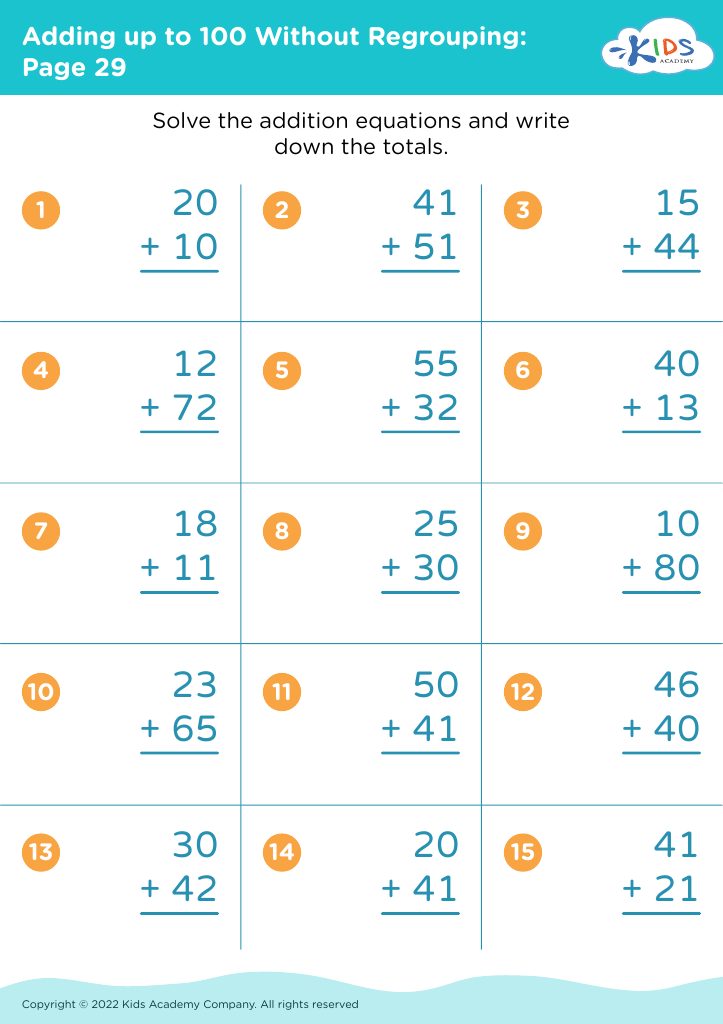
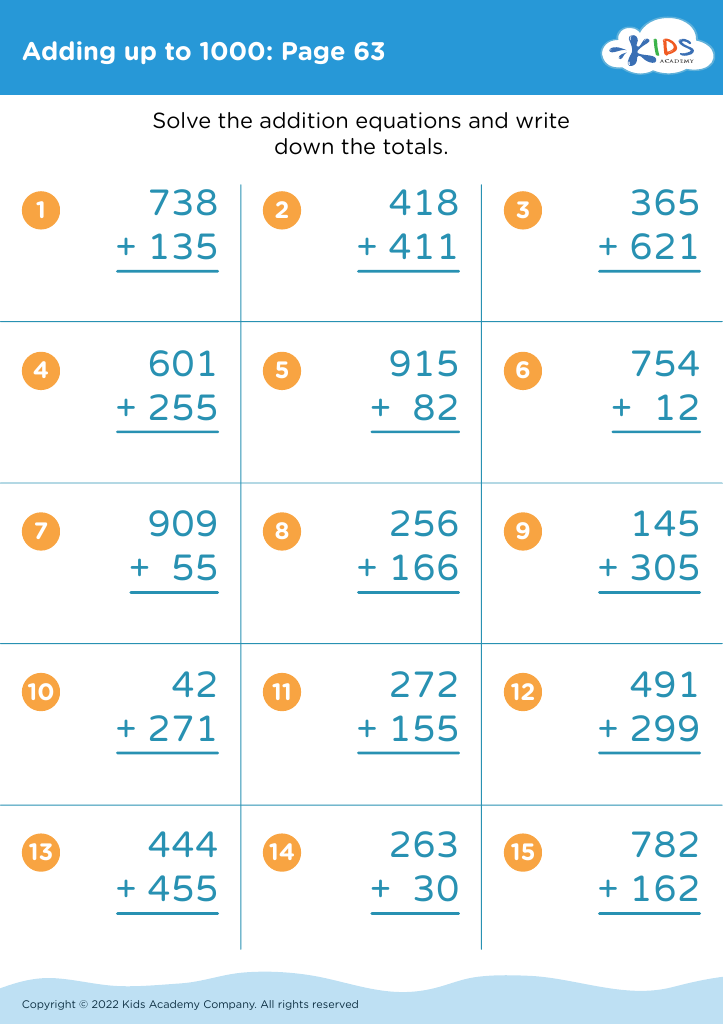








Comparing numbers, along with basic addition and subtraction, is fundamental for young children's math development and serves as a groundwork for later mathematical concepts. Understanding these skills helps children grasp the idea of quantity, value, and relationships between numbers, which is crucial as they start to encounter more complex operations in primary grades.
For parents and teachers, fostering these skills nurtures critical thinking and problem-solving abilities. Engaging children in comparing numbers can enhance their cognitive skills, promoting analytics in shaping their thinking patterns. When children learn to add and subtract effectively, they gain confidence in their mathematical abilities, allowing them to approach future challenges with a positive mindset.
Additionally, these early math skills are linked to later academic success. Research shows that children who have strong number sense in early grades perform better in mathematics throughout their academic careers. Furthermore, integrating fun activities at this stage—such as games and hands-on learning experiences—can make math a joyful subject, likely encouraging a lifelong love for learning.
Ultimately, prioritizing this educational aspect can help children develop essential life skills, making parents and teachers instrumental in prepare them for future advanced mathematical concepts and applications.








