
Geography knowledge Addition & Subtraction Worksheets for Ages 3-9
4 filtered results
Difficulty Level
Grade
Age
-
From - To
Subject
Activity
Standards
Enhance your child's math and geography skills with our engaging Addition & Subtraction Worksheets for Ages 3-9. These thoughtfully designed worksheets combine essential arithmetic practice with fascinating geographical facts and maps, making learning fun and effective. Ideal for early learners, the activities help children develop their addition and subtraction skills while also expanding their geographical knowledge. Worksheets feature colorful illustrations, interactive tasks, and age-appropriate challenges, fostering a love for learning in young minds. Perfect for parents and educators looking to support both math proficiency and cultural awareness. Start exploring today with Kids Academy and watch your child thrive!
Favorites
With answer key
Interactive
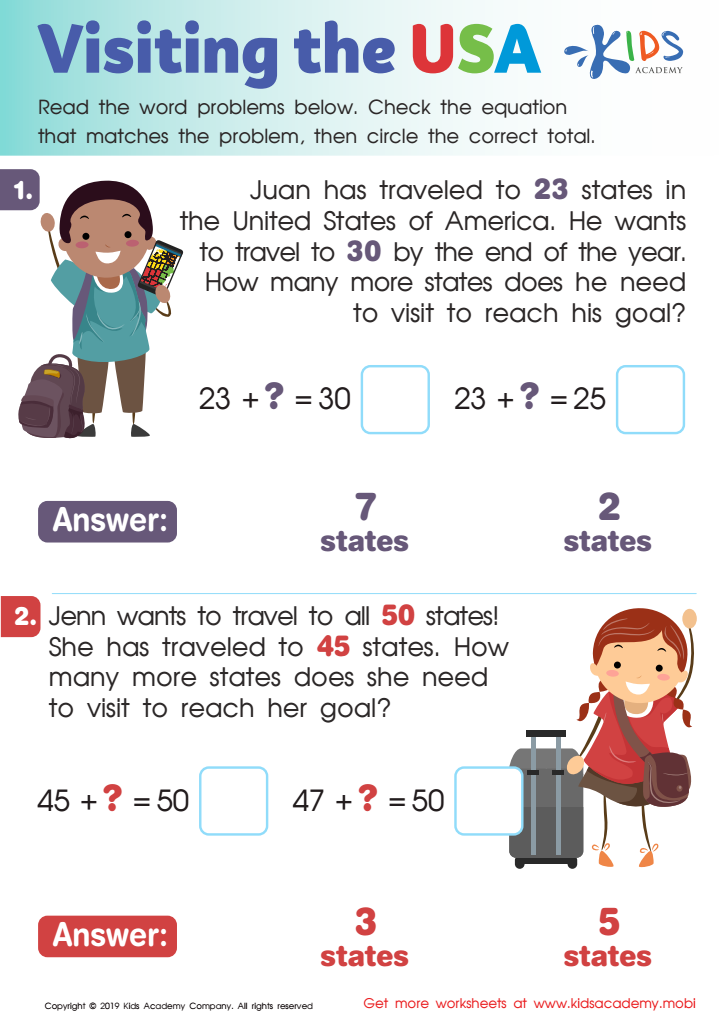
Visiting the USA Worksheet
Do your kids love travelling? Ask them why and find out what they look forward to the most. People travel for a variety of reasons, such as adventure, holiday, or business. Juan and Jenn in the picture travel for adventure and have a goal they want to achieve. Read the word problems to your kids and help them pick the right equation and match the total.
 Assign to My Students
Visiting the USA Worksheet
Worksheet
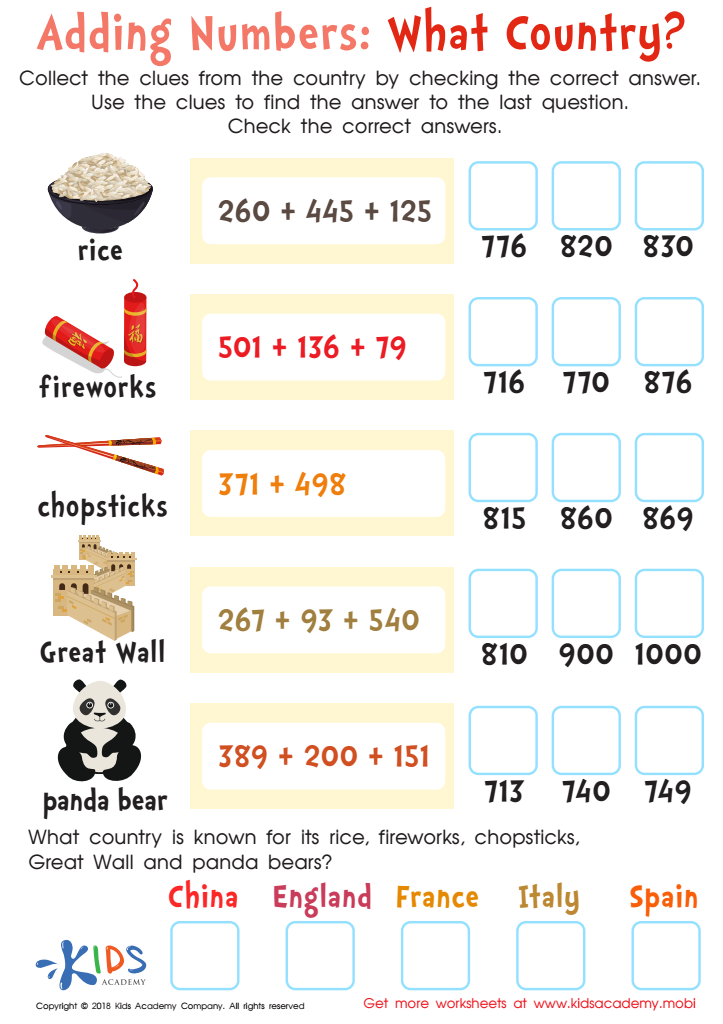
Adding Numbers: What Country Worksheet
Students can use this worksheet to learn more about different countries. Have them collect clues from the worksheet to answer the last question. Help them check the correct answer, and they'll gain knowledge about each country's food, animals, celebrations, and landmarks.
Adding Numbers: What Country Worksheet
Worksheet
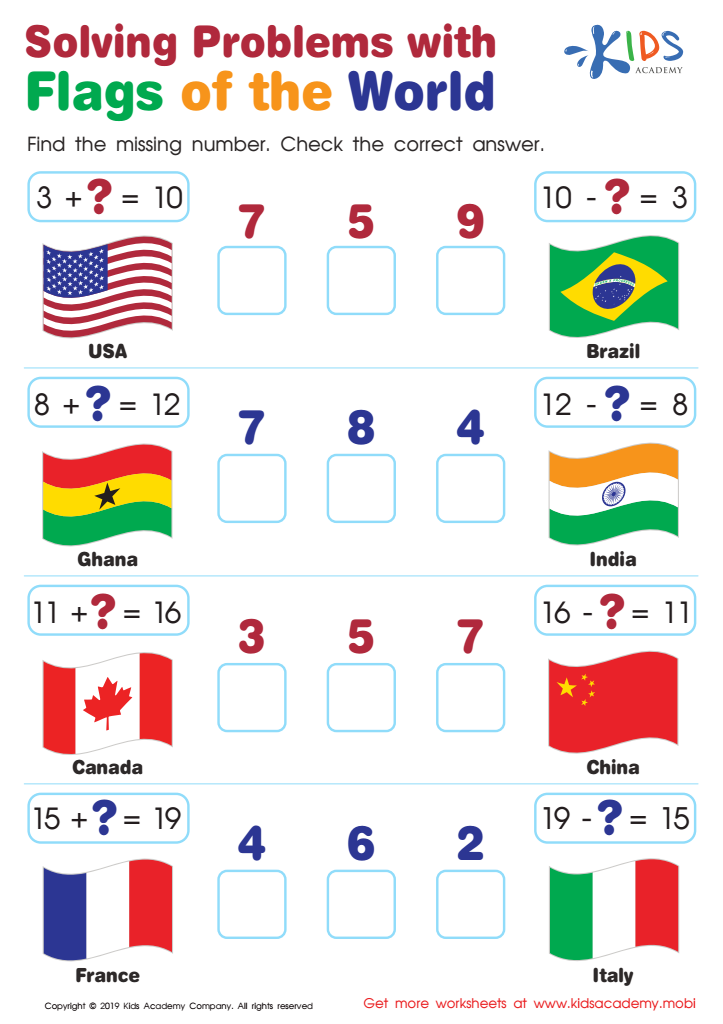
Solving Problems with Flags of the World Worksheet
Name some countries you know with your kids, then introduce their flags with this worksheet. Help them find the missing number in each addition problem, and then check the answer. It's a fun way to learn about different countries near and far.
Solving Problems with Flags of the World Worksheet
Worksheet
Join Kids Academy for Free
Who is primarily going to use this learning content?








Parents and teachers should prioritize geographical knowledge and early math skills, like addition and subtraction, for children aged 3-9 because these areas lay a foundational framework for academic and everyday success.
First, geography fosters spatial thinking, critical for problem-solving and understanding the world. Children learn about different cultures, climates, and environments, which can make them more open-minded and knowledgeable global citizens. Understanding maps and spatial relationships enhances their navigation and planning skills, too.
On the other hand, basic arithmetic, such as addition and subtraction, is indispensable in everyday life. Early math skills boost cognitive development, and are closely linked to future academic performance in subjects beyond math, including reading and science. Mastery of these basic operations encourages logical reasoning and decision-making skills.
For young children, integrating these learning objectives seamlessly into playful and engaging activities ensures that they develop these skills in a stress-free environment. Picture books with maps or themed counting games about global travels can stimulate curiosity and build a robust educational foundation.
Combining geography with early math makes education holistic and relevant. Both subjects develop a child's ability to interact skillfully with their surroundings and set the stage for more complex learning experiences in the future.








