Improve problem-solving abilities Addition & Subtraction Worksheets for Ages 3-9
3 filtered results
-
From - To
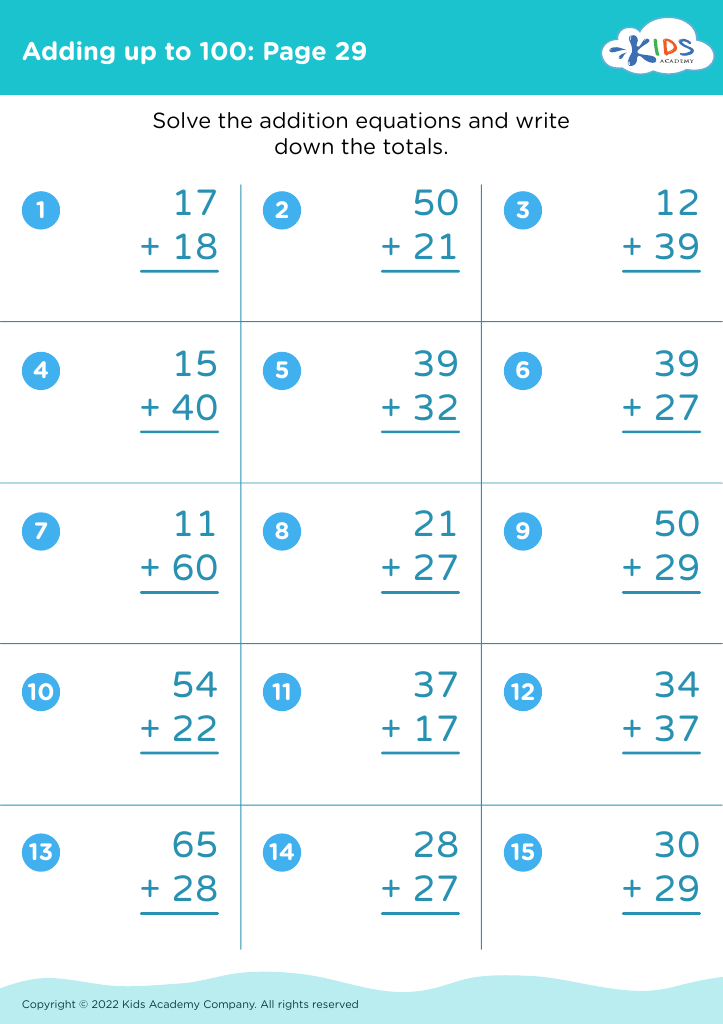
Enhance your child's problem-solving skills with our engaging addition and subtraction worksheets, tailored for ages 3-9! Our diverse activities blend fun with essential math practice, helping young learners build a strong foundation in arithmetic concepts. Each worksheet encourages critical thinking, reinforces number recognition, and develops reasoning abilities through interactive, real-world scenarios. From simple sums to challenging puzzles, our comprehensive resources cater to various learning levels, ensuring your child masters basic math while boosting confidence. Download now and watch your little ones excel in math while enjoying every step of their learning journey! Perfect for homeschoolers and classroom use alike.
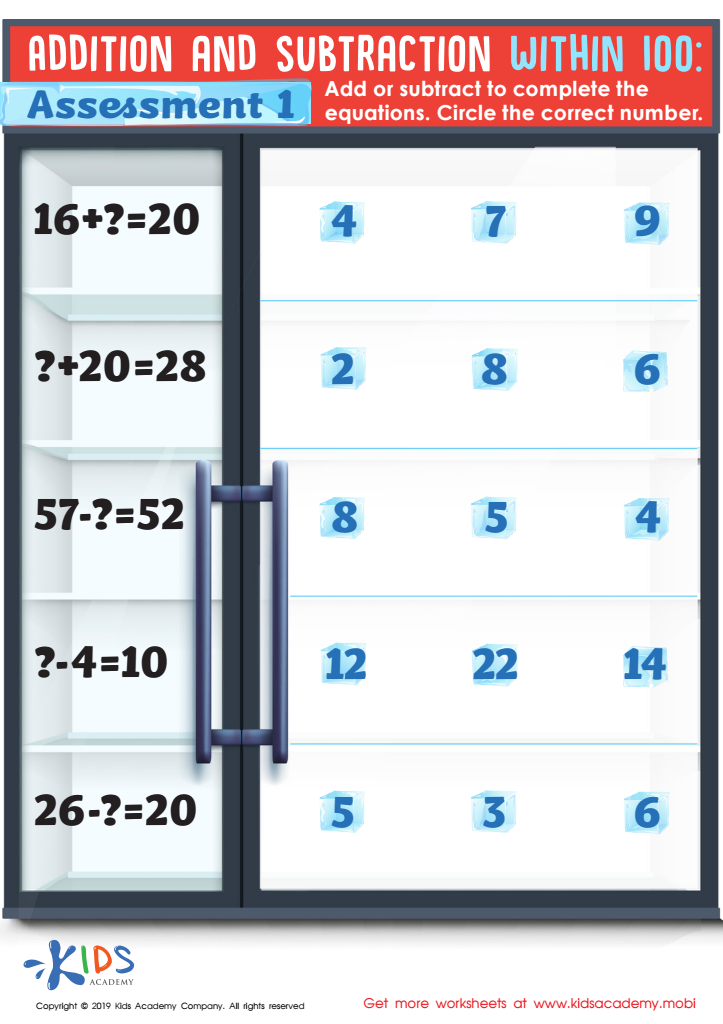
Addition and Subtraction within 100: Assessment 1 Worksheet
 Assign to My Students
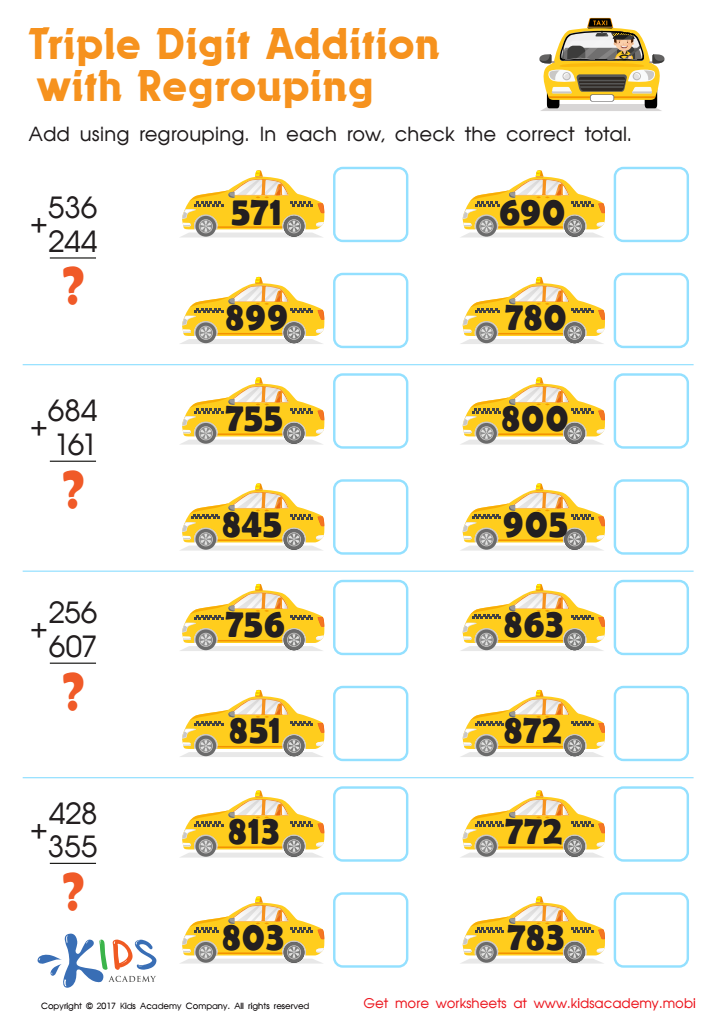
Triple Digit Addition with Regrouping Worksheet








Improving problem-solving abilities in addition and subtraction for children aged 3-9 is crucial as these foundational skills shape their mathematical understanding and critical thinking. At this developmental stage, children are naturally curious and eager to learn; fostering their problem-solving skills not only enhances their ability to perform basic arithmetic but also promotes logical reasoning and cognitive flexibility.
Mathematics is not just about numbers; it teaches children how to approach problems, think creatively, and find solutions. By emphasizing addition and subtraction, educators and parents can equip children with essential tools for everyday situations, such as budgeting, measuring, and time management. These skills also promote perseverance and resilience, as students learn to tackle challenges and learn from mistakes.
Additionally, a strong foundation in early math skills fosters confidence and a positive attitude toward learning. When children feel competent in their abilities, they are more likely to engage in classroom discussions and participate in cooperative learning activities. This lays the groundwork for future success in more complex subjects, benefitting academic performance across the board. Therefore, prioritizing problem-solving abilities during these formative years is vital for holistic development and lifelong learning.








