Improving calculation skills Addition & Subtraction Worksheets for Ages 3-9
3 filtered results
-
From - To
Boost your child's arithmetic prowess with our engaging Addition & Subtraction Worksheets, specially designed for ages 3-9. Tailored to enhance crucial calculation skills, these worksheets offer a series of fun, age-appropriate activities that simplify learning. Kids will seamlessly master foundational math concepts through playful exercises that stimulate critical thinking and reinforce memory retention. Ideal for both home practice and classroom instruction, our expertly crafted resources ensure a solid mathematical foundation. Help your child thrive and build confidence in their numerical abilities with our high-quality printable math worksheets today! Unlock limitless learning potential at Kids Academy!
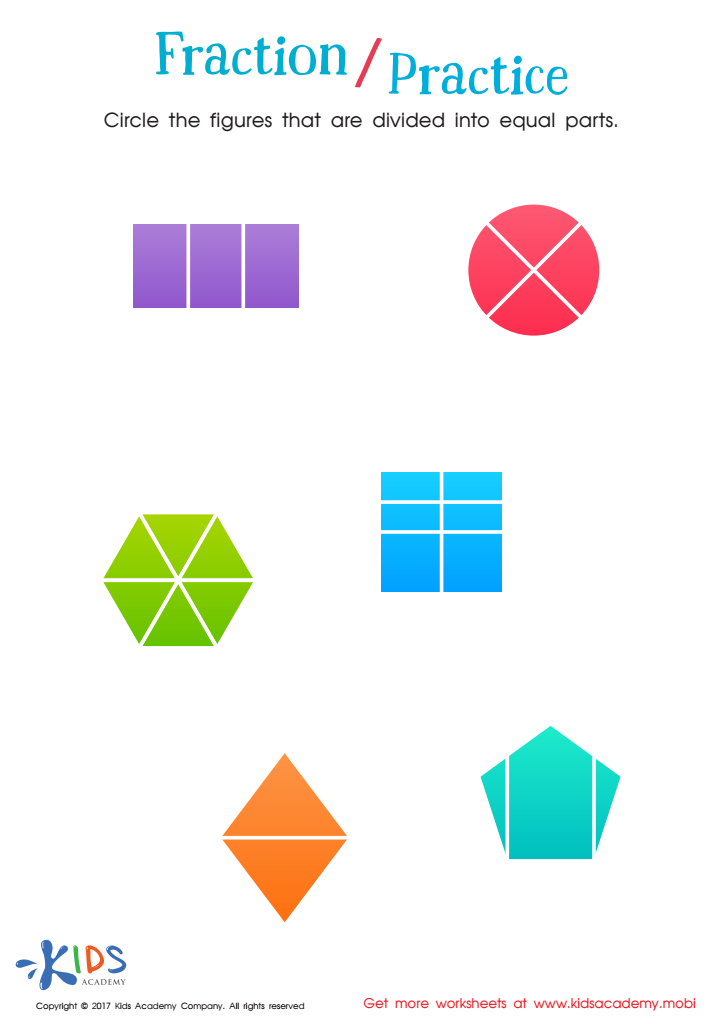
Fractions: Shapes Worksheet
 Assign to My Students
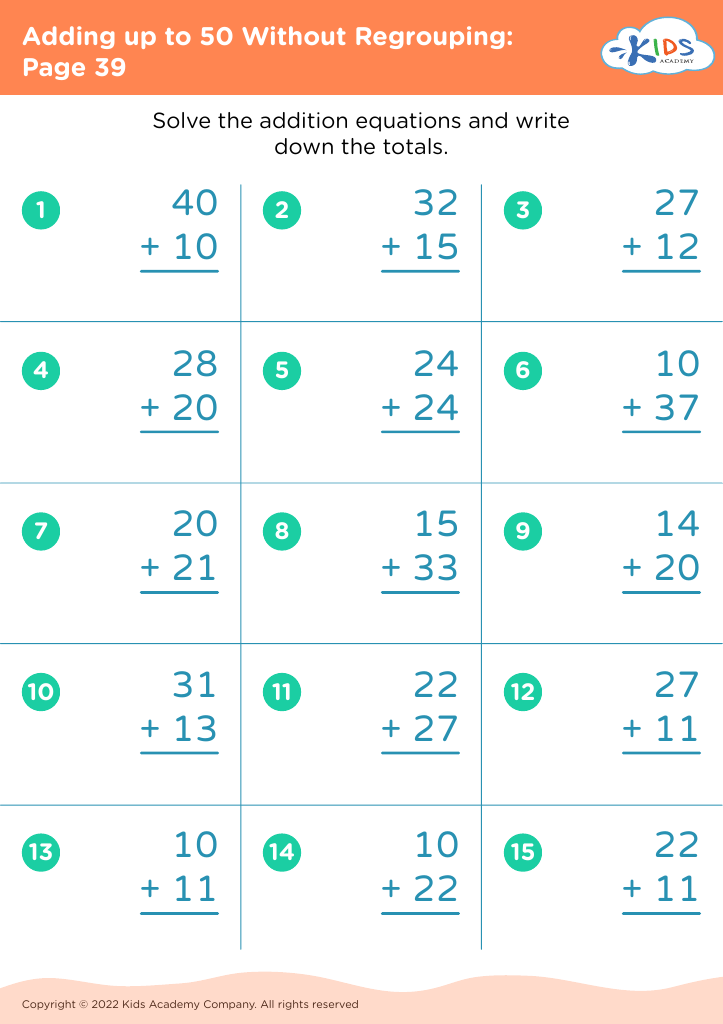
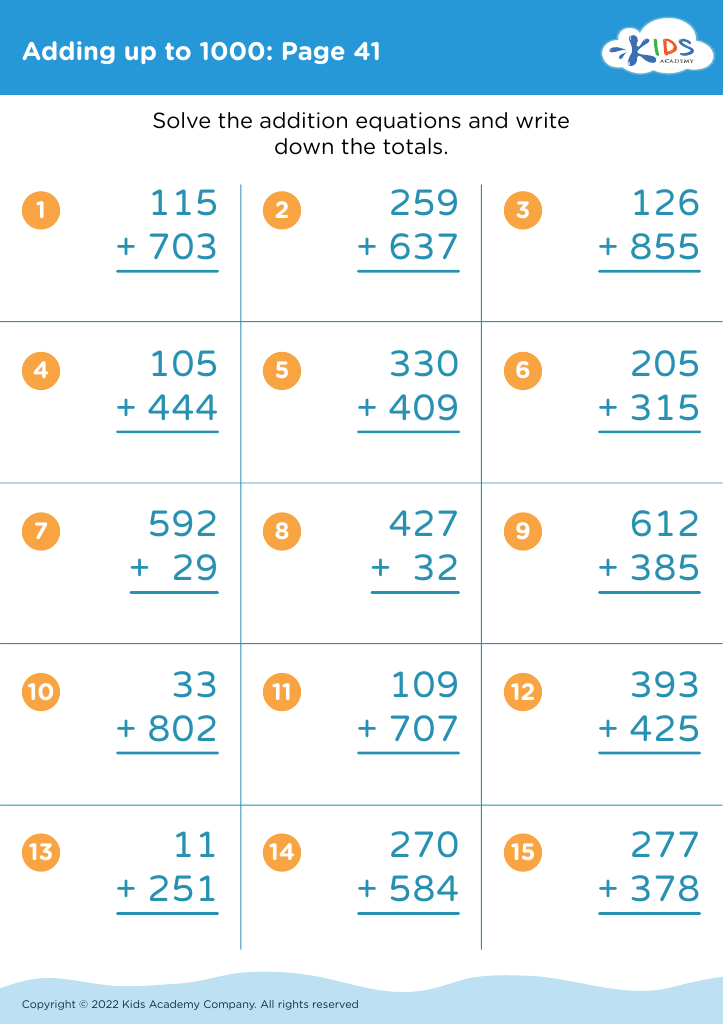








Improving calculation skills in addition and subtraction for children ages 3-9 is essential because these foundational skills are the cornerstone of mathematical literacy and overall cognitive development. Early proficiency in basic arithmetic fosters a sense of numerical understanding and encourages logical thinking. When children are comfortable with addition and subtraction, they are more likely to develop a positive attitude towards math, which can influence their academic performance across a range of subjects.
Parents and teachers play a crucial role in nurturing these skills. By engaging children in practical, hands-on activities, they help demystify numbers and make learning enjoyable. This early intervention sets the stage for more complex mathematical concepts, ensuring that children build a solid understanding before moving on to higher-level math. Furthermore, these skills are used in everyday life, from calculating the total price while shopping to dividing treats among friends, making them relevant and practical.
In a broader context, early mathematical skills are linked to better problem-solving abilities and higher academic achievement later in life. By investing time and effort into improving these basic skills, parents and teachers can help children develop confidence, critical thinking, and a lifelong interest in learning. This early attention can pave the way for academic success and provide children with vital tools for their future.








