
Number comparison Addition & Subtraction Worksheets for Ages 3-9
3 filtered results
Difficulty Level
Grade
Age
-
From - To
Subject
Activity
Standards
Help your child master the basics of math with our "Number Comparison Addition & Subtraction Worksheets for Ages 3-9." Perfectly designed for young learners, these worksheets bolster essential skills including comparing numbers, understanding basic math operations, and building confidence in addition and subtraction. Each worksheet, made by educational experts, combines engaging problems with fun illustrations to make learning entertaining and effective. Ideal for at-home practice or supplementing classroom learning, these activities will pave the way for your child's academic success. Discover our collection today and watch your child's math abilities flourish!
Favorites
With answer key
Interactive
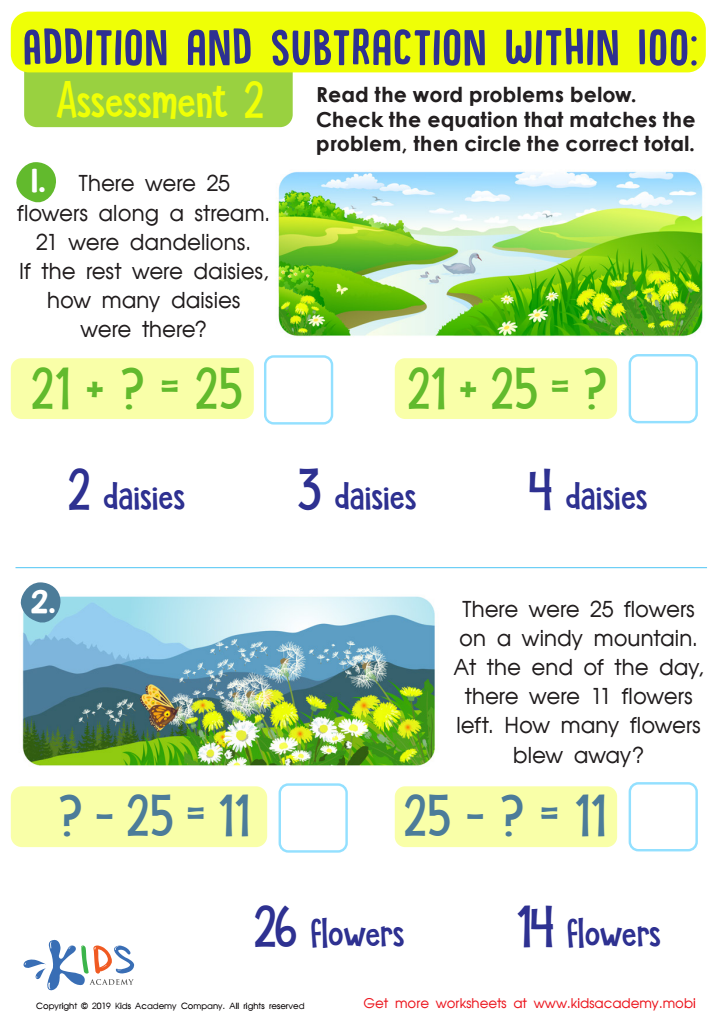
Assessment 2 Math Worksheet
Using fun exercises and pictures, you can get kids excited about math. With practice and reminders of what they've learnt, they'll be solving simple addition and subtraction equations with ease. Read the word problems in the picture to them, then help them check the equation and choose the correct answer.
 Assign to My Students
Assessment 2 Math Worksheet
Worksheet
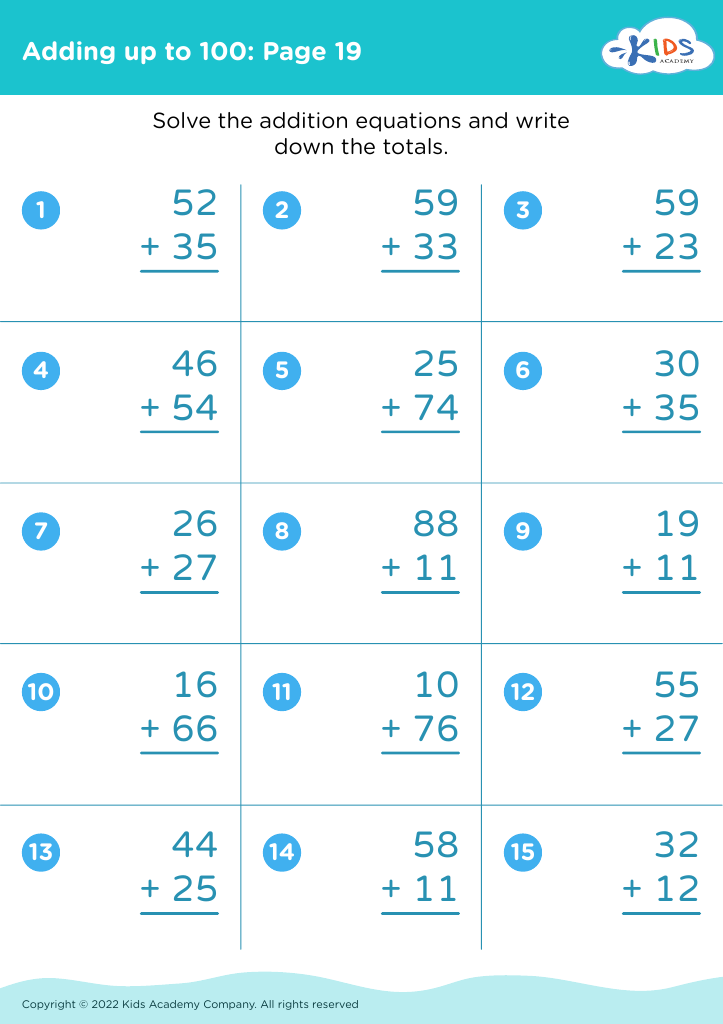
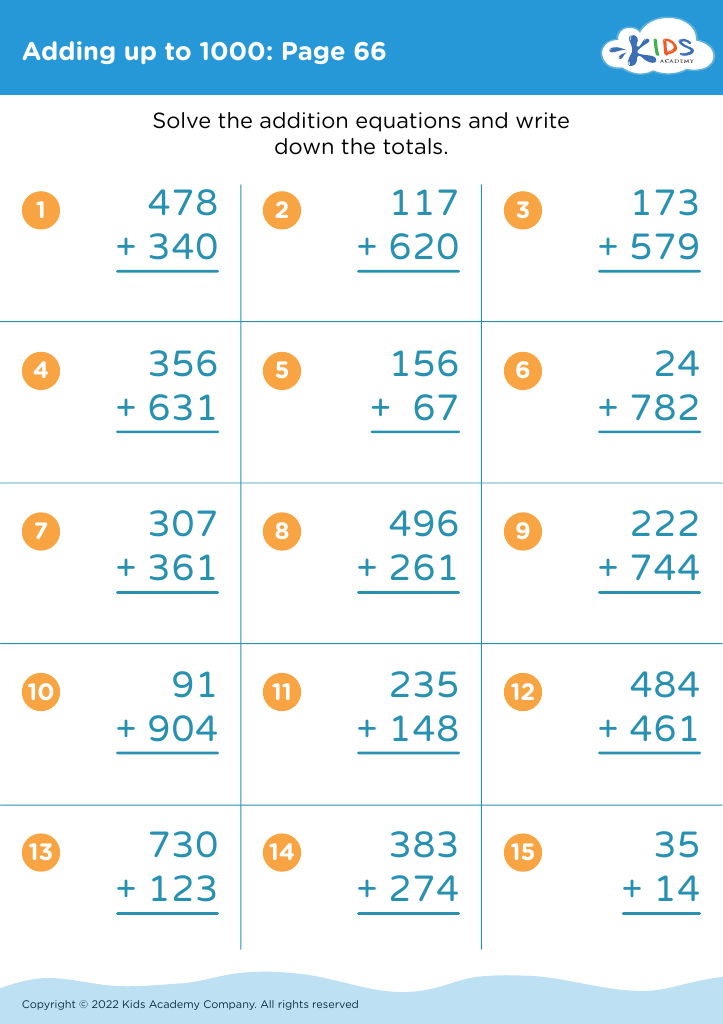
Join Kids Academy for Free
Who is primarily going to use this learning content?








Understanding number comparison, addition, and subtraction for ages 3-9 is crucial for early childhood development. These foundational math skills underpin more complex mathematical reasoning and problem-solving that children will encounter later in their education. At these formative ages, children’s brains are highly receptive to learning new concepts, and introducing them to basic arithmetic skills can foster a lifelong interest and confidence in math.
Number comparison helps children understand relative sizes and quantities, which is essential for grasping more advanced mathematical relationships. This skill enhances their reasoning ability, laying the groundwork for effective decision-making.
Addition and subtraction are fundamental operations in math. Mastering these early enables children to engage with everyday activities involving arithmetic, like counting objects, sharing snacks, or measuring ingredients—experiences that make math tangible and relevant. Proficiency in these areas also contributes to literacy, as it involves language skills to describe and discuss concepts.
Moreover, early competence in basic arithmetic builds self-esteem and reduces math anxiety, a common issue in later academic stages. Reliable arithmetic skills empower children to tackle more complex tasks with confidence.
Therefore, parents and teachers should embrace and encourage number comparison, addition, and subtraction activities to ensure children develop strong, lasting numeracy skills, instilling a robust foundation for future learning.








