Filters

570 filtered results

Clear all filters
Favorites
With answer key
Interactive

570 filtered results

Difficulty Level

Grade


Check out this FREE Trial Lesson on Addition & Subtraction for age 3-9!

Making 11

Favorites
With answer key
Interactive
  • 3-9
  • Number Recognition
  • Addition & Subtraction
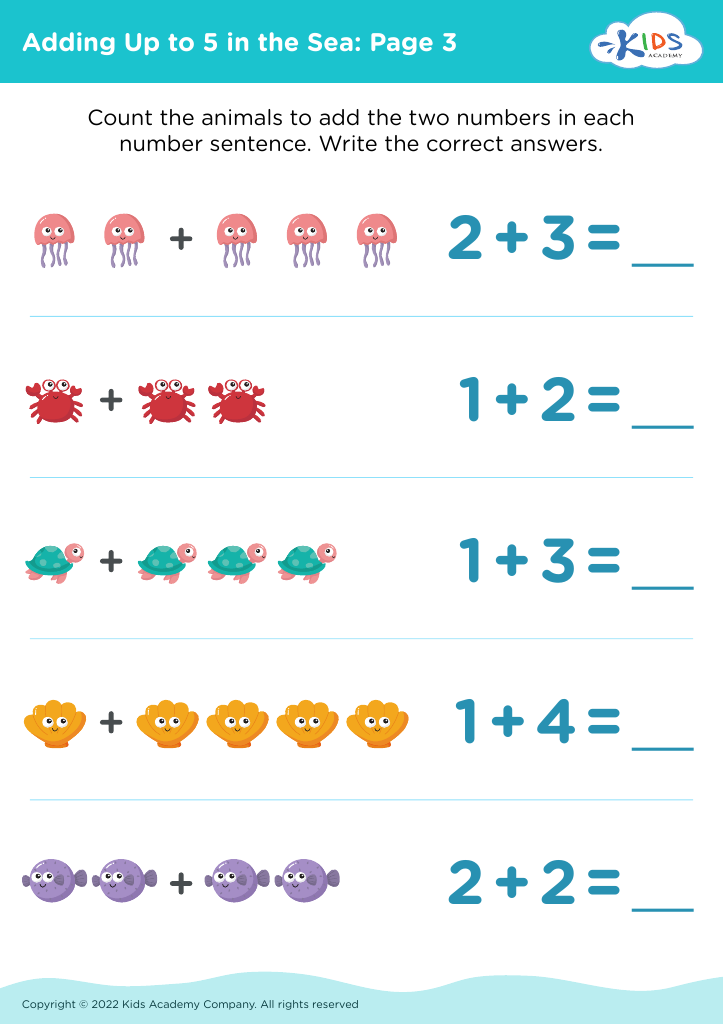
Adding Up to 5 in the Sea: Page 3

Adding Up to 5 in the Sea: Page 3

Adding Up to 5 in the Sea: Page 3
Worksheet
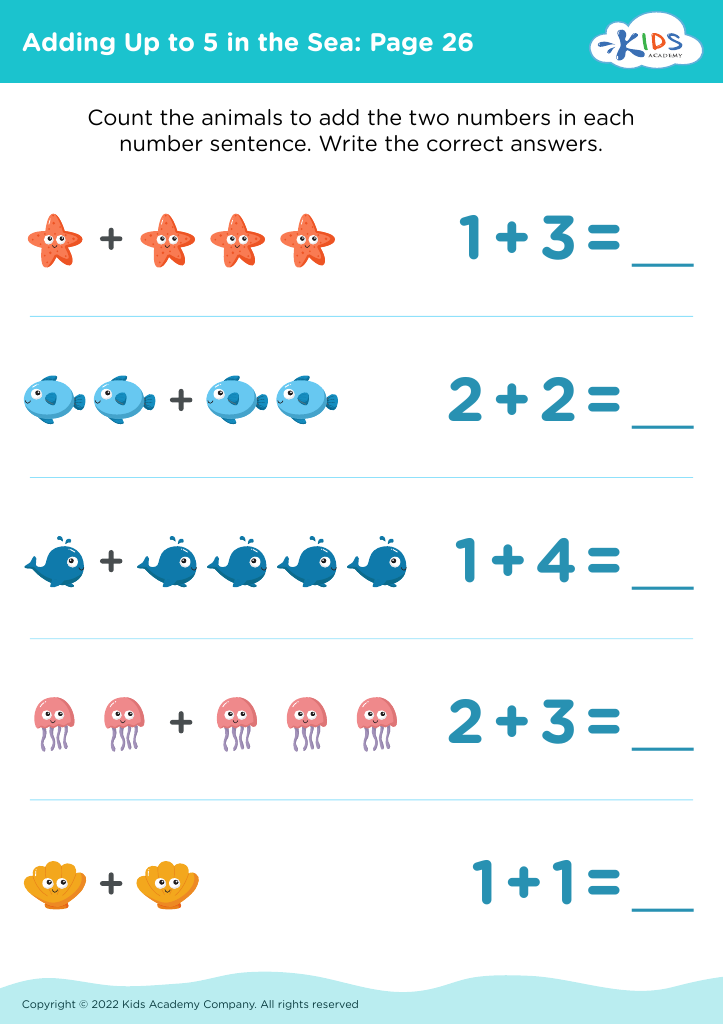
Adding Up to 5 in the Sea: Page 26
Worksheet
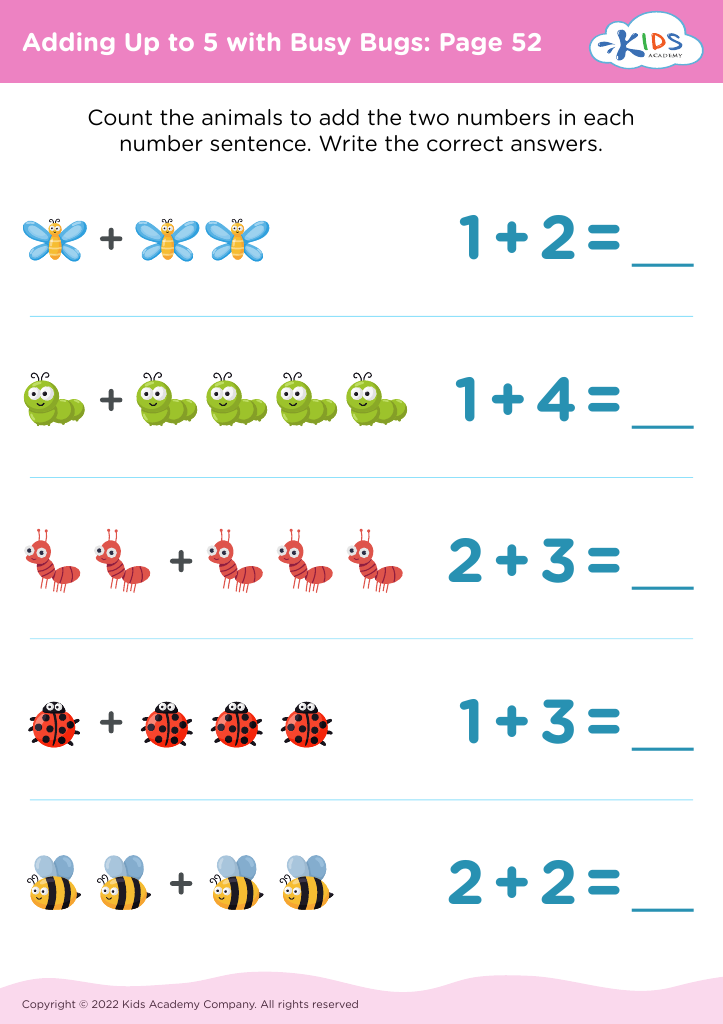
Adding Up to 5 with Busy Bugs: Page 52
Worksheet
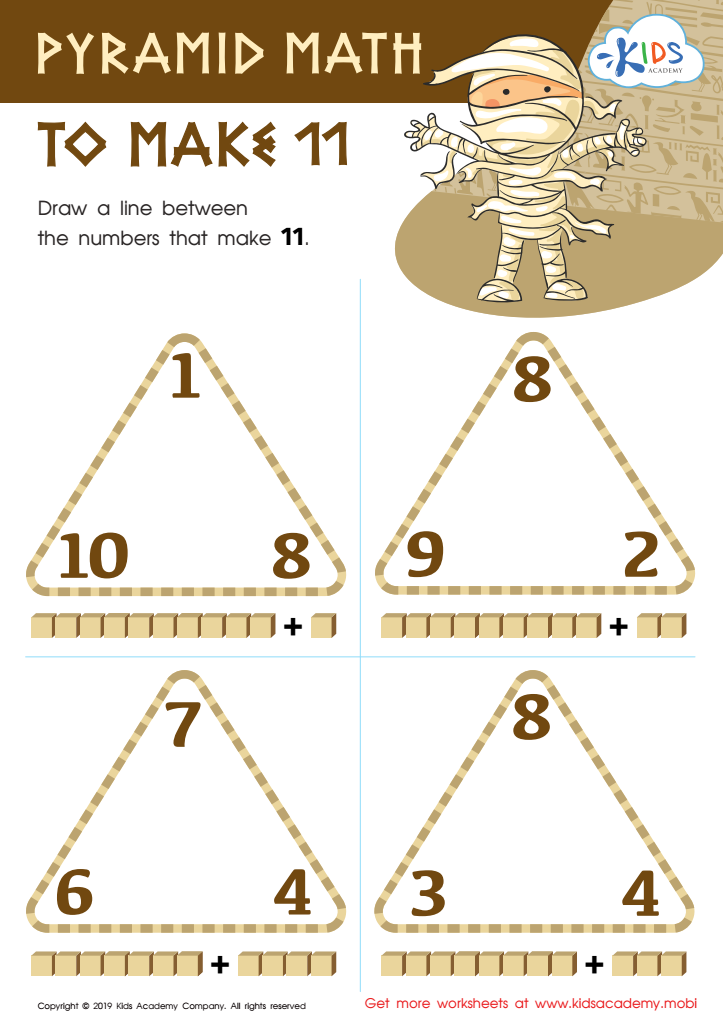
Pyramid Math to Make 11 Worksheet

Pyramid Math to Make 11 Worksheet

Have your kids look at the picture of the Egyptian pyramids and tell you what they see. Then, help them do simple math by adding up the numbers in the pyramids and connecting those that make 11. This worksheet is perfect for teaching your kids about history, mathematics, and problem-solving.
Pyramid Math to Make 11 Worksheet
Worksheet
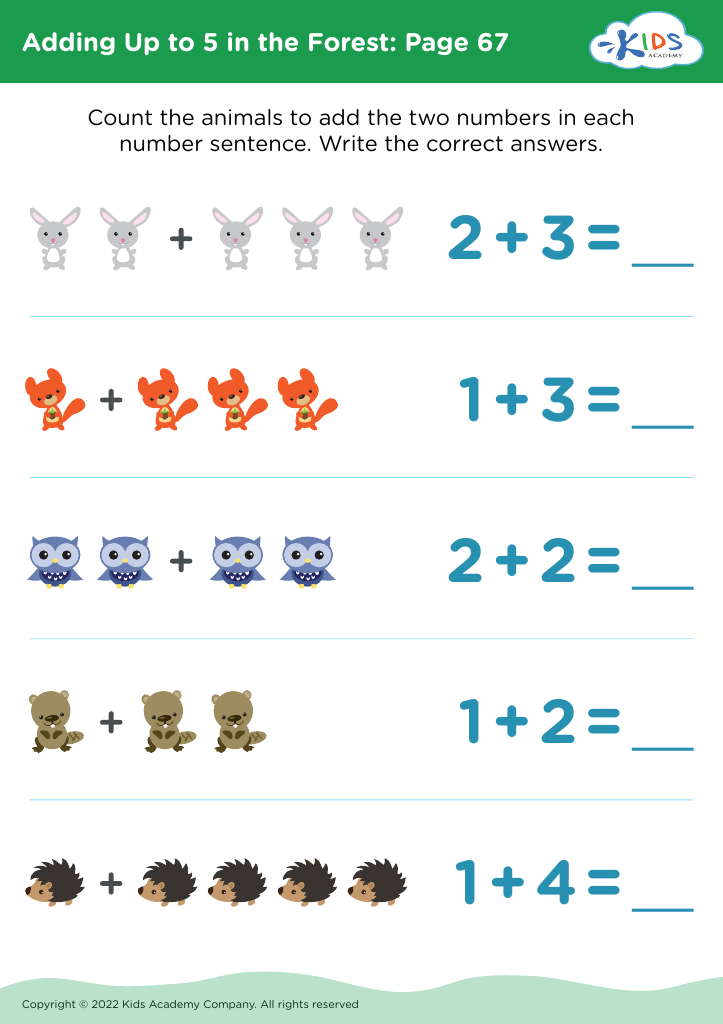
Adding Up to 5 in the Forest: Page 67
Worksheet
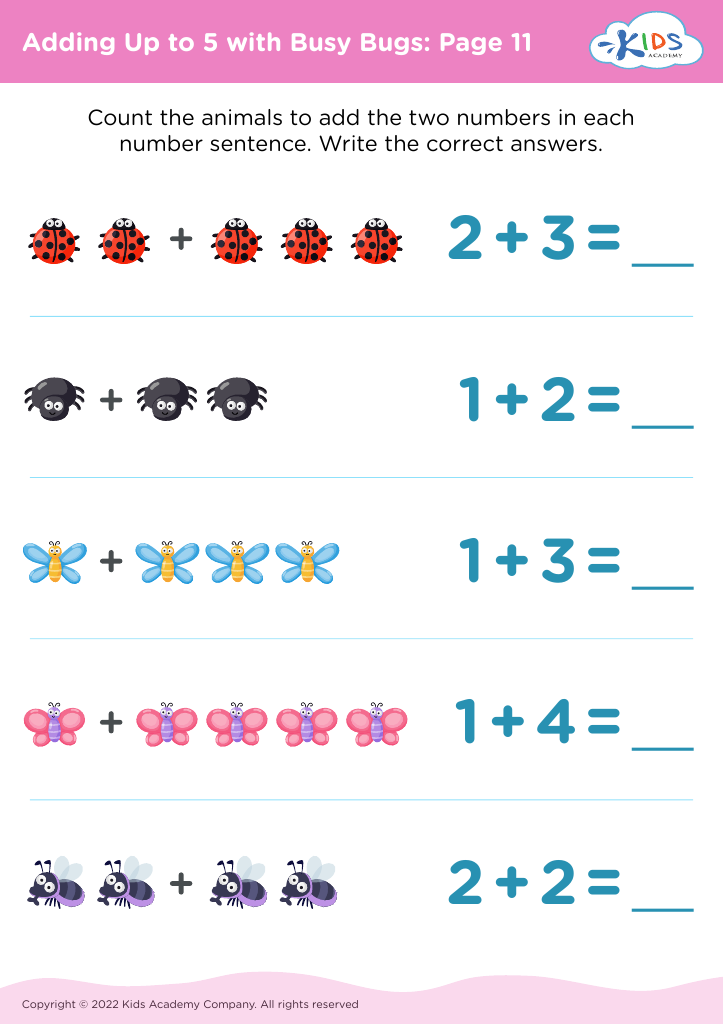
Adding Up to 5 with Busy Bugs: Page 11
Worksheet
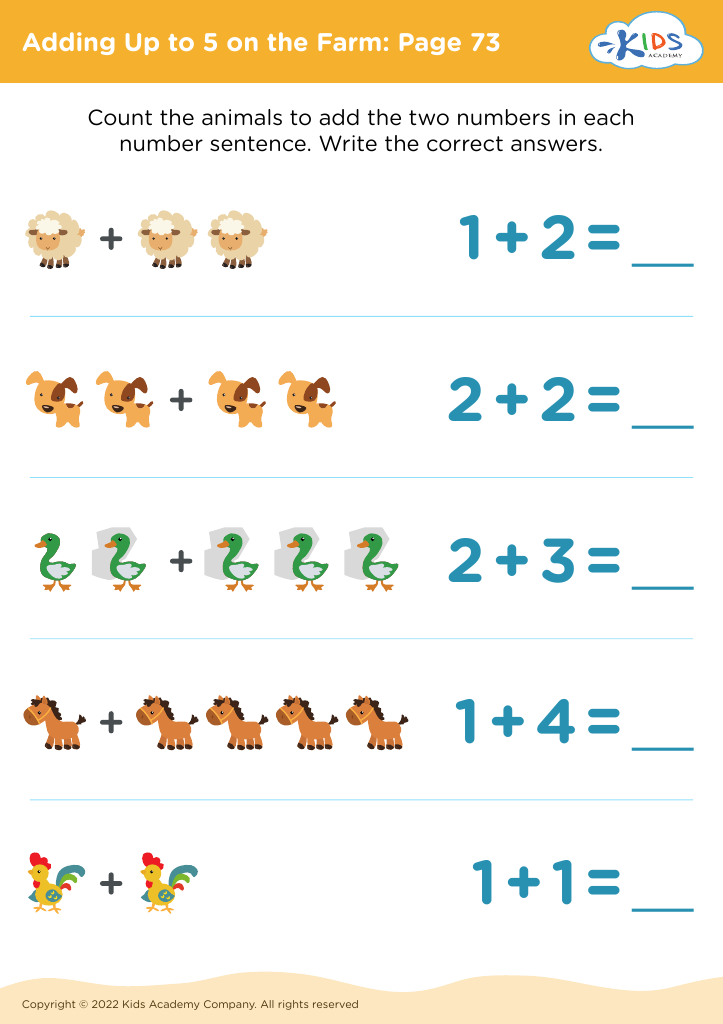
Adding Up to 5 on the Farm: Page 73
Worksheet
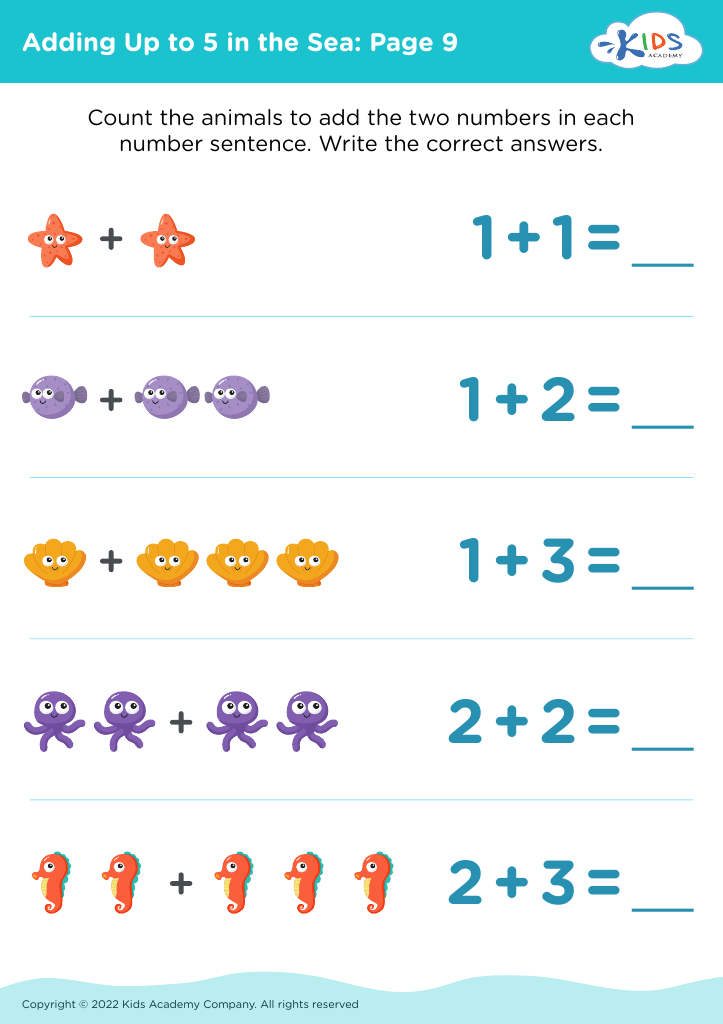
Adding Up to 5 in the Sea: Page 9

Adding Up to 5 in the Sea: Page 9

Adding Up to 5 in the Sea: Page 9
Worksheet
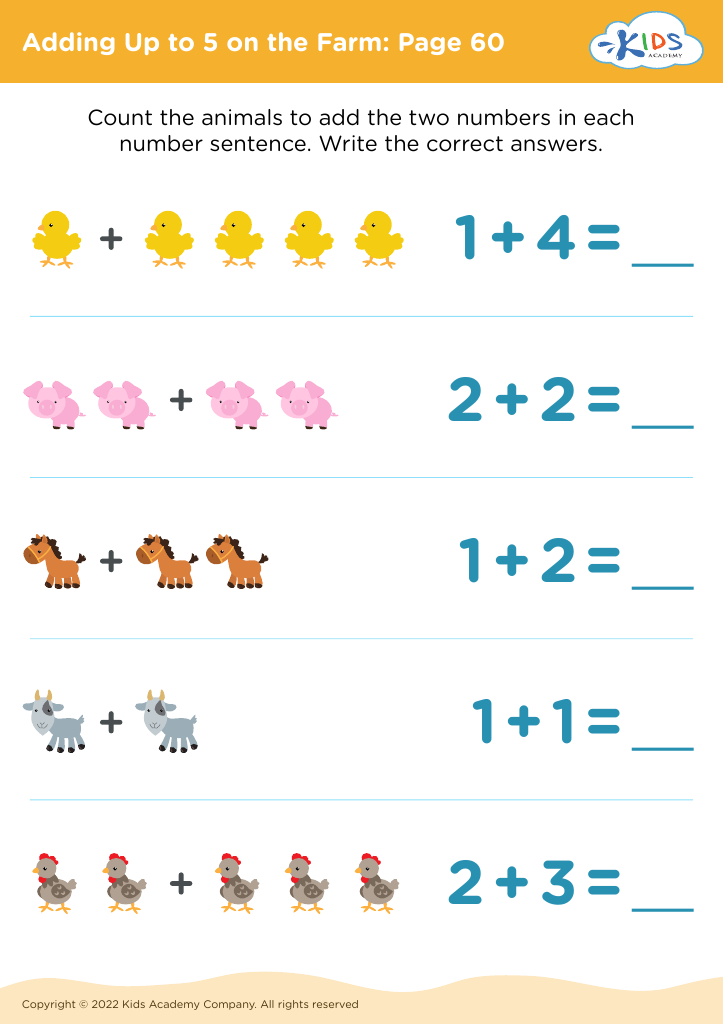
Adding Up to 5 on the Farm: Page 60
Worksheet
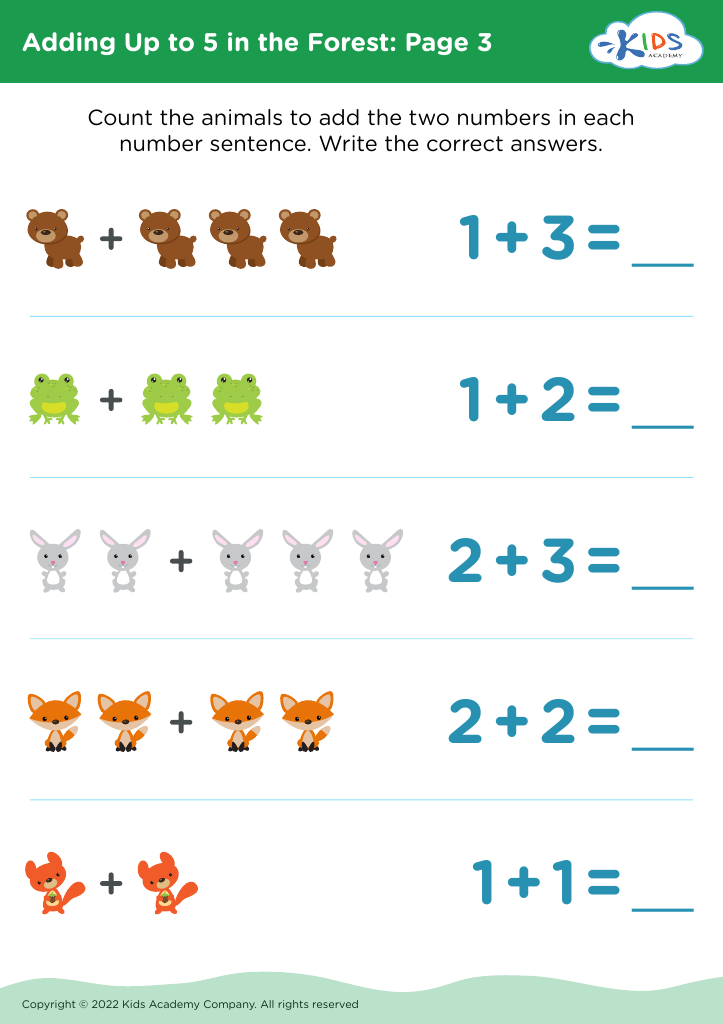
Adding Up to 5 in the Forest: Page 3
Worksheet
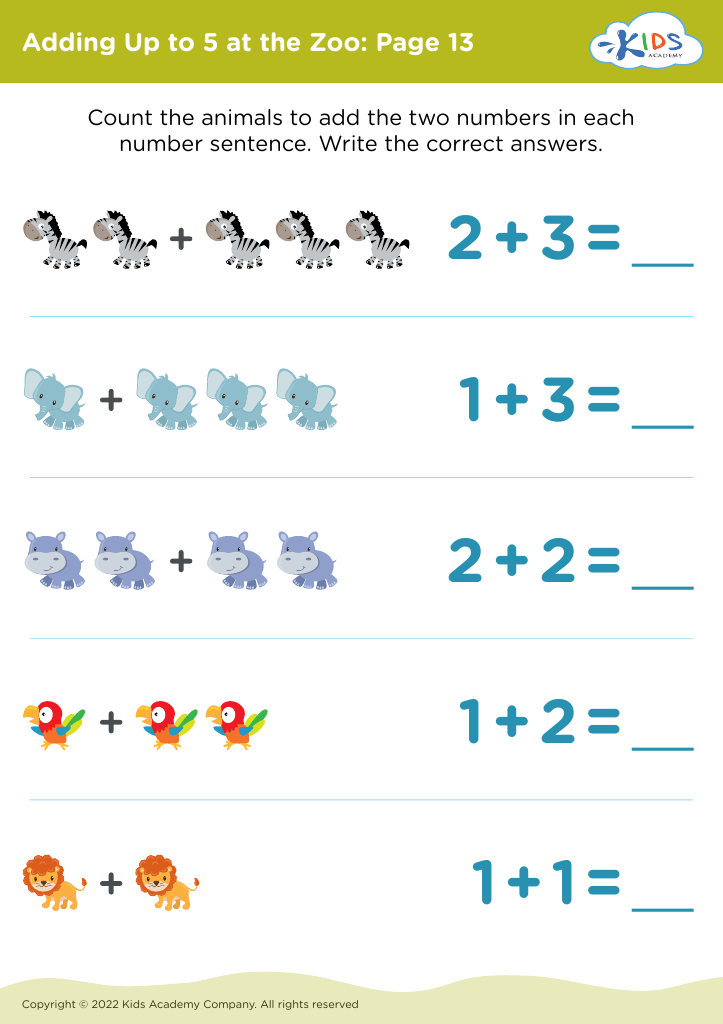
Adding Up to 5 at the Zoo: Page 13
Worksheet
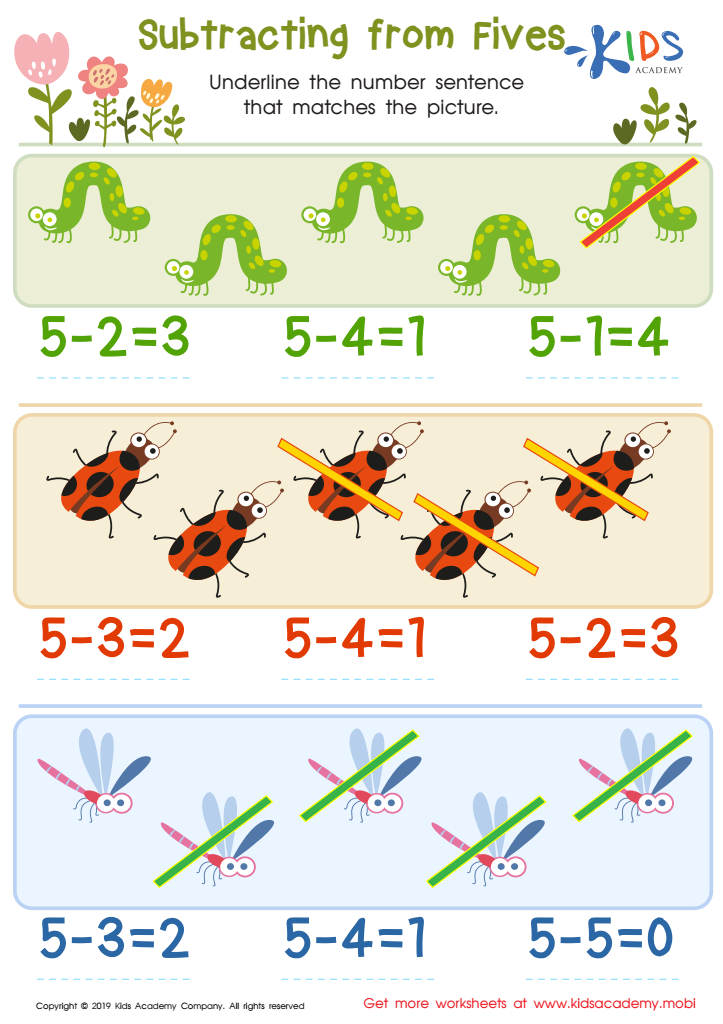
Subtracting From Fives Worksheet
Subtracting From Fives Worksheet
Help your kids practice subtraction with this fun worksheet! Have them identify the insects, then solve the equations and find the matching number sentence. It's a great way to give them an edge in math and enjoy doing it!
Subtracting From Fives Worksheet
Worksheet
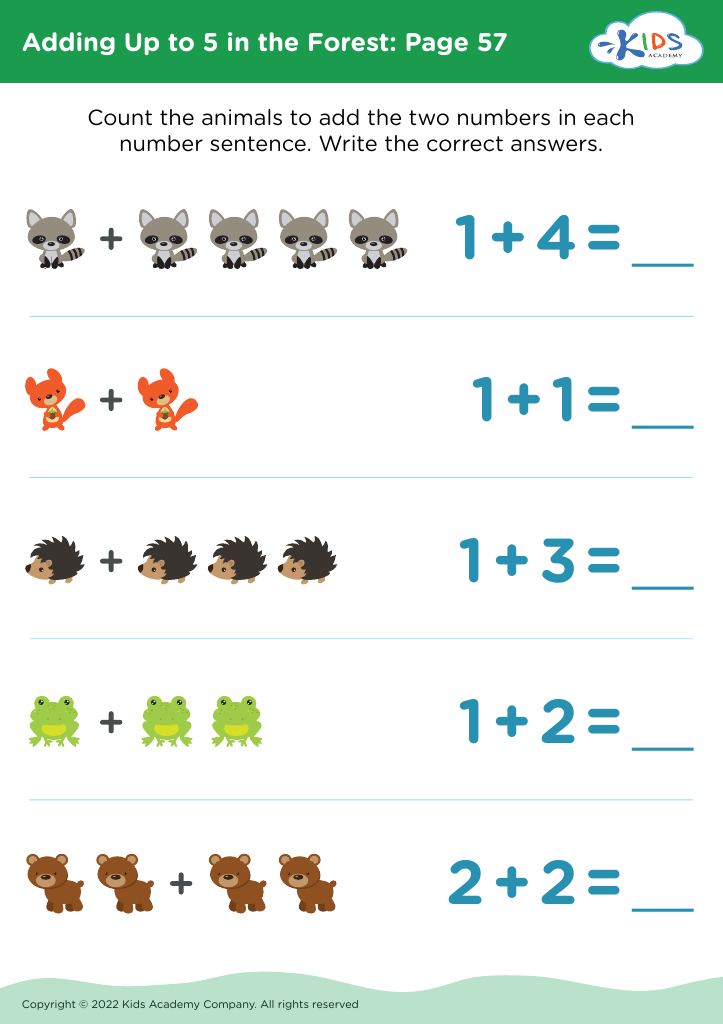
Adding Up to 5 in the Forest: Page 57
Worksheet
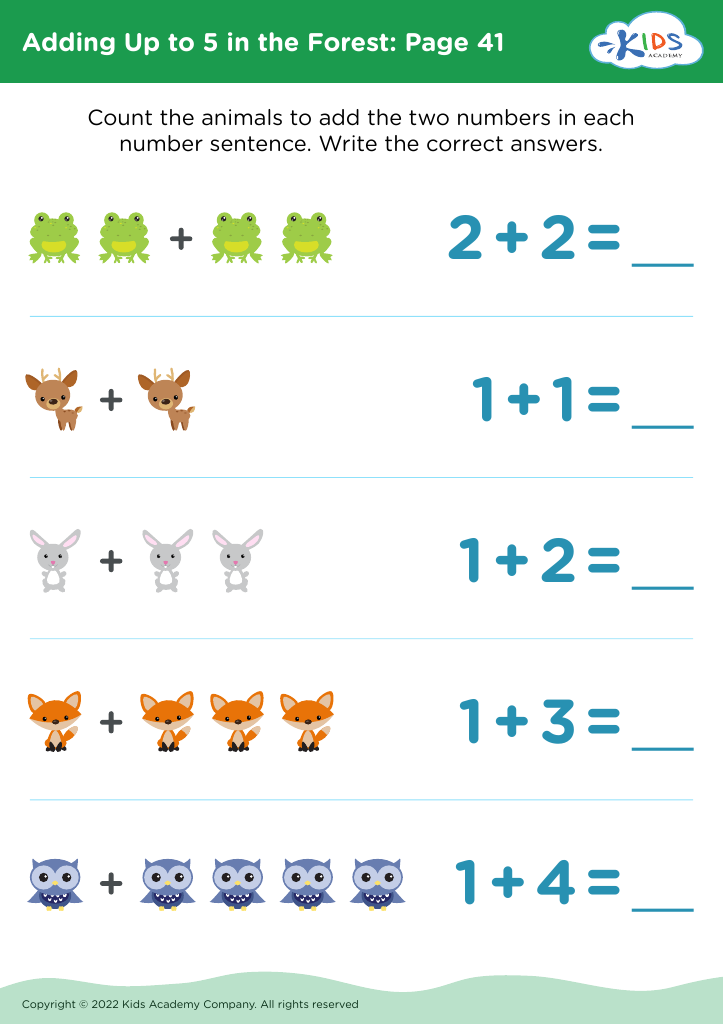
Adding Up to 5 in the Forest: Page 41
Worksheet
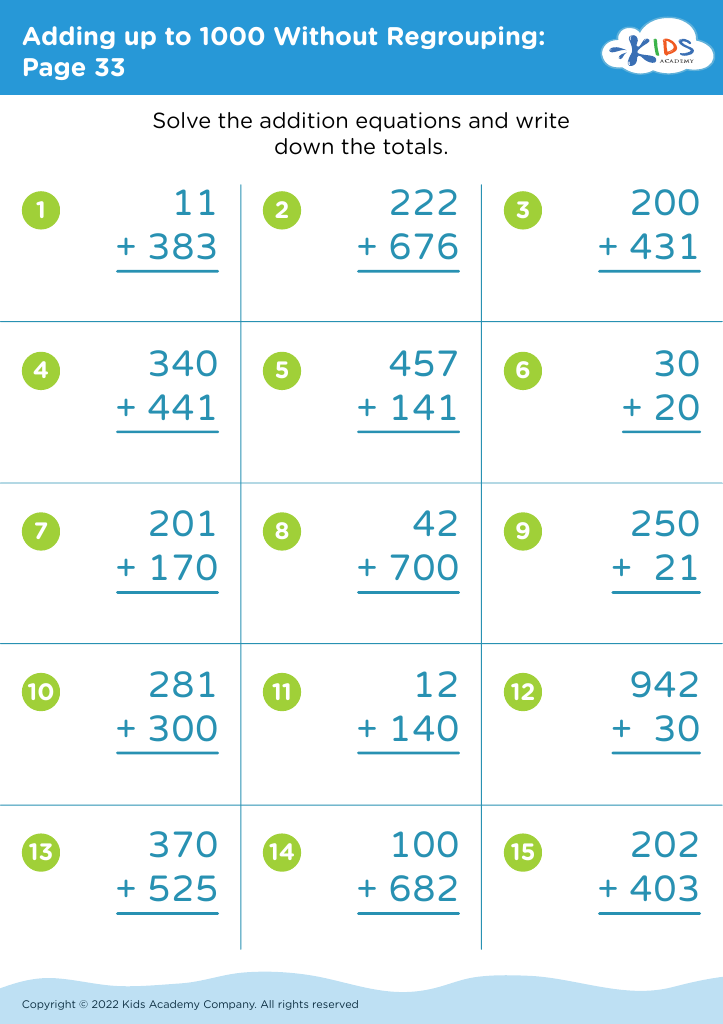
Adding up to 1000 Without Regrouping: Page 33
Worksheet
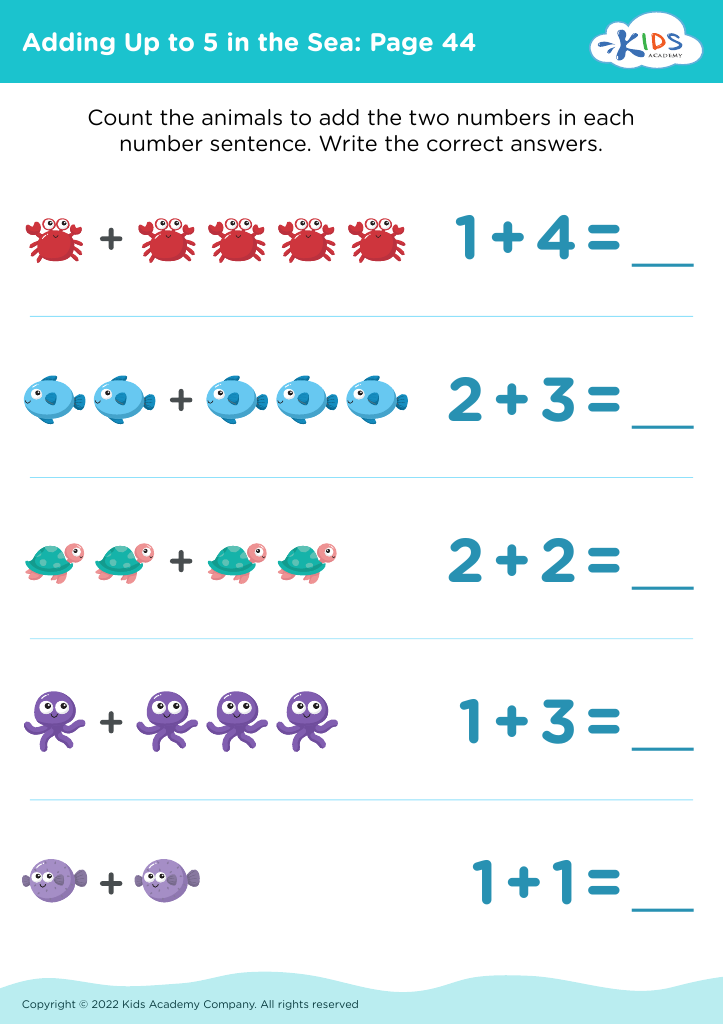
Adding Up to 5 in the Sea: Page 44
Worksheet
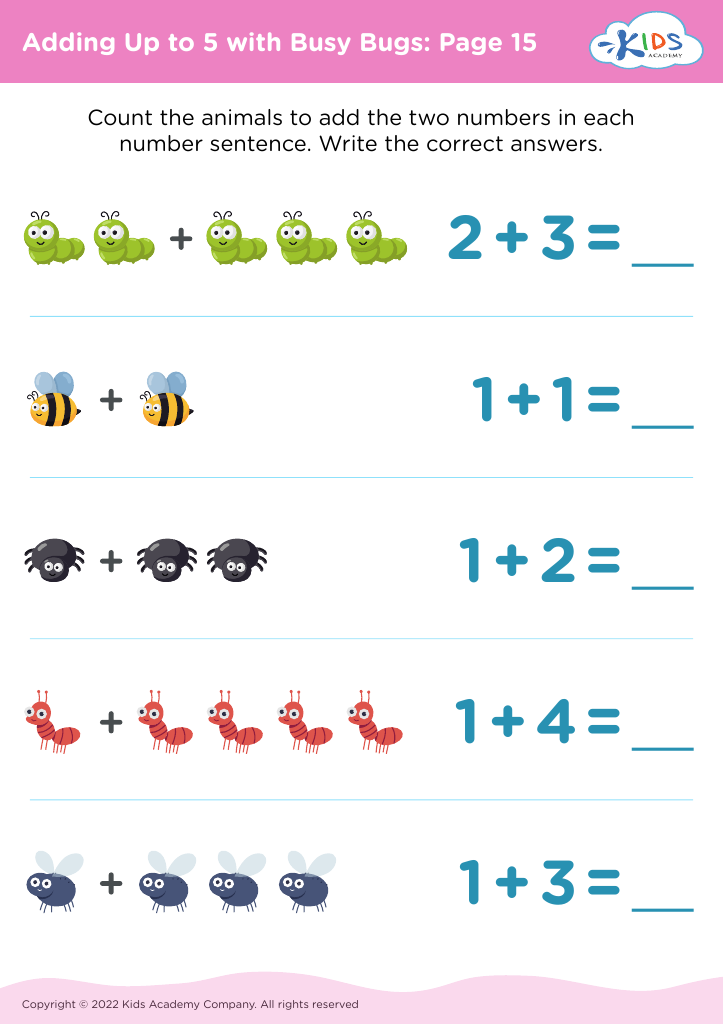
Adding Up to 5 with Busy Bugs: Page 15
Worksheet
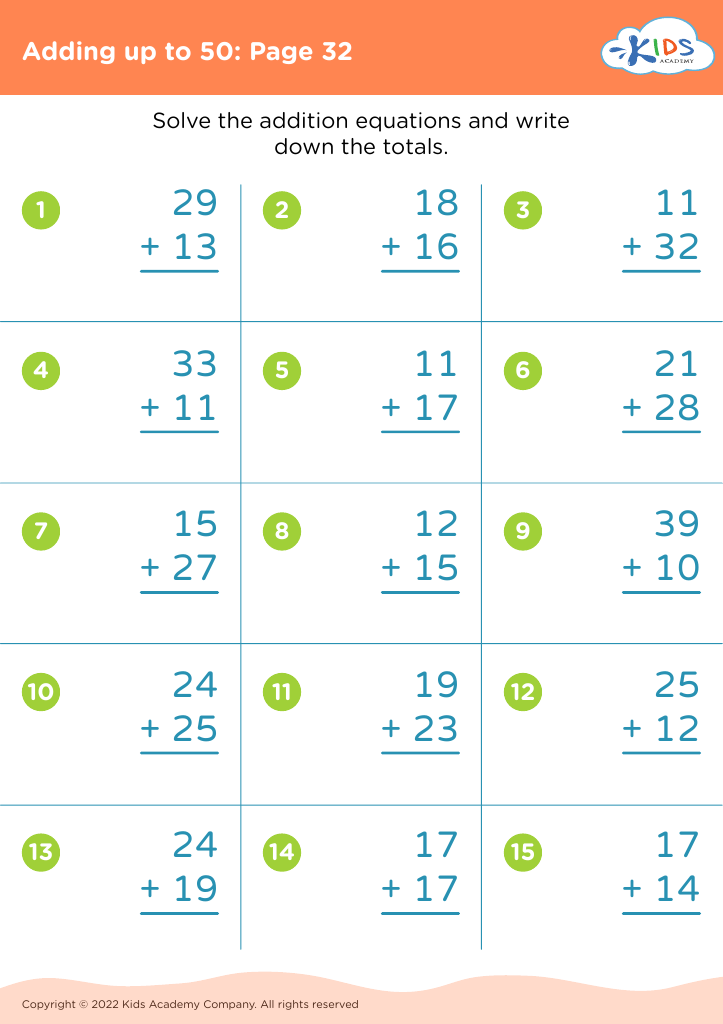
Adding up to 50: Page 32

Adding up to 50: Page 32

Adding up to 50: Page 32
Worksheet


... 23 24

Number recognition and foundational skills in addition and subtraction are crucial for children aged 3-9, setting the groundwork for their future math abilities. Early number recognition enables children to identify numbers and understand their value, fostering a strong mathematical foundation. This skill is essential as it leads to grasping basic arithmetic concepts, important for everyday tasks and critical thinking.

Parents and teachers play a pivotal role in nurturing these skills. By engaging children in activities that promote counting, recognizing numbers, and practicing simple addition and subtraction, they help build confidence and competence in mathematics. These early experiences not only aid in academic success, but they also encourage a positive attitude toward math, reducing anxiety as children progress to more complex topics.

Additionally, supporting number recognition and basic operations enhances cognitive development, problem-solving skills, and logical reasoning. Statistics show that early mastery of these concepts can predict later academic achievement. By prioritizing number recognition and foundational arithmetic through intentional teaching and playful interactions, parents and educators can lay the groundwork for lifelong learning, enabling children to navigate an increasingly numerical world with ease and confidence.