Numeracy development Addition & Subtraction Worksheets for Ages 3-9
3 filtered results
-
From - To
Welcome to our Numeracy Development Addition and Subtraction Worksheets for ages 3-9! Our thoughtfully designed worksheets provide the perfect resources to help young learners build a strong foundation in basic math skills. Tailored for various ages and skill levels, these engaging worksheets include fun, colorful illustrations and interactive activities that keep children motivated. While reinforcing their understanding of addition and subtraction, students will enhance their problem-solving abilities and boost confidence in their math skills. Ideal for both classroom and home use, these worksheets promise to make learning numbers an enjoyable adventure! Explore our comprehensive collection and watch your child's numeracy skills flourish.
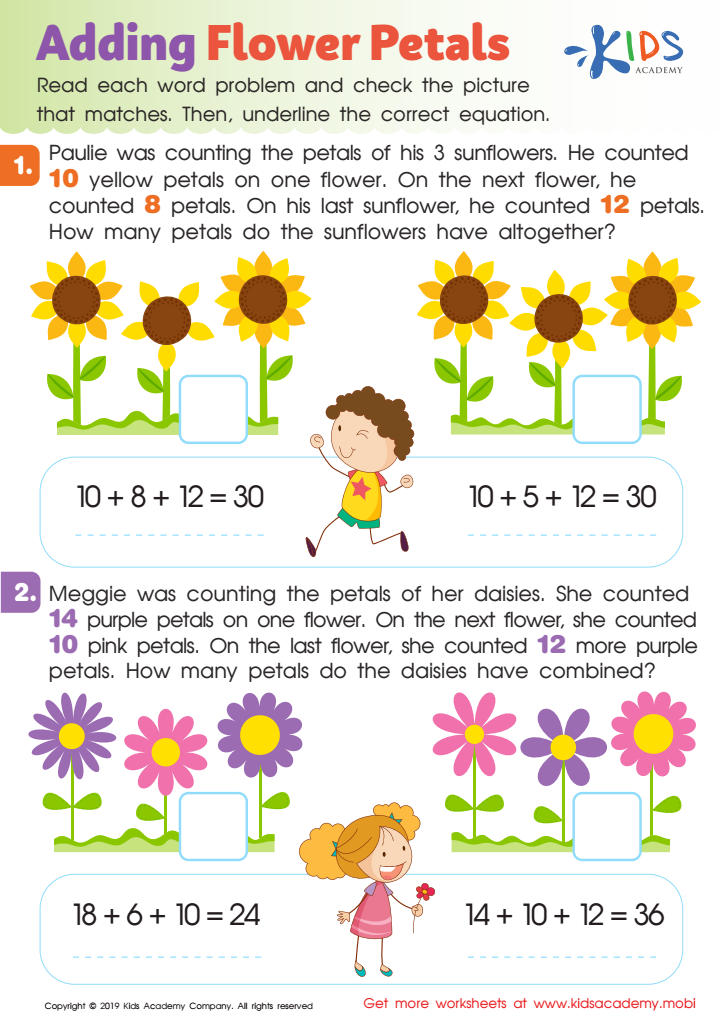
Adding Flower Petals Worksheet
 Assign to My Students








Numeracy development, particularly in addition and subtraction, is crucial for children aged 3-9 as it lays the foundation for future mathematical understanding. This stage of early education is vital because it shapes children's attitudes toward math, influencing their confidence and skills as they progress.
At this age, children develop essential cognitive abilities that allow them to understand the concepts of quantity, number relationships, and basic operations. By engaging in addition and subtraction, children learn problem-solving and critical thinking skills. These activities stimulate their brains, fostering logical reasoning and strategic thinking.
Moreover, numeracy skills are interconnected with daily life activities. When children grasp these fundamental concepts, they can make sense of money, time, and measurements, making them more capable and independent. Furthermore, early success in math correlates with academic achievement in later years, demonstrating that nurturing these skills can have long-term benefits.
In addition to academic advantages, a strong foundation in addition and subtraction helps cultivate positive mathematical experiences. This can reduce math anxiety and encourage a growth mindset. Consequently, educators and parents should prioritize numeracy development as a key component of holistic childhood education, ensuring that children thrive in both academic and personal realms.








