Pattern recognition Addition & Subtraction Worksheets for Ages 3-9
9 filtered results
-
From - To
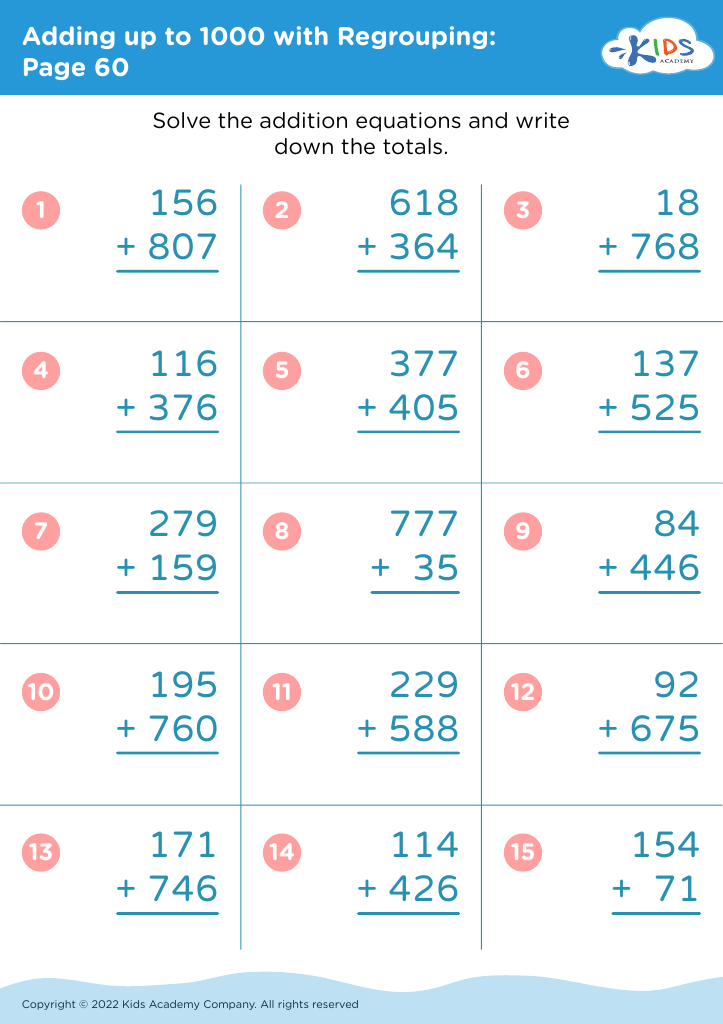
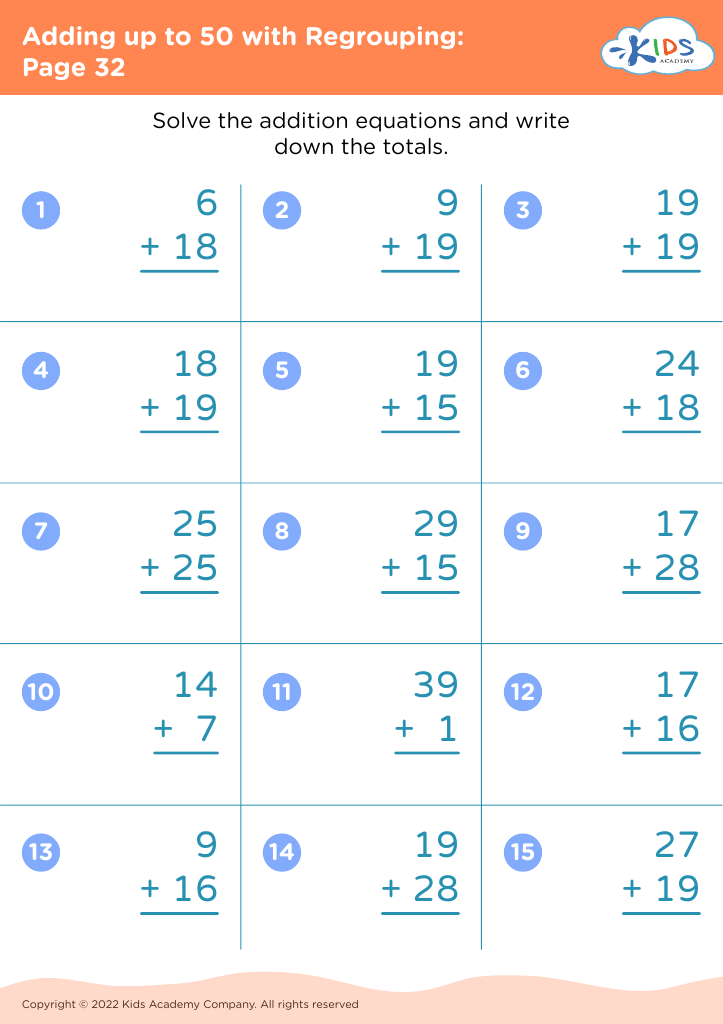
Boost your child's math skills with our engaging Pattern Recognition Addition & Subtraction Worksheets designed for ages 3-9. These unique resources, available at Kids Academy, combine fun patterns with essential addition and subtraction exercises to enhance learning. Each worksheet is crafted to develop your child's ability to recognize and complete patterns while performing fundamental math operations. Activities cater to various skill levels, ensuring progress and confidence. Start building a solid math foundation and pattern recognition today by exploring our comprehensive collection aimed at fostering critical thinking and problem-solving abilities in young learners.
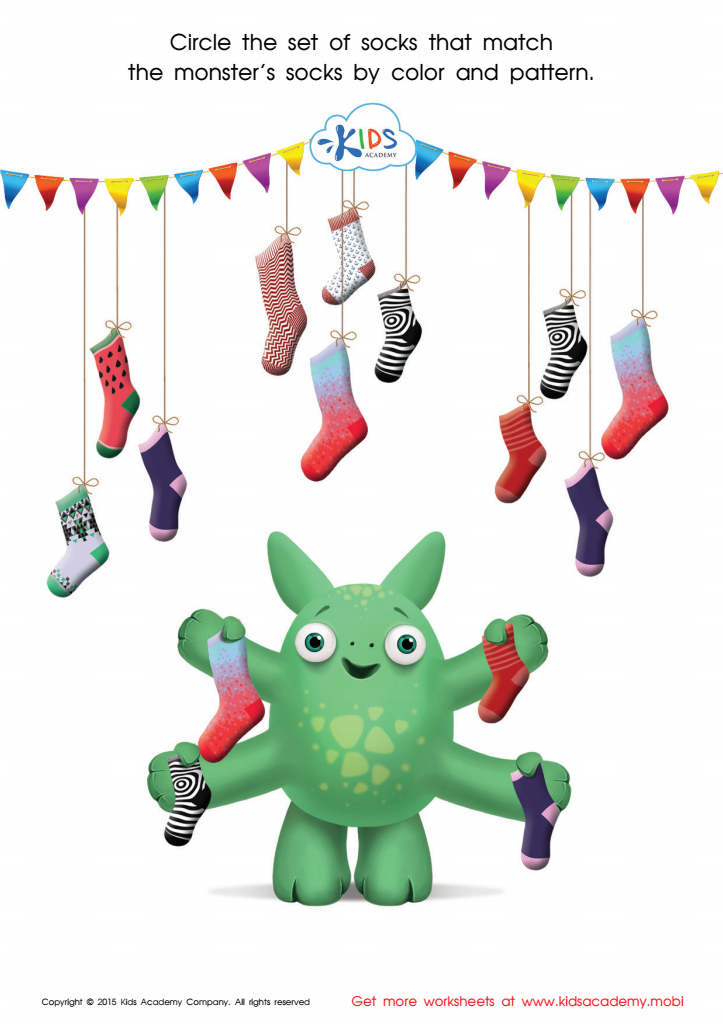
Sort the Monster's Socks Worksheet
 Assign to My Students
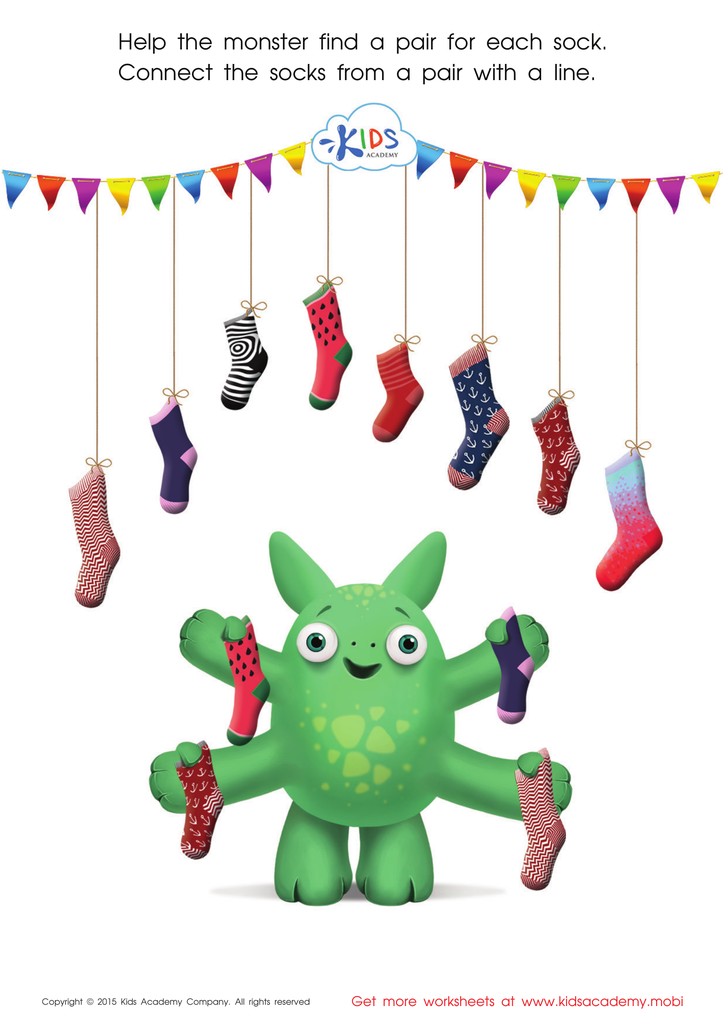
Math Matching Game: Monsterв's Socks Worksheet
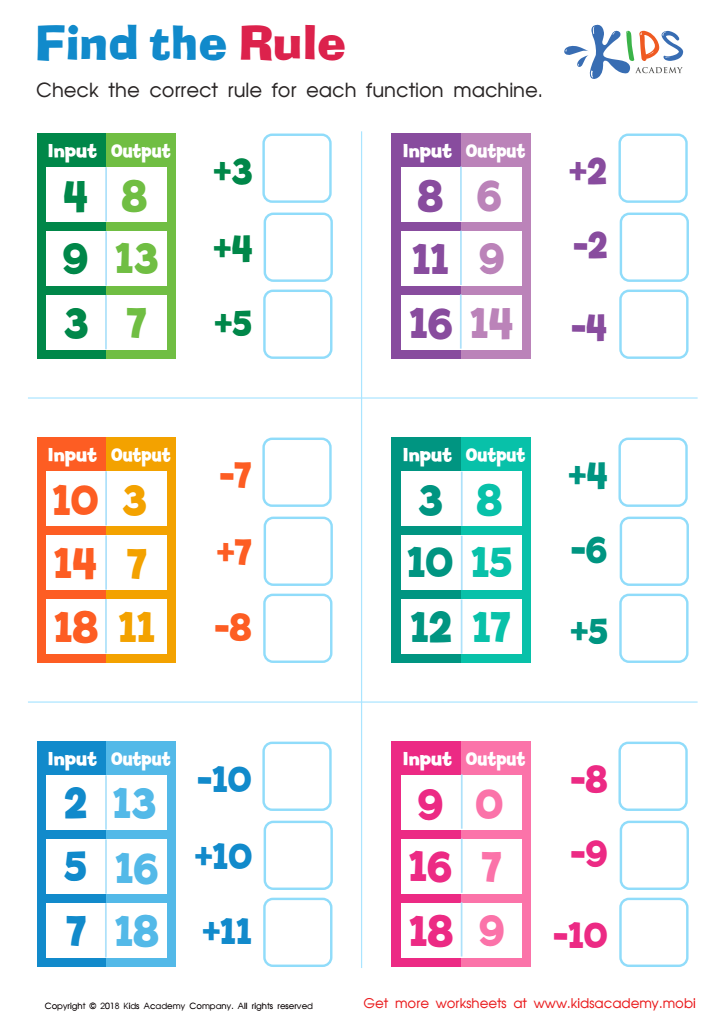
Find the Rule Worksheet
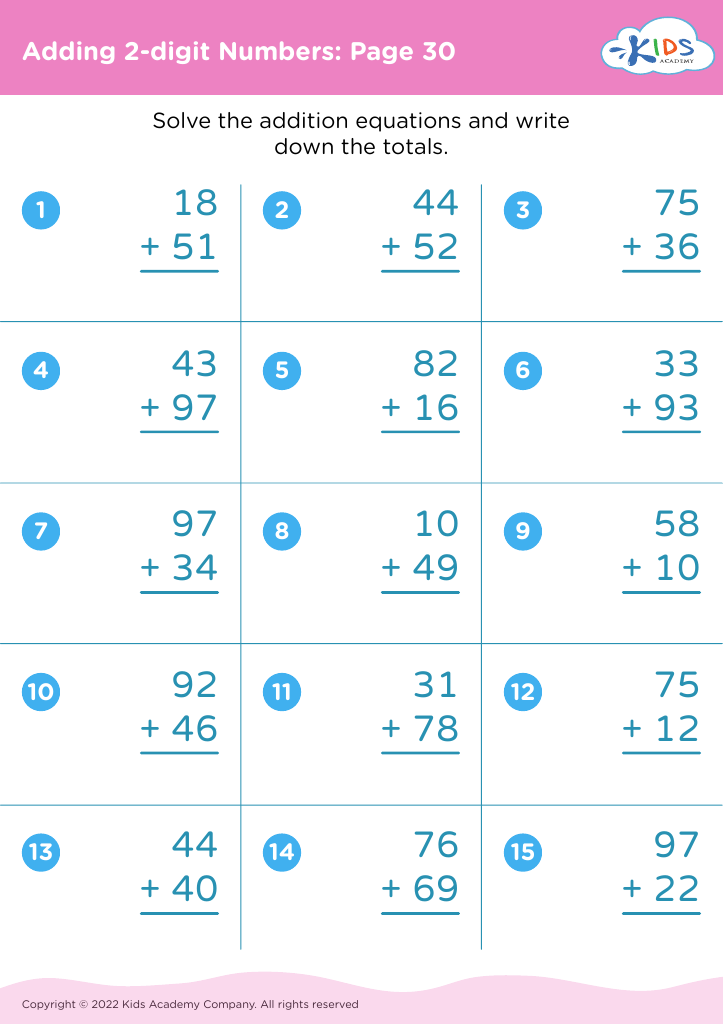
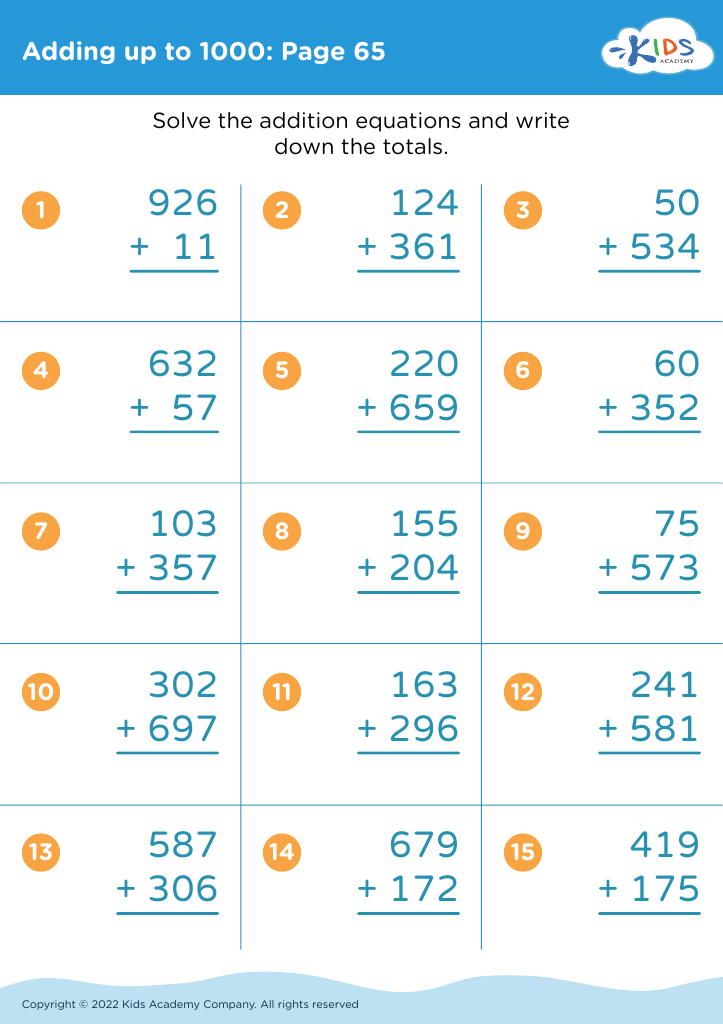
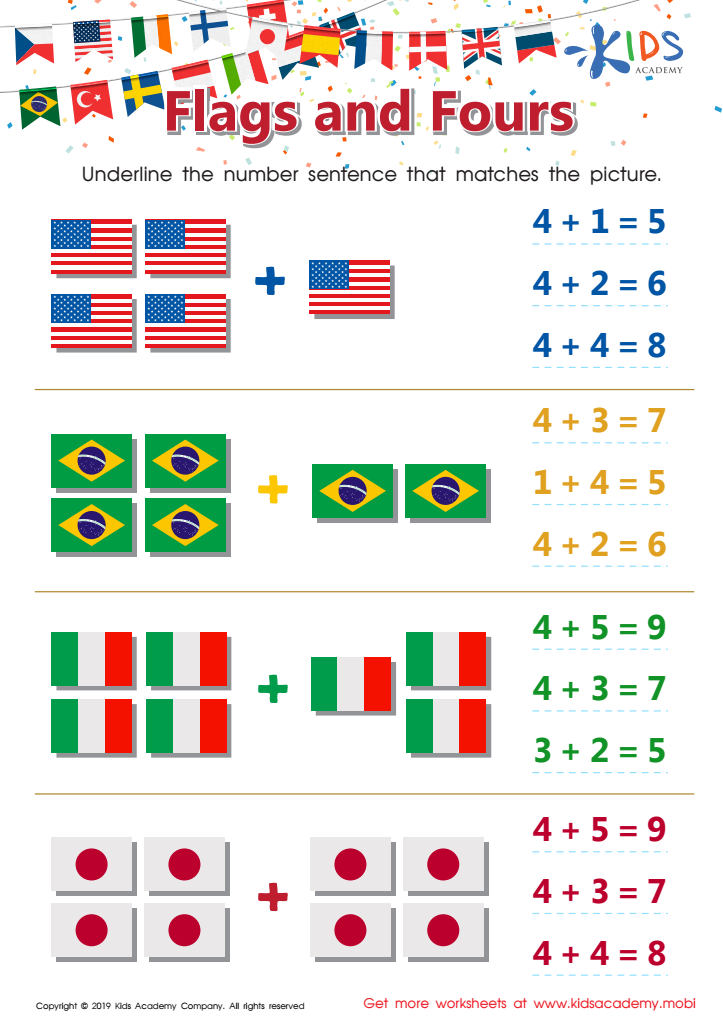
Flags and Fours Worksheet
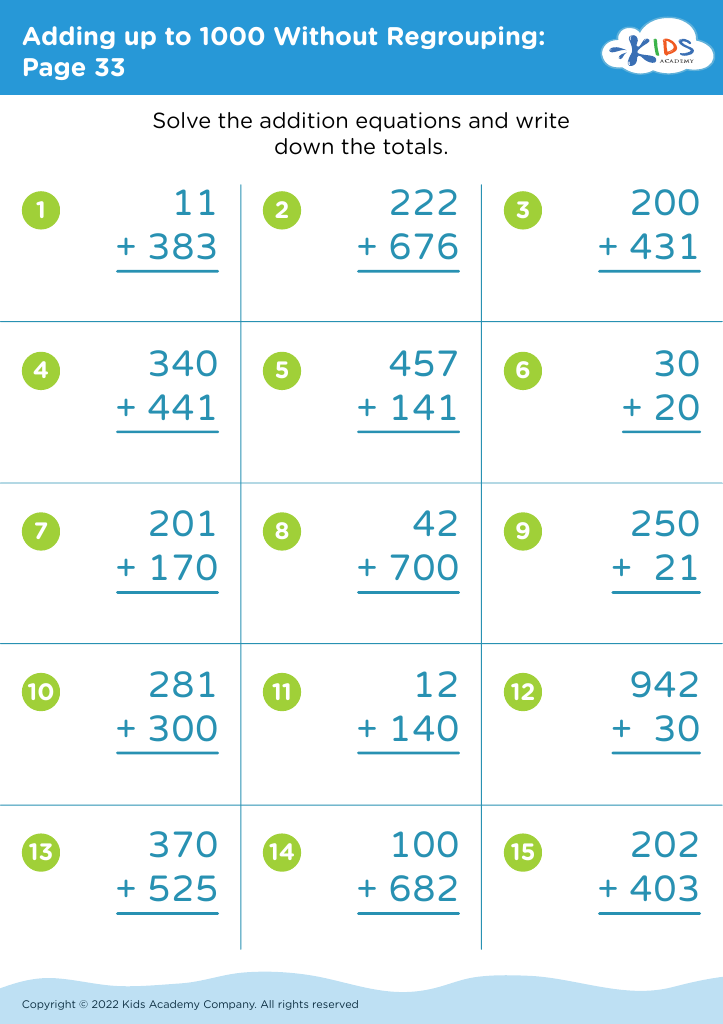








Pattern recognition, addition, and subtraction are foundational skills that are crucial for children ages 3-9. During these formative years, the brain is rapidly developing, making it the optimal time to introduce and strengthen mathematical concepts.
Pattern recognition is the bedrock of mathematical thinking. It helps children understand and predict sequences, which is not only essential in math but also in daily life, such as predicting the order of seasons or recognizing traffic light patterns. Early mastery of pattern recognition boosts problem-solving skills and analytical thinking, creating a strong base for more complex concepts.
Addition and subtraction are fundamental arithmetic operations that form the core of almost all future math learning. When children grasp these concepts early on, they build the confidence needed to tackle more challenging mathematical problems. These skills are also practical and applicable in everyday situations, like counting objects, determining quantities, and understanding concepts of more and less.
Furthermore, developing these skills enhances cognitive abilities such as memory, attention, and critical thinking. For teachers and parents, incorporating playful and engaging activities around pattern recognition, addition, and subtraction can make learning enjoyable and less intimidating, thereby instilling a lifelong love for mathematics.
In summary, caring about these skills not only prepares children academically but also equips them with essential tools for day-to-day problem solving and logical reasoning.








