Introduce your child to the exciting world of fractions with our Simplifying Fractions Addition & Subtraction Worksheets for Ages 3-9. Designed to make learning fun and engaging, these printable worksheets help young learners effortlessly grasp the essentials of adding and subtracting fractions by simplifying them. Whether your child is just starting to learn about fractions or needs extra practice, these worksheets provide an age-appropriate approach tailored to their developmental level. Packed with colorful visuals, interactive exercises, and step-by-step instructions, our resources ensure kids build a strong mathematical foundation with ease and confidence. Join us in making math enjoyable!
Check out this FREE Trial Lesson on Addition & Subtraction for age 3-9!

D

Favorites
With answer key
Interactive
  • 3-9
  • Simplifying Fractions
  • Addition & Subtraction
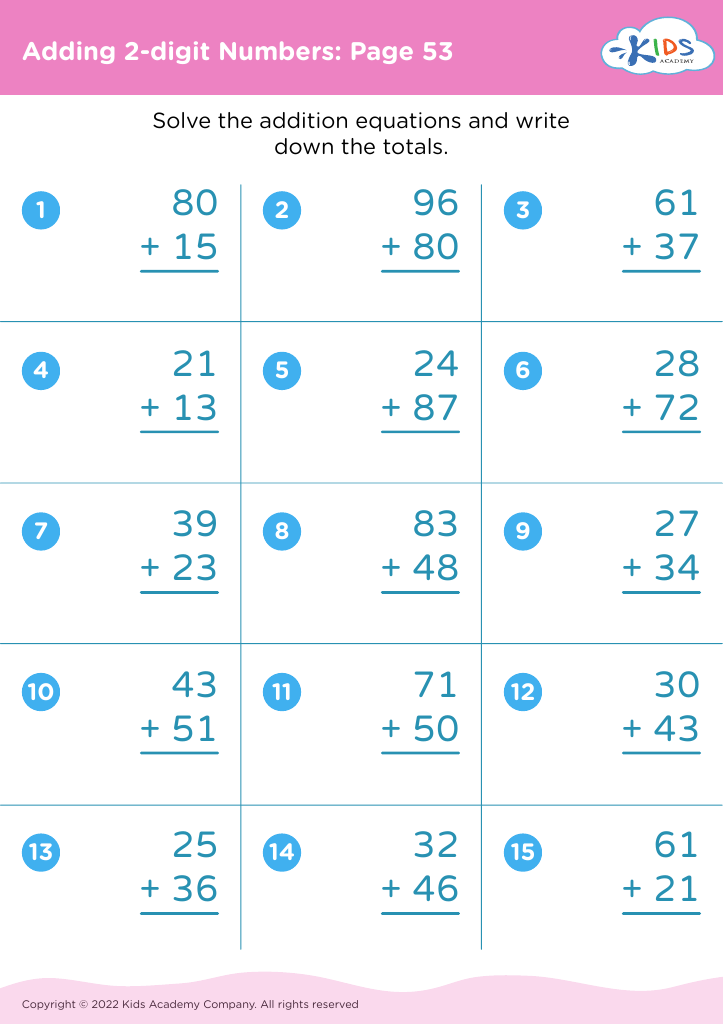
Adding 2-digit Numbers: Page 53

Adding 2-digit Numbers: Page 53

Adding 2-digit Numbers: Page 53
Worksheet
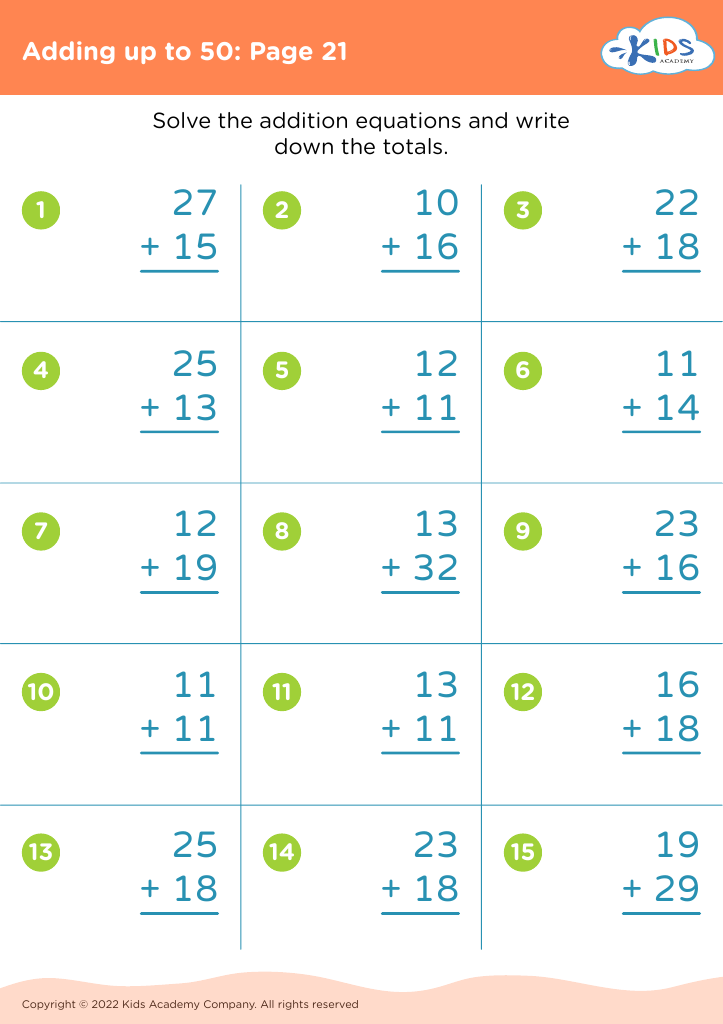
Adding up to 50: Page 21

Adding up to 50: Page 21

Adding up to 50: Page 21
Worksheet
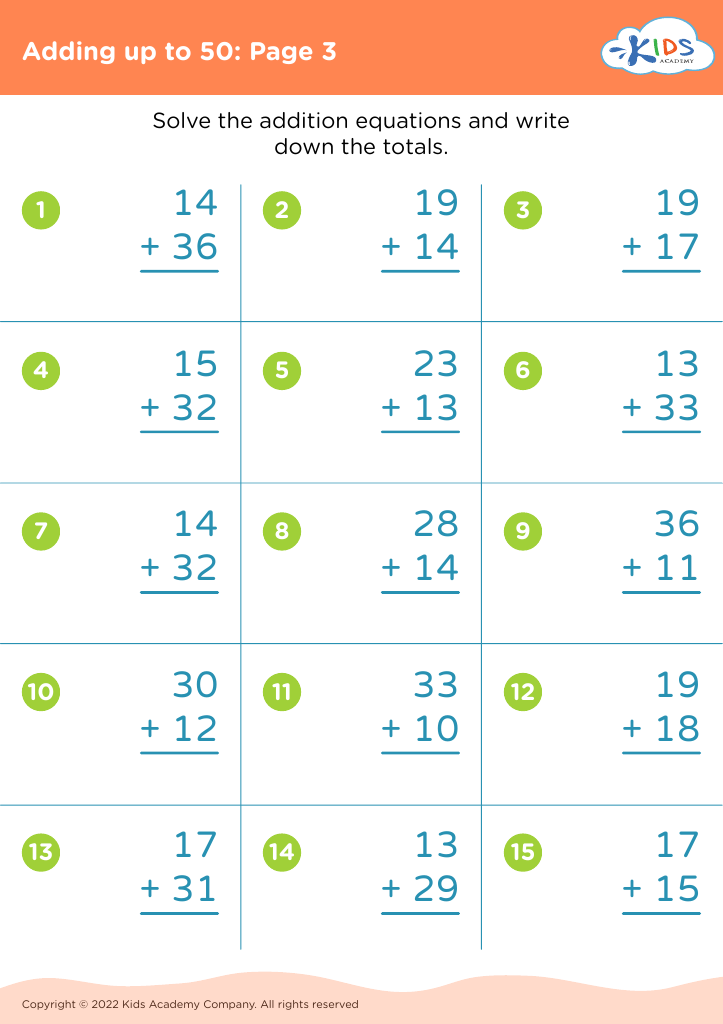
Adding up to 50: Page 3

Adding up to 50: Page 3

Adding up to 50: Page 3
Worksheet
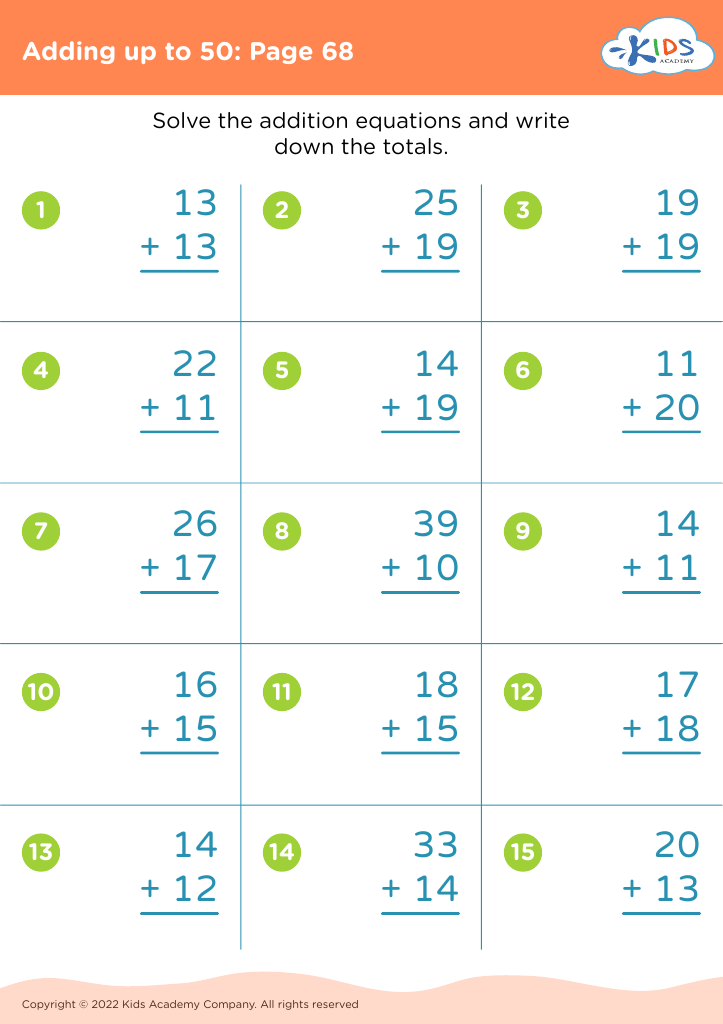
Adding up to 50: Page 68

Adding up to 50: Page 68

Adding up to 50: Page 68
Worksheet
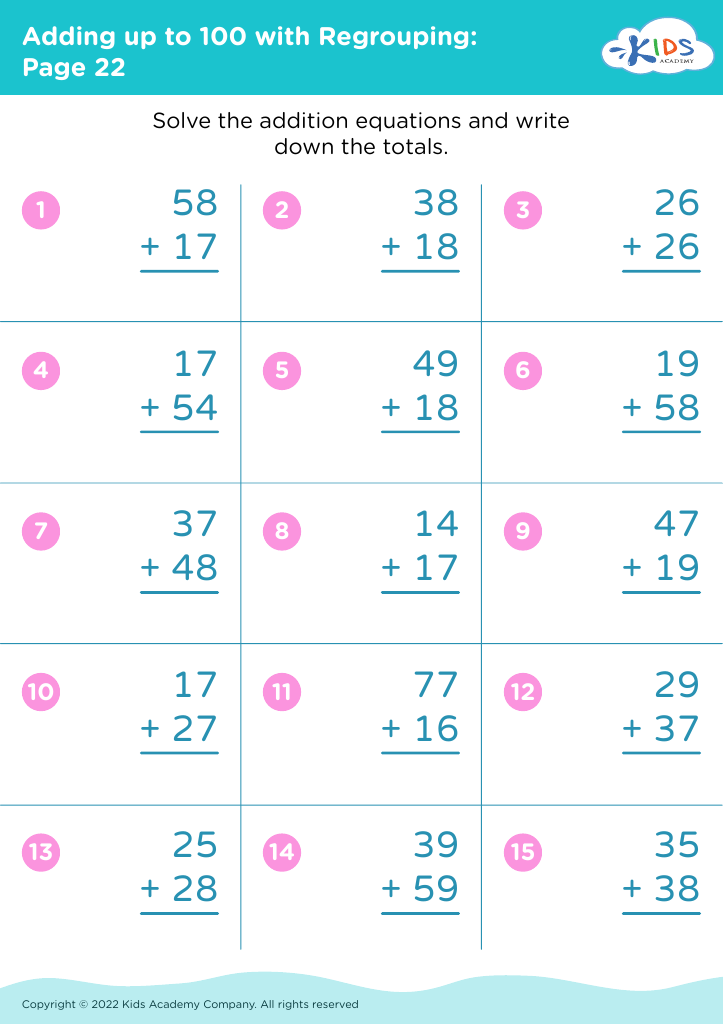
Adding up to 100 with Regrouping: Page 22
Worksheet
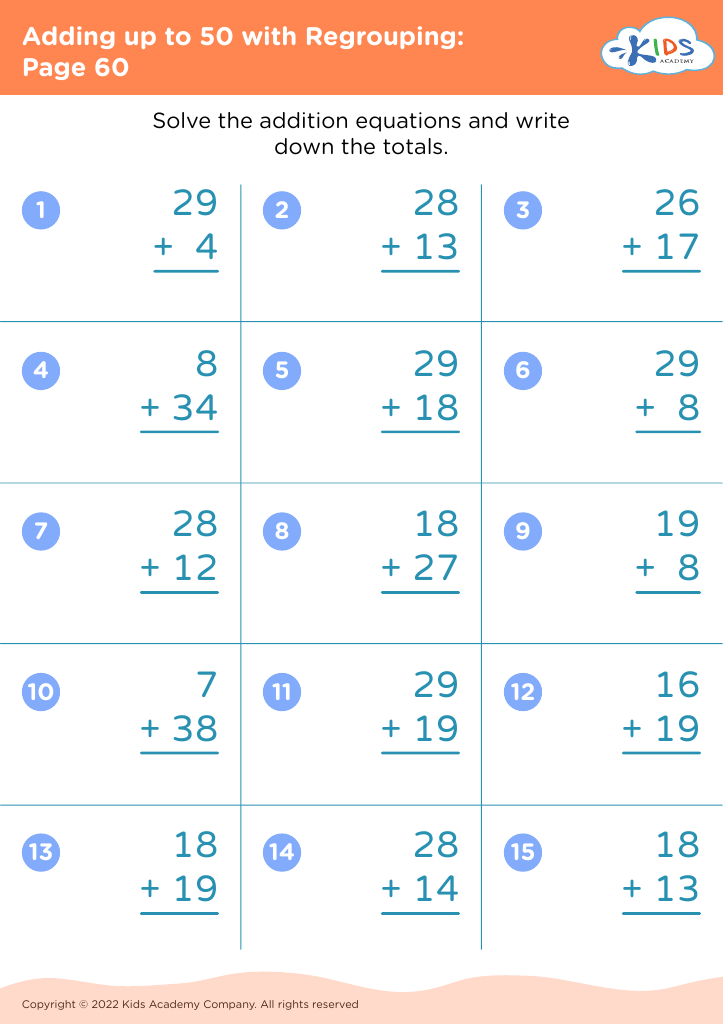
Adding up to 50 with Regrouping: Page 60
Worksheet
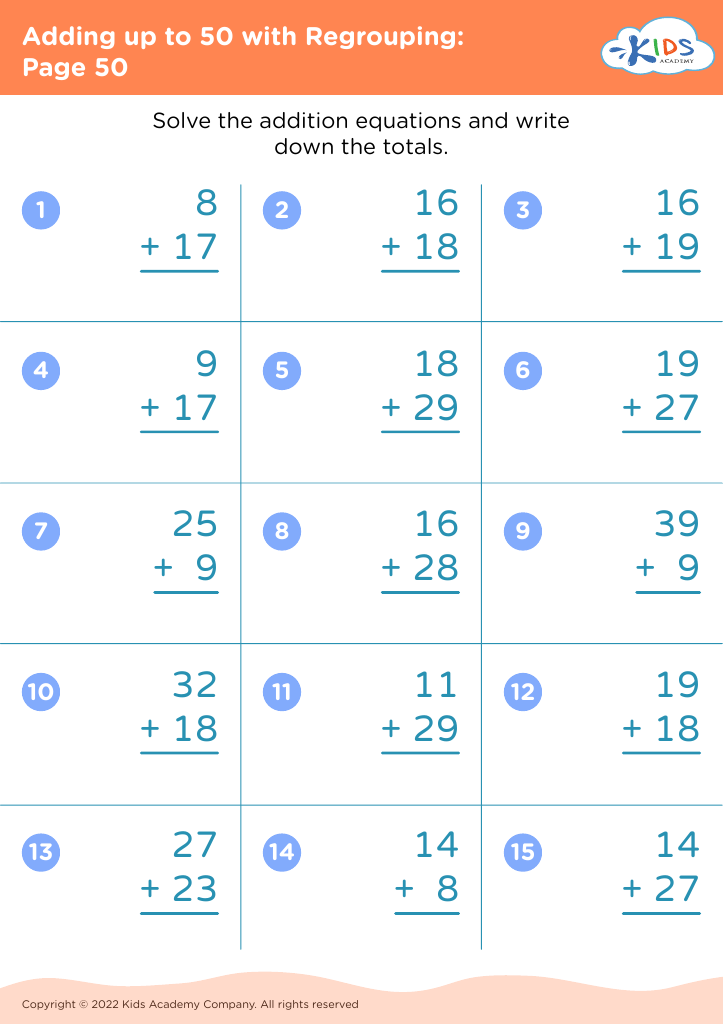
Adding up to 50 with Regrouping: Page 50
Worksheet
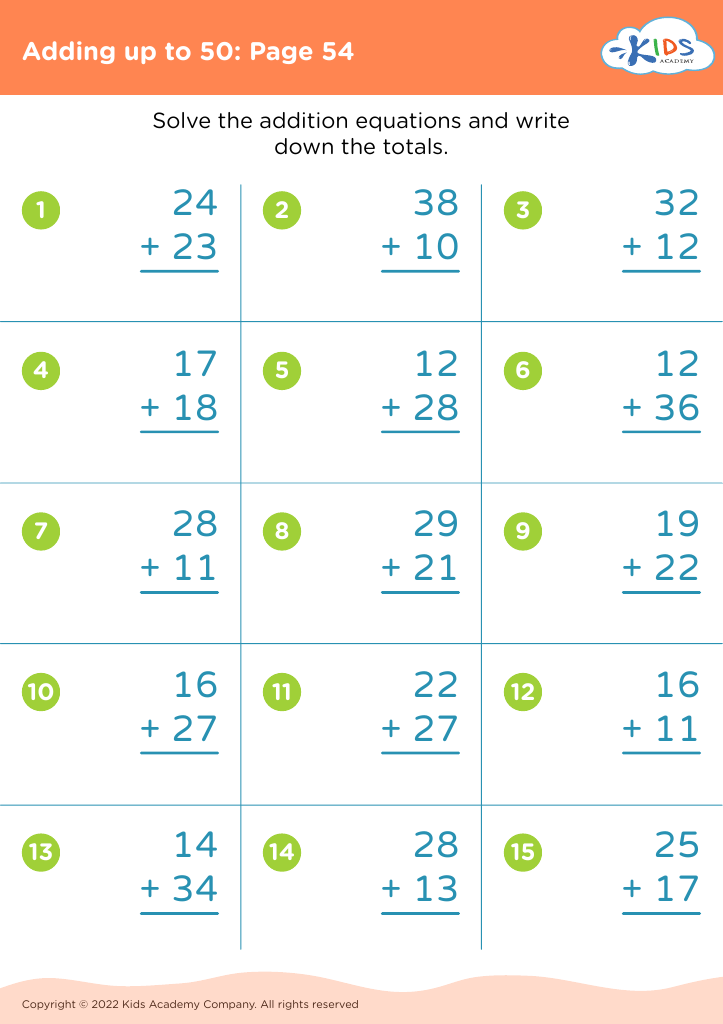
Adding up to 50: Page 54

Adding up to 50: Page 54

Adding up to 50: Page 54
Worksheet
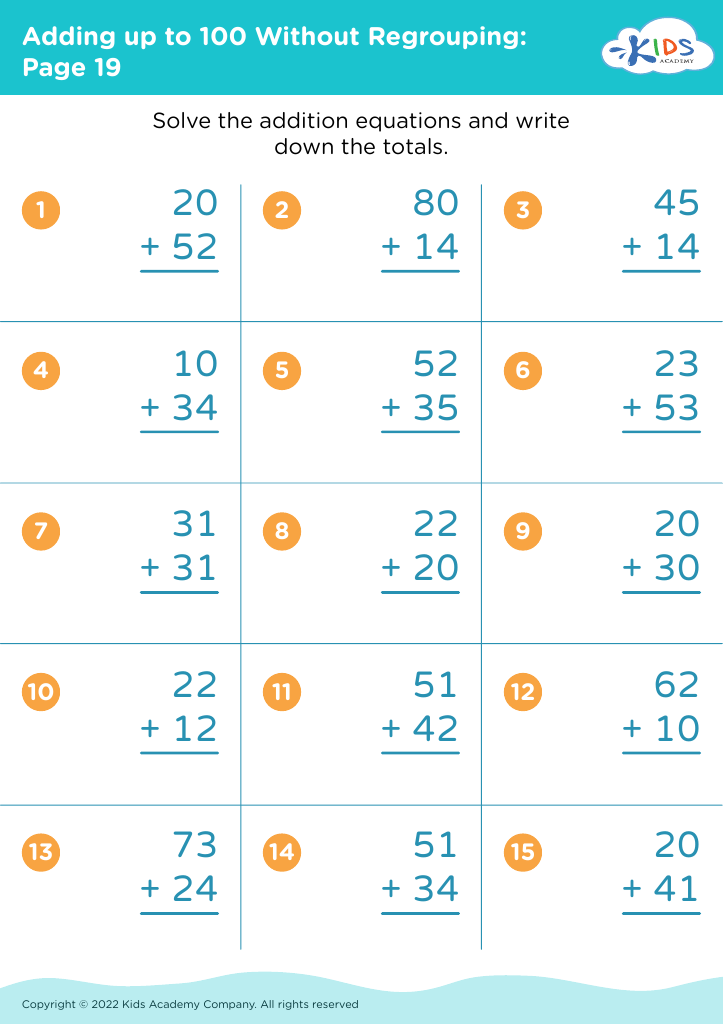
Adding up to 100 Without Regrouping: Page 19
Worksheet
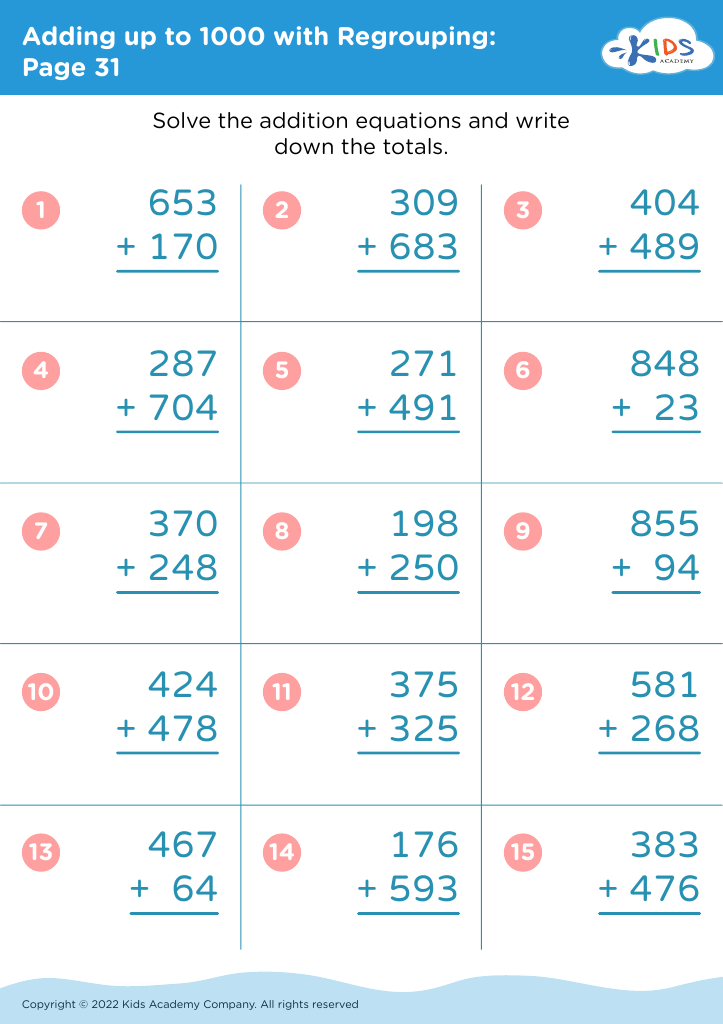
Adding up to 1000 with Regrouping: Page 31
Worksheet
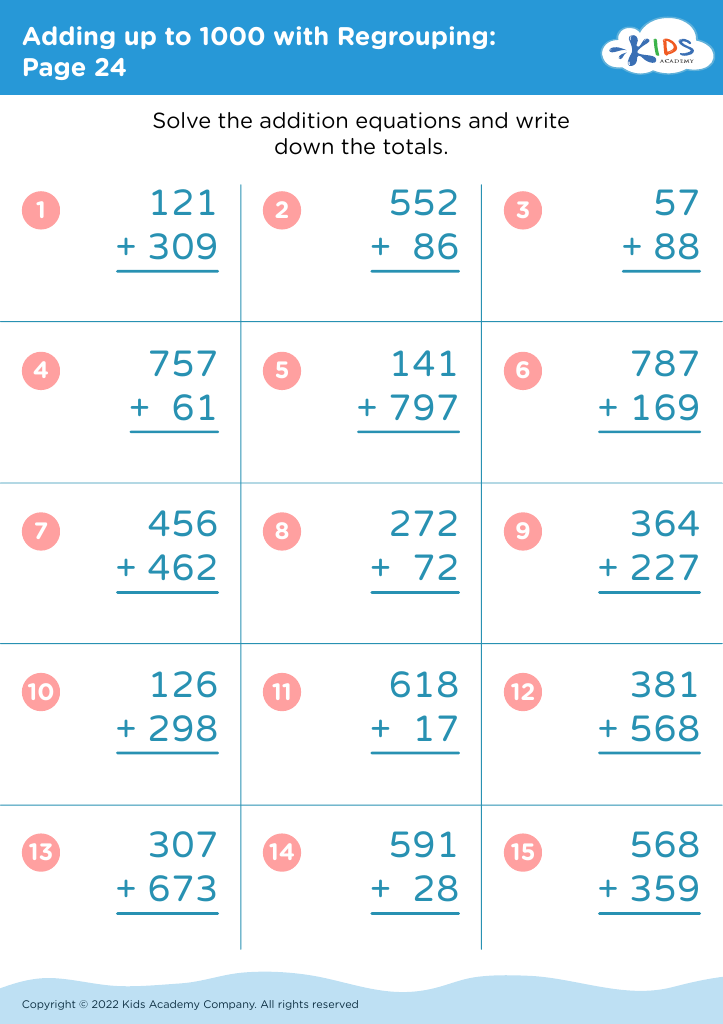
Adding up to 1000 with Regrouping: Page 24
Worksheet
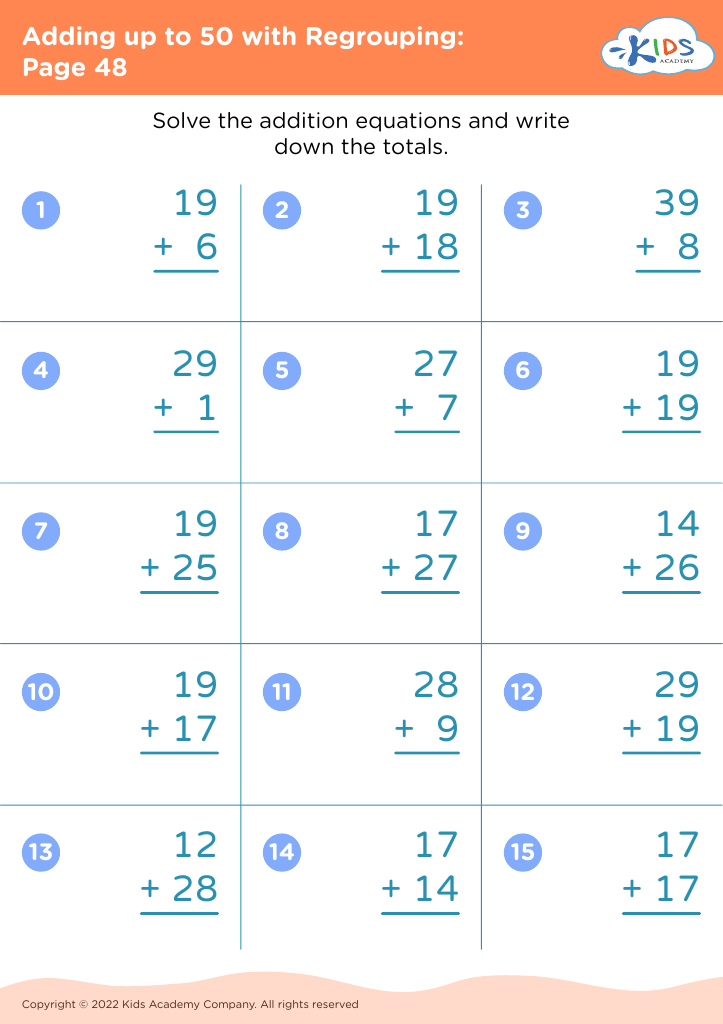
Adding up to 50 with Regrouping: Page 48
Worksheet
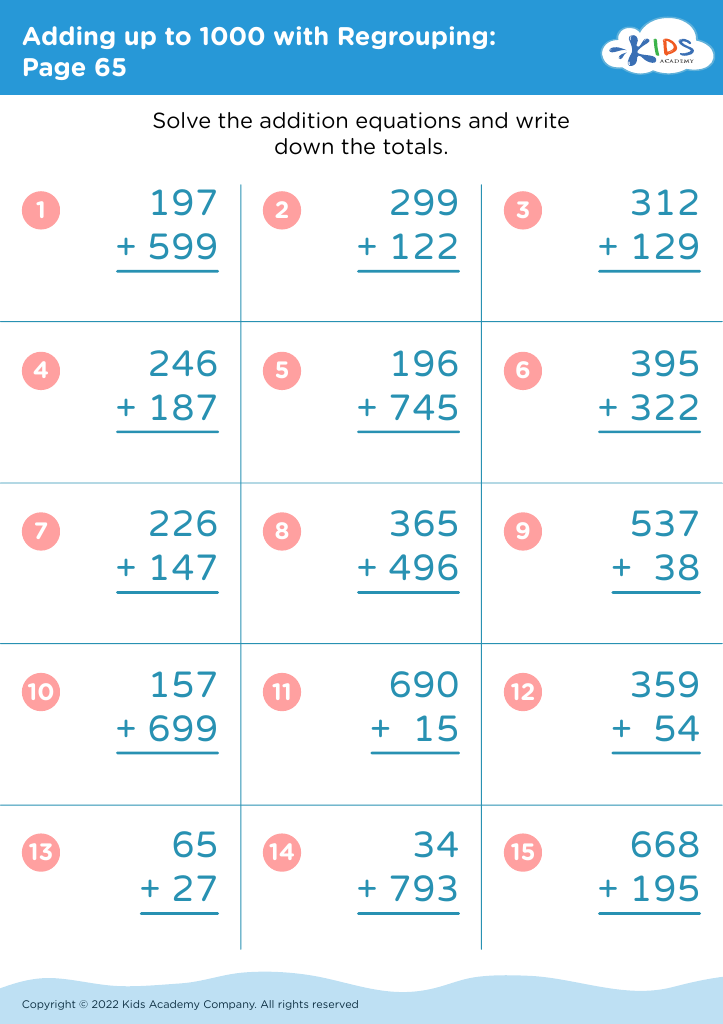
Adding up to 1000 with Regrouping: Page 65
Worksheet
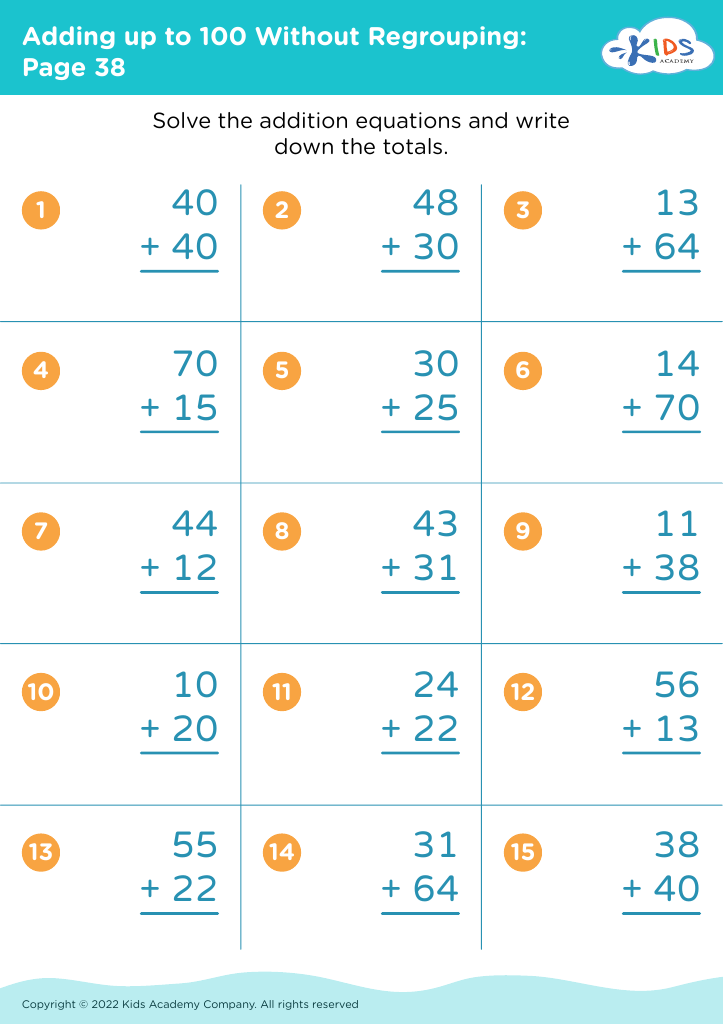
Adding up to 100 Without Regrouping: Page 38
Worksheet
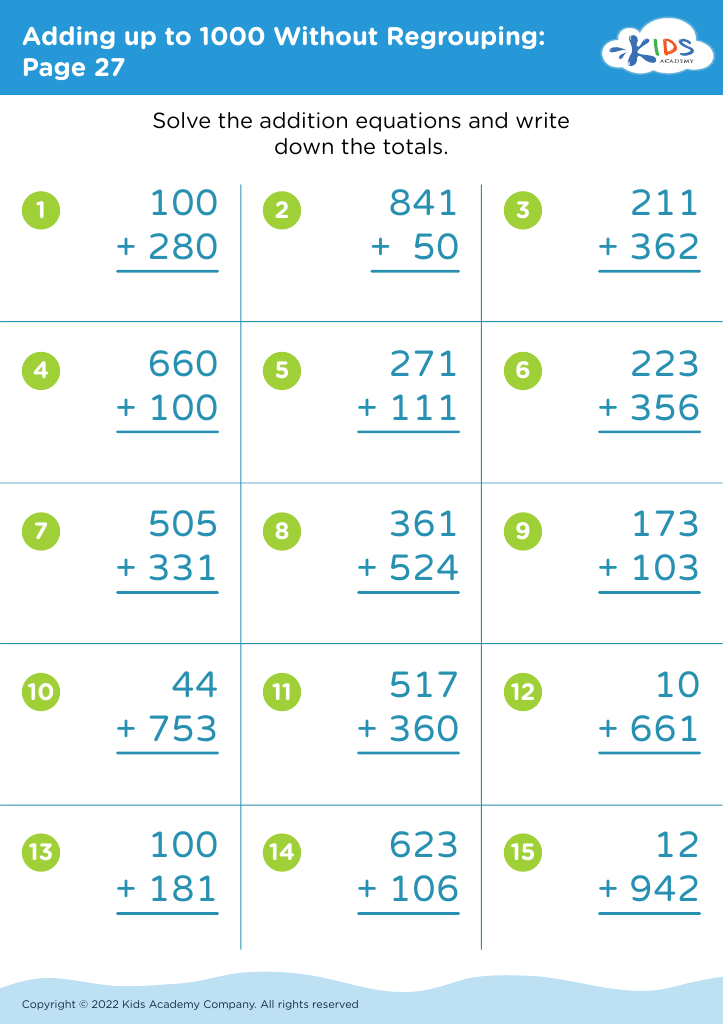
Adding up to 1000 Without Regrouping: Page 27
Worksheet
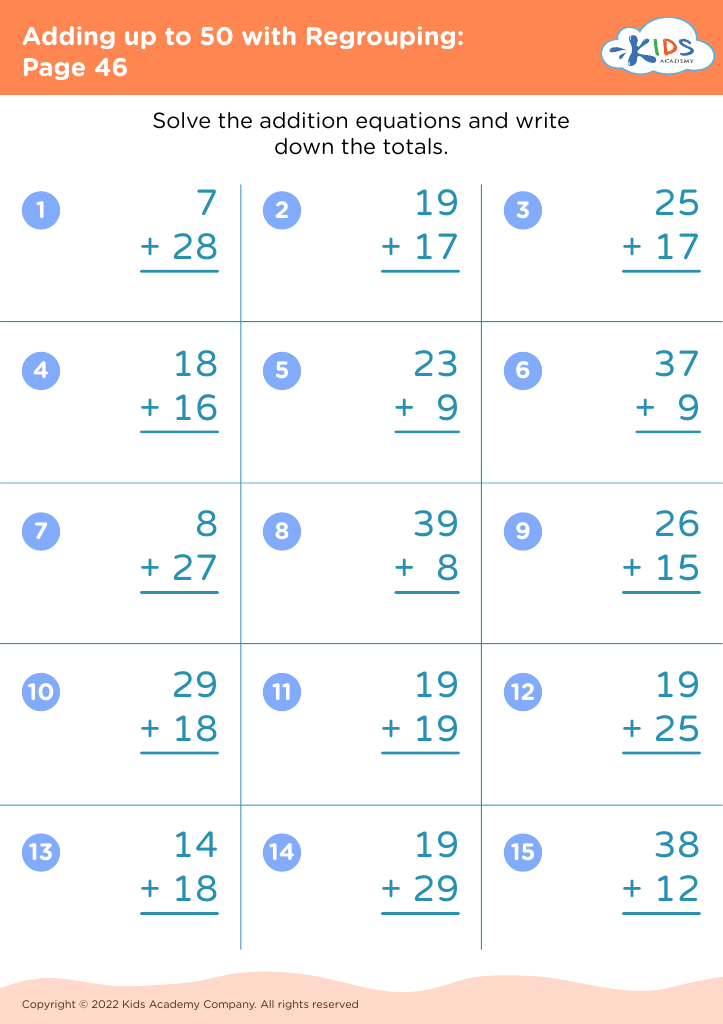
Adding up to 50 with Regrouping: Page 46
Worksheet
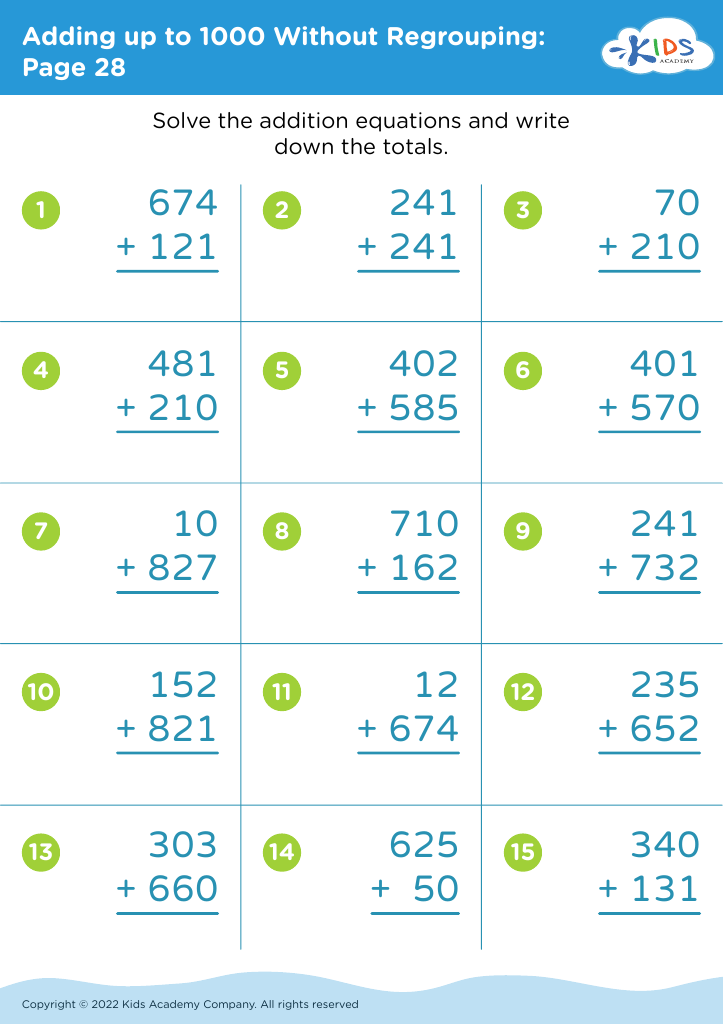
Adding up to 1000 Without Regrouping: Page 28
Worksheet
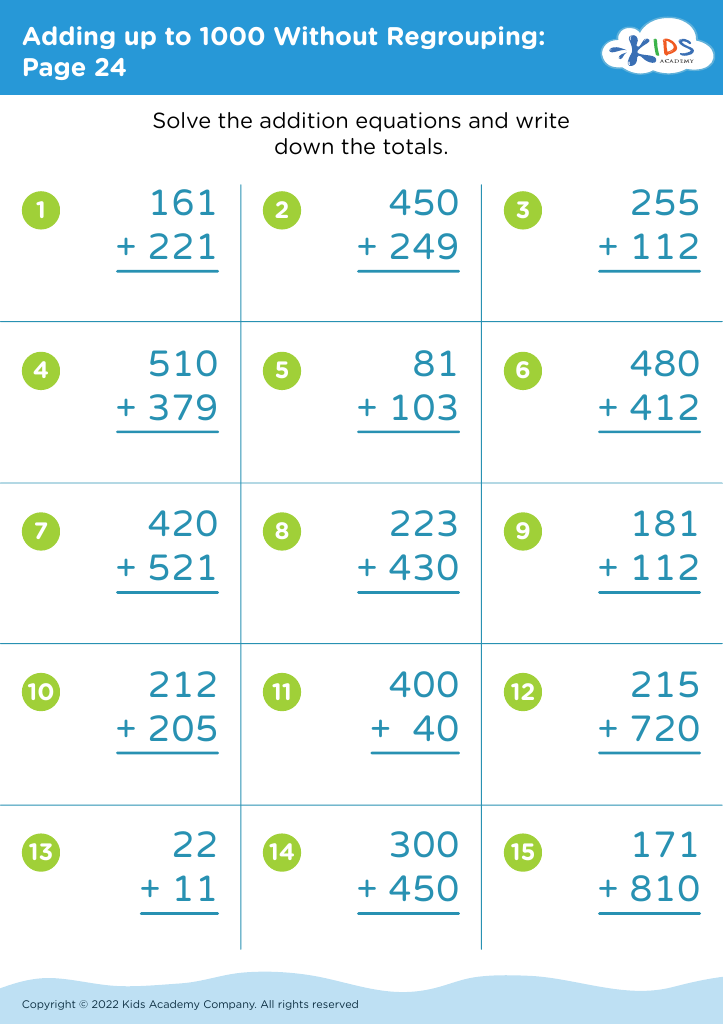
Adding up to 1000 Without Regrouping: Page 24
Worksheet


Caring about simplifying fractions and teaching addition and subtraction of fractions to children ages 3-9 sets a solid foundation for their future math skills. At these formative ages, children's brains are highly adaptable and capable of grasping complex concepts when taught in a simplified and engaging manner. Introducing fractions early aids in their cognitive development and problem-solving abilities, providing a critical advantage as these concepts underpin much of the mathematics they will encounter later in school.

Fractions particularly enhance a child’s understanding of division, ratios, and proportions, which are essential for more advanced math topics. Simplifying fractions makes kids recognize patterns and relationships between numbers, allowing them to understand and manipulate numerical data more fluently.

Additionally, early exposure to these skills encourages analytical thinking and boosts their confidence in tackling math problems. Hands-on activities with visual aids help to demystify fractions, making them less intimidating and more intuitive.

Teachers and parents being proactive about simplifying fraction addition and subtraction can spark a child’s fascination for math, creating a positive mindset towards learning. This fosters a can-do attitude, paving the way for a lifelong appreciation and aptitude for mathematics, which is critical in many aspects of everyday life and numerous career paths.