Filters

13 filtered results

Clear all filters
Favorites
With answer key
Interactive

13 filtered results

Difficulty Level

Grade


Discover our engaging Vocabulary Expansion Addition & Subtraction Worksheets designed for children aged 3 to 9! These interactive resources help young learners enhance their math skills while simultaneously building their vocabulary. Each worksheet is tailored to weave basic arithmetic concepts and language development, encouraging your child to explore mathematical terms and their meanings. With colorful illustrations and age-appropriate exercises, kids will enjoy practicing addition and subtraction as they deepen their understanding of related vocabulary. Ideal for both classroom settings and home learning, our worksheets promote essential skills in a fun, engaging way. Enhance your child’s learning journey with us today!
Check out this FREE Trial Lesson on Addition & Subtraction for age 3-9!

Add 3 & 4 Numbers at the same time

Favorites
With answer key
Interactive
  • 3-9
  • Vocabulary expansion
  • Addition & Subtraction
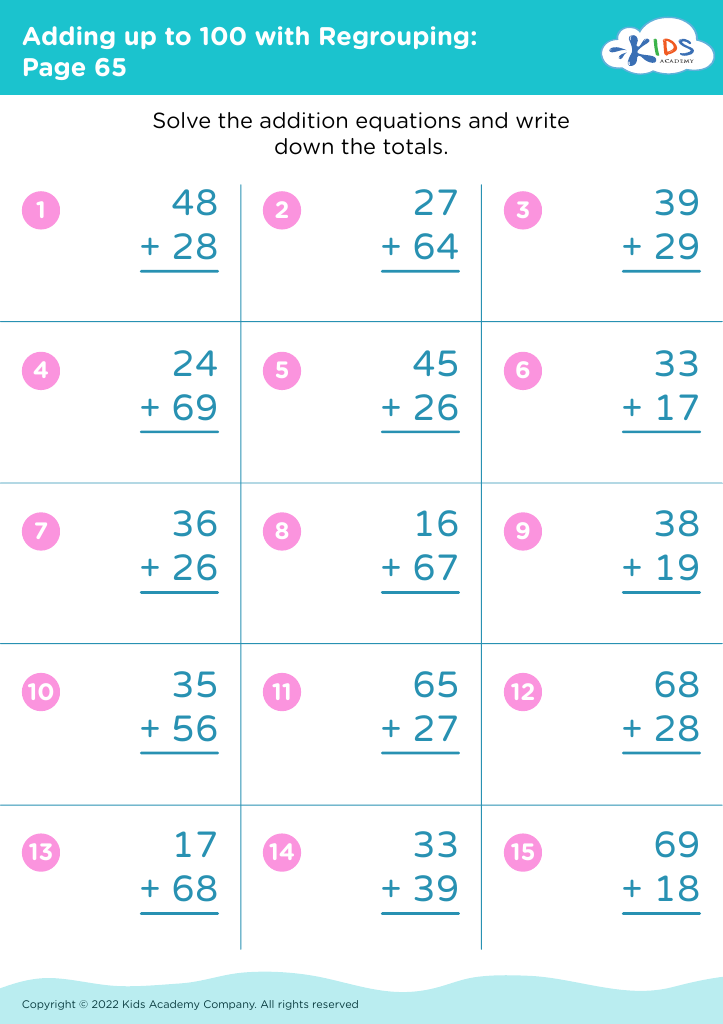
Adding up to 100 with Regrouping: Page 65
Worksheet
Adding up to 1000 with Regrouping: Page 6
Worksheet
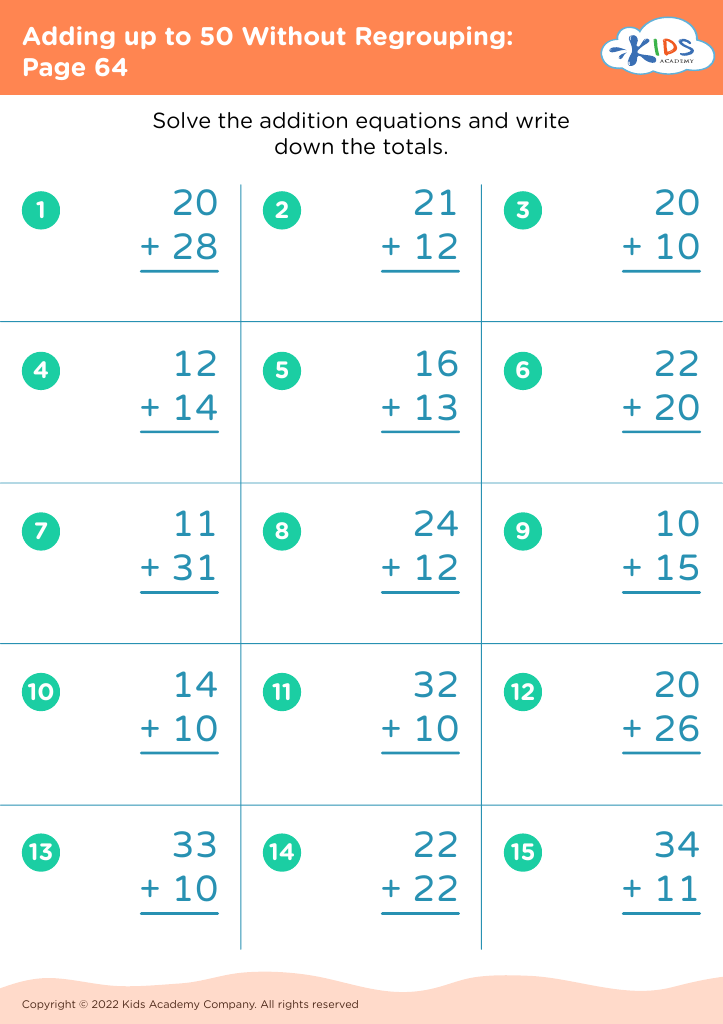
Adding up to 50 Without Regrouping: Page 64
Worksheet
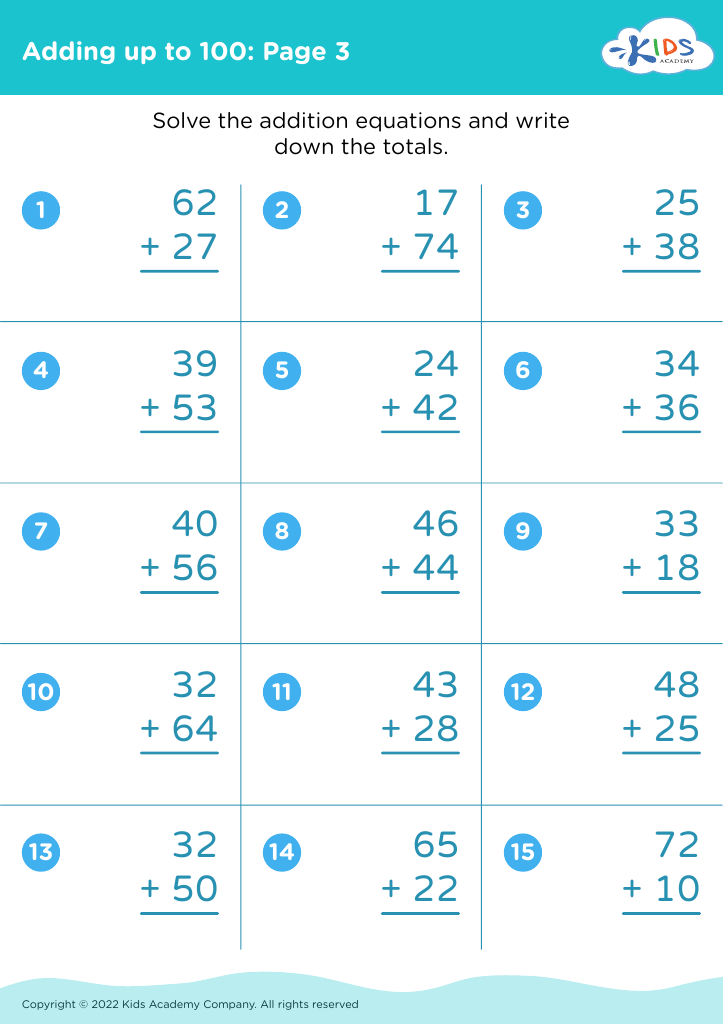
Adding up to 100: Page 3

Adding up to 100: Page 3

Adding up to 100: Page 3
Worksheet
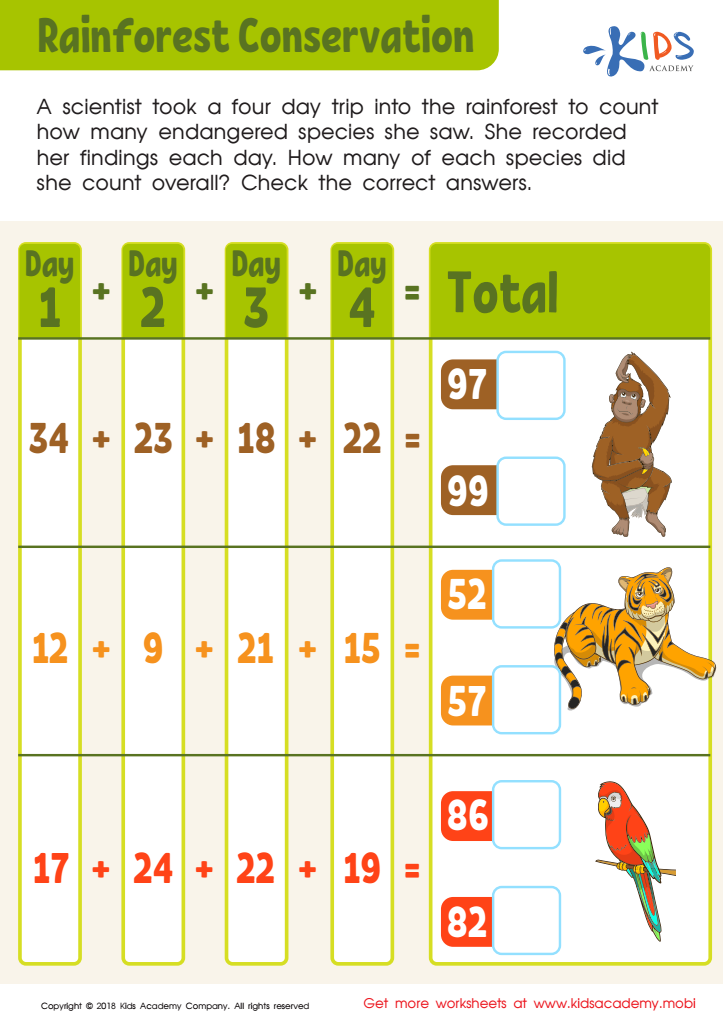
Rainforest Conservation Worksheet

Rainforest Conservation Worksheet

Explain to your child what a rainforest is and why it's important. A scientist took a four-day trip to count endangered species. Let your child count how many of each species were seen in total. Check the answers and help them understand.
Rainforest Conservation Worksheet
Worksheet
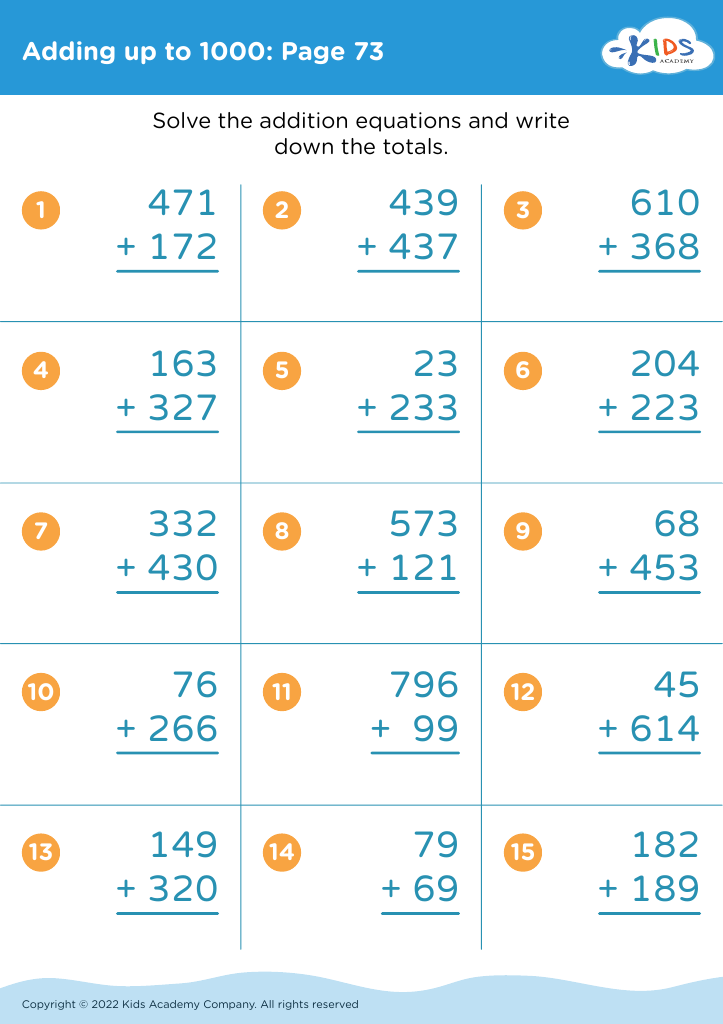
Adding up to 1000: Page 73

Adding up to 1000: Page 73

Adding up to 1000: Page 73
Worksheet
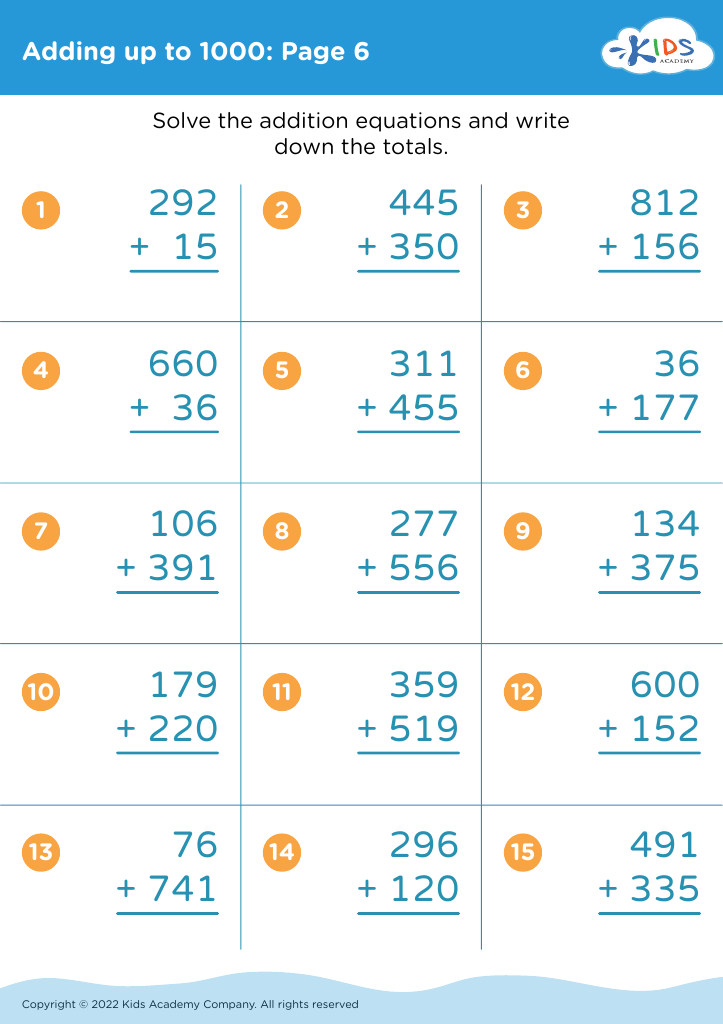
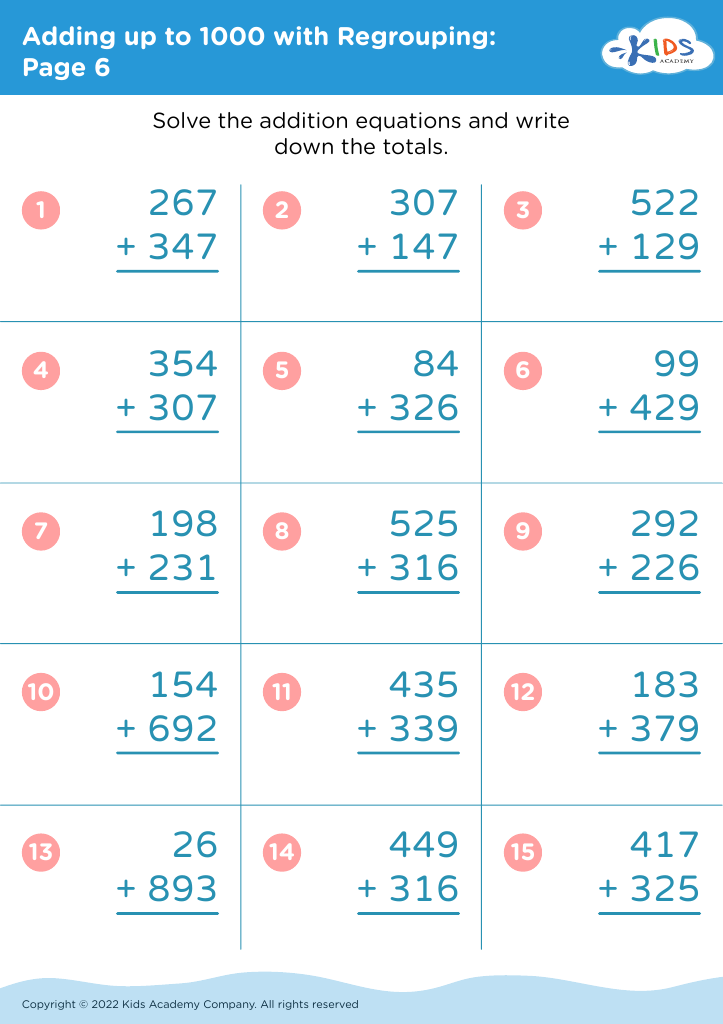
Adding up to 1000: Page 6

Adding up to 1000: Page 6

Adding up to 1000: Page 6
Worksheet
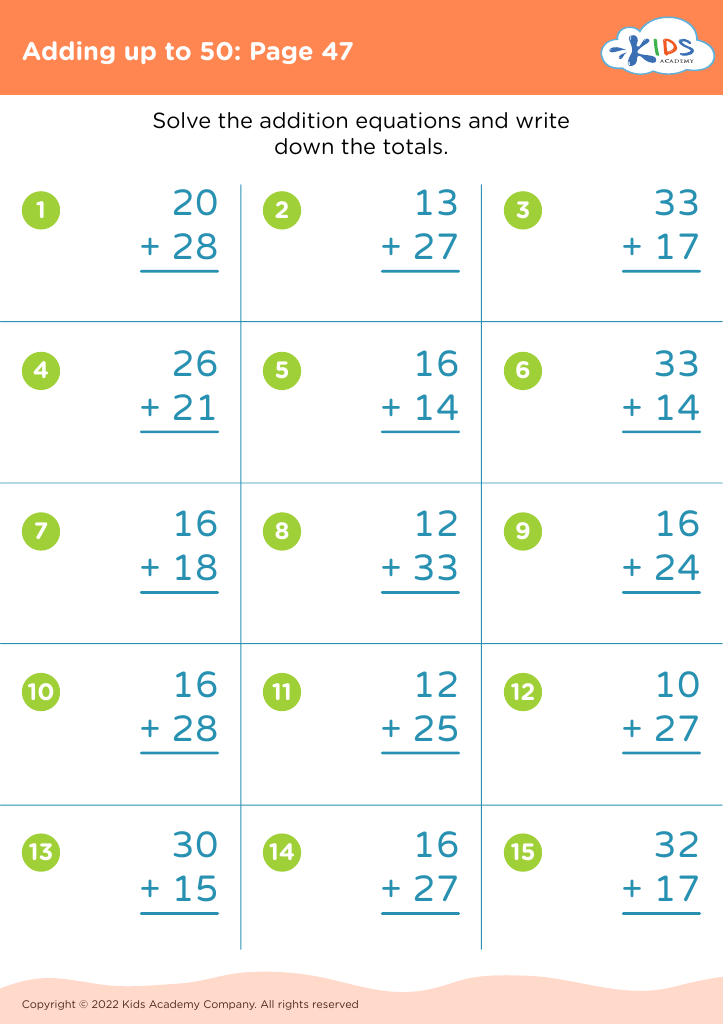
Adding up to 50: Page 47

Adding up to 50: Page 47

Adding up to 50: Page 47
Worksheet
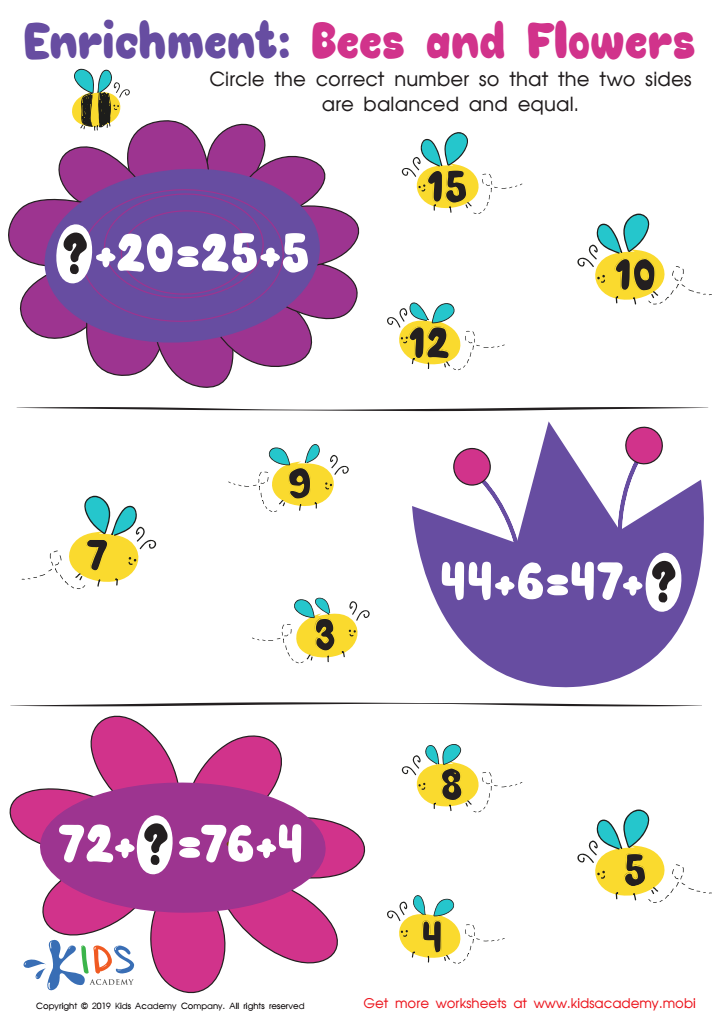
Enrichment: Bees and Flowers Worksheet
Enrichment: Bees and Flowers Worksheet
Help your kids become better at identifying bees and math with this worksheet! It features pictures of bees for your child to point out, as well as numbers to add up and circle to make the two sides equal. Let them having fun learning and watching bees flit around the flowers.
Enrichment: Bees and Flowers Worksheet
Worksheet
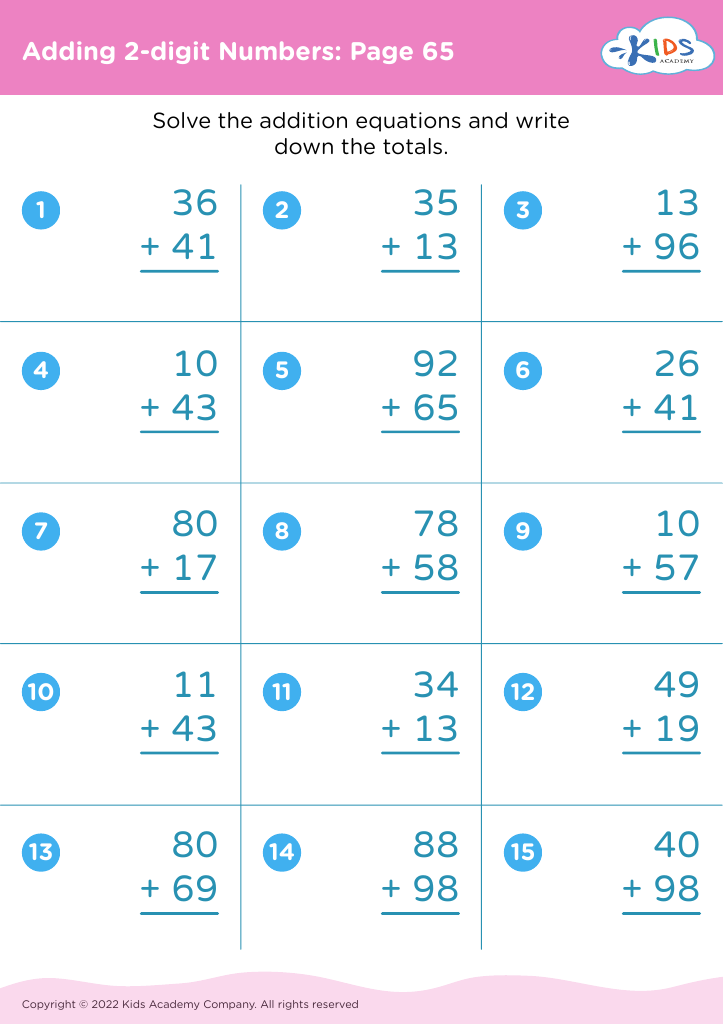
Adding 2-digit Numbers: Page 65

Adding 2-digit Numbers: Page 65

Adding 2-digit Numbers: Page 65
Worksheet
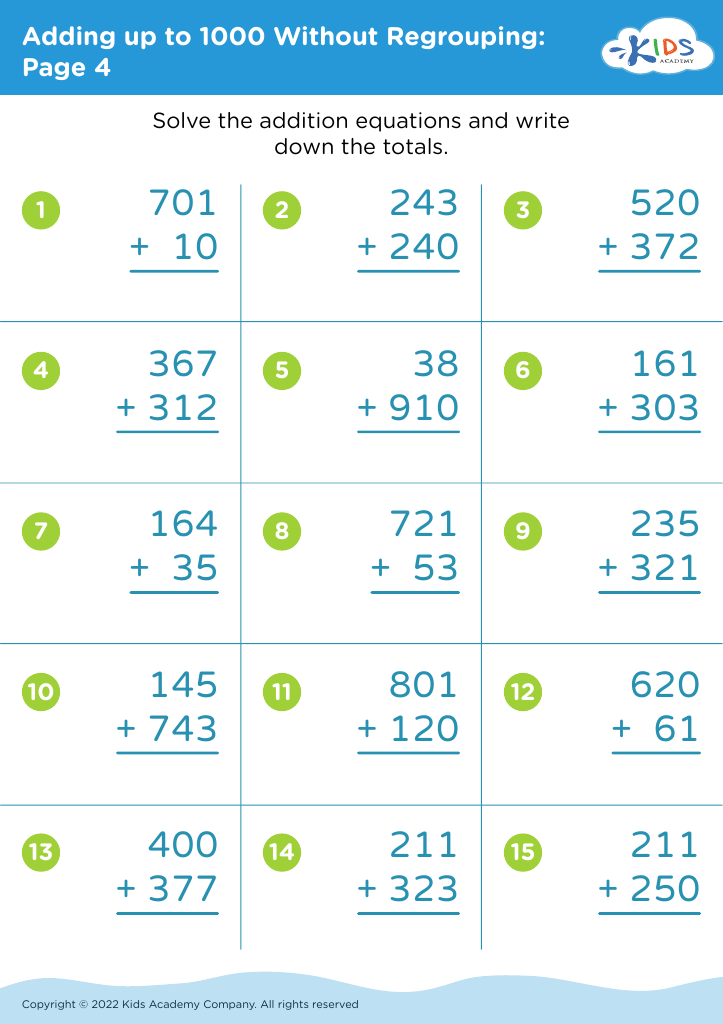
Adding up to 1000 Without Regrouping: Page 4
Worksheet
Animal Sanctuary Worksheet

Animal Sanctuary Worksheet

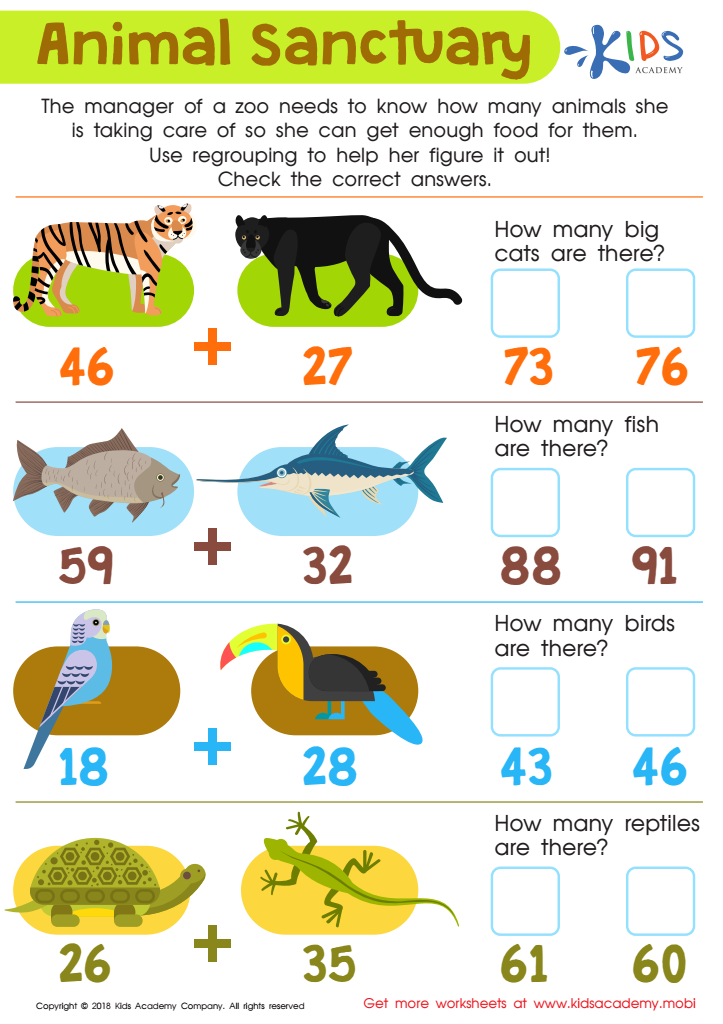
Do your kids love visiting the zoo? Ask which animals they remember & which ones they liked the most. The manager needs help to get enough food for all the animals. Help your child use regrouping to figure out how many animals there are. And ask them to check the answers.
Animal Sanctuary Worksheet
Worksheet
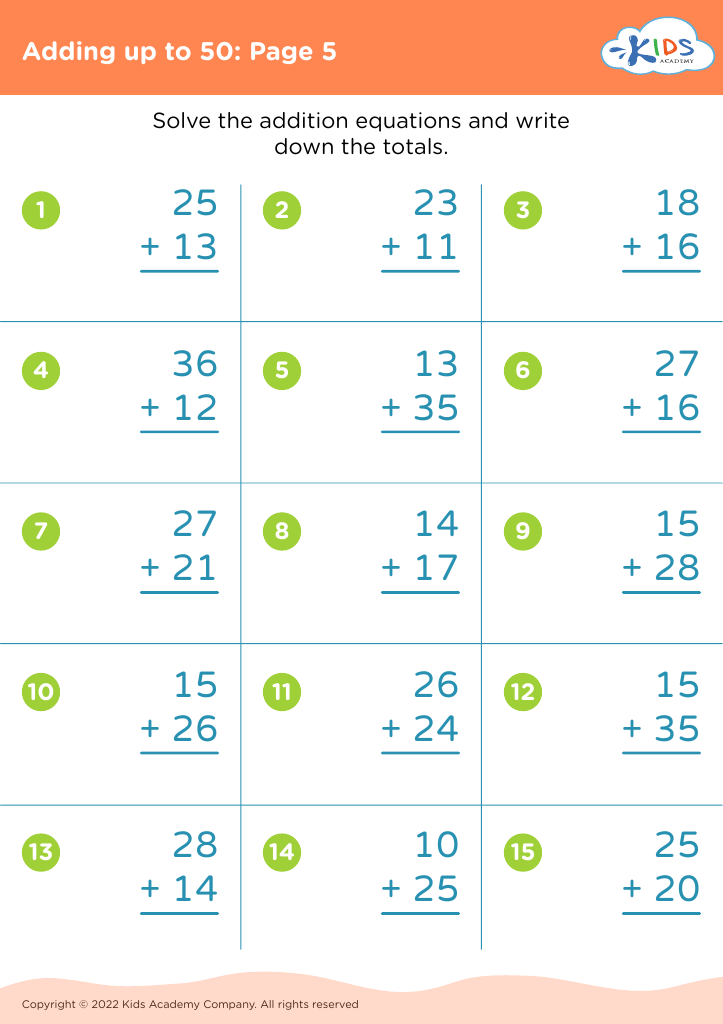
Adding up to 50: Page 5

Adding up to 50: Page 5

Adding up to 50: Page 5
Worksheet


Vocabulary expansion and foundational math skills like addition and subtraction are critical components of early childhood education for children ages 3 to 9. During these formative years, children undergo swift cognitive development, and so enriched vocabulary helps bolster their communication skills, enhances comprehension, and supports emotional intelligence. Effective vocabulary serves as the foundation for all future learning; children with a robust vocab are more likely to excel in reading and writing.

Simultaneously, strengthening addition and subtraction skills lays the groundwork for critical thinking and problem-solving. Mastery of these basic mathematical concepts promotes numerical literacy, essential not just in school, but in everyday life as well. When parents and teachers prioritize these skills, they help cultivate a mindset of curiosity and an appreciation for learning.

Moreover, integrating vocabulary and math helps create cross-curricular connections, enriching the child’s overall educational experience. Engaging educational strategies, such as games or storytelling, make learning enjoyable while also nurturing essential cognitive and social skills. Therefore, by focusing on vocabulary expansion alongside basic arithmetic, parents and teachers can foster well-rounded, confident learners ready to tackle more complex concepts in the future. Investing time in these areas is investing in a child's lifelong academic and social success.