Basic addition practice Addition Worksheets for Ages 3-9
18 filtered results
-
From - To
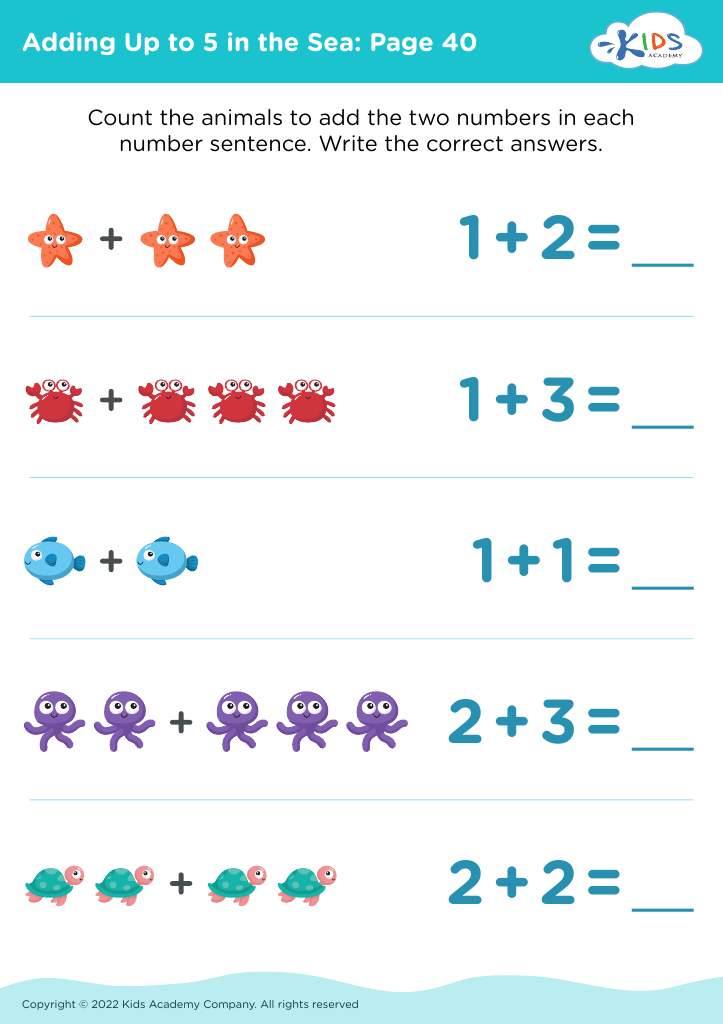
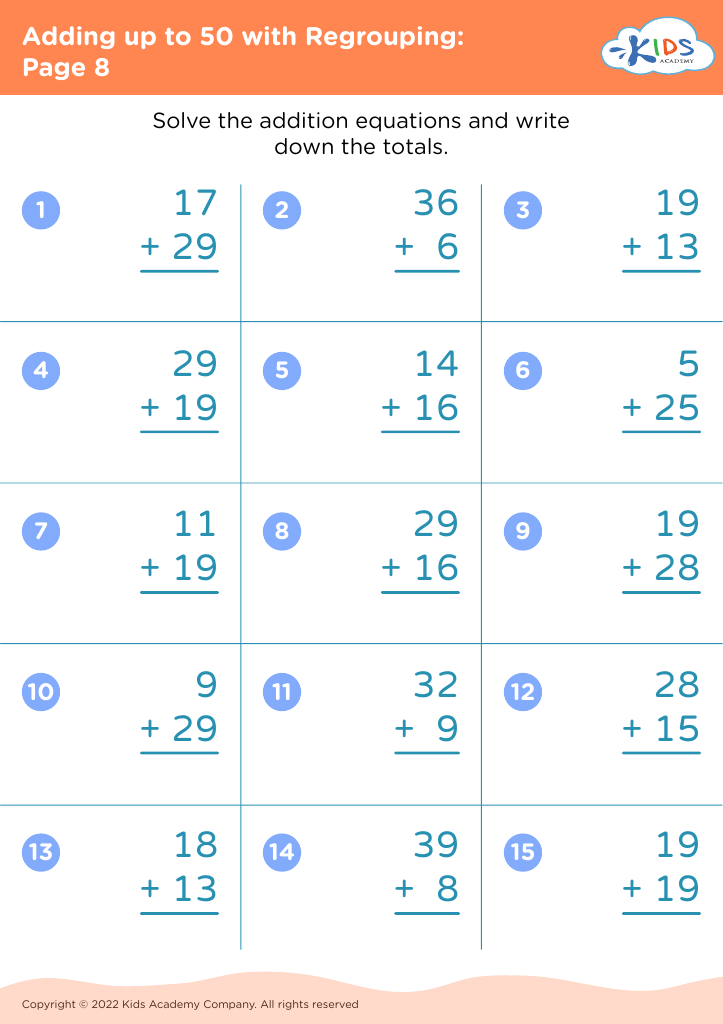
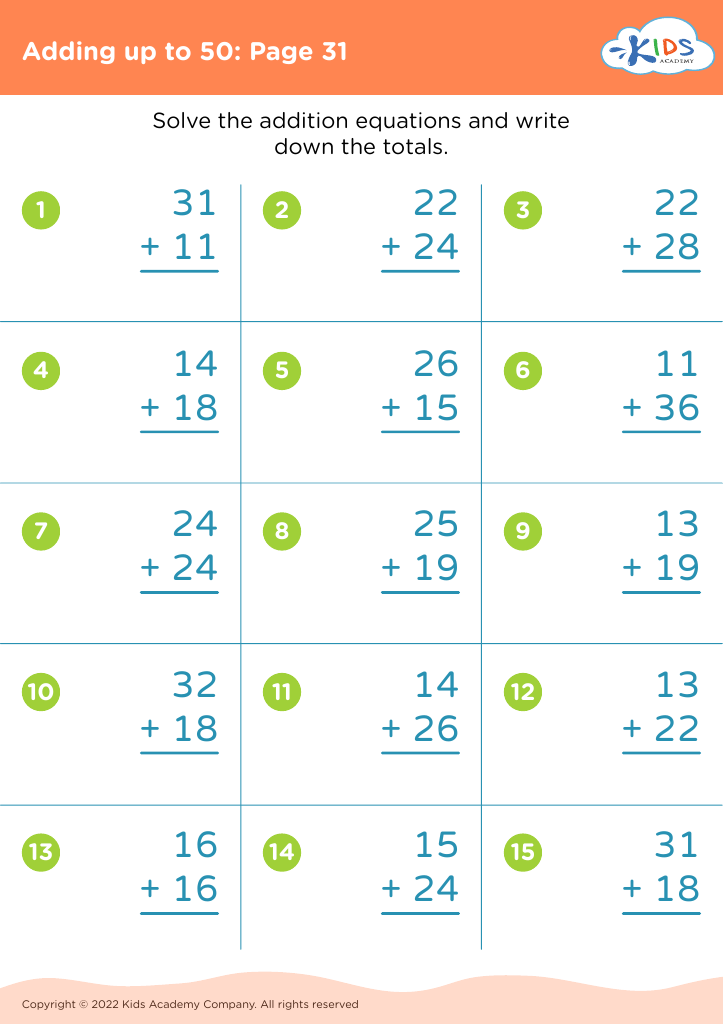
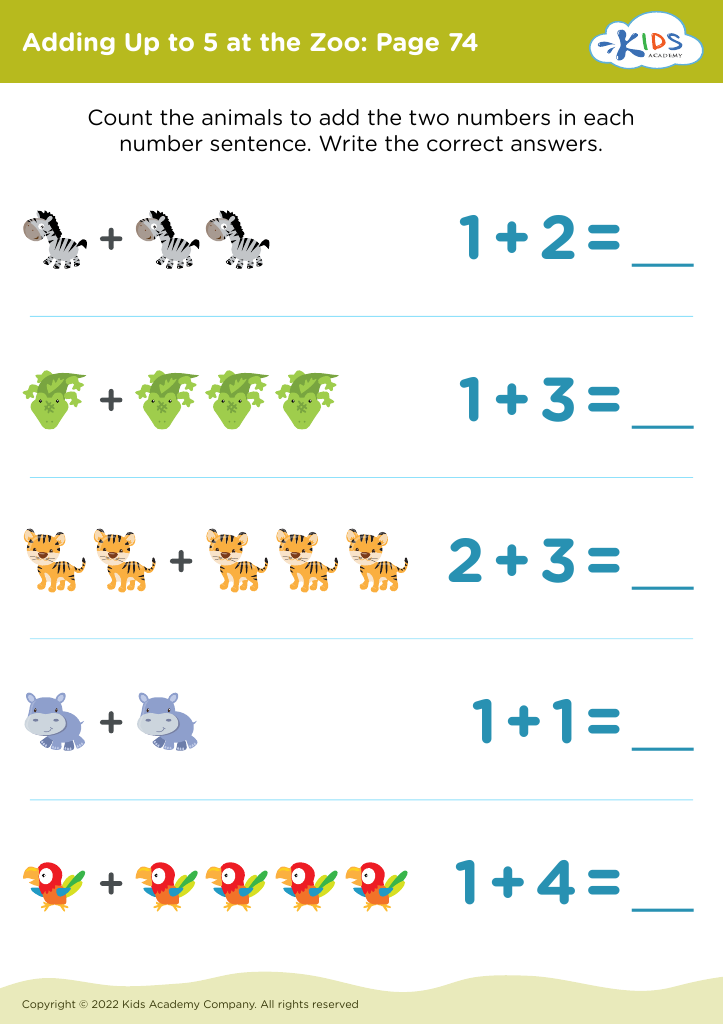
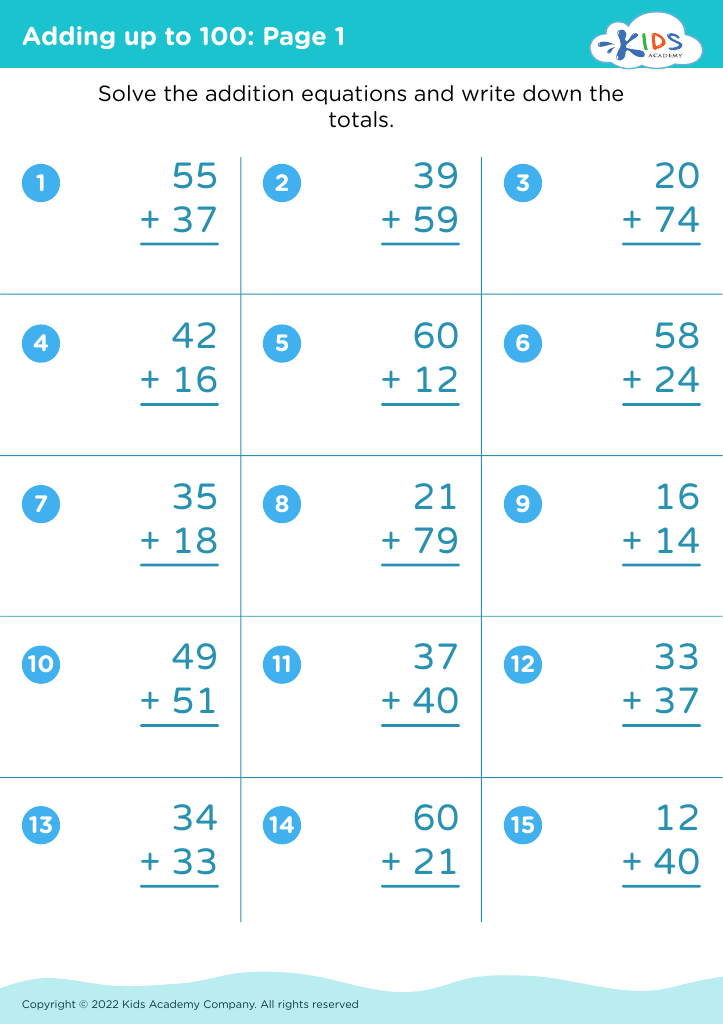
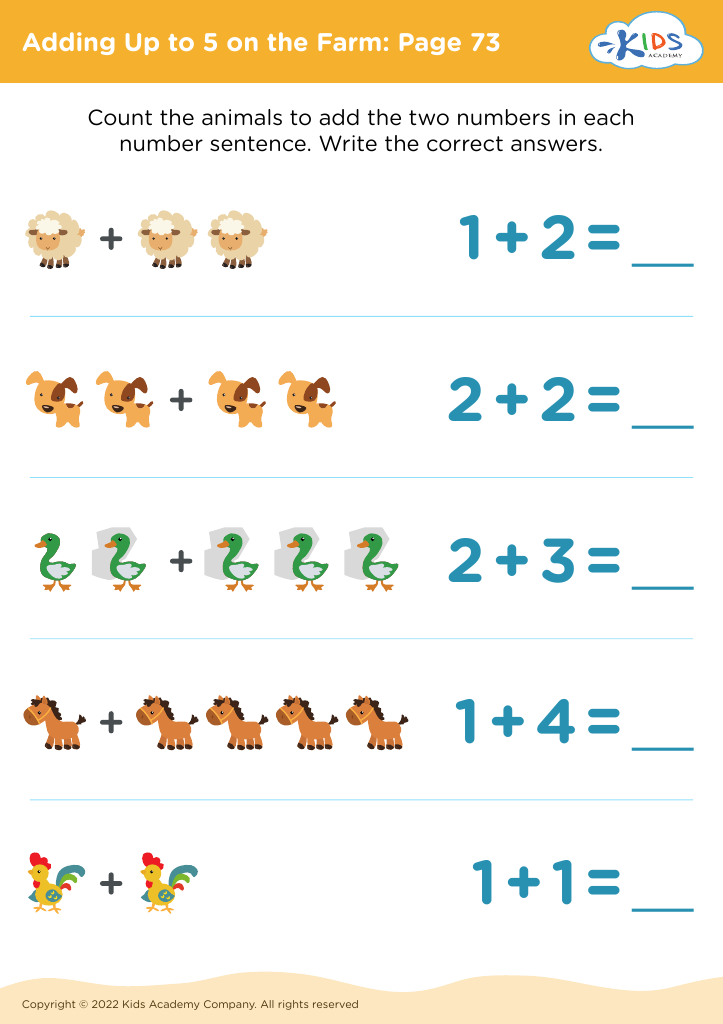
Looking for engaging ways to help your child master basic addition? Our Addition Worksheets for Ages 3-9 provide a fun and interactive learning experience! Tailored for young learners, these worksheets feature colorful illustrations and clear instructions to promote essential math skills. From simple equations to picture-based problems, these activities make addition approachable and enjoyable. Perfect for use at home or in the classroom, these worksheets encourage independent learning and strengthen foundational math concepts. Download our Basic Addition Practice Worksheets today, and watch your child build confidence in their addition skills while having fun! Ideal for parents and educators alike!
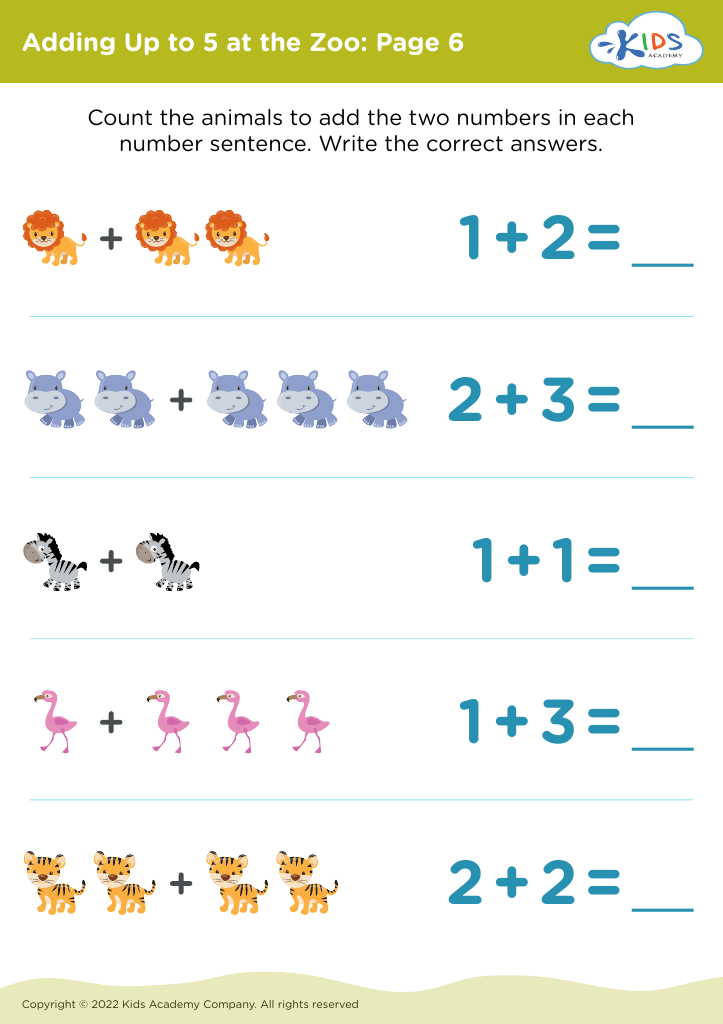
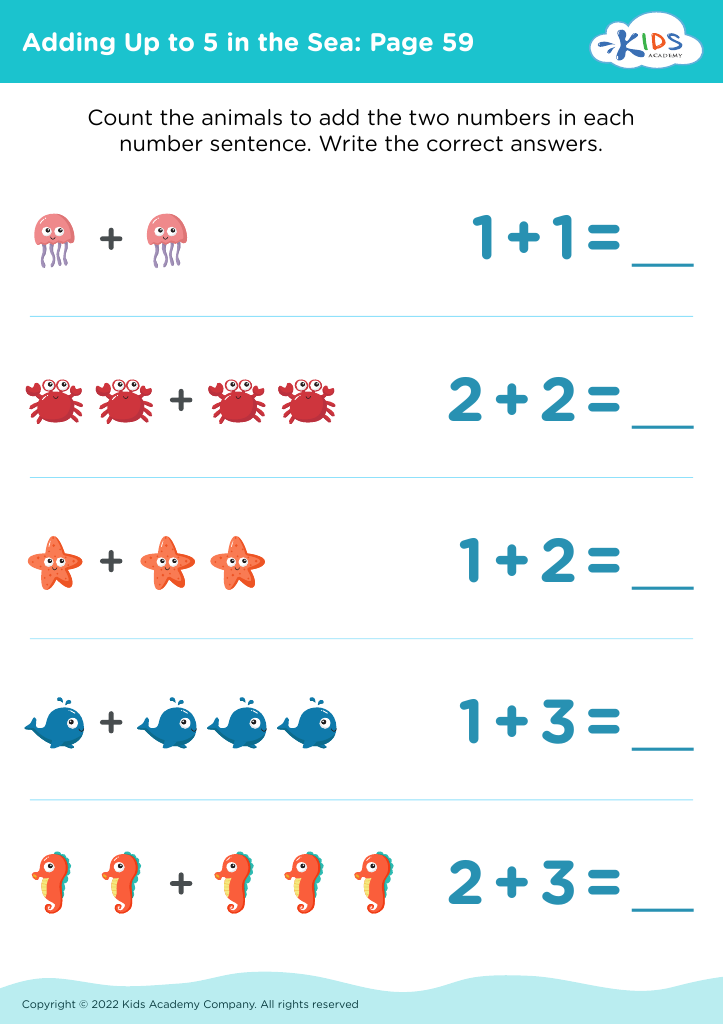
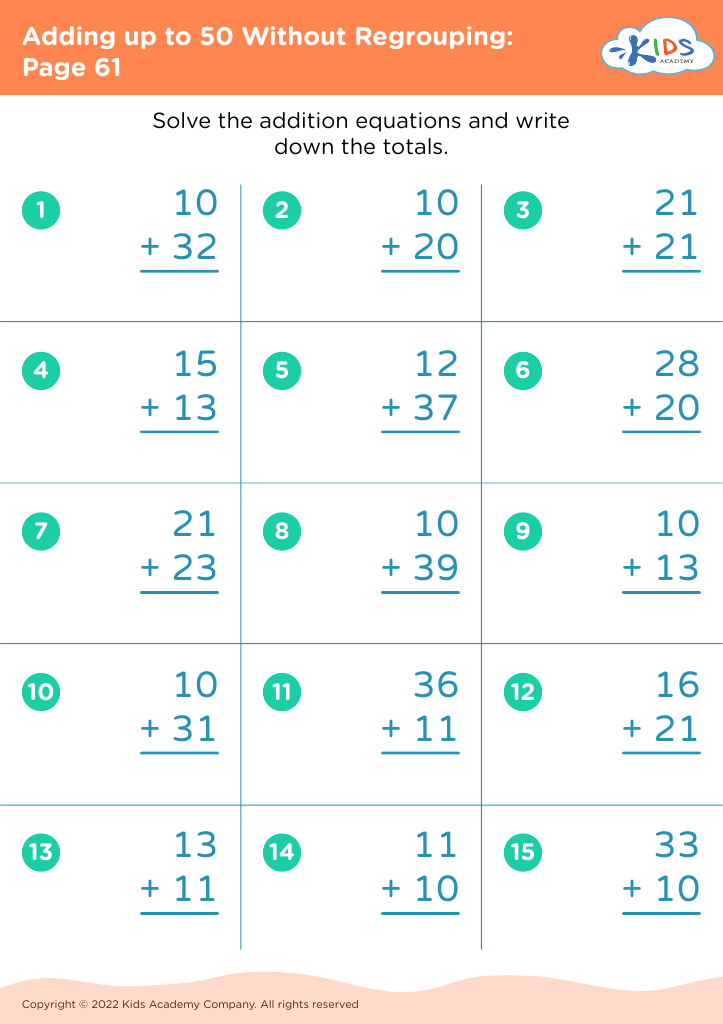
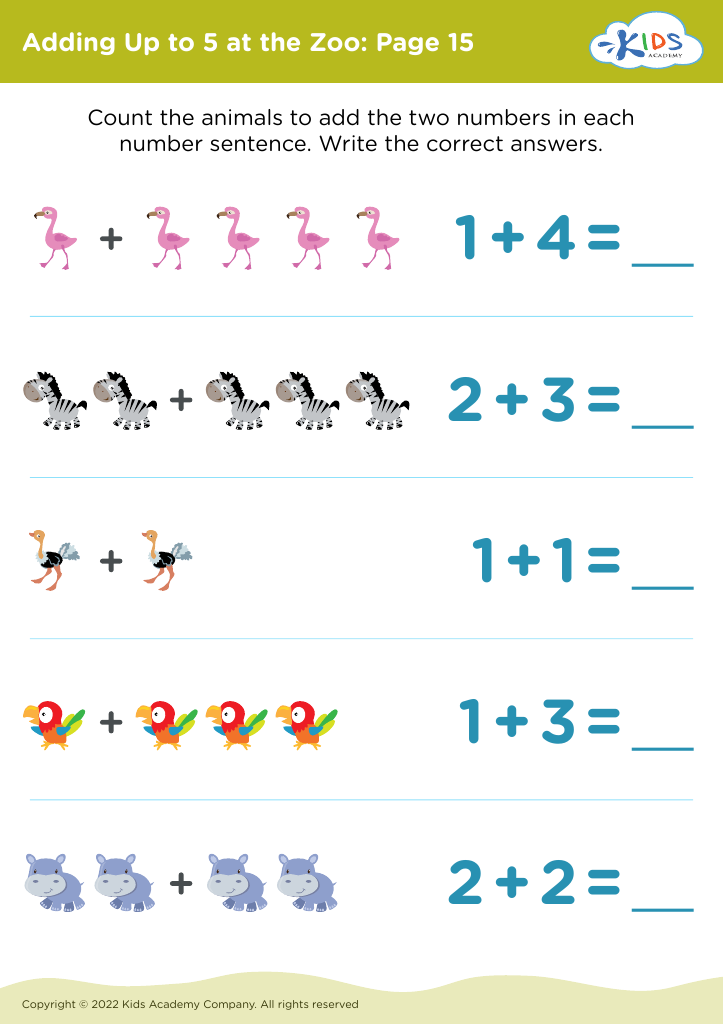
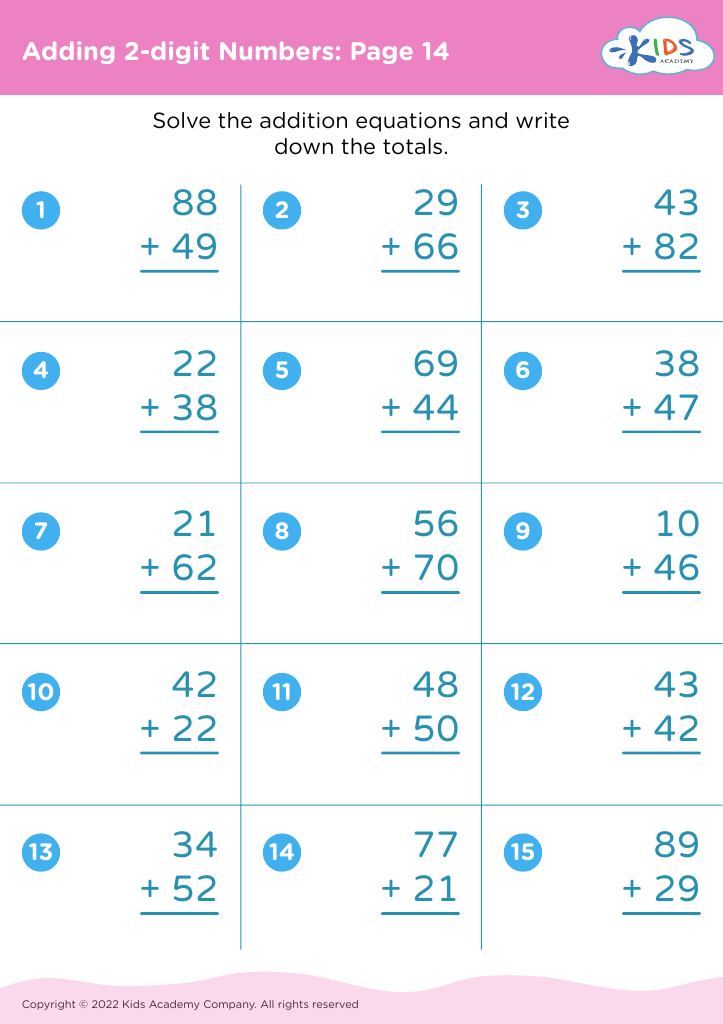
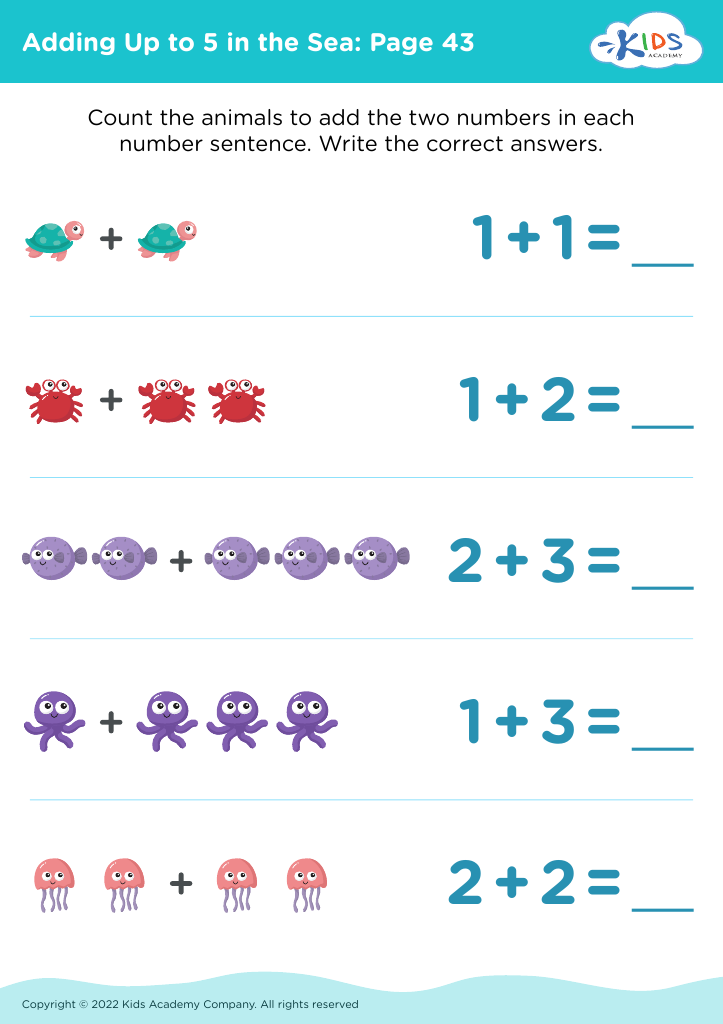
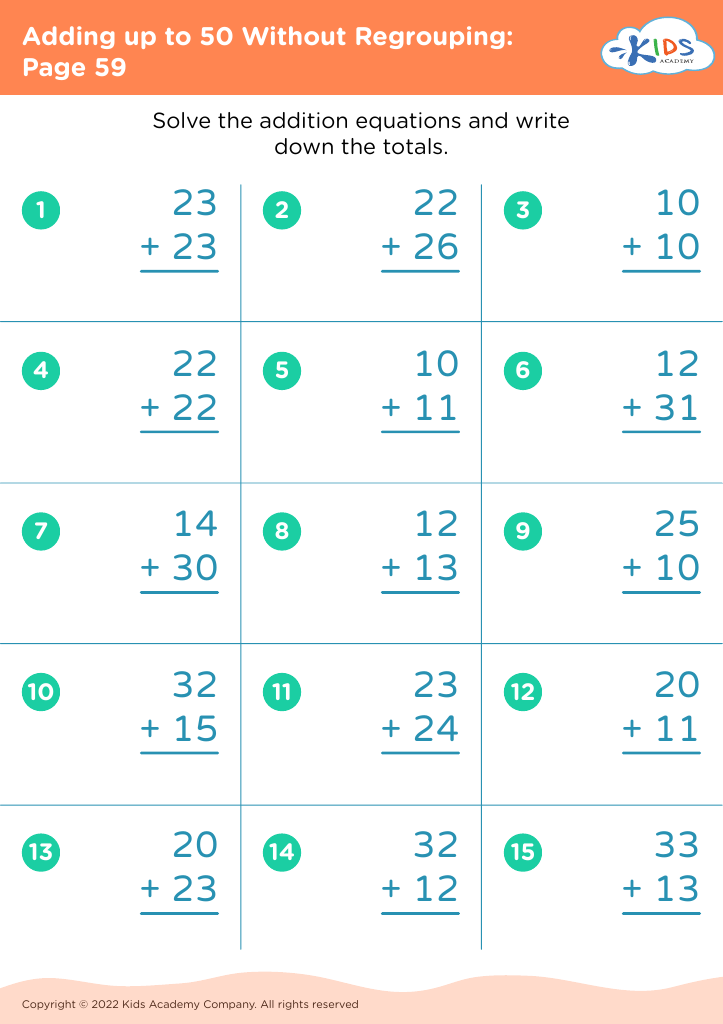
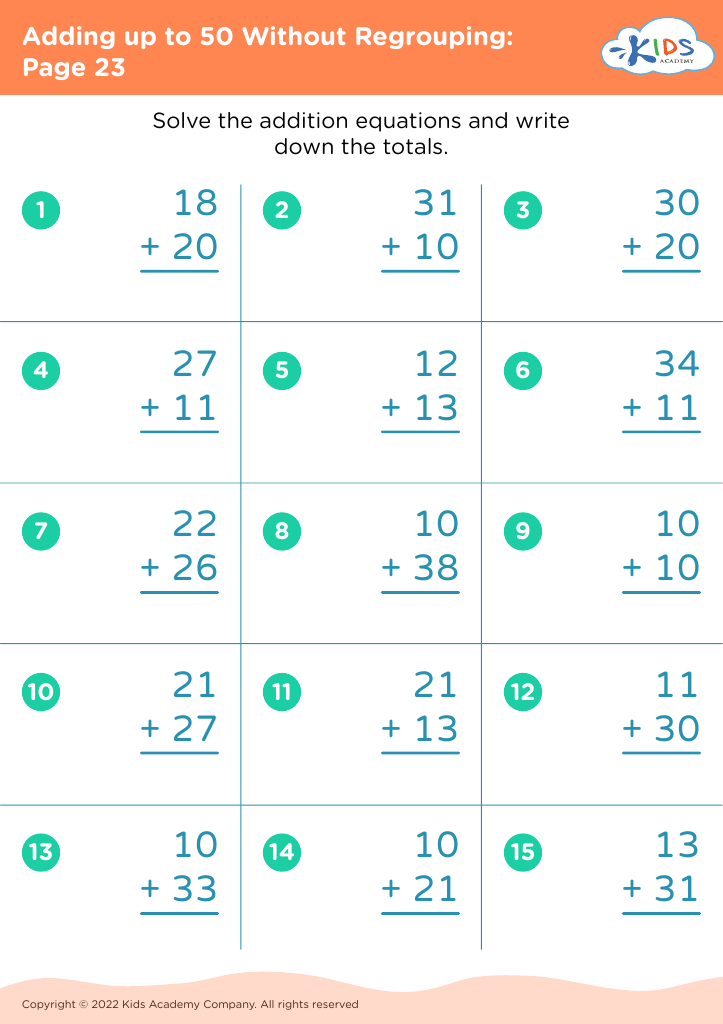
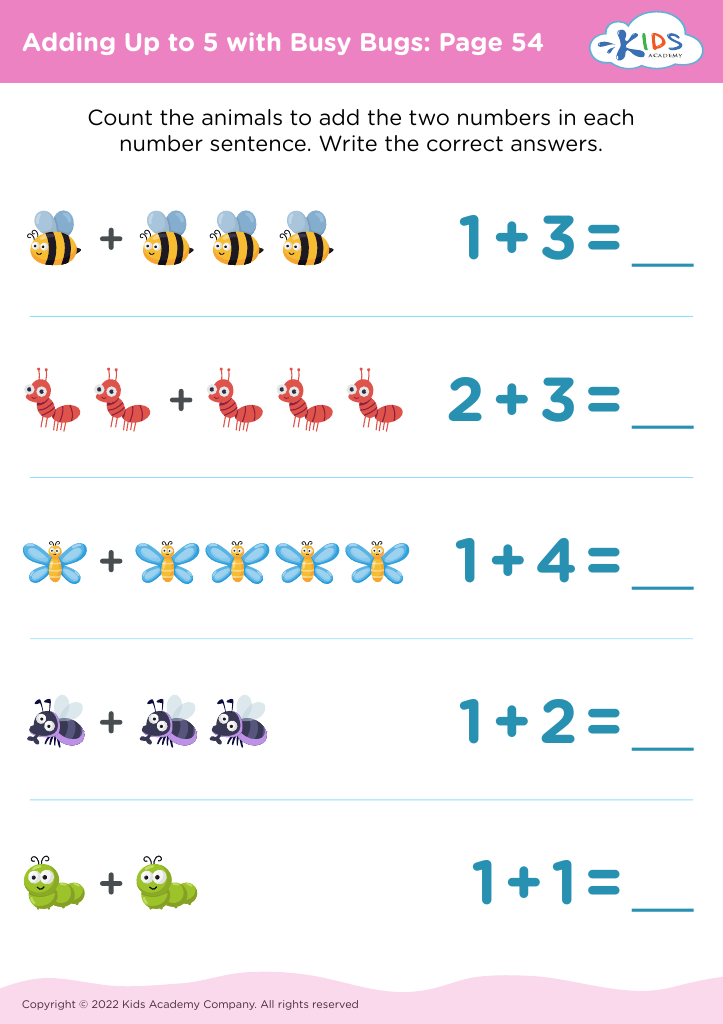
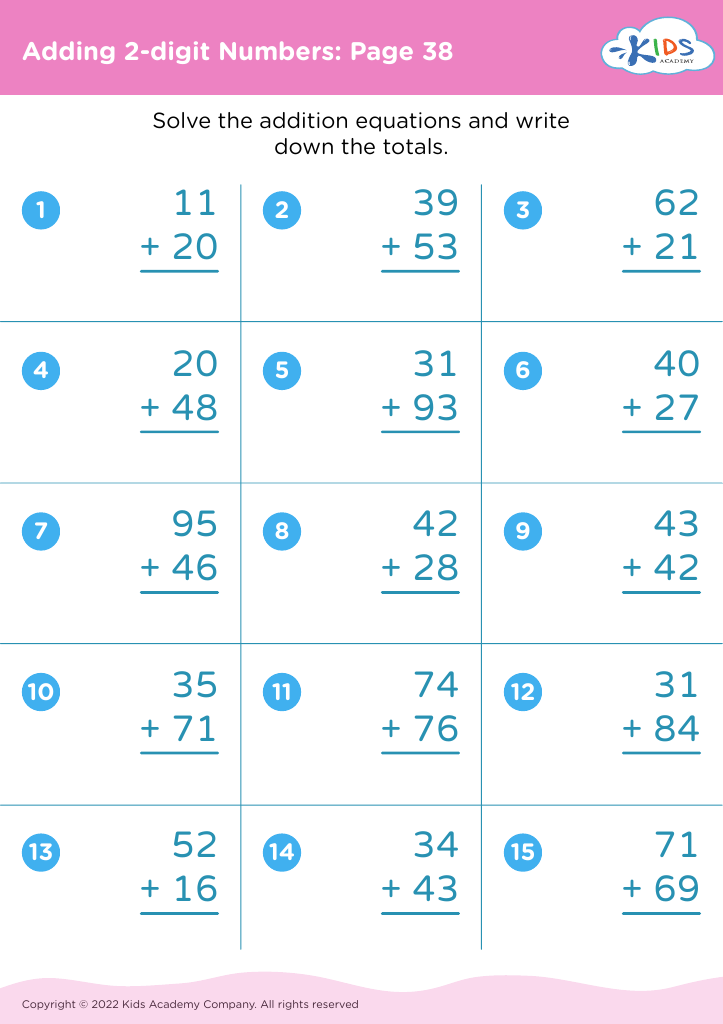
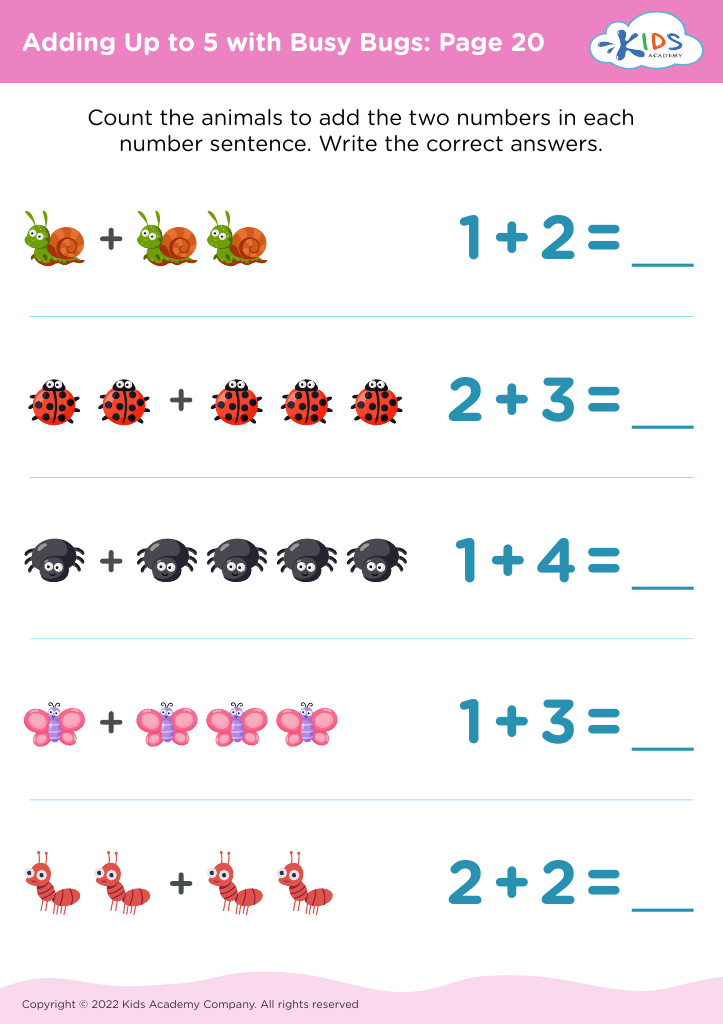
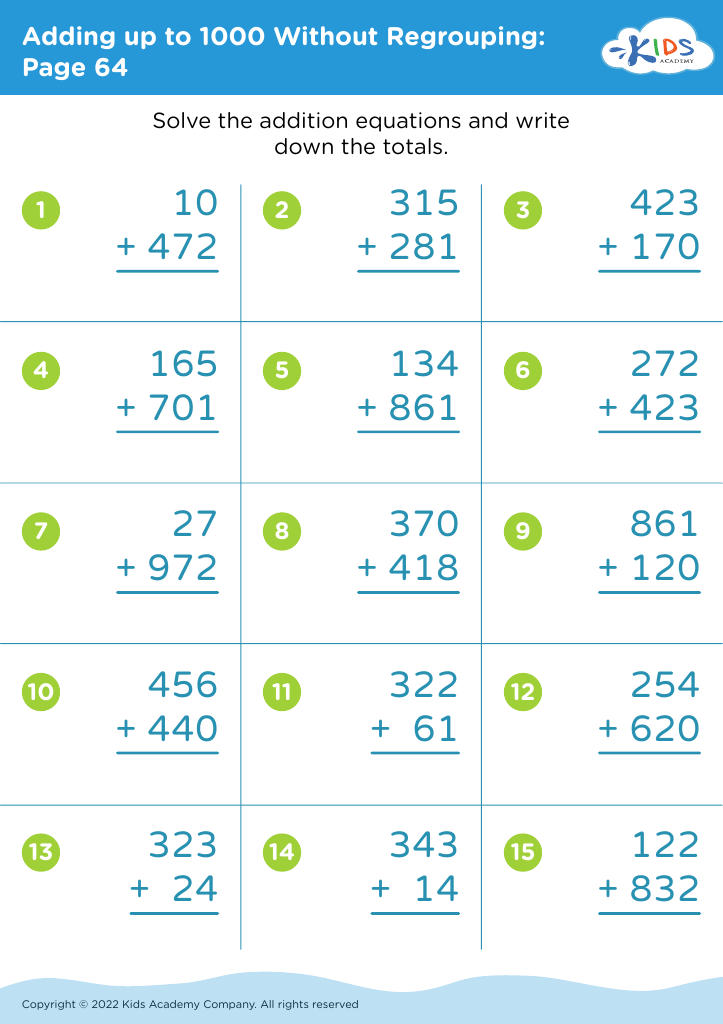








Basic addition practice is crucial for children aged 3-9 as it lays the foundation for their mathematical understanding and overall cognitive development. At this young age, children are developing critical thinking and problem-solving skills. Learning addition helps enhance their ability to analyze and interpret information, engage in logical reasoning, and build confidence in tackling numerical challenges.
Moreover, mastering basic addition fosters a sense of accomplishment and encourages a positive attitude towards mathematics. As students encounter more complex mathematical concepts later, a strong understanding of addition will serve them well, reducing potential anxiety and struggles with higher-level math.
From a practical perspective, addition is relevant in everyday scenarios, such as handling money, measuring quantities while cooking, or planning for events. Understanding these skills reinforces the importance of math in real-life applications, making it more relatable and engaging for young learners.
Additionally, consistent practice with addition helps improve fine motor skills through writing and manipulating objects used in counting. Therefore, parents and teachers should actively engage young children in addition practice, whether through games, visual aids, or interactive activities, ensuring they gain the necessary skills for future academic success. This not only benefits their educational journey but also encourages lifelong learning and curiosity.








