Filters

271 filtered results

Clear all filters
Favorites
With answer key
Interactive

271 filtered results

Difficulty Level

Grade


Check out this FREE Trial Lesson on Addition for age 3-9!

Exactly the Same, or Not

Favorites
With answer key
Interactive
  • 3-9
  • Basic Addition Skills
  • Addition
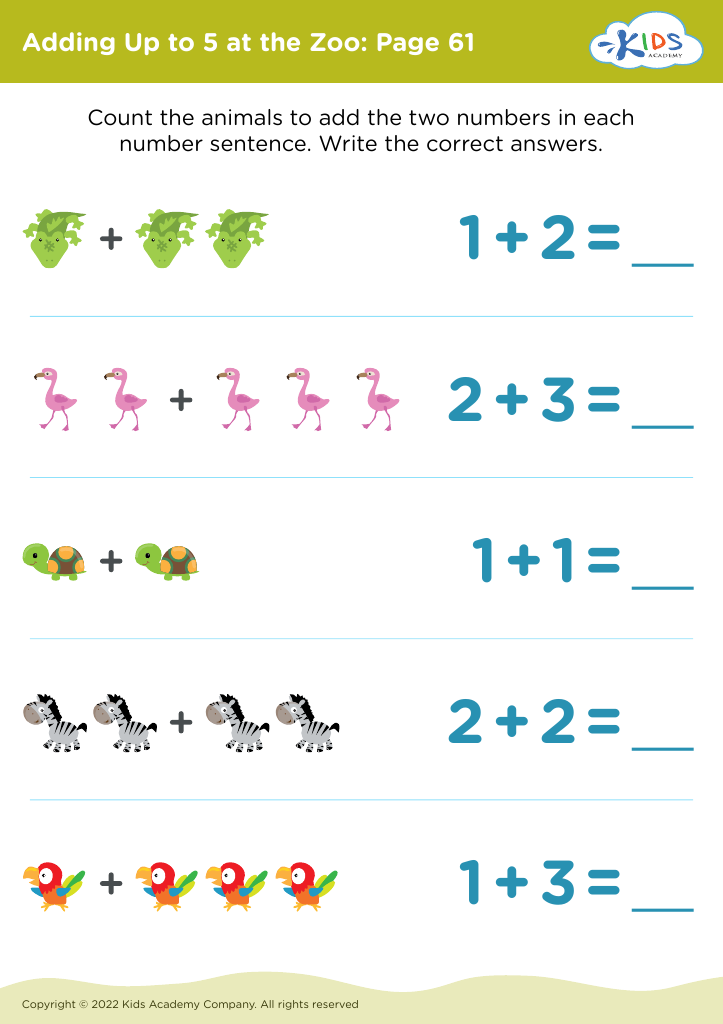
Adding Up to 5 at the Zoo: Page 61
Worksheet
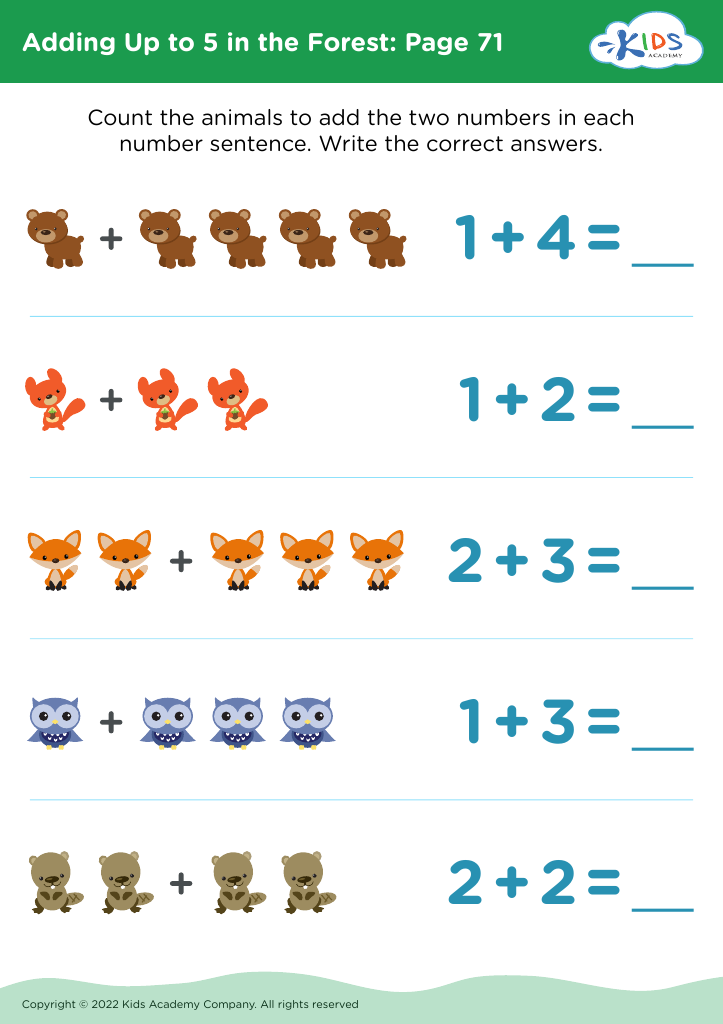
Adding Up to 5 in the Forest: Page 71
Worksheet
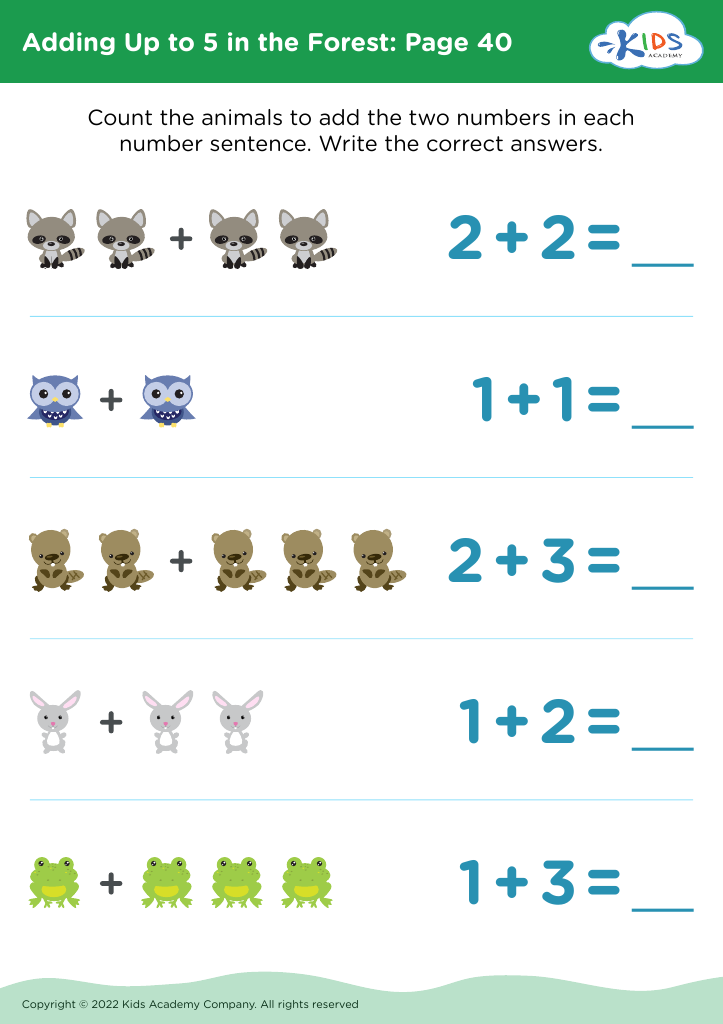
Adding Up to 5 in the Forest: Page 40
Worksheet
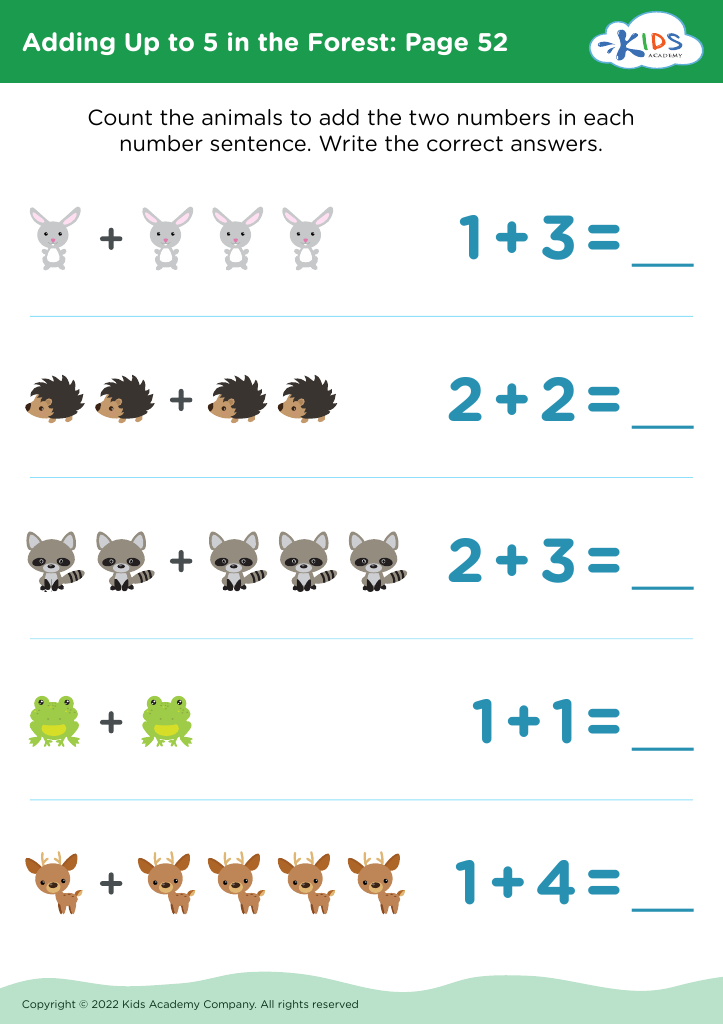
Adding Up to 5 in the Forest: Page 52
Worksheet
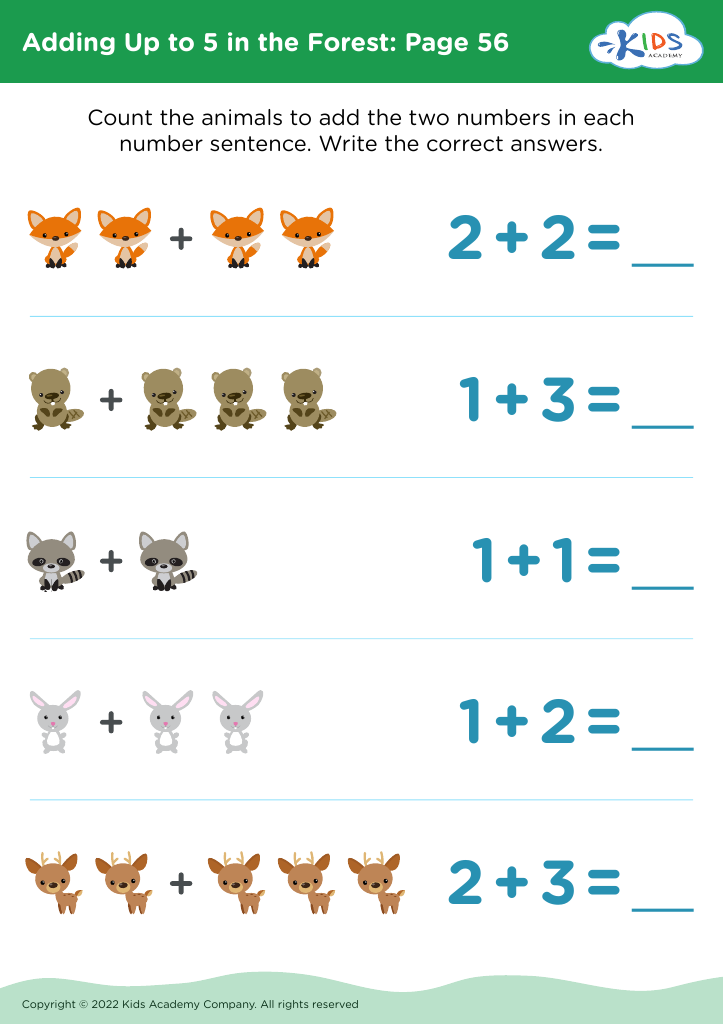
Adding Up to 5 in the Forest: Page 56
Worksheet
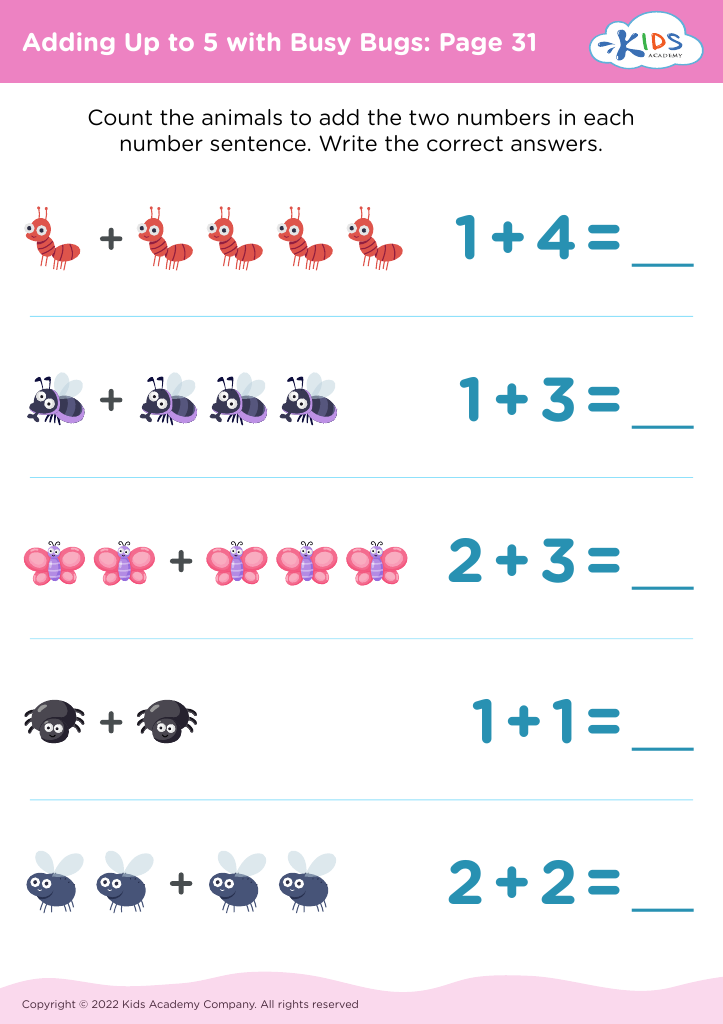
Adding Up to 5 with Busy Bugs: Page 31
Worksheet
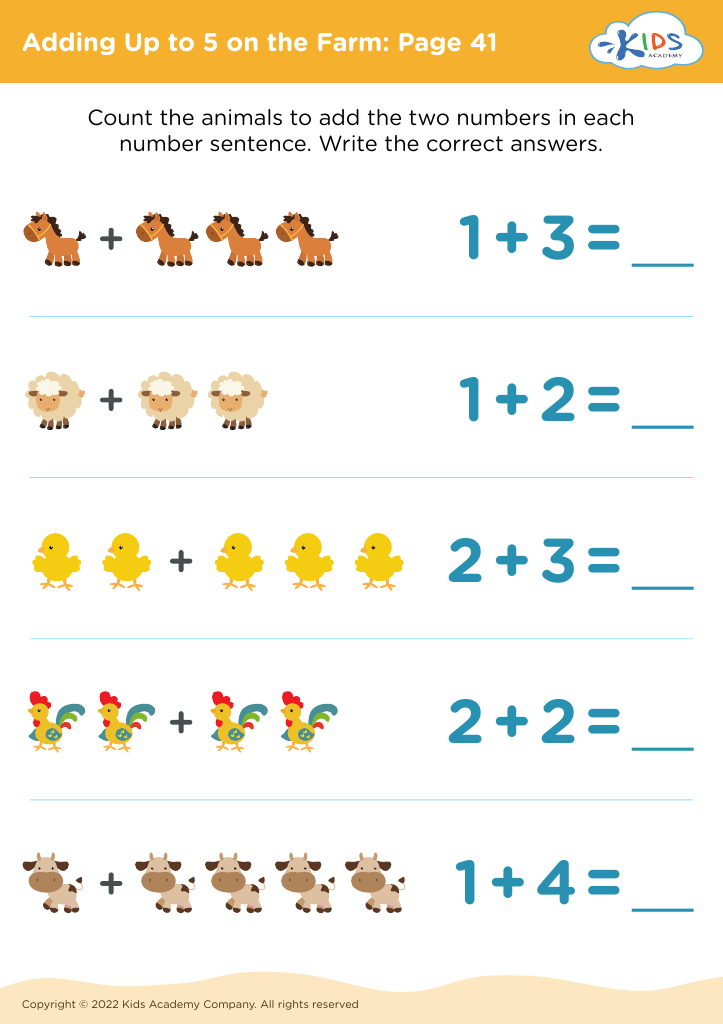
Adding Up to 5 on the Farm: Page 41
Worksheet
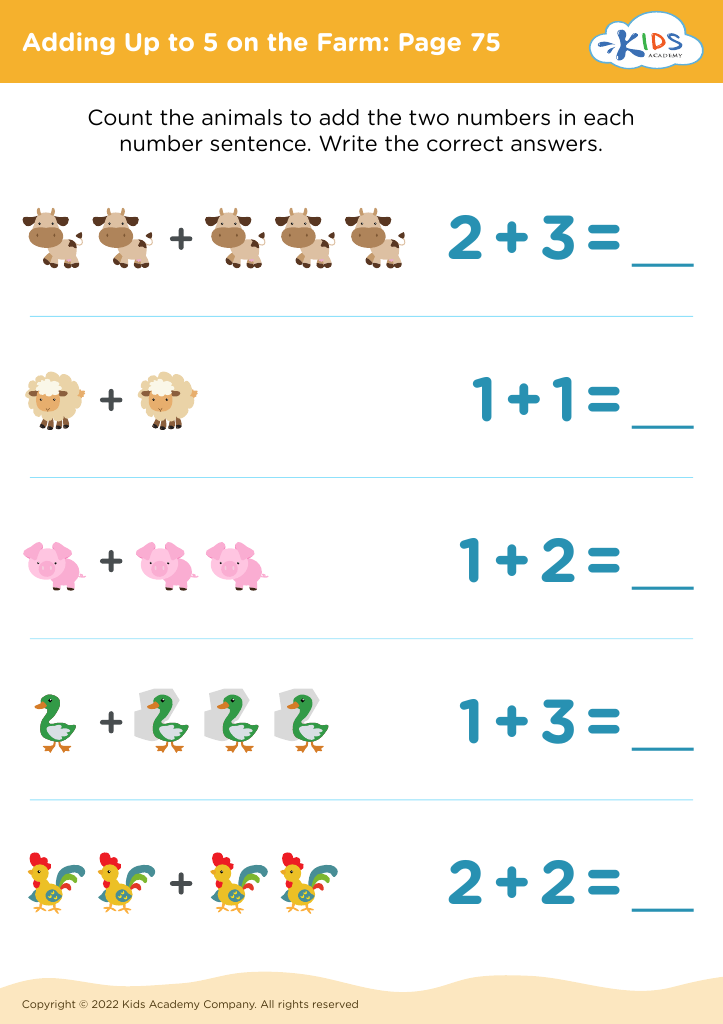
Adding Up to 5 on the Farm: Page 75
Worksheet
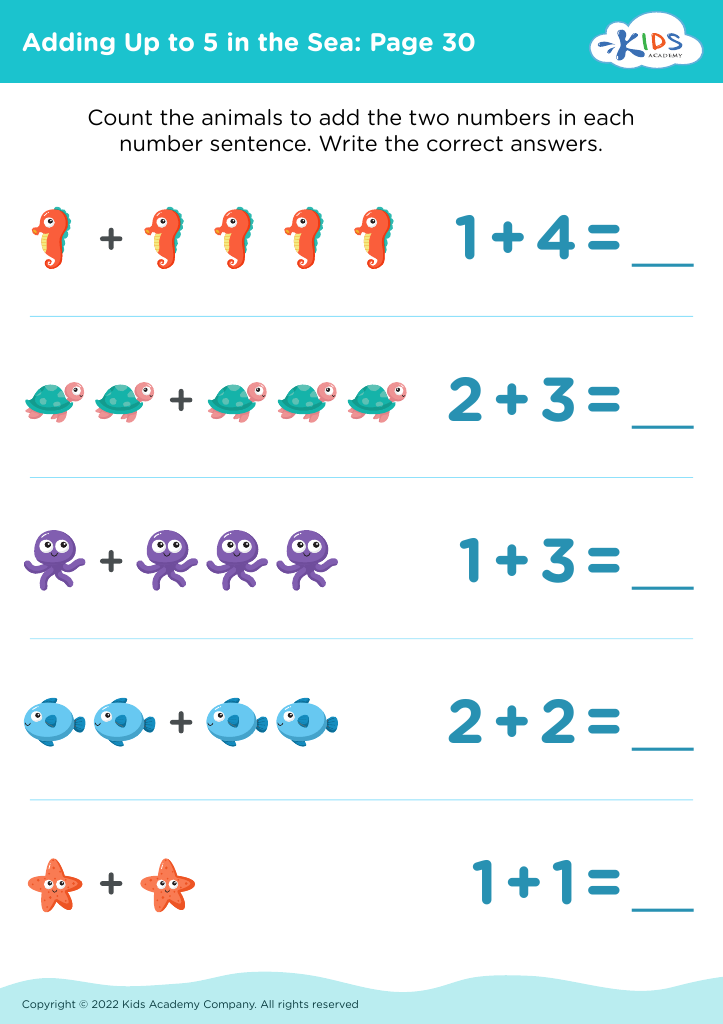
Adding Up to 5 in the Sea: Page 30
Worksheet
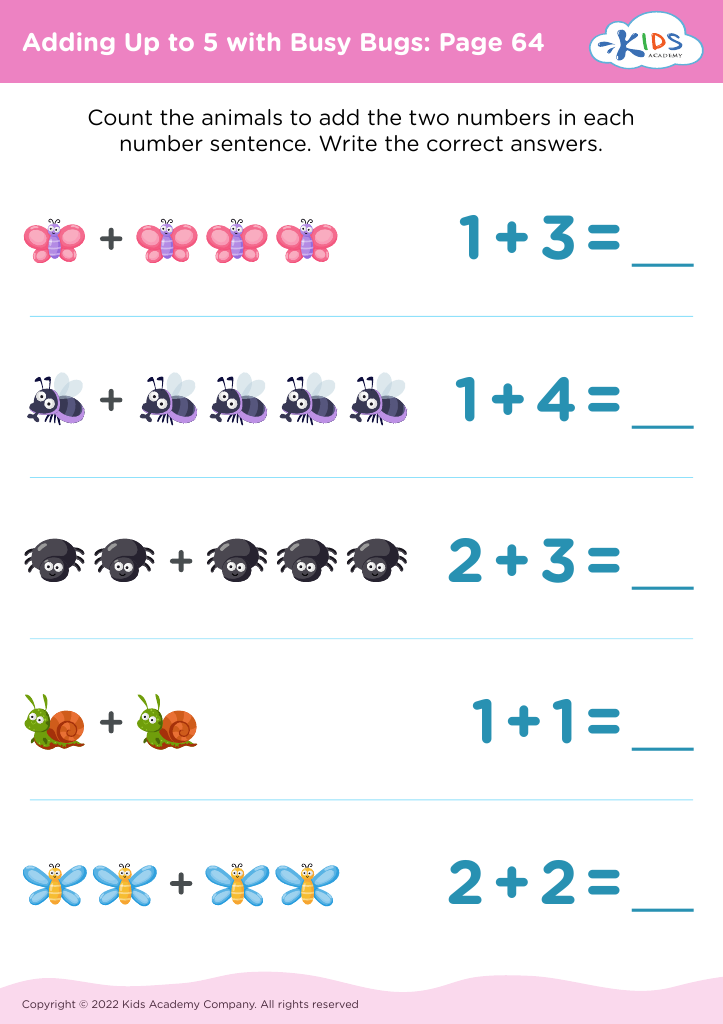
Adding Up to 5 with Busy Bugs: Page 64
Worksheet
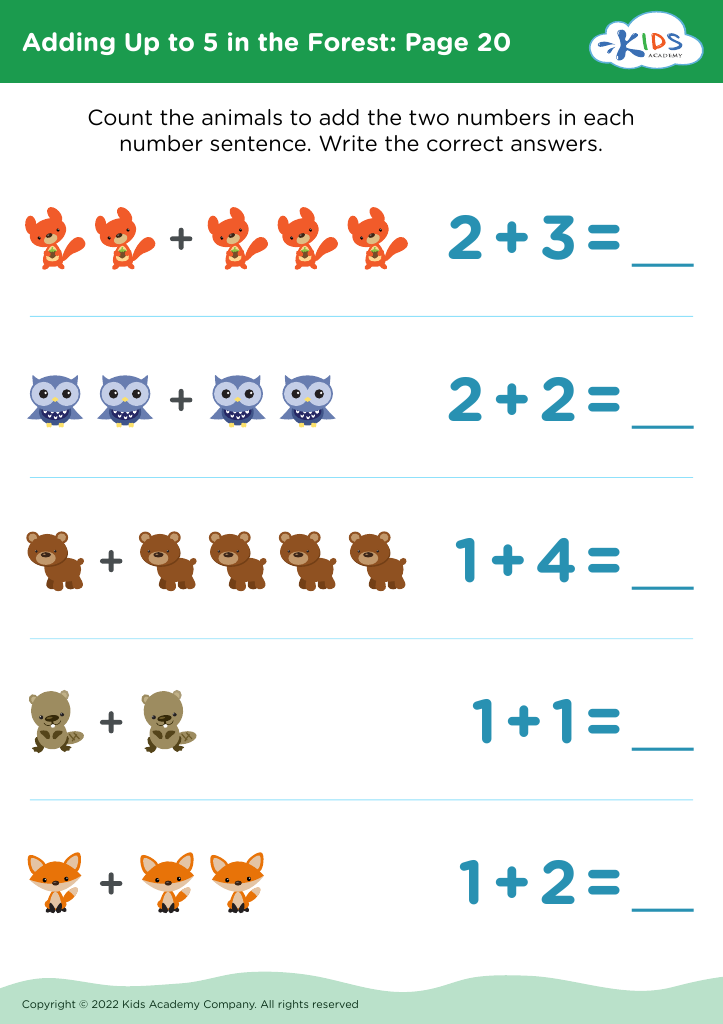
Adding Up to 5 in the Forest: Page 20
Worksheet
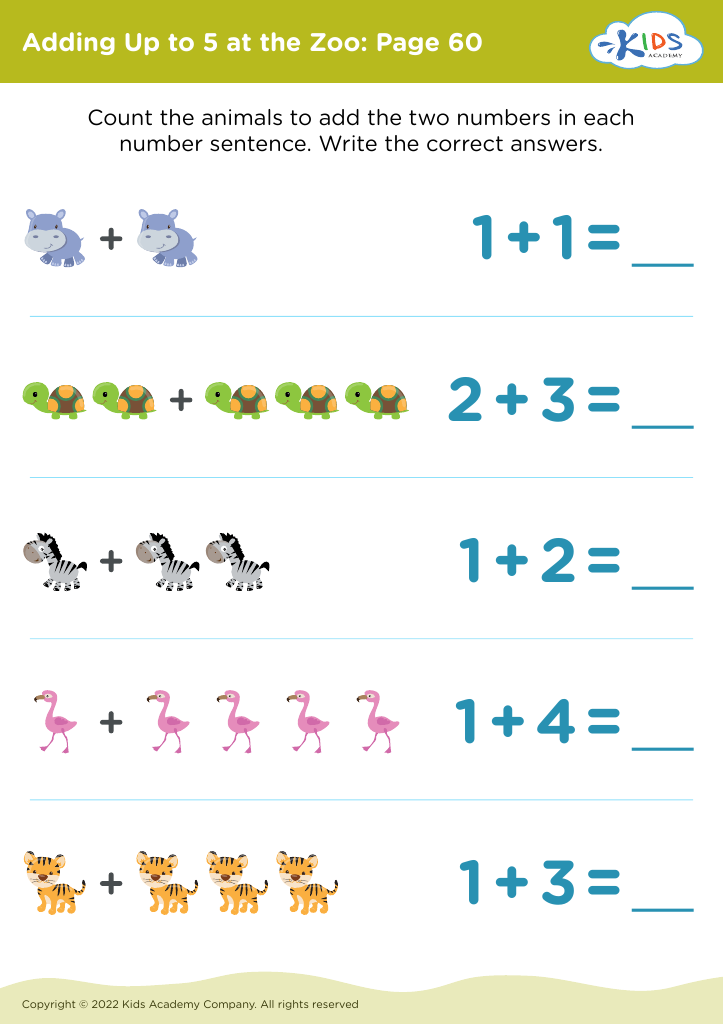
Adding Up to 5 at the Zoo: Page 60
Worksheet
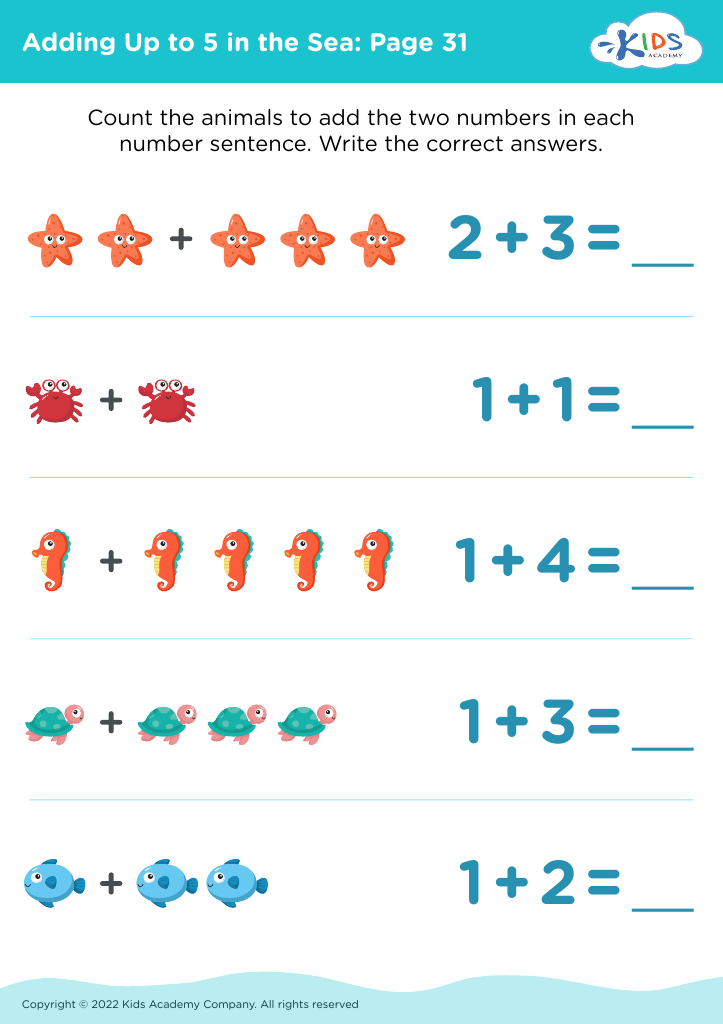
Adding Up to 5 in the Sea: Page 31
Worksheet
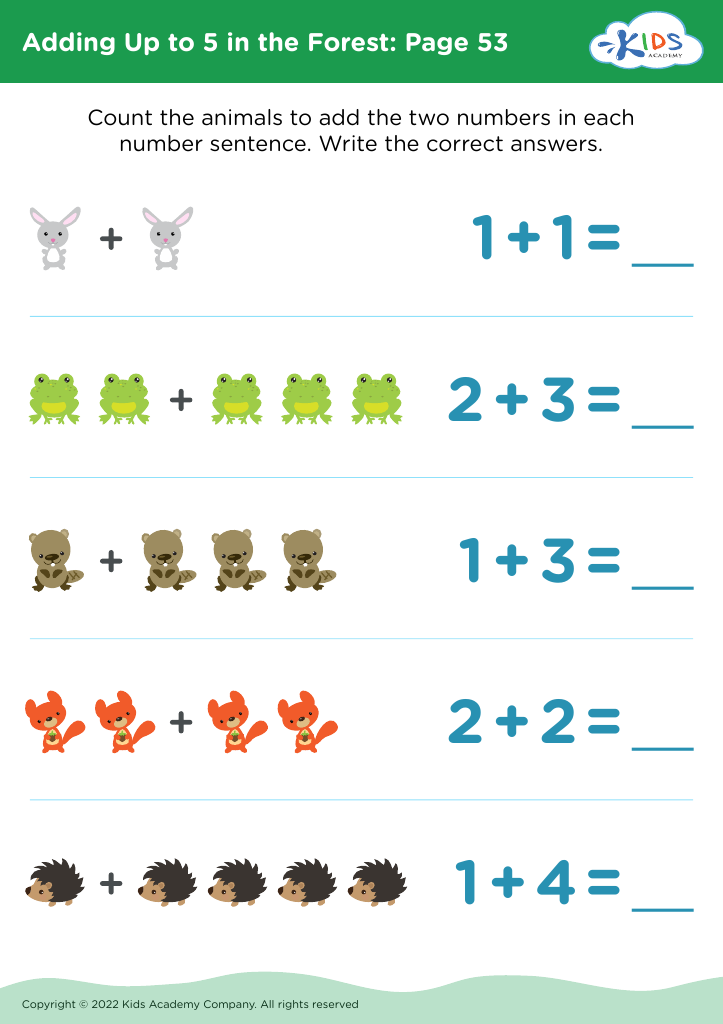
Adding Up to 5 in the Forest: Page 53
Worksheet
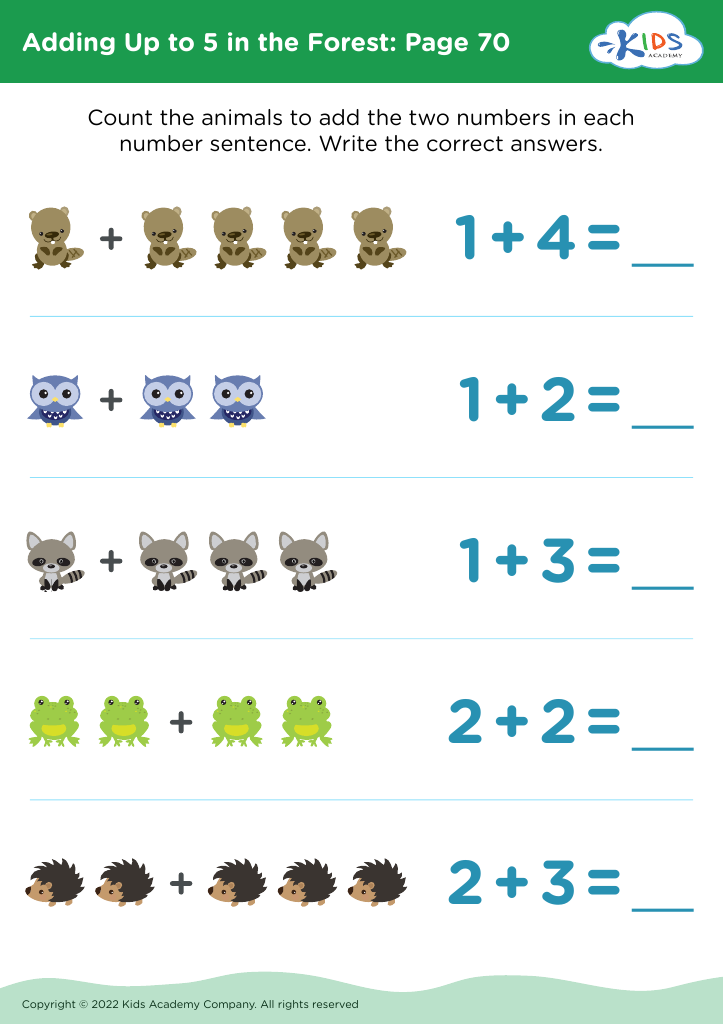
Adding Up to 5 in the Forest: Page 70
Worksheet
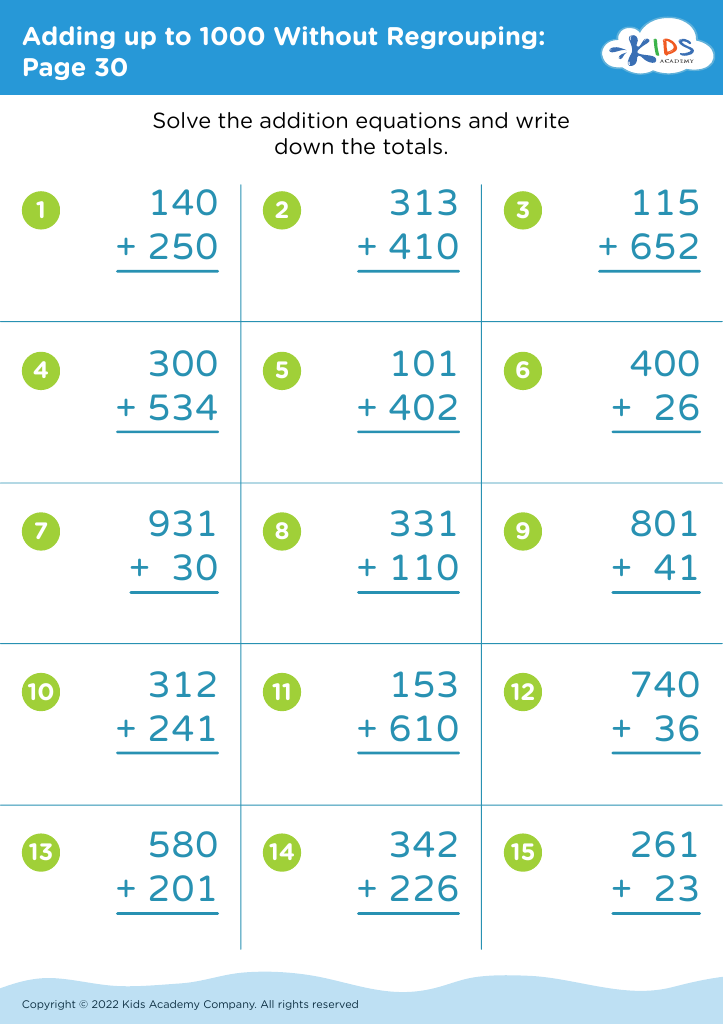
Adding up to 1000 Without Regrouping: Page 30
Worksheet
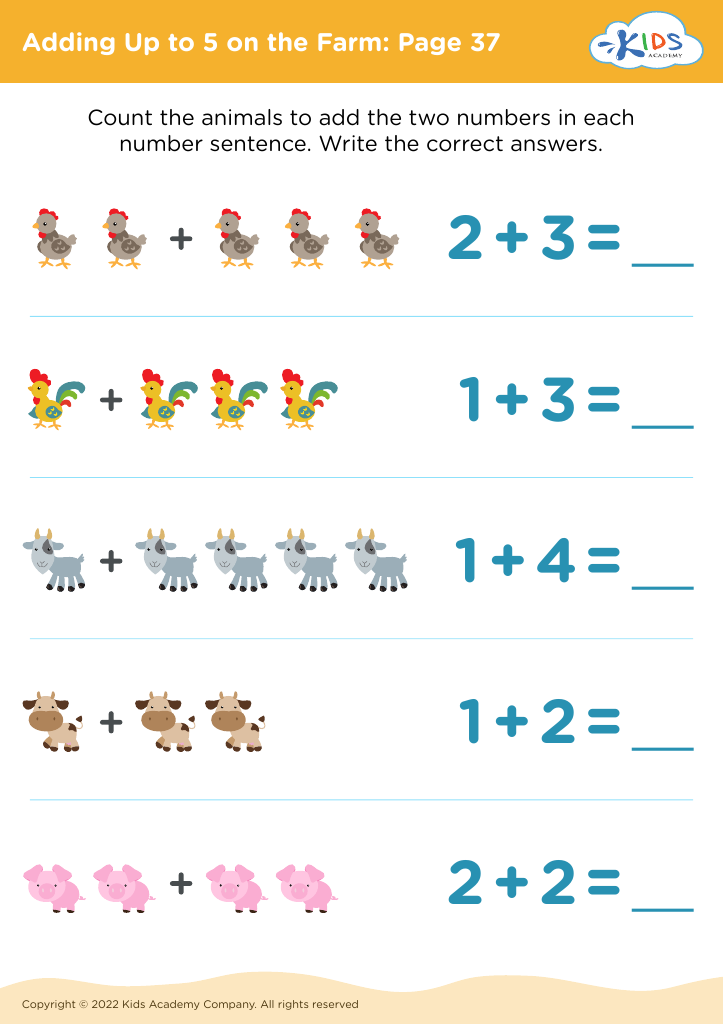
Adding Up to 5 on the Farm: Page 37
Worksheet
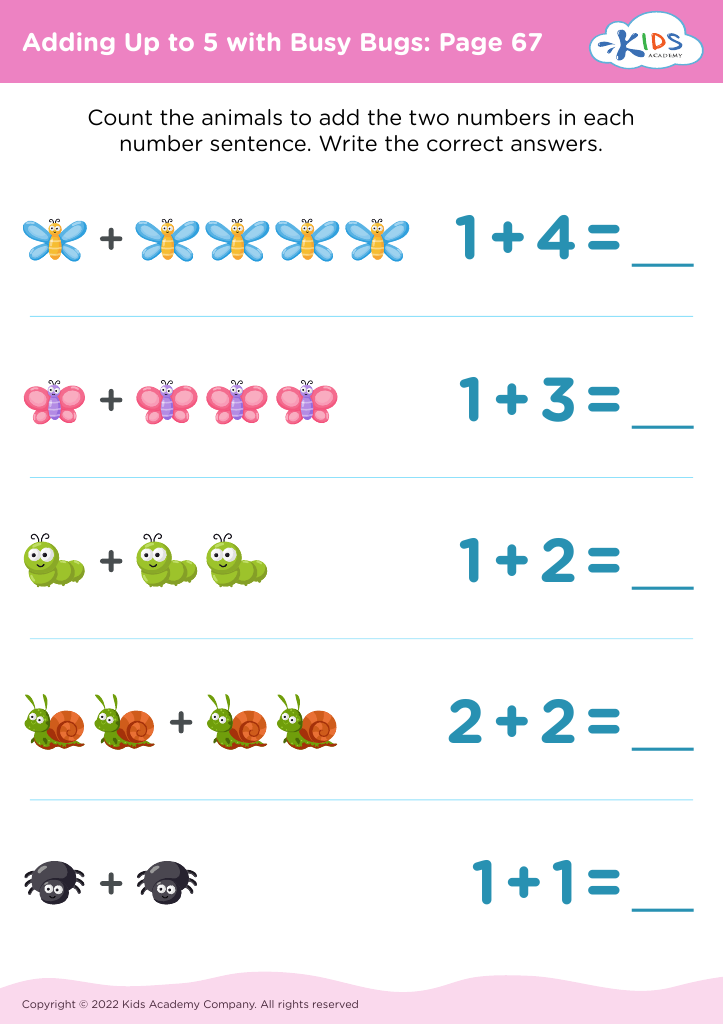
Adding Up to 5 with Busy Bugs: Page 67
Worksheet
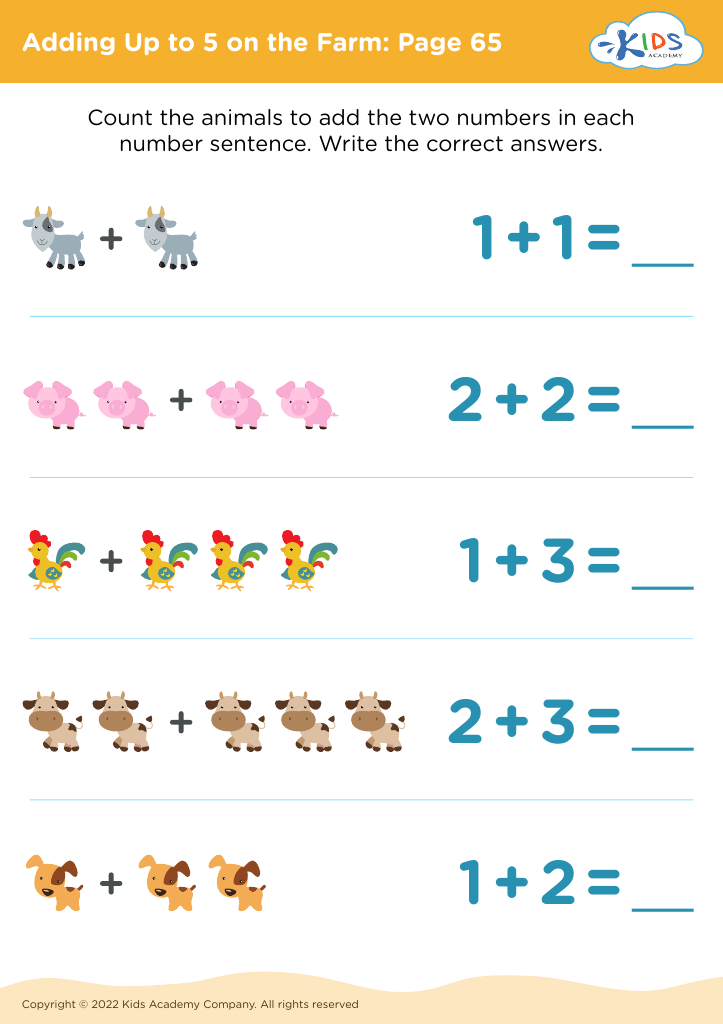
Adding Up to 5 on the Farm: Page 65
Worksheet
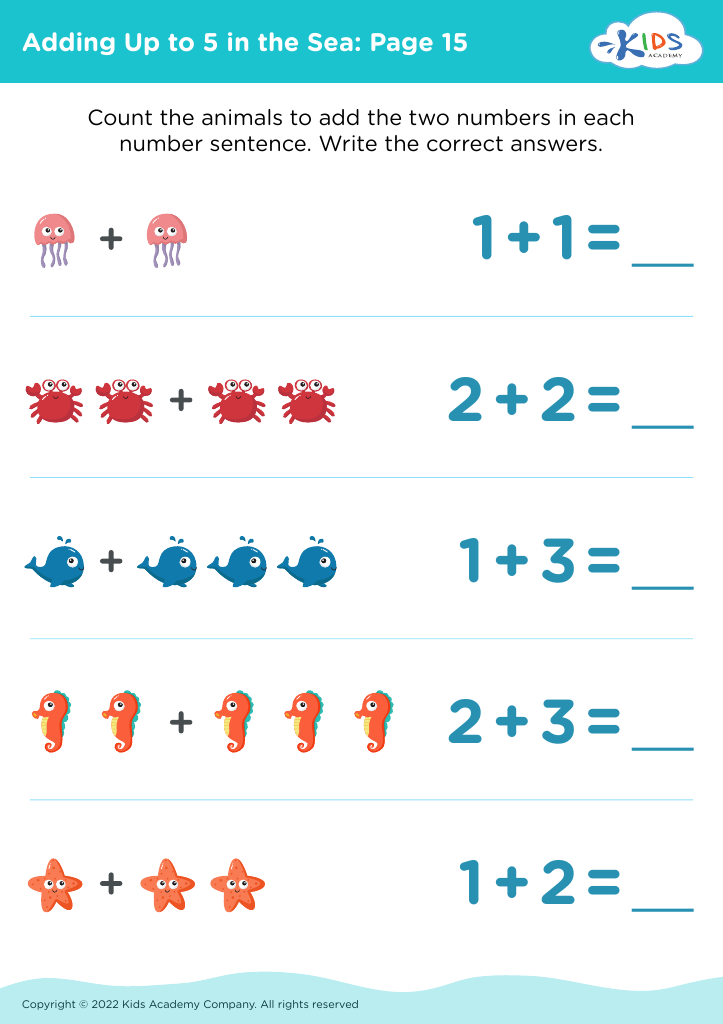
Adding Up to 5 in the Sea: Page 15
Worksheet
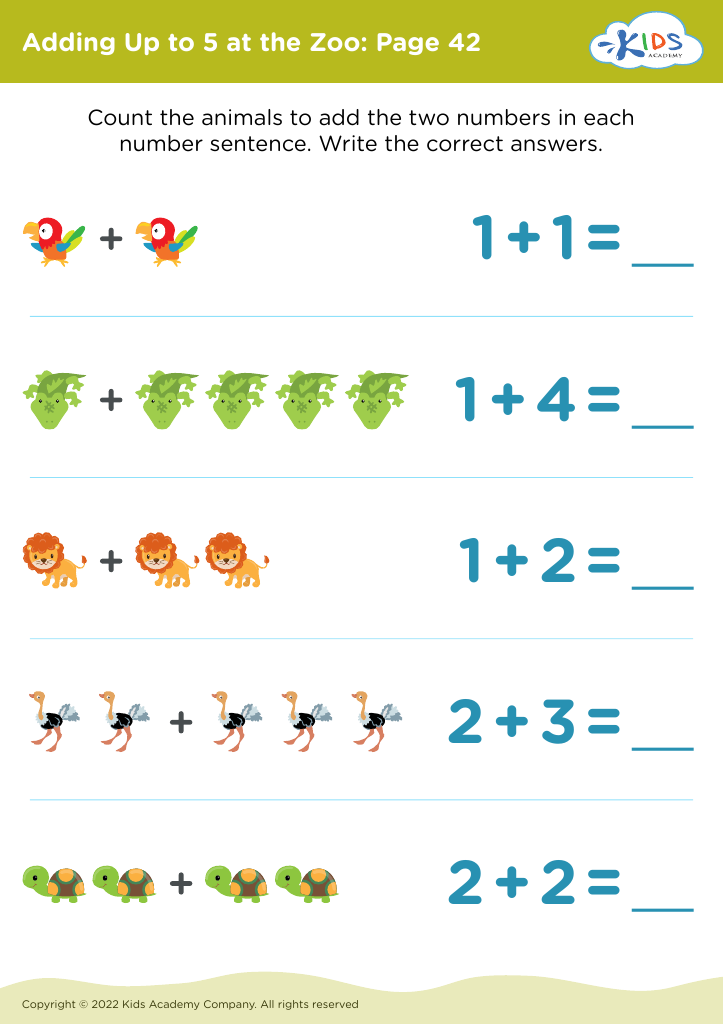
Adding Up to 5 at the Zoo: Page 42
Worksheet
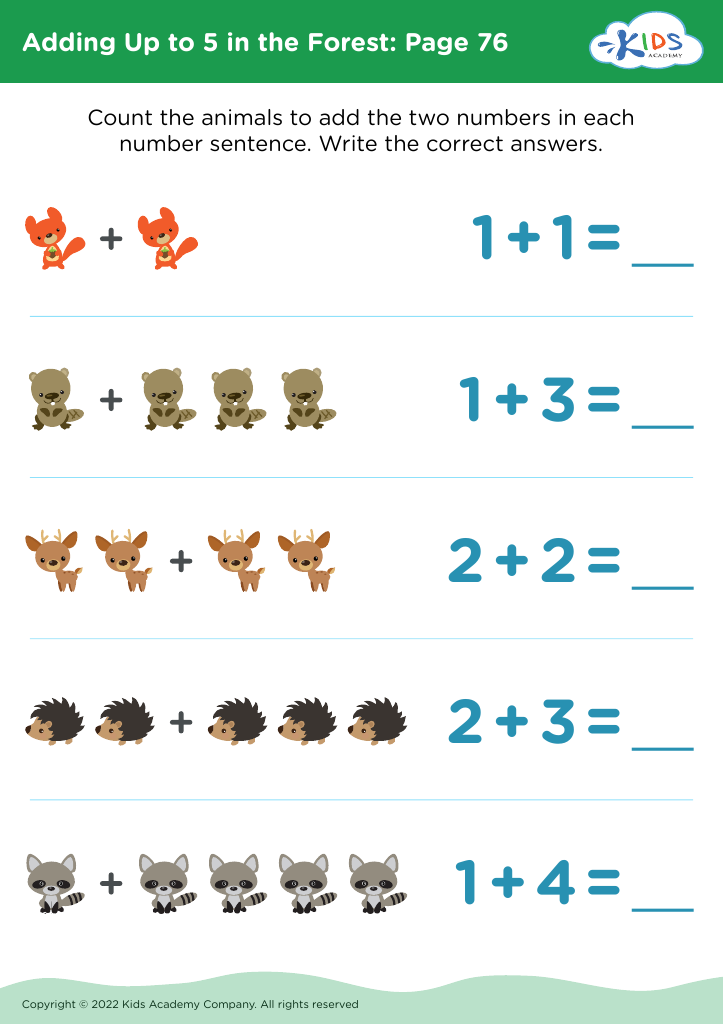
Adding Up to 5 in the Forest: Page 76
Worksheet
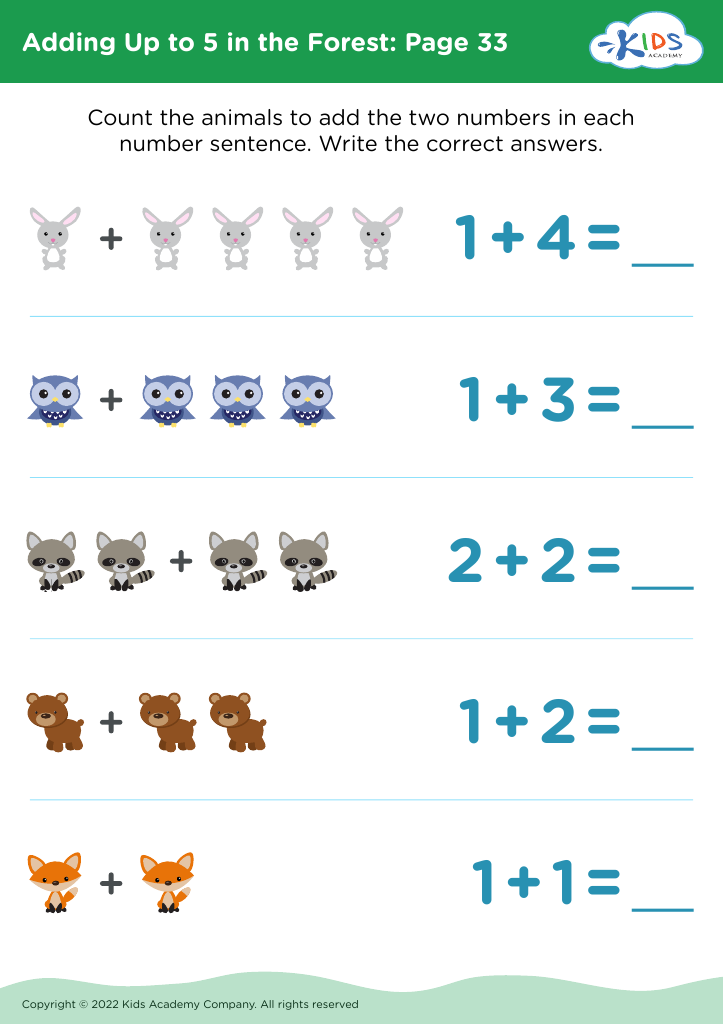
Adding Up to 5 in the Forest: Page 33
Worksheet
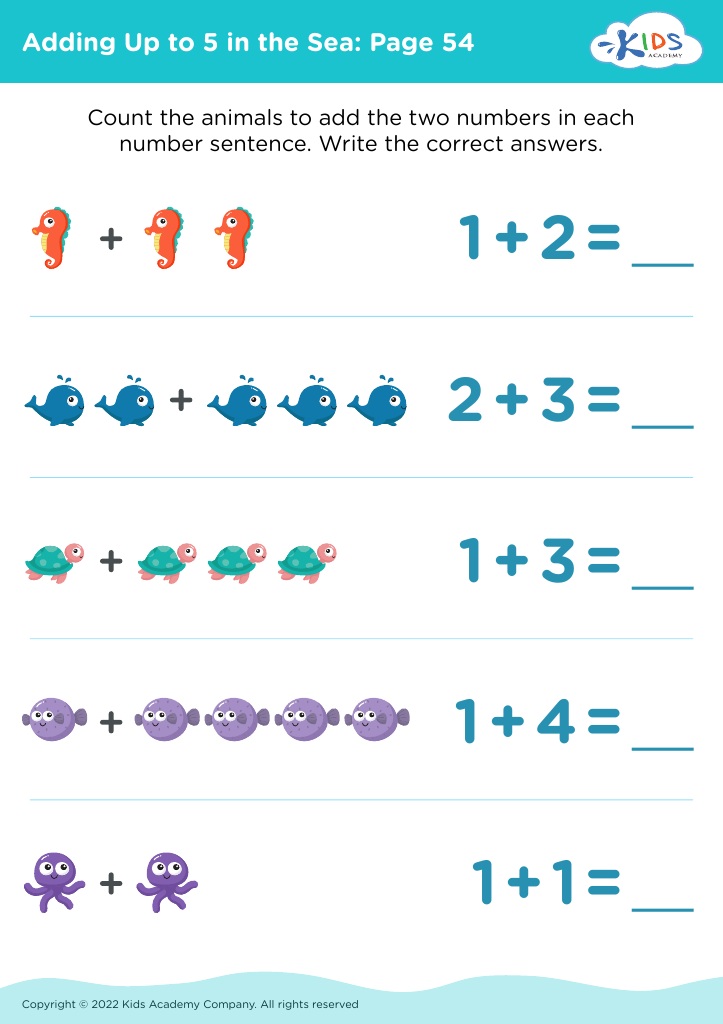
Adding Up to 5 in the Sea: Page 54
Worksheet


Basic addition skills are fundamental to a child's early mathematical understanding and cognitive development, making them critical for parents and teachers to emphasize for children aged 3-9. Mastering addition lays the groundwork for more complex mathematical concepts later on, including subtraction, multiplication, and division. When children grasp basic addition, they build confidence in their problem-solving abilities, which can enhance their overall academic performance.

Moreover, early competency in addition promotes mental agility and logical reasoning, encouraging children to analyze and approach problems systematically. Additionally, incorporating addition into everyday activities helps to contextualize learning, reinforcing its practicality by relating it to real-life scenarios, like counting items or sharing equally.

Furthermore, strengthening these skills at a young age fosters a positive attitude towards mathematics, reducing math anxiety as children progress in their educational journey. When parents and teachers engage with children in addition activities, they not only support skill acquisition but also strengthen their social and emotional growth by promoting collaboration and communication.

In summary, focusing on basic addition skills creates a solid foundation for a child’s academic success, confidence, and enthusiasm for learning, making it a crucial area of focus for both parents and educators.