Basic arithmetic practice Addition Worksheets for Ages 3-9
12 filtered results
-
From - To
Enhance your child’s math skills with our Basic Arithmetic Practice Addition Worksheets, designed for ages 3 to 9! Perfectly tailored for young learners, these engaging worksheets help build a strong foundation in addition through fun and interactive activities. With a variety of exercises, children will enjoy solving problems while developing critical thinking and number recognition. Our worksheets accommodate different learning levels, ensuring every child can progress at their own pace. Ideal for home or classroom use, these resources encourage hands-on practice and reinforce key math concepts in an enjoyable way. Get started today and watch your child flourish in arithmetic!
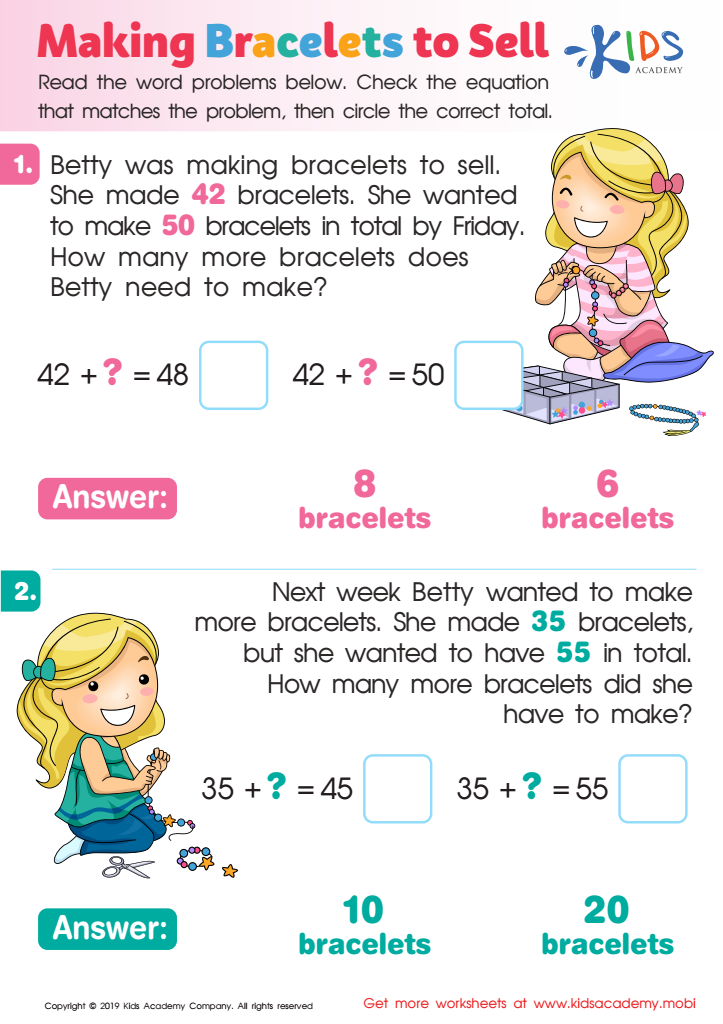
Making Bracelets to Sell Worksheet
 Assign to My Students
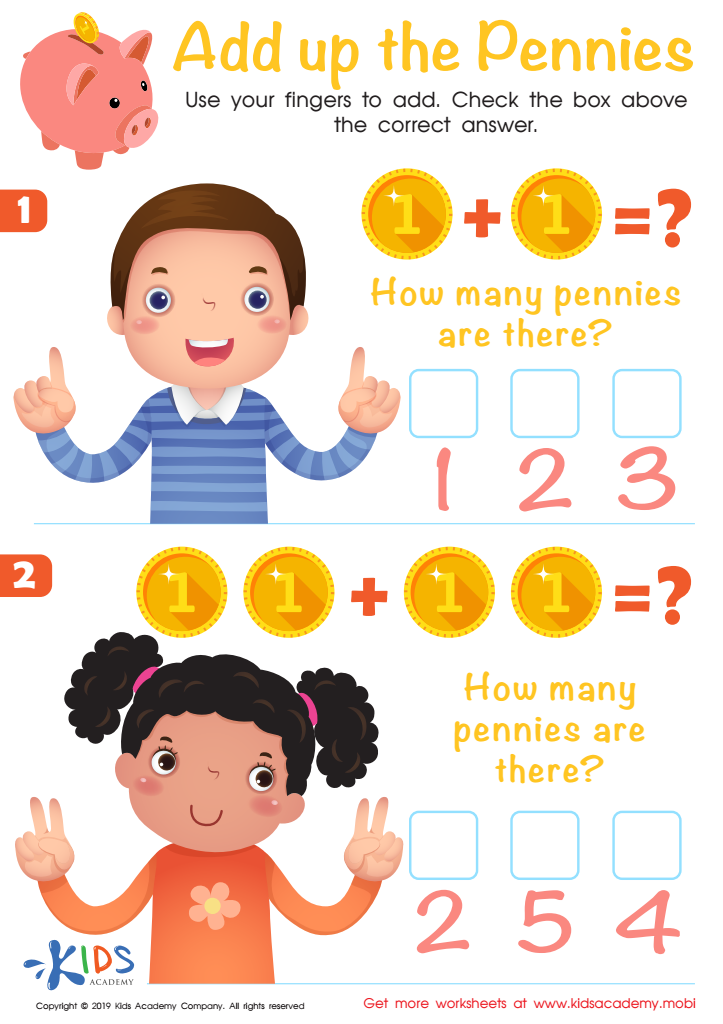
Add up the Pennies Worksheet
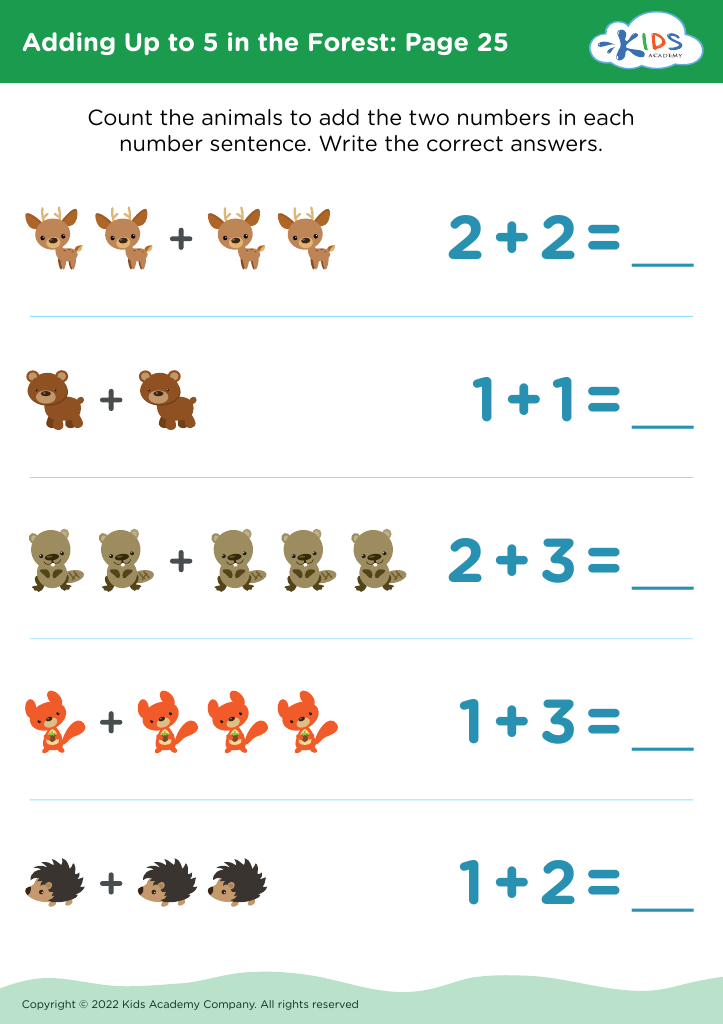
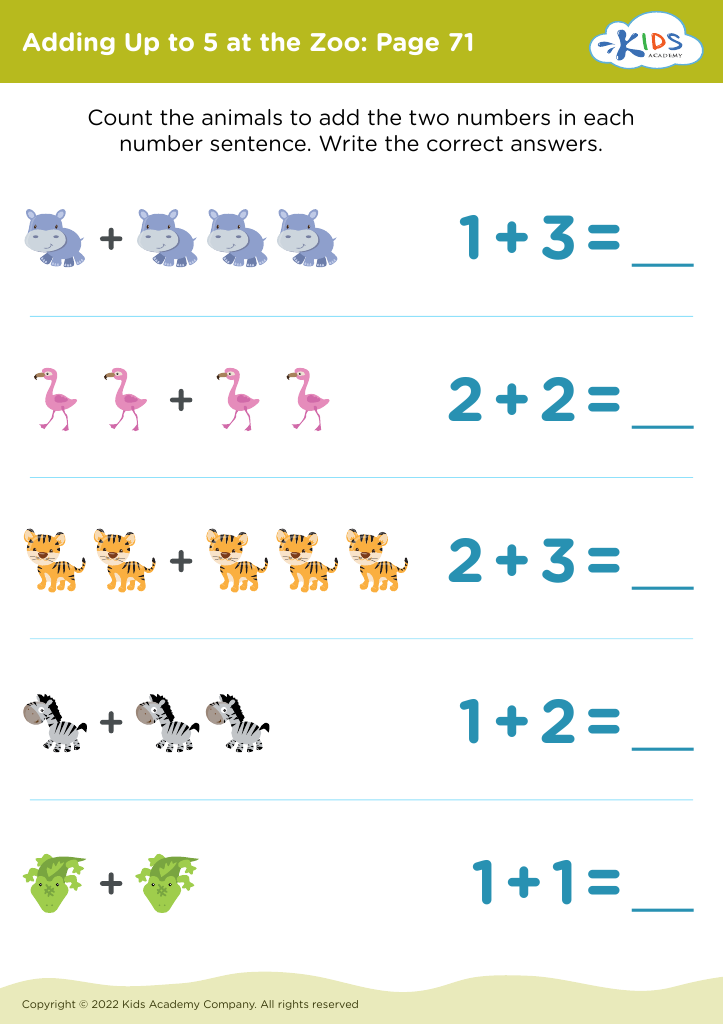
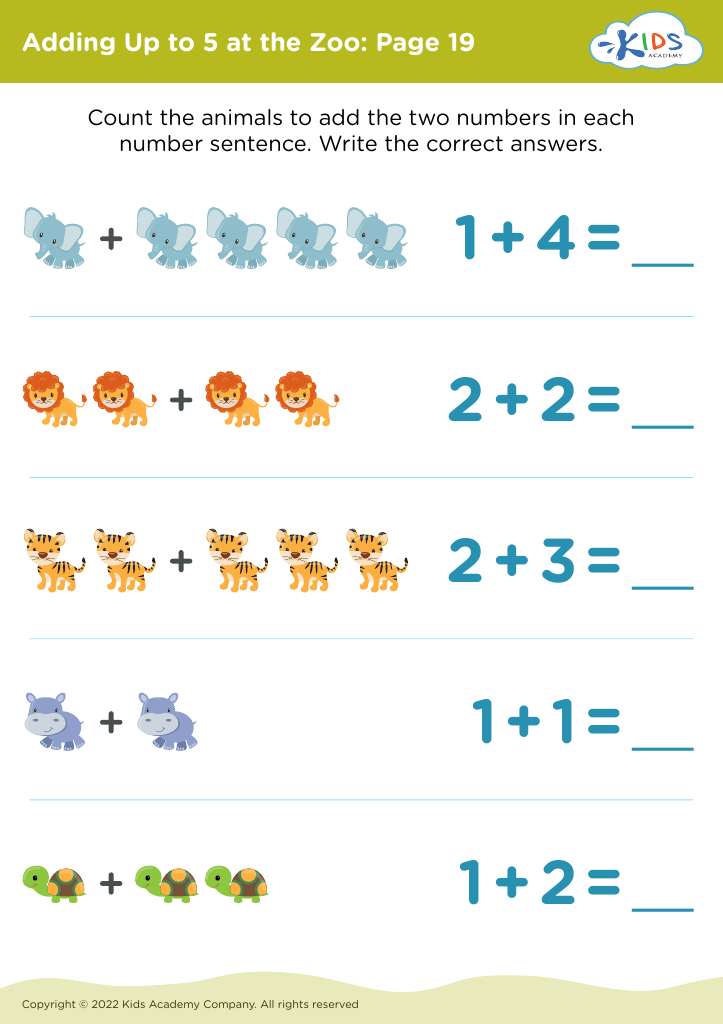
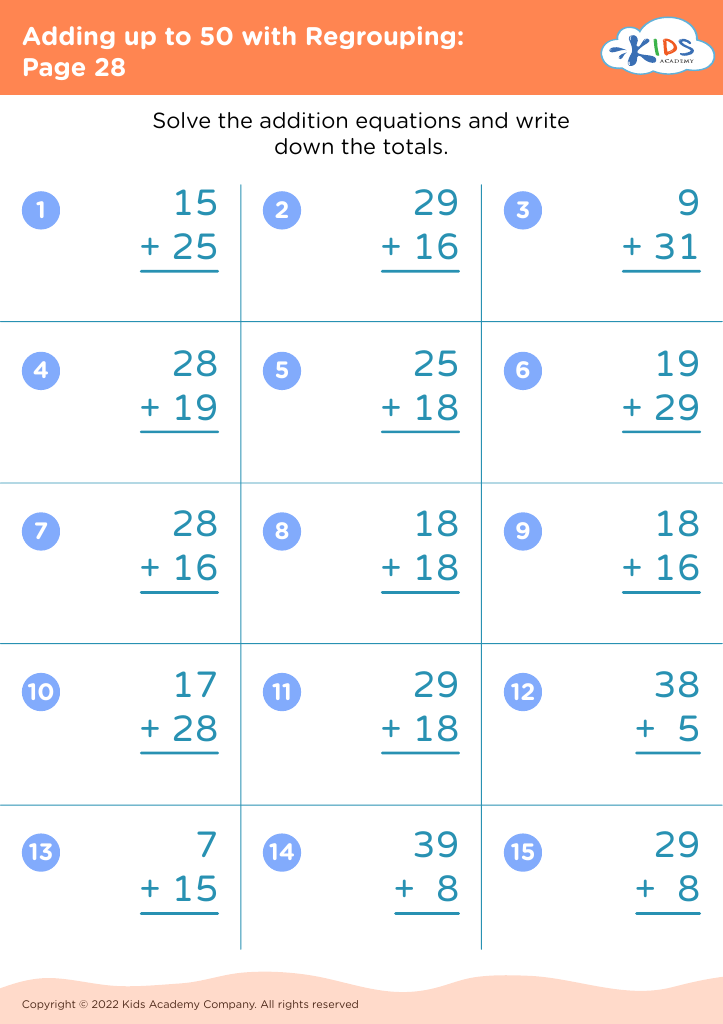
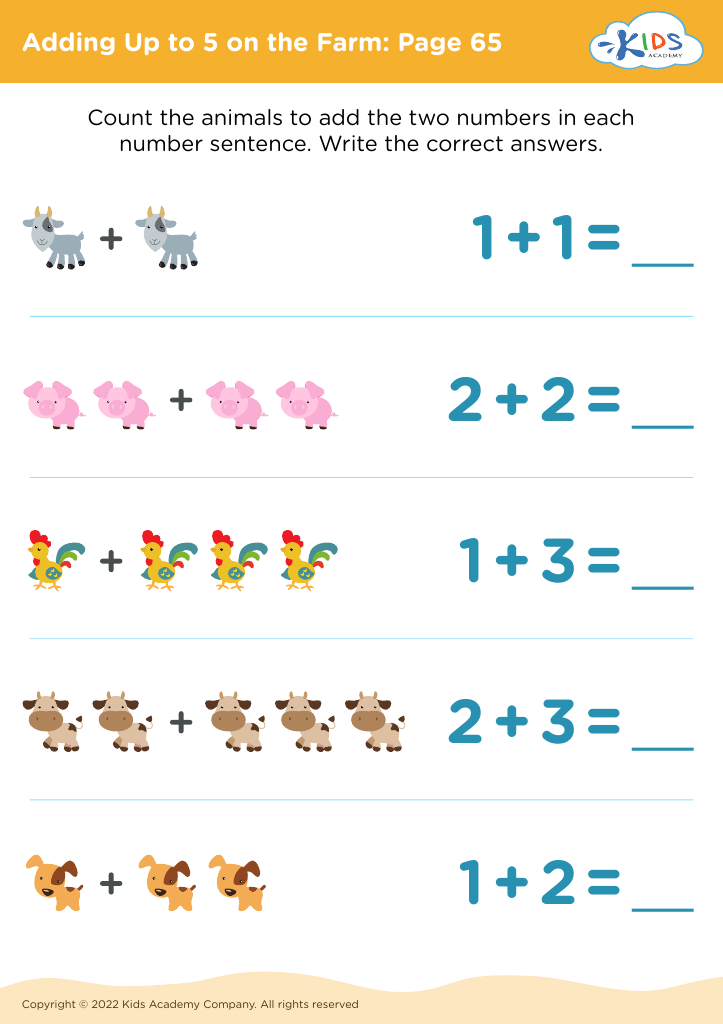
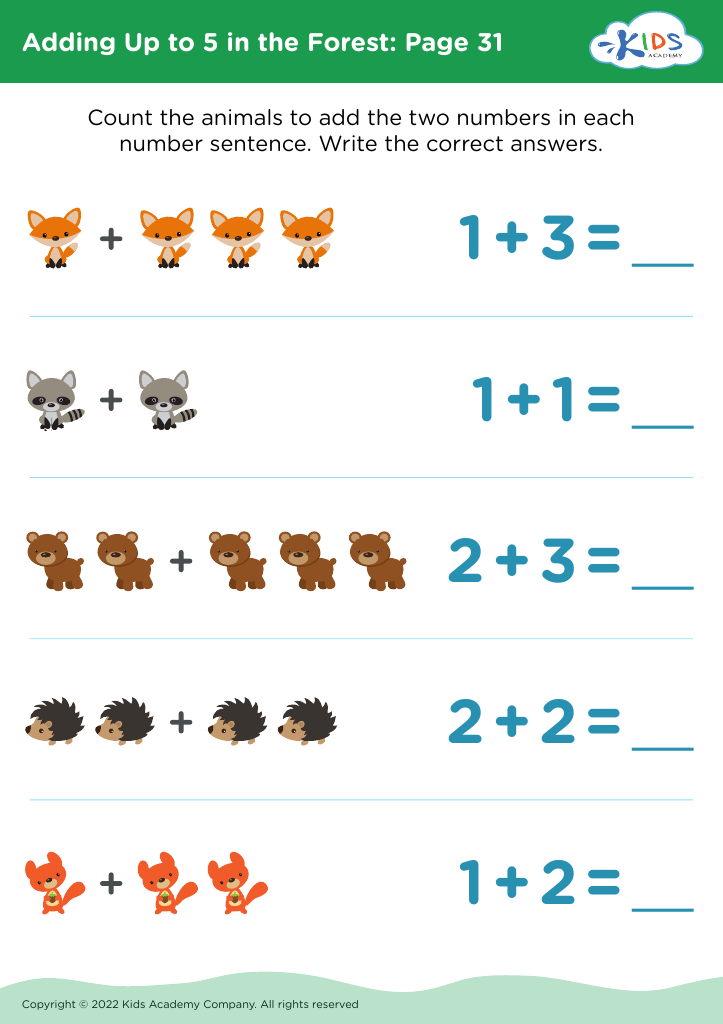
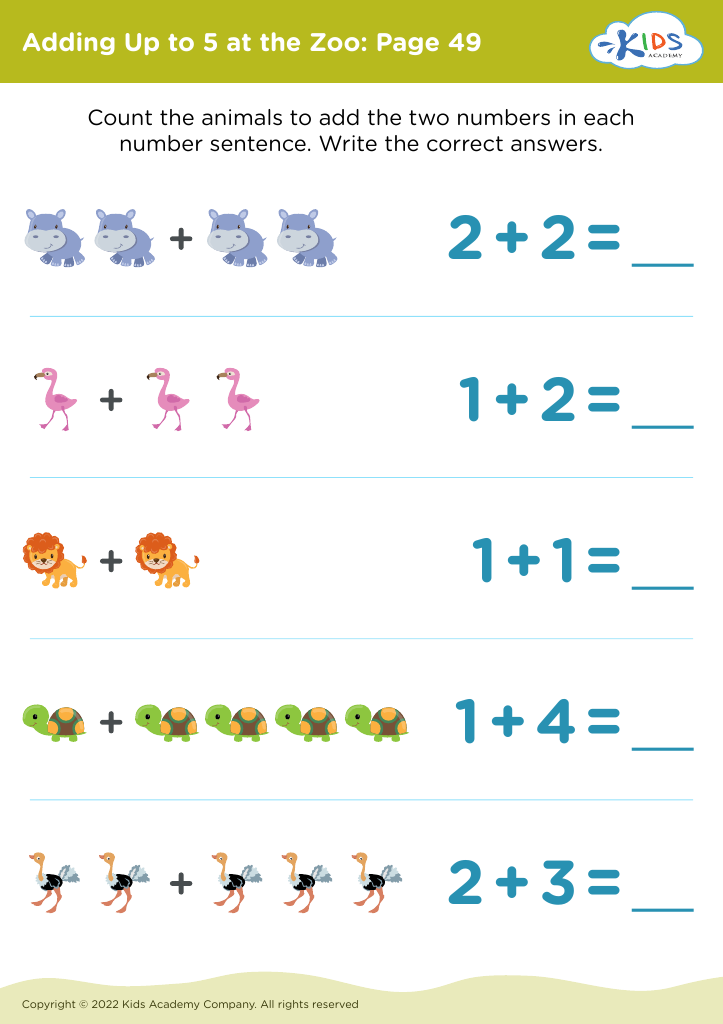
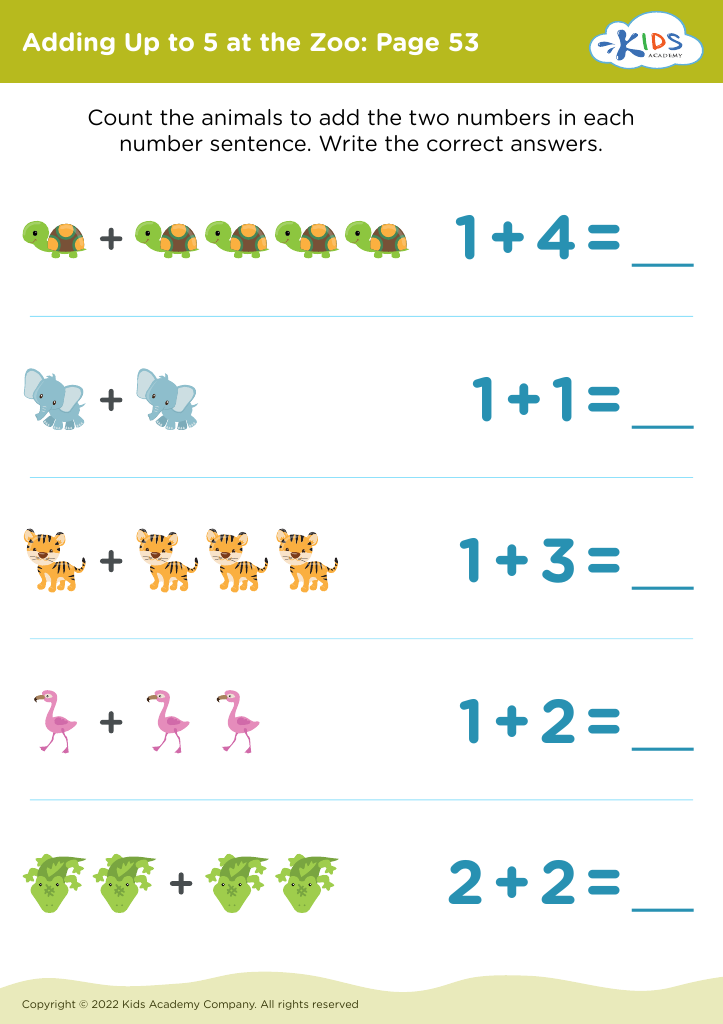








Basic arithmetic practice, particularly addition, is crucial for children aged 3-9 as it lays the groundwork for their future mathematical understanding and overall cognitive development. At this age, children's brains are highly receptive to learning; they are developing essential problem-solving skills, logical thinking, and spatial awareness. Engaging in simple addition games or exercises not only reinforces numerical concepts but also encourages critical thinking and the ability to make connections between numbers and real-world situations.
Additionally, mastering basic addition fosters a sense of achievement and confidence in young learners. When children successfully solve addition problems, they build self-esteem, which motivates them to tackle more complex concepts in the future. This foundational skill also serves as a stepping stone for more advanced mathematics, helping to create a well-rounded educational experience.
For parents and teachers, facilitating regular addition practice can integrate learning into daily routines—such as counting items during shopping or playing simple math-focused games. This engagement nurtures a positive attitude toward math, minimizes anxiety around the subject, and promotes lifelong learning. Ultimately, caring about and prioritizing basic arithmetic practice supports children's academic success and boosts their ability to navigate various everyday situations involving numbers.








